
Sarah E. Thompson (1)
Author of Hokusai
For other authors named Sarah E. Thompson, see the disambiguation page.
Works by Sarah E. Thompson
Tagged
Common Knowledge
- Canonical name
- Thompson, Sarah E.
- Gender
- female
- Education
- Harvard (AB)
Columbia University (PhD) - Occupations
- curator
art historian - Organizations
- Museum of Fine Arts, Boston
- Nationality
- USA
- Associated Place (for map)
- USA
Members
Reviews

Many years ago, I was browsing through a rack at what has become my best source for inexpensive kimono, haori and obi. Of course, the linings are often the best part, and on looking at the lining of one man's haori, I found this: http://www.flickr.com/photos/mojosmom/3473994034/
I did not know at the time what it was, only that it was beautiful and unusual. But a few years later, at an exhibition of Japanese art, I discovered that it was a rendering of one of Hiroshige's Fifty-three Stations show more of the Tōkaidō - specifically, Yokkaichi from the Hoeido edition. Thus began my fascination with Japanese woodblock prints (aided and abetted, I might add, by being in close proximity to the Art Institute of Chicago's Clarence Buckingham Collection of Japanese Prints)
Sarah Thompson's book, describing the prints of Kuniyoshi's Sixty-Nine Stations of the Kisokaidō from the Boston Museum of Fine Arts' William Sturgis Bigelow Collection, is quite simply one of the finest books on the subject that I have come across, for a number of reasons.
Of course, the quality of reproduction is of prime importance in any book about art, and the reproductions in this book are excellent. The lines are sharp, and this is critical, because each print has a series title bordered with images related to the print, and each has an inset landscape the design of which also relates to the images. Any blurring of the lines would detract from the reader-viewer's ability to see and appreciate those relationships. The colors, too, are well-reproduced, of particular benefit in prints such as No. 38 (Fukushima) and No. 43 (Tsumagome), which contain images of dreams or ghosts.
Like the Tōkaidō, the Kisokaidō linked Kyoto, the ancient capital, with Edo (now Tokyo), but by an inland, rather than a coastal, route. All these official routes had designated posts which were required to provide facilities to travelers. There were sixty-nine of the Kisokaidō, so the woodblock series consists of seventy-one images (one of each station, and one for each of the cities that was an endpoint).
Kuniyoshi's prints, however, are more than mere landscape images of the stations. In fact, as noted above, those landscapes are presented as an inset in the larger print. The main content of each is drawn from Japanese history and folklore, with the connection to the particular station being made sometimes straightforwardly, as where the action of the story depicted occurred in or near the area, and sometimes through punning on the place names and names of people and places in the stories. Thompson explicates the connection in short, but information-packed, essays on the facing pages. The reader will learn as much about the history and folklore of Japan as she will about the prints themselves, and the scholar will appreciate Thompson's identification of each print, not only by title, but by publisher, date and censors' seals.
I must comment, too, on the construction and design of the book. It's a dust-jacketed hardback, and very sturdily put together, with the sections sewn (I see too many hardbacks these days that are merely glued, and fall apart too quickly!) and endsheets firmly attached. As mentioned, the colors are beautiful, but I want to note also the design of the small panel with the print number that accompanies Ms. Thompson's essays; it's a small, but telling, indication of the attention to detail that makes this book so valuable. And there's a good index and a good bibliography, too!
I cannot recommend this book highly enough.
(Note: I received this book through the Early Reviewers program. Pomegranate Communications was kind enough to send me their catalogue along with it, and I spent an inordinate amount of time drooling over their offerings. They have quite a varied selection of art and architecture books, and if the quality of this book is any indication, one should look for the Pomegranate name on any such book.) show less
I did not know at the time what it was, only that it was beautiful and unusual. But a few years later, at an exhibition of Japanese art, I discovered that it was a rendering of one of Hiroshige's Fifty-three Stations show more of the Tōkaidō - specifically, Yokkaichi from the Hoeido edition. Thus began my fascination with Japanese woodblock prints (aided and abetted, I might add, by being in close proximity to the Art Institute of Chicago's Clarence Buckingham Collection of Japanese Prints)
Sarah Thompson's book, describing the prints of Kuniyoshi's Sixty-Nine Stations of the Kisokaidō from the Boston Museum of Fine Arts' William Sturgis Bigelow Collection, is quite simply one of the finest books on the subject that I have come across, for a number of reasons.
Of course, the quality of reproduction is of prime importance in any book about art, and the reproductions in this book are excellent. The lines are sharp, and this is critical, because each print has a series title bordered with images related to the print, and each has an inset landscape the design of which also relates to the images. Any blurring of the lines would detract from the reader-viewer's ability to see and appreciate those relationships. The colors, too, are well-reproduced, of particular benefit in prints such as No. 38 (Fukushima) and No. 43 (Tsumagome), which contain images of dreams or ghosts.
Like the Tōkaidō, the Kisokaidō linked Kyoto, the ancient capital, with Edo (now Tokyo), but by an inland, rather than a coastal, route. All these official routes had designated posts which were required to provide facilities to travelers. There were sixty-nine of the Kisokaidō, so the woodblock series consists of seventy-one images (one of each station, and one for each of the cities that was an endpoint).
Kuniyoshi's prints, however, are more than mere landscape images of the stations. In fact, as noted above, those landscapes are presented as an inset in the larger print. The main content of each is drawn from Japanese history and folklore, with the connection to the particular station being made sometimes straightforwardly, as where the action of the story depicted occurred in or near the area, and sometimes through punning on the place names and names of people and places in the stories. Thompson explicates the connection in short, but information-packed, essays on the facing pages. The reader will learn as much about the history and folklore of Japan as she will about the prints themselves, and the scholar will appreciate Thompson's identification of each print, not only by title, but by publisher, date and censors' seals.
I must comment, too, on the construction and design of the book. It's a dust-jacketed hardback, and very sturdily put together, with the sections sewn (I see too many hardbacks these days that are merely glued, and fall apart too quickly!) and endsheets firmly attached. As mentioned, the colors are beautiful, but I want to note also the design of the small panel with the print number that accompanies Ms. Thompson's essays; it's a small, but telling, indication of the attention to detail that makes this book so valuable. And there's a good index and a good bibliography, too!
I cannot recommend this book highly enough.
(Note: I received this book through the Early Reviewers program. Pomegranate Communications was kind enough to send me their catalogue along with it, and I spent an inordinate amount of time drooling over their offerings. They have quite a varied selection of art and architecture books, and if the quality of this book is any indication, one should look for the Pomegranate name on any such book.) show less
 This review was written for LibraryThing Early Reviewers.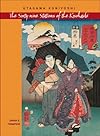
This marvelous edition of Utagawa Kuniyoshi’s series of prints does much more than provide a quality reproduction of the justly famous artwork. It is a fine art book, with vibrant colors crisply printed on heavy stock and sewn signatures, but the real value of the work is the exhaustive but lightly presented scholarship. The Introduction to the volume and the text accompanying each print give the modern reader some sense of the delight the artist had in producing the prints and what made show more them so popular in pre-Meiji Japan.
Sarah E. Thompson, now Assistant Curator for Japanese Prints at the Museum of Fine Arts in Boston, acknowledges her debt to other scholars, particularly Iwakiri Mayumi, at what is now the Ukiyo-e Tokyo Museum. However, although it has a good bibliography, this is not a book full of scholarly apparatus. Instead, the page of text opposite each print lets us in on what the contemporary viewer would have seen.
Each picture has the name of one of the way-stations on mountain route between Edo (Tokyo) and Kyoto, the old imperial capital. But these are not landscapes or a travelogue. For each one, Kuniyoshi illustrates a scene from a story or a play that would have been familiar to his audience. The particular story might be linked by some landscape feature or, more often, an awful pun on the place name. Thompson’s explication isn’t a lecture or a lesson, it just lets us in on the joke. Each print has its own story and there’s no need to read them all at once or in any particular order. But you’ll find them addictive, once you start. show less
Sarah E. Thompson, now Assistant Curator for Japanese Prints at the Museum of Fine Arts in Boston, acknowledges her debt to other scholars, particularly Iwakiri Mayumi, at what is now the Ukiyo-e Tokyo Museum. However, although it has a good bibliography, this is not a book full of scholarly apparatus. Instead, the page of text opposite each print lets us in on what the contemporary viewer would have seen.
Each picture has the name of one of the way-stations on mountain route between Edo (Tokyo) and Kyoto, the old imperial capital. But these are not landscapes or a travelogue. For each one, Kuniyoshi illustrates a scene from a story or a play that would have been familiar to his audience. The particular story might be linked by some landscape feature or, more often, an awful pun on the place name. Thompson’s explication isn’t a lecture or a lesson, it just lets us in on the joke. Each print has its own story and there’s no need to read them all at once or in any particular order. But you’ll find them addictive, once you start. show less
This review was written for LibraryThing Early Reviewers.This is a beautiful book with richly colored, full page reproductions of each of the seventy two prints in this series – title page, all 69 stations, plus the starting and ending cities of Edo and Kyoto – and provides a wonderful introduction to this period, and to the history and legends of Japan.
For this series showing the overland route between the shogun's and the emperor's capitals, the landscape takes a minor role. Instead, Utagawa Kuniyoshi chooses to focus on heroes from show more legendary tales, characters from dramas, and historical figures. In each print, Kuniyoshi cleverly combines images within images and uses puns & wordplay in his titles to identify each station on the road.
An example from one print "Ageo: Takao of the Miurya". In the print, a courtesan is being weighed against a heaping chest of gold. The story is from an urban legend that was made into a kabuki play where a lord offers to buy the contract for his favorite by paying her weight in gold. Ageo is the name of the station on the Kisokaido, but there's also a variety of wordplay and visual punning going on in the image: between the print title and Takao's name which uses similar characters; the name "Takao" was sort of an historic one since it was passed down over 'generations' of courtesans; the lord's name in the play was a stand-in name for an historical figure; and throughout the print there are visual references to Takao's signature maple leaf crest.
The Edo-era viewer of this print and this series would be familiar with these stories and could readily appreciate Kuniyoshi's visual puns and word-play. Modern readers can begin to appreciate all of the intricacies of these prints thanks to the detailed descriptions by the author, an assistant curator at the Museum of Fine Arts in Boston. The introduction provides the necessary background to 19th century ukiyo-e and to Kuniyoshi, and the layout of the book, with the print title and description immediately facing the image, make this an easy and enjoyable read. show less
For this series showing the overland route between the shogun's and the emperor's capitals, the landscape takes a minor role. Instead, Utagawa Kuniyoshi chooses to focus on heroes from show more legendary tales, characters from dramas, and historical figures. In each print, Kuniyoshi cleverly combines images within images and uses puns & wordplay in his titles to identify each station on the road.
An example from one print "Ageo: Takao of the Miurya". In the print, a courtesan is being weighed against a heaping chest of gold. The story is from an urban legend that was made into a kabuki play where a lord offers to buy the contract for his favorite by paying her weight in gold. Ageo is the name of the station on the Kisokaido, but there's also a variety of wordplay and visual punning going on in the image: between the print title and Takao's name which uses similar characters; the name "Takao" was sort of an historic one since it was passed down over 'generations' of courtesans; the lord's name in the play was a stand-in name for an historical figure; and throughout the print there are visual references to Takao's signature maple leaf crest.
The Edo-era viewer of this print and this series would be familiar with these stories and could readily appreciate Kuniyoshi's visual puns and word-play. Modern readers can begin to appreciate all of the intricacies of these prints thanks to the detailed descriptions by the author, an assistant curator at the Museum of Fine Arts in Boston. The introduction provides the necessary background to 19th century ukiyo-e and to Kuniyoshi, and the layout of the book, with the print title and description immediately facing the image, make this an easy and enjoyable read. show less
This review was written for LibraryThing Early Reviewers.The Sixty-nine Stations of the Kisokaido was the final flowering of the great series prints of the Edo era. Unlike the familiar views of Fuji and other “road” series, this one focuses on dramatic stories associated with the place, rather than the view from that place. I had not expected to find the one-page explanations facing each print almost as interesting as the reproduced prints themselves, but I read them with pleasure. A great amount of information is imparted concerning Japanese show more literature, folklore, history and other matters relating to the form and manner of production of the prints. Utagawa Kuniyoshi was a great printmaker and this series is beautifully conceived and executed. It was completed just months before the "opening" of Japan to the western world begun by the arrival of Commodore Perry.
This Pomegranate Press book is beautifully produced with a sturdy binding, attractive dust jacket and well-printed color plates of each of the seventy-two prints in the series. Each part of the print is explained, the title, the small landscape in varying shapes of cartouche, the censors seal and the publishing information. Well worth the money as an additon to the library of anyone who cares about Japanese woodblock printing. show less
This Pomegranate Press book is beautifully produced with a sturdy binding, attractive dust jacket and well-printed color plates of each of the seventy-two prints in the series. Each part of the print is explained, the title, the small landscape in varying shapes of cartouche, the censors seal and the publishing information. Well worth the money as an additon to the library of anyone who cares about Japanese woodblock printing. show less
This review was written for LibraryThing Early Reviewers.Lists
You May Also Like
Associated Authors
Statistics
- Works
- 13
- Members
- 270
- Popularity
- #85,637
- Rating
- 4.3
- Reviews
- 9
- ISBNs
- 13
