
David L. Jones (1) (1944–)
Author of Palms Throughout the World
For other authors named David L. Jones, see the disambiguation page.
About the Author
Image credit: David Lloyd Jones (1)
Works by David L. Jones
Pests, diseases and ailments of Australian plants, with suggestions for their control (1986) 13 copies
Tagged
Common Knowledge
- Other names
- Jones, David Lloyd (birth name)
Jones, D. L. (standard name used to indicate this person as the author when citing a botanical name] - Birthdate
- 1944
- Gender
- male
- Occupations
- botanish
- Nationality
- Australia
- Associated Place (for map)
- Australia
Members
Reviews

After a bushfire in Australia, I've noticed that frequently it's the understory of cycads that is first to recover and spread a bright green carpet layer under the blackened trunks of the eucalypts. And I've long been fascinated by this ancient species...imagining the dinosaurs munching on them (though they seem pretty indigestible to me) and sometimes seeing the seeds ..bright orange ..or in one case quite red. David Jones has done a really good job here of putting the cycads of the world show more into a rather nice structure. I especially appreciated his maps showing the occurrence of different species world wide and you could pretty much trace the drifting continents by the occurrence of the cycad species. A couple of things stood out for me. The first was that the cycads are quite poisonous though with special treatment (leaching with water for long periods and roasting) people had found ways of making then palatable. Though, I must confess, I'm not rushing in to give it a try. Apparently, early explorers in Australia regularly poisoned themselves...with violent purging and vertigo and in some cases death. they hadn't figured out how to neutralise the toxins. The second was that the trunk, like the trunk of the Sago palm, of many species of cycads is a great store of starch (especially just before flowering) and they have been harvested just for this purpose. Though it does seem a bit strange to kill the golden goose when you could be extracting starch from the seeds for year after year .....with appropriate treatment. Another thing that stood out was the the cycads have motile sperm. The motile sperm emerges from the pollen grain when in close proximity to the pollen tube. And, one more thing, despite producing prodigious quantities of pollen, they appear to be mainly pollinated by insects (like weevils) rather than being wind pollinated.
Jones has also put together a great collection of photographs of he different species...with a few line drawings which are helpful in identifying botanical structures, etc. Though one thing that I found lacking was a cross section of the trunk. I'm interested to know how the vascular bundles are arranged. Also, the book is not comprehensive. there are not photographs of all the species ..snd i guess a comprehensive book would be overwhelmingly heavy and hard to manage anyway. So his concentration on a few species with special emphasis on the horticulturally valuable, makes sense. He does seem to have examples of all the major species though I have not tried his botanical keys yet to see how difficult (or easy) it is to identify the various species. And, as I have a rather significant collection close by in the Botanical Gardens in Sydney, I might try my luck keying some examples down. Overall, I really liked the book. Five stars from me. show less
Jones has also put together a great collection of photographs of he different species...with a few line drawings which are helpful in identifying botanical structures, etc. Though one thing that I found lacking was a cross section of the trunk. I'm interested to know how the vascular bundles are arranged. Also, the book is not comprehensive. there are not photographs of all the species ..snd i guess a comprehensive book would be overwhelmingly heavy and hard to manage anyway. So his concentration on a few species with special emphasis on the horticulturally valuable, makes sense. He does seem to have examples of all the major species though I have not tried his botanical keys yet to see how difficult (or easy) it is to identify the various species. And, as I have a rather significant collection close by in the Botanical Gardens in Sydney, I might try my luck keying some examples down. Overall, I really liked the book. Five stars from me. show less
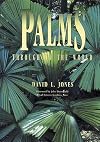
This book promised a lot but didn't really deliver. It is about palm trees throughout the world ....and there are a lot of them so clearly the task was not going to be easy. Basically there are two parts to the book. The first is a text introduction to palms; their botanical structure, economic importance, biology, cultivation, diseases and propagation. Generally this was well done but I was surprised that there is no actual botanical key....so it's pretty much impossible to classify any show more palm tree based on this book.There is a kind of a key on p11. but 10 groups are shown as having reduplicate leaf folding and pinnate leaf shape. In other words there is no way to distinguish between these 10 groups ....maybe containing over a thousand different species.
The second part of the book is a description (alphabetical order) of a range of palms that are commonly grown. When I was casually looking at the book, I noted the large number of coloured photos and thought that it would be comprehensive and that there would be one picture for each species. ...But No! It's more like one photo per 5 species. And the photos are not consistent. So we might have a photo of a mature plant or a juvenile plant or an inflorescence etc. Sometimes just a detail on the stem. And, whilst these photos are interesting themselves it's not very helpful looking at a picture of a young or juvenile plant and trying to picture how they might look after 30 years. (Having made this criticism, I must add that I do appreciate how difficult it is to get a comprehensive collection of pictures ....let alone a set that covers all the mature plants, or all the inflorescences/fruit etc. It is extremely difficult). Whilst the existing pictures may be of some help in identifying the named species...though this is doubtful.....they are of no use whatsoever in identifying the much larger number that only have a general description. I have another book titled the "Palms of Malaysia" and though much smaller than the current book, it has a good botanical key which makes it a lot more useful when trying to identify species.
I did learn some new things however, Initially I thought it was a mistake but Malesia is a name for a botanical area that covers Indonesia, Philippines .....and maybe Malaysia and PNG depending on the definitions adopted.
I also learned that there are probably about 2600 species in 200 genera of palm trees and that carnuba wax is obtained from the leaves of a palm tree. Also that the Nypa fruticans (or Mangrove palm) grows like a true mangrove in shallow estuaries and swampy soils. And many other facts that were new to me. So it was interesting despite some major weaknesses. I give it three stars. show less
The second part of the book is a description (alphabetical order) of a range of palms that are commonly grown. When I was casually looking at the book, I noted the large number of coloured photos and thought that it would be comprehensive and that there would be one picture for each species. ...But No! It's more like one photo per 5 species. And the photos are not consistent. So we might have a photo of a mature plant or a juvenile plant or an inflorescence etc. Sometimes just a detail on the stem. And, whilst these photos are interesting themselves it's not very helpful looking at a picture of a young or juvenile plant and trying to picture how they might look after 30 years. (Having made this criticism, I must add that I do appreciate how difficult it is to get a comprehensive collection of pictures ....let alone a set that covers all the mature plants, or all the inflorescences/fruit etc. It is extremely difficult). Whilst the existing pictures may be of some help in identifying the named species...though this is doubtful.....they are of no use whatsoever in identifying the much larger number that only have a general description. I have another book titled the "Palms of Malaysia" and though much smaller than the current book, it has a good botanical key which makes it a lot more useful when trying to identify species.
I did learn some new things however, Initially I thought it was a mistake but Malesia is a name for a botanical area that covers Indonesia, Philippines .....and maybe Malaysia and PNG depending on the definitions adopted.
I also learned that there are probably about 2600 species in 200 genera of palm trees and that carnuba wax is obtained from the leaves of a palm tree. Also that the Nypa fruticans (or Mangrove palm) grows like a true mangrove in shallow estuaries and swampy soils. And many other facts that were new to me. So it was interesting despite some major weaknesses. I give it three stars. show less
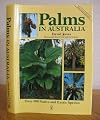
According to this book there are about 2500 species of palm in 236 genera in the world and Australia is relatively poor in Palms with about 57 species and twenty two genera. Of these, only 36 species are endemic.By contrast, New Caledonia hads about 30 species of palms. I think David jones covers all 576 species in some detail but I found the count rather difficult because of frequently confused species and the different genera being named. Anyway, he either has covered all species or come show more very close to it. So, in this sense, this book is superior to his Palms of the world which attempts to do the same sort of thing for the 2,500 world wide species...and obviously, this is a very different task (in a book which is not supposed to be a comprehensive botanical guide/key).
I liked this book. It covers the structure of palms ...including the nasty "wait a while" thorny climbing palm ...plus leaf, flower and fruit details and has significant sections relating to the cultivation and propagation of palms.
It's fairly squarely aimed at palm enthusiasts or nursery people or keen gardeners who wish to grow their own palms. For example he has a very significant section of over 50 pages, devoted to exotic palms which are now found in Australia. And he's also including a reasonably detailed appendix of palms suited to different environments ...which should make the task of the incipient landscape artist much easier. the flowering process is clearly complicated because the individual floors may be bisexual (hermaphrodite) or unisexual (having only one sexual part functional). There may be just one flower type on the whole inflorescence or there may be combinations of various flower types on an inflorescence. Sometimes the palms may be monoecious or sometimes dioecious. (Male and female on separate plants). So: pretty difficult to make sweeping statements about flowering. But he's got a reasonable botanical description and diagrams to illustrate the basic points. What I did miss was a cross section of a palm tree. I'm still curious about the distribution of the vascular bundles and how/why some of the palm manage to keep the same trunk diameter (more or less) up to a very great height.
Anyway, I liked the book even if it didn't give me all the answers I might have liked. And he seems to have covered the ground of featuring all the Australian species. So five stars from me. show less
I liked this book. It covers the structure of palms ...including the nasty "wait a while" thorny climbing palm ...plus leaf, flower and fruit details and has significant sections relating to the cultivation and propagation of palms.
It's fairly squarely aimed at palm enthusiasts or nursery people or keen gardeners who wish to grow their own palms. For example he has a very significant section of over 50 pages, devoted to exotic palms which are now found in Australia. And he's also including a reasonably detailed appendix of palms suited to different environments ...which should make the task of the incipient landscape artist much easier. the flowering process is clearly complicated because the individual floors may be bisexual (hermaphrodite) or unisexual (having only one sexual part functional). There may be just one flower type on the whole inflorescence or there may be combinations of various flower types on an inflorescence. Sometimes the palms may be monoecious or sometimes dioecious. (Male and female on separate plants). So: pretty difficult to make sweeping statements about flowering. But he's got a reasonable botanical description and diagrams to illustrate the basic points. What I did miss was a cross section of a palm tree. I'm still curious about the distribution of the vascular bundles and how/why some of the palm manage to keep the same trunk diameter (more or less) up to a very great height.
Anyway, I liked the book even if it didn't give me all the answers I might have liked. And he seems to have covered the ground of featuring all the Australian species. So five stars from me. show less
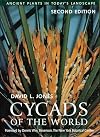
Cycads is a book both scientifically accurate yet very accessible to the ordinary reader. It covers all the known species of in the 11 genera of cycads. The introductory chapters of nearly 100pp included discussions on history and prehistory, conservation, the structure of cycads, economic importance, biology of cycads, cultivation, pests and diseases, propagation, and cycads for containers. There are three appendices: cycad synonyms, lists of authors and a selection of fossil cycads. The show more book includes a glossary, bibliography and index.
The bulk of the book, well over 300pp, however is devoted to the individual species, with precise descriptions including etymology, distribution and habitat, notes, cultivation and propagation. There are over 360 colour photographs in addition to black and white photographs, line drawings and maps.
It is a good size and very handsome volume, beautifully illustrated, informative and easy to read; with this book one would surely need for nothing more. show less
The bulk of the book, well over 300pp, however is devoted to the individual species, with precise descriptions including etymology, distribution and habitat, notes, cultivation and propagation. There are over 360 colour photographs in addition to black and white photographs, line drawings and maps.
It is a good size and very handsome volume, beautifully illustrated, informative and easy to read; with this book one would surely need for nothing more. show less
You May Also Like


Statistics
- Works
- 28
- Members
- 429
- Popularity
- #56,933
- Rating
- 4.2
- Reviews
- 8
- ISBNs
- 55
- Languages
- 2