
David Wolfe (1)
Author of Superfoods: The Food and Medicine of the Future
For other authors named David Wolfe, see the disambiguation page.
Works by David Wolfe
Associated Works
Pop! Goes the Witch: The Disinformation Guide to 21st Century Witchcraft (2004) — Contributor — 90 copies, 1 review
Tagged
Common Knowledge
- Gender
- male
Members
Reviews
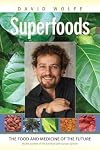
I have looked at the book, "Superfoods" by David Wolfe, on several levels. First, I was raised in the 1950's and 60's by a mother who was a fan of Adele Davis. I learned early on the importance of vitamins and minerals to go beyond "normal" to optimum health. As a young 20 something, my first husband and I purchased 75 acres in Georgia which had never had any pesticides or chemical fertilizers put on it so that we could build a homestead and have a true organic garden. During that time, I show more was a librarian and I combed the shelves of the college library where I worked to learn all that I could about nutrition, diet, and organic gardening. Later, this college started an unusual medical school, and I moved over to the medical library where I had access to even more information which I used as I carried my one and only child to a super babyhood. So, with all of this behind me, I got a copy of Superfoods to catch up on what has happened over the last 20 years that I have been out of touch with nutrition and scientific studies.
"Superfoods" has created a list of the top ten super foods, with seven additional runners up. Each chapter has a subtitle, giving the primary use of the food, a list of common and scientific names, allowing the reader to do more research, and a great deal of useful information in the body of the chapter. Each begins with history and legends of the food, where it comes from, cultural traditions, and differences when the food comes from different continents. Many color photos, some showing the author on location, allow the reader to see what the plant looks like in its usual setting. A laundry list follows of all of the benefits of using the food, with a few warnings when necessary if the food could cause harm to people with certain conditions like allergies, or age groups, like infants who cannot have honey. Shopping information is given for the reader to be able to find the optimum types of the food; in some cases preservation can destroy the very nutrient for which the food is sought. The final part of each chapter is a small selection of recipes using the food either in the raw state or in some form of preserved food, like a syrup or flour. Bold headings separate each part of the chapter making it easy for the reader to skim through for the part that interests them at the moment.
At the back of the book are some appendixes and an index. The section begins with a glossary for readers that are new to nutrition and natural foods, basically to assist in reading and using the recipes. The first appendix contains all of the scientific information on the 17 foods, listing all of their vitamin, mineral and amino acid content. Toxins, viruses and bacteria are listed when the food is effective in fighting disease or infection caused by these antigens, making this useful for someone dealing with any of them to supplement medical care and prescriptions. For further research, references to books are given on each of the foods. Appendix II covers scientific studies done on these foods, with a brief synopsis and a citation for the reader to get the complete article through their library.
The only drawback to this book that I can see is the index is not in depth. If a reader has a specific condition or disease caused by a certain bacterium or virus, they have to sift through the appendixes and search for the scientific name either in the studies appendix or in the nutritional information section. This is also necessary through the body of the book. This is the only reason I would want to have this book on CD instead of in paper format. Having it in paper makes it easy to take along on a trip to the health food store.
All in all, I find this book to be both interesting and useful. The most surprising thing I noticed that differs from the many books I read back in the 60's through the 90's is the introduction of a spiritual element that would have caused this book to be rejected even 10 years ago. Both the "history, facts and legends" part of some chapters and some sidebars mention Ayurvedic or Chinese Medicine uses of certain foods. These other traditions acknowledge that each plant is a living thing, having certain characteristics and an energy force. This energy is found in the food and transferred to the person eating or using it as a medicine. In my own experience, I have found this to be true, especially since produce from the mega-farms of today's agribusinesses cannot compete for flavor, texture, and food content with food grown in my own garden or on a traditional farm.
I highly recommend "Superfoods" both to the beginner starting out on a path to self responsibility for one's own health through diet and nutrition to the experienced health food consumer. The book is well written and easy to understand at any level of education, yet has all of the scientific testimony and vocabulary to back up the author's claims for each of the foods. The photos show the author literally out in the field, collecting the raw materials for his own use and research. Unlike books that may be written by people who never leave their offices, in "Superfoods," David Wolfe has done his research in the scientific setting and in the real world as well. show less
"Superfoods" has created a list of the top ten super foods, with seven additional runners up. Each chapter has a subtitle, giving the primary use of the food, a list of common and scientific names, allowing the reader to do more research, and a great deal of useful information in the body of the chapter. Each begins with history and legends of the food, where it comes from, cultural traditions, and differences when the food comes from different continents. Many color photos, some showing the author on location, allow the reader to see what the plant looks like in its usual setting. A laundry list follows of all of the benefits of using the food, with a few warnings when necessary if the food could cause harm to people with certain conditions like allergies, or age groups, like infants who cannot have honey. Shopping information is given for the reader to be able to find the optimum types of the food; in some cases preservation can destroy the very nutrient for which the food is sought. The final part of each chapter is a small selection of recipes using the food either in the raw state or in some form of preserved food, like a syrup or flour. Bold headings separate each part of the chapter making it easy for the reader to skim through for the part that interests them at the moment.
At the back of the book are some appendixes and an index. The section begins with a glossary for readers that are new to nutrition and natural foods, basically to assist in reading and using the recipes. The first appendix contains all of the scientific information on the 17 foods, listing all of their vitamin, mineral and amino acid content. Toxins, viruses and bacteria are listed when the food is effective in fighting disease or infection caused by these antigens, making this useful for someone dealing with any of them to supplement medical care and prescriptions. For further research, references to books are given on each of the foods. Appendix II covers scientific studies done on these foods, with a brief synopsis and a citation for the reader to get the complete article through their library.
The only drawback to this book that I can see is the index is not in depth. If a reader has a specific condition or disease caused by a certain bacterium or virus, they have to sift through the appendixes and search for the scientific name either in the studies appendix or in the nutritional information section. This is also necessary through the body of the book. This is the only reason I would want to have this book on CD instead of in paper format. Having it in paper makes it easy to take along on a trip to the health food store.
All in all, I find this book to be both interesting and useful. The most surprising thing I noticed that differs from the many books I read back in the 60's through the 90's is the introduction of a spiritual element that would have caused this book to be rejected even 10 years ago. Both the "history, facts and legends" part of some chapters and some sidebars mention Ayurvedic or Chinese Medicine uses of certain foods. These other traditions acknowledge that each plant is a living thing, having certain characteristics and an energy force. This energy is found in the food and transferred to the person eating or using it as a medicine. In my own experience, I have found this to be true, especially since produce from the mega-farms of today's agribusinesses cannot compete for flavor, texture, and food content with food grown in my own garden or on a traditional farm.
I highly recommend "Superfoods" both to the beginner starting out on a path to self responsibility for one's own health through diet and nutrition to the experienced health food consumer. The book is well written and easy to understand at any level of education, yet has all of the scientific testimony and vocabulary to back up the author's claims for each of the foods. The photos show the author literally out in the field, collecting the raw materials for his own use and research. Unlike books that may be written by people who never leave their offices, in "Superfoods," David Wolfe has done his research in the scientific setting and in the real world as well. show less
 This review was written for LibraryThing Early Reviewers.
This guy knows healthy food! What else would you expect from a man whose nickname is 'Avocado'? This is an enjoyable book with a lot of beautiful photos, and it is written in easy to read style. Wolfe picked his Top 10 Superfoods (like goji berries and raw chocolate - yum!) and devotes a chapter to each one. He explains the health benefits and includes recipes to show how to use each superfood in your diet. After the top 10 he includes 7 other superfoods - his 'honorable mentions.'
You can show more tell that he practices what he preaches. His motto is to eat healthy and have the 'Best Day Ever.' show less
You can show more tell that he practices what he preaches. His motto is to eat healthy and have the 'Best Day Ever.' show less
Oh, my- it has taken me years to get around to thins book. I will say that while this book is interesting, I think the jury is still out on most of the information and that it should be taken with a grain (or two) of salt- no pun intended. I do not see a whole lot of citations for current research into the validity of the claims and that is a bit worrisome to me. Also the difficulty to come by many of the items leads me to believe that only the people that shout from the rooftops about the show more awesome super powers of these foods are the "crunchy granola" folks. I think all foods have merits and what we all (as humans) need to do is eat a variety of foods from as many places as we can- vegan, vegetarian, pescatarian or omnivore- the more variation we have the healthier we shall be.
This is a great reference book for the items discussed and gives plenty of room for thought and consideration, but I do not see it as a bible for health "eat a goji berry and you will live forever and be a sexual dynamite". More like a travel guide of places to visit and the highlights of things to see and why. Then you can do the research and decide for yourself- but it is a great starting point for that further research.
I gave 2 stars, because while a useful reference, the recipes are too full of hard to find (you can mail order from someplace and wait 2 weeks) ingredients- rendering them virtually useless. they might be fantastic, but I am not going to order and pay shipping to see if a recipe is a "keeper". And secondly because of the lack of complete information on possible contrary opinions. (i.e. Soy was a miracle food, until it was put into EVERYTHING and the over saturation was causing thyroid complications in some people). show less
This is a great reference book for the items discussed and gives plenty of room for thought and consideration, but I do not see it as a bible for health "eat a goji berry and you will live forever and be a sexual dynamite". More like a travel guide of places to visit and the highlights of things to see and why. Then you can do the research and decide for yourself- but it is a great starting point for that further research.
I gave 2 stars, because while a useful reference, the recipes are too full of hard to find (you can mail order from someplace and wait 2 weeks) ingredients- rendering them virtually useless. they might be fantastic, but I am not going to order and pay shipping to see if a recipe is a "keeper". And secondly because of the lack of complete information on possible contrary opinions. (i.e. Soy was a miracle food, until it was put into EVERYTHING and the over saturation was causing thyroid complications in some people). show less
This review was written for LibraryThing Early Reviewers.This is an extremely important book for all of us who wish to live in a state of optimal health. And surely we all wish that!
It introduced me to the concept of superfoods and I have now begun to include more of them in my diet. (I’d already been using coconut products and Spirulina, without knowing they were actually “superfoods”.) This is contributing to my physical and in fact total transformation.
David’s top 10 superfoods are as follows: Goji berries, Cacao (raw chocolate), Maca, show more Bee products, Spirulina, AFA Super Blue-Green Algae, Marine phytoplankton, Aloe Vera, Hempseed and Coconuts.
Additionally, seven products which he awards “Honourable Mentions” are Acai (pronounced ah-SAH’ee), Camu Camu Berries, Chlorella, Incan Berries, Kelp, Noni and Yacon.
Superfoods comprise foods that have a dozen or more unique properties. They are both a food and a medicine – they are “a class of the most potent, super-concentrated, and nutrient-rich foods on the planet”.
Below I will indicate only a few of the most important attributes of each superfood.
1) Goji berries. These are some of the highest antioxidant –containing foods in the world. They contain polysaccharides, that fortify the immune system. There is evidence that they increase longevity. They have anti-inflammatory properties and enhance libido and sexual function.
2) Cacao (raw chocolate). I had heard that dark chocolate was health-giving, but hadn’t dreamt that it was a superfood. Cacao beans contain no sugar, and cacao is one of the great weight loss foods owing to its content of minerals and PEA (Phenylethylamine) molecules that shut off appetite (surprise, surprise!).
3) Maca. This is a member of the cruciferous family of plants that includes broccoli and cauliflower. It is grown for its root, and has been cultivated in the Peruvian Andes for over 2000 years. Maca is a powerful adaptogen which has the ability to stabilize the body’s “glandular-hormonal system, nervous system, cardiovascular system and musculature”. It is known to improve innumerable disorders and has aphrodisiac qualities,
4) Bee products. These include honey, pollen, royal jelly and propolis. These various products have also been known to relieve or cure innumerable disorders.
5) Spirulina. This belongs to a class of single-celled, blue-green algae, and contains “an astounding array of nutrients”, including chlorophyll, protein, vitamins, etc. etc. It consists of 65-71 percent protein, which is the highest concentration of protein found in any food. It is “a powerful tonic” for the immune system, and is the only green food rich in the essential fatty acid GLA (Gamma-linolenic acid).
6)AFA Super Blue-Green Algae. These algae (Alphanizomenon flos-aquae) are a type of wild blue-green algae that live in Klamath Lake, the largest lake in Oregon. They contain even more minerals, chlorophyll, phycocyanin, Vitamin C and essential fatty acids than Spirulina. The product is “one of the most digestible and utilizable protein foods in all of nature”. It is filled with chlorophyll and contains 40 major and trace minerals. AFA is a wild food, and the author states that the key solution to mineral deficiencies appears to be incorporating wild foods into our diet.
7)Marine phytoplankton. These are the smallest plant organisms found on Earth. Marine phytoplankton forms the basis of the Earth’s food chain. It is the best “plant-based source of long-chain omega-3 fatty acids” and “a natural source of wide-spectrum, plant-based vitamins, minerals, antioxidants, polysaccharides, and protein”. It is an ideal detoxification tool, helps you lose excess weight, improves memory, normalizes blood sugar, etc. etc.
8)Aloe Vera. The gel of raw aloe vera helps alleviate all sorts of digestive problems and is effective at killing yeast (Candida), It reduces inflammation, radiation sickness, cancer, heart disease and diabetes.
9)Hempseed. Hemp is “one of the most nutritious food sources on the planet”. It contains all the essential amino and fatty acids. It is one of the few seeds that contain chlorophyll.
10)Coconuts. Coconut products can “save your life”. They improve digestion and contain antiviral, antifungal and antimicrobial fatty acids. The saturated fat in coconut oil is in the form of medium-chain fatty acids (MCFAs) which support the immune system, the thyroid gland, nervous system, etc. Coconut water is wonderful for rehydration. (I myself drink coconut water every day without fail, and it removes all symptoms of the Crohn’s disease from which I suffer – and I use only coconut oil for cooking.)
Due to lack of space I will not go into the properties of the seven excellent products given an “Honourable Mention” by David.
This wonderful book has been an absolute eye-opener for me. It has introduced me to Goji berries, the amazing properties of Cacao, Maca, the healing properties of bee products and above all AFA blue-green algae and marine phytoplankton, which I feel to be the most powerful of the superfoods and which I hope will help me the most with detoxification and healing.
David presents an extremely informational overview of all aspects of the various superfoods, including historical, biological and other scientific facts, the benefits of each food, its healing properties, its nutrient contents specified in detail, how to use the products, what types to look for, recommended dosages and pages and pages of appetizing recipes. The book includes innumerable beautiful photos.
It is an amazing, invaluable and beautiful handbook. It is extremely well-written except for a few problems as regards whether the word “algae” is in singular or plural form. It is actually a plural form (“alga” is the singular form), but he uses it as both.
The book contains extremely detailed, informative and invaluable appendices listing the exact nutritional content of all the mentioned products and references to scientific studies. I found the quality of the book to be excellent.
I also applaud David for helping the public to gain access to these products – he is contributing to our health and longevity in innumerable ways! I look forward to reading his coming book on super herbs. show less
It introduced me to the concept of superfoods and I have now begun to include more of them in my diet. (I’d already been using coconut products and Spirulina, without knowing they were actually “superfoods”.) This is contributing to my physical and in fact total transformation.
David’s top 10 superfoods are as follows: Goji berries, Cacao (raw chocolate), Maca, show more Bee products, Spirulina, AFA Super Blue-Green Algae, Marine phytoplankton, Aloe Vera, Hempseed and Coconuts.
Additionally, seven products which he awards “Honourable Mentions” are Acai (pronounced ah-SAH’ee), Camu Camu Berries, Chlorella, Incan Berries, Kelp, Noni and Yacon.
Superfoods comprise foods that have a dozen or more unique properties. They are both a food and a medicine – they are “a class of the most potent, super-concentrated, and nutrient-rich foods on the planet”.
Below I will indicate only a few of the most important attributes of each superfood.
1) Goji berries. These are some of the highest antioxidant –containing foods in the world. They contain polysaccharides, that fortify the immune system. There is evidence that they increase longevity. They have anti-inflammatory properties and enhance libido and sexual function.
2) Cacao (raw chocolate). I had heard that dark chocolate was health-giving, but hadn’t dreamt that it was a superfood. Cacao beans contain no sugar, and cacao is one of the great weight loss foods owing to its content of minerals and PEA (Phenylethylamine) molecules that shut off appetite (surprise, surprise!).
3) Maca. This is a member of the cruciferous family of plants that includes broccoli and cauliflower. It is grown for its root, and has been cultivated in the Peruvian Andes for over 2000 years. Maca is a powerful adaptogen which has the ability to stabilize the body’s “glandular-hormonal system, nervous system, cardiovascular system and musculature”. It is known to improve innumerable disorders and has aphrodisiac qualities,
4) Bee products. These include honey, pollen, royal jelly and propolis. These various products have also been known to relieve or cure innumerable disorders.
5) Spirulina. This belongs to a class of single-celled, blue-green algae, and contains “an astounding array of nutrients”, including chlorophyll, protein, vitamins, etc. etc. It consists of 65-71 percent protein, which is the highest concentration of protein found in any food. It is “a powerful tonic” for the immune system, and is the only green food rich in the essential fatty acid GLA (Gamma-linolenic acid).
6)AFA Super Blue-Green Algae. These algae (Alphanizomenon flos-aquae) are a type of wild blue-green algae that live in Klamath Lake, the largest lake in Oregon. They contain even more minerals, chlorophyll, phycocyanin, Vitamin C and essential fatty acids than Spirulina. The product is “one of the most digestible and utilizable protein foods in all of nature”. It is filled with chlorophyll and contains 40 major and trace minerals. AFA is a wild food, and the author states that the key solution to mineral deficiencies appears to be incorporating wild foods into our diet.
7)Marine phytoplankton. These are the smallest plant organisms found on Earth. Marine phytoplankton forms the basis of the Earth’s food chain. It is the best “plant-based source of long-chain omega-3 fatty acids” and “a natural source of wide-spectrum, plant-based vitamins, minerals, antioxidants, polysaccharides, and protein”. It is an ideal detoxification tool, helps you lose excess weight, improves memory, normalizes blood sugar, etc. etc.
8)Aloe Vera. The gel of raw aloe vera helps alleviate all sorts of digestive problems and is effective at killing yeast (Candida), It reduces inflammation, radiation sickness, cancer, heart disease and diabetes.
9)Hempseed. Hemp is “one of the most nutritious food sources on the planet”. It contains all the essential amino and fatty acids. It is one of the few seeds that contain chlorophyll.
10)Coconuts. Coconut products can “save your life”. They improve digestion and contain antiviral, antifungal and antimicrobial fatty acids. The saturated fat in coconut oil is in the form of medium-chain fatty acids (MCFAs) which support the immune system, the thyroid gland, nervous system, etc. Coconut water is wonderful for rehydration. (I myself drink coconut water every day without fail, and it removes all symptoms of the Crohn’s disease from which I suffer – and I use only coconut oil for cooking.)
Due to lack of space I will not go into the properties of the seven excellent products given an “Honourable Mention” by David.
This wonderful book has been an absolute eye-opener for me. It has introduced me to Goji berries, the amazing properties of Cacao, Maca, the healing properties of bee products and above all AFA blue-green algae and marine phytoplankton, which I feel to be the most powerful of the superfoods and which I hope will help me the most with detoxification and healing.
David presents an extremely informational overview of all aspects of the various superfoods, including historical, biological and other scientific facts, the benefits of each food, its healing properties, its nutrient contents specified in detail, how to use the products, what types to look for, recommended dosages and pages and pages of appetizing recipes. The book includes innumerable beautiful photos.
It is an amazing, invaluable and beautiful handbook. It is extremely well-written except for a few problems as regards whether the word “algae” is in singular or plural form. It is actually a plural form (“alga” is the singular form), but he uses it as both.
The book contains extremely detailed, informative and invaluable appendices listing the exact nutritional content of all the mentioned products and references to scientific studies. I found the quality of the book to be excellent.
I also applaud David for helping the public to gain access to these products – he is contributing to our health and longevity in innumerable ways! I look forward to reading his coming book on super herbs. show less
You May Also Like


Associated Authors
Statistics
- Works
- 9
- Also by
- 1
- Members
- 447
- Popularity
- #54,864
- Rating
- 3.8
- Reviews
- 14
- ISBNs
- 87
- Languages
- 6
- Favorited
- 5
