
Gwyn Thomas (1) (1913–1981)
Author of The Dark Philosophers
For other authors named Gwyn Thomas, see the disambiguation page.
About the Author
Gwyn Thomas was born in Cymmer, Wales on July 6, 1913. He was educated at the University of Oxford and at Complutense University of Madrid. He wrote 16 books during his lifetime including All Things Betray Thee, The Alone to the Alone, and The World Cannot Hear You. He also wrote six plays show more including The Keep and an autobiography entitled A Few Selected Exits. He died on April 13, 1981 at the age of 67. (Bowker Author Biography) show less
Image credit: BBC
Works by Gwyn Thomas
Leaves in the wind 4 copies
A wolf at dusk,: A novel 2 copies
Associated Works
Tagged
Common Knowledge
- Birthdate
- 1913-07-06
- Date of death
- 1981-04-14
- Gender
- male
- Occupations
- novelist
playwright - Short biography
- Gwyn Thomas (6 July 1913 – 13 April 1981) was a Welsh writer who has been called 'the true voice of the English-speaking valleys'.
- Nationality
- UK
- Birthplace
- Cymmer, Wales
- Place of death
- Cardiff, Wales
- Associated Place (for map)
- Wales
Members
Reviews

Thomas shows us the lives of half a dozen or so main characters in a small Welsh town. The coal mines are closed and most folks live on public assistance. What's left of the labor unions seems like the core of the town's culture. Various religious sects move through too with revivals etc.
To what extent can a person really just buckle down and work hard and make themselves successful, despite a start in such bleak surroundings? And if a person does make themselves such a success, is it to show more the detriment of others? Maybe it is better just to accept the limits that one's circumstances impose, and just find some simple happiness within those limits.
Thomas gives us an excellent story to explore questions like this. His characters are always reflecting on the unfolding of events. There is some good connivance, too, where the real schemers are playing with various presentations of events to try to win the support or cooperation of others.
The language of this novel really sparkles. Practically every paragraph has some colorful analogy. Through the whole novel, these never get stale or repetitious. It's a real tour de force in that dimension.
This novel was a great pleasure to read and a thoughtful exploration of some core universal issues. It's a colorful portrayal of bottom-dogs living in a decaying Welsh mining town. show less
To what extent can a person really just buckle down and work hard and make themselves successful, despite a start in such bleak surroundings? And if a person does make themselves such a success, is it to show more the detriment of others? Maybe it is better just to accept the limits that one's circumstances impose, and just find some simple happiness within those limits.
Thomas gives us an excellent story to explore questions like this. His characters are always reflecting on the unfolding of events. There is some good connivance, too, where the real schemers are playing with various presentations of events to try to win the support or cooperation of others.
The language of this novel really sparkles. Practically every paragraph has some colorful analogy. Through the whole novel, these never get stale or repetitious. It's a real tour de force in that dimension.
This novel was a great pleasure to read and a thoughtful exploration of some core universal issues. It's a colorful portrayal of bottom-dogs living in a decaying Welsh mining town. show less

“All Things Betray Thee” wears its bleeding heart on the pages:
“We are the something that happens, Katherine. If we are still, the world’s a desert.”
Is stuffed with aphorisms:
“A man pinned under a rock will show bruises, if not understanding.”
And gleams in a sun epiphanic and restless:
“I’ve heard of such men, Eddie. I’m not like them. The feel of other men’s lives is rough as sandstone on my face. I dodge away from it, that’s the great aim of all my breathing. I give show more as little of a damn for whether they find salvation as for whether they find gold or dung or amethyses or smallpox or whatever it is they feel will belly out their lives. But I’m glad such men exist as feel the fever of a boundless misery. Somehow, somewhere, I suppose they keep the root of something watered, something that off and on serves as a magnet even for the slowest, daftest feet.” show less
“We are the something that happens, Katherine. If we are still, the world’s a desert.”
Is stuffed with aphorisms:
“A man pinned under a rock will show bruises, if not understanding.”
And gleams in a sun epiphanic and restless:
“I’ve heard of such men, Eddie. I’m not like them. The feel of other men’s lives is rough as sandstone on my face. I dodge away from it, that’s the great aim of all my breathing. I give show more as little of a damn for whether they find salvation as for whether they find gold or dung or amethyses or smallpox or whatever it is they feel will belly out their lives. But I’m glad such men exist as feel the fever of a boundless misery. Somehow, somewhere, I suppose they keep the root of something watered, something that off and on serves as a magnet even for the slowest, daftest feet.” show less
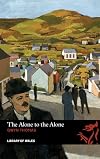
The only way to give you a genuine idea of this book is to quote it -- extensively, which I'll refrain from overdoing. The Alone to the Alone is endearing and funny, and the grey reality of its subject matter only serves to emphasise the warmth and humour of the book itself. It does gymnastics with language without even touching the edge of self-conscious pretentiousness (at least as I see it).
His complacency, between the whisky and the way we stood there dumbly listening, had reached a show more fresh peak. His face looked the cosiest thing on earth. With leather binding on the ears to take the strain one could have sat on it and felt grateful.
As for plot, well, it's set in Wales, in the slums, during the Great Depression. It's about love and poverty; unemployment and the Government; justice and injustice, with a greater emphasis on the latter. It's a political book, and decidedly left-wing. There is anger in this novel, but it's veiled by a sort of ironic garrulousness - and the resigned tone of the narrative voice is perhaps its greatest charm.
We were seeking, without wealth, influence or a map, for the materials of a new social understanding aimed at something lower than love, a muddied concept, but fixed beyond the chilling reach of envy and contempt. A large order as all know who have taken more than half a dozen steps beyond the cradle. Now here was this Shadrach measuring our rhapsody for the hatchet and describing us as woodlice. We gave the term some thought for we had never been called that in the afternoon before. We are larger, fairer-skinned and faster. We eat no wood unless it has been thoroughly ground beforehand...
Gwyn Thomas reminds me a lot of Ruth Park - but that comparison would give a slightly skewed idea of either author. Still, think of The Harp in the South, and you've got something at least similar to The Alone to the Alone, only the latter is funnier, has more elastic language, and verges oh so slightly on the absurd.
I'm not sure why others feel there isn't an ending to this book; it was satisfying to me. Those who deserve it most get their come-uppance, and there is a much-needed avoidance of a fairytale happy-ever-after. show less
His complacency, between the whisky and the way we stood there dumbly listening, had reached a show more fresh peak. His face looked the cosiest thing on earth. With leather binding on the ears to take the strain one could have sat on it and felt grateful.
As for plot, well, it's set in Wales, in the slums, during the Great Depression. It's about love and poverty; unemployment and the Government; justice and injustice, with a greater emphasis on the latter. It's a political book, and decidedly left-wing. There is anger in this novel, but it's veiled by a sort of ironic garrulousness - and the resigned tone of the narrative voice is perhaps its greatest charm.
We were seeking, without wealth, influence or a map, for the materials of a new social understanding aimed at something lower than love, a muddied concept, but fixed beyond the chilling reach of envy and contempt. A large order as all know who have taken more than half a dozen steps beyond the cradle. Now here was this Shadrach measuring our rhapsody for the hatchet and describing us as woodlice. We gave the term some thought for we had never been called that in the afternoon before. We are larger, fairer-skinned and faster. We eat no wood unless it has been thoroughly ground beforehand...
Gwyn Thomas reminds me a lot of Ruth Park - but that comparison would give a slightly skewed idea of either author. Still, think of The Harp in the South, and you've got something at least similar to The Alone to the Alone, only the latter is funnier, has more elastic language, and verges oh so slightly on the absurd.
I'm not sure why others feel there isn't an ending to this book; it was satisfying to me. Those who deserve it most get their come-uppance, and there is a much-needed avoidance of a fairytale happy-ever-after. show less
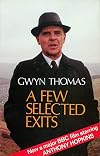
Gwyn (ga-win) Thomas. What a funny man! I feel totally unqualified in wit and Welsh lore to review this "autobiography of sorts" by this genius of Wales. But not so unqualified to laugh at his comedic brilliance, which combines the charm of Garrison Keillor's loving but ambivalent Tales of Lake Wobegon with the schtick of Woody Allen - the intellectual who is always put just a little bit off balance by the ways of the worldly.
Thomas's rambling memoir is comprised of recollections and show more character sketches from periods in his life as a youth in Wales, as a foreign student in Spain, as a schoolteacher, as a budding playwright, and as a TV celebrity, in the BBC show The Brain Trust.
But it's his voice, vacillating between poetry and philosophy, as much as his trove of anecdotes, that makes compelling reading. For example, Thomas writes, of his struggle to find a theme for a commissioned play:
"But my mind came back to the place where it abidingly belongs: South Wales. I wanted a play that would paint the true face of sensuality, rebellion, and religious revivalism; roaring debauch, intemperate petulance, and whimpering hangover. In South Wales, these three phenomena have played second fiddle only to hernia viewed as a way of life, bandy-legs stemming from lack of protein and a compelling urge to walk with a kind of lecherous strut, sex viewed as an aspect of gunmanship, and the Rugby Union as a distillation of the lot, brutal Old Testament ferocity tempered by the curious Greek moods of men crowded together in a steaming post-match bath and a night of beer-logged piety."
In 1993, the BBC produced a film, Selected Exits, based on this book. The film featured Sir Anthony Hopkins. Curiously, and sadly, the BBC never followed up with a DVD release of production. This perverse twist would likely not surprise Thomas. The chapter of the book dealing with his career in television, entitled "See one miracle and you've seen the lot" is perhaps its most biting. To sum up his views on the medium: "If you want to qualify for a lifebelt of benzedrine, try a little TV commentary and interviewing.
Did I mention that Gwyn Thomas is known primarily for his novels and stories? That's because I seem to have backed into the man, by reading his autobiography first. But this sort of slapstick meeting seems to have been a perfect introduction to this gifted and comic writer. Feel free to make the same mistake. show less
Thomas's rambling memoir is comprised of recollections and show more character sketches from periods in his life as a youth in Wales, as a foreign student in Spain, as a schoolteacher, as a budding playwright, and as a TV celebrity, in the BBC show The Brain Trust.
But it's his voice, vacillating between poetry and philosophy, as much as his trove of anecdotes, that makes compelling reading. For example, Thomas writes, of his struggle to find a theme for a commissioned play:
"But my mind came back to the place where it abidingly belongs: South Wales. I wanted a play that would paint the true face of sensuality, rebellion, and religious revivalism; roaring debauch, intemperate petulance, and whimpering hangover. In South Wales, these three phenomena have played second fiddle only to hernia viewed as a way of life, bandy-legs stemming from lack of protein and a compelling urge to walk with a kind of lecherous strut, sex viewed as an aspect of gunmanship, and the Rugby Union as a distillation of the lot, brutal Old Testament ferocity tempered by the curious Greek moods of men crowded together in a steaming post-match bath and a night of beer-logged piety."
In 1993, the BBC produced a film, Selected Exits, based on this book. The film featured Sir Anthony Hopkins. Curiously, and sadly, the BBC never followed up with a DVD release of production. This perverse twist would likely not surprise Thomas. The chapter of the book dealing with his career in television, entitled "See one miracle and you've seen the lot" is perhaps its most biting. To sum up his views on the medium: "If you want to qualify for a lifebelt of benzedrine, try a little TV commentary and interviewing.
Did I mention that Gwyn Thomas is known primarily for his novels and stories? That's because I seem to have backed into the man, by reading his autobiography first. But this sort of slapstick meeting seems to have been a perfect introduction to this gifted and comic writer. Feel free to make the same mistake. show less
You May Also Like


Associated Authors
Statistics
- Works
- 21
- Also by
- 1
- Members
- 191
- Popularity
- #114,254
- Rating
- 4.1
- Reviews
- 10
- ISBNs
- 95
- Languages
- 2