
Martin Bailey (1) (1947–)
Author of The Folio Society Book of the 100 Greatest Paintings
For other authors named Martin Bailey, see the disambiguation page.
Works by Martin Bailey
The Pet Parade 1 copy
Letters from Provence 1 copy
Associated Works
Tagged
Common Knowledge
- Canonical name
- Bailey, Martin
- Birthdate
- 1947-10-26
- Gender
- male
- Education
- University of Sussex (B.A.|1969)
London School of Economics (Ph.D|1974) - Occupations
- journalist
art historian
Van Gogh specialist
investigative reporter for The Art Newspaper - Organizations
- The Art Newspaper
- Nationality
- UK
- Birthplace
- London, England, UK
- Associated Place (for map)
- England, UK
Members
Reviews

Van Gogh's Finale is the last volume on Van Gogh's time in France from Martin Bailey and may well be the most interesting. Which is saying a lot since I found the others very good. If you're interested, the others are The Sunflowers are Mine, Studio of the South, and Starry Night.
It has almost become cliché to pronounce how much one likes Van Gogh's work or how often we have visited the museum or walked some part of his own life's path, so many of us have that it really means very little. show more What it does signify, however, is how deeply and how personally his work has touched so many people. Take any ten of us who admire his work and visited sites, museum or otherwise, just to feel a bit closer, and you'll likely get ten very different ways in which his life and work touched us. And there lies a large part of his popularity.
This volume covers the last days of his life, and the final burst of creativity that produced many of his best works. In addition to the many paintings he produced as many drawings in that time as well. Yet this was how he worked once he became an artist. He seemed to know he would not live a long life so had to paint at almost every moment, or at least be thinking about his next painting.
If you are familiar with the weak, but popularized, theory that he was accidentally shot rather than committed suicide, Bailey presents the evidence that pretty much makes that argument impossible. It is hard to accidentally shoot someone if you've already left town. In addition to that simple fact there are plenty of logical reasons to not believe the other story.
I found particularly fascinating the story of how, after death, he and his work steadily gained in popularity. This section of the book may well be my favorite single section of all four of Bailey's books. Again, I found the rest to be engrossing as well but the reception, popular and critical, just happens to be what grabbed me this time through the book.
I would highly recommend this to anyone with an interest in art in general and in Van Gogh in particular. The writing is very good and the illustrations are great. A beautiful addition to any library.
Reviewed from a copy made available by the publisher via NetGalley. show less
It has almost become cliché to pronounce how much one likes Van Gogh's work or how often we have visited the museum or walked some part of his own life's path, so many of us have that it really means very little. show more What it does signify, however, is how deeply and how personally his work has touched so many people. Take any ten of us who admire his work and visited sites, museum or otherwise, just to feel a bit closer, and you'll likely get ten very different ways in which his life and work touched us. And there lies a large part of his popularity.
This volume covers the last days of his life, and the final burst of creativity that produced many of his best works. In addition to the many paintings he produced as many drawings in that time as well. Yet this was how he worked once he became an artist. He seemed to know he would not live a long life so had to paint at almost every moment, or at least be thinking about his next painting.
If you are familiar with the weak, but popularized, theory that he was accidentally shot rather than committed suicide, Bailey presents the evidence that pretty much makes that argument impossible. It is hard to accidentally shoot someone if you've already left town. In addition to that simple fact there are plenty of logical reasons to not believe the other story.
I found particularly fascinating the story of how, after death, he and his work steadily gained in popularity. This section of the book may well be my favorite single section of all four of Bailey's books. Again, I found the rest to be engrossing as well but the reception, popular and critical, just happens to be what grabbed me this time through the book.
I would highly recommend this to anyone with an interest in art in general and in Van Gogh in particular. The writing is very good and the illustrations are great. A beautiful addition to any library.
Reviewed from a copy made available by the publisher via NetGalley. show less
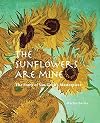
Why the description refers to "the most iconic image" when there were actually seven? I suppose most people think of Van Gogh's sunflower paintings as one painting. Van Gogh painted four images of sunflowers when he was in Arles, ostensibly to decorate the house and Gauguin's room when his friend was coming to stay. These are Three Sunflowers, Six Sunflowers, Fourteen Sunflowers, and Fifteen Sunflowers. Later he painted a copy of Fourteen Sunflowers which he signed, a copy of Fifteen show more Sunflowers which he signed, and another copy of Fifteen Sunflowers which he did not sign. None of the copies are identical to the originals so you can clearly tell them apart.
This book explains how he painted these masterpieces and why they are masterpieces. If you are not well versed in art, it helps you to understand how to look at and appreciate these paintings and provides many excellent color illustrations as well as some old photos. It also explains his life during this time, what happened to all these paintings after his death, and his legacy to the art world (other painters) and to the world in general (collectors and people like us who go to museums to see these paintings and buy the reproductions to have in our homes).
It's a wonderful book, clearly well researched, interesting, intelligently written, and easy to read. I do, however, have one criticism. Bailey talks about van Gogh's death as a suicide, which has been the accepted version. But new information came out in the brilliant book Van Gogh: The Life by Steven Naifeh and Gregory White Smith that convincingly explains why suicide is unlikely and that what is far more likely is that he was shot by a young person who was summering in the village. The fact that the gun was never found, would be one fact in favor of this theory, but there are other factors as well (trajectory of the bullet and more). When I read that, I was convinced. Evidently Bailey was not. He does refer briefly to the theory that Vincent was shot by someone, only mentioning that there is a new biography that presents this theory without even mentioning the title or name of the authors.
I've always liked those sunflower paintings. Now I like them even more. Poor Vincent. He couldn't imagine how beloved his paintings would become. show less
This book explains how he painted these masterpieces and why they are masterpieces. If you are not well versed in art, it helps you to understand how to look at and appreciate these paintings and provides many excellent color illustrations as well as some old photos. It also explains his life during this time, what happened to all these paintings after his death, and his legacy to the art world (other painters) and to the world in general (collectors and people like us who go to museums to see these paintings and buy the reproductions to have in our homes).
It's a wonderful book, clearly well researched, interesting, intelligently written, and easy to read. I do, however, have one criticism. Bailey talks about van Gogh's death as a suicide, which has been the accepted version. But new information came out in the brilliant book Van Gogh: The Life by Steven Naifeh and Gregory White Smith that convincingly explains why suicide is unlikely and that what is far more likely is that he was shot by a young person who was summering in the village. The fact that the gun was never found, would be one fact in favor of this theory, but there are other factors as well (trajectory of the bullet and more). When I read that, I was convinced. Evidently Bailey was not. He does refer briefly to the theory that Vincent was shot by someone, only mentioning that there is a new biography that presents this theory without even mentioning the title or name of the authors.
I've always liked those sunflower paintings. Now I like them even more. Poor Vincent. He couldn't imagine how beloved his paintings would become. show less
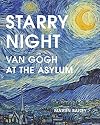
Starry Night by Martin Bailey is a wonderful exploration of this period of Van Gogh's life.
It seems like whenever I reread one of Bailey's books on Van Gogh's time in France (The Sunflowers are Mine, Studio of the South, Starry Night, and Van Gogh's Finale) it becomes my new favorite. I can offer some reasons why this one qualifies.
First, I think this period of his work is my favorite and a beautifully illustrated book like this is sure to appeal to me. Coupled with well-written accounts of show more his stay and his thoughts makes this both visually and intellectually interesting.
Second, exploring the grounds and his fellow patients through Bailey's research gives wonderful insight into what helped him create such exquisite pieces of art. Plus, it gave me several opportunities to go off on tangents. For example, his painting of the long hallway and his thought that, if the building were someplace else, it would make an ideal exhibit space, made me think about exhibit spaces. I mentally went back and thought about how I work my way through various layouts, more or less structured paths through the exhibits. Yeah, I go off by myself sometimes, but I enjoy it.
Third, and this is really just me being odd, it always brings Don McLean to mind and I sing Vincent for days. Even my dogs get tired of it, but the song is great. Anyway, back to the book.
I would recommend this, as well as Bailey's other books on Van Gogh, to anyone with even a passing interest in him. The illustrations are wonderful and the text brings the life and times of Van Gogh into vivid light.
Reviewed from a copy made available by the publisher via NetGalley. show less
It seems like whenever I reread one of Bailey's books on Van Gogh's time in France (The Sunflowers are Mine, Studio of the South, Starry Night, and Van Gogh's Finale) it becomes my new favorite. I can offer some reasons why this one qualifies.
First, I think this period of his work is my favorite and a beautifully illustrated book like this is sure to appeal to me. Coupled with well-written accounts of show more his stay and his thoughts makes this both visually and intellectually interesting.
Second, exploring the grounds and his fellow patients through Bailey's research gives wonderful insight into what helped him create such exquisite pieces of art. Plus, it gave me several opportunities to go off on tangents. For example, his painting of the long hallway and his thought that, if the building were someplace else, it would make an ideal exhibit space, made me think about exhibit spaces. I mentally went back and thought about how I work my way through various layouts, more or less structured paths through the exhibits. Yeah, I go off by myself sometimes, but I enjoy it.
Third, and this is really just me being odd, it always brings Don McLean to mind and I sing Vincent for days. Even my dogs get tired of it, but the song is great. Anyway, back to the book.
I would recommend this, as well as Bailey's other books on Van Gogh, to anyone with even a passing interest in him. The illustrations are wonderful and the text brings the life and times of Van Gogh into vivid light.
Reviewed from a copy made available by the publisher via NetGalley. show less
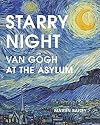
Beautifully put together and exceedingly well researched, the book is a total delight for all who love the art of Vincent van Gogh and are interested to know more about the man behind the canvas, who, for a substantial part of his life lived in agony, mostly with himself.
Starry Night offers a closer look at the time the painter spent in Saint-Paul de Mausole, a small asylum in France on the outskirts of Saint-Rémy-de-Provence.
In fact, the place is just 25 km/16 miles away from Arles, where show more van Gogh had previously shared the famous Yellow House together with Gauguin. There exists a book by Martin Gayford which tells of nine turbulent weeks, as that's basically how long it lasted, until after a final fallout Gauguin moved out, with the result of van Gogh suffering a severe breakdown and cutting off his left ear.
Short after his release from hospital he admits himself to the small asylum at the foot of Les Alpilles (the little Alps), where he spent a bit over a year. A time of intense and painful creativity and where he created in June 1889 one of his most famous paintings "Starry Night". A time, where he also tried to poison himself by swallowing the colours he used for those paintings.
Author Martin Bailey, an expert on van Gogh's life, takes the reader on a fascinating journey, which is gripping and touching at the same time and we follow Vincent through the "Harrowing Period".
The chapter "The Wheatfield" is for a fan simply a must, as we see a group of paintings on which the artist worked in 1889 during his time in the asylum and which capture a view he had from the studio room, an extra room, that was allocated to him in the institution to enable him to continue to paint. We see the same scene in the changing seasons and without doubt also reflecting good and bad days of the painter himself.
But what exactly happenend leading up to van Gogh's moment of madness and self harm? And was it really his free will to go to the asylum?
How did he feel upon his arrival, when he saw the place for the first time? A place about which he wrote himself "One continually hears shouts and terrible howls as of animals in a menagerie."
What was his treatment like, the other patients, his daily routine? Why did his brother Theo never visit him?
Endless questions and carefully the author unravels mystery after mystery.
The fluent writing has you hooked from the start.
The illustrations and photos, together with never before published material are often jawdropping.
There's even a map to offer the visitor of the place and its surrounds an idea for a most enjoyable walk along Vincent's path at this very painful time in his life.
To say, I love the book, doesn't cover it. Starry Night is simply one of my highlights of the year, every page is a delight. show less
Starry Night offers a closer look at the time the painter spent in Saint-Paul de Mausole, a small asylum in France on the outskirts of Saint-Rémy-de-Provence.
In fact, the place is just 25 km/16 miles away from Arles, where show more van Gogh had previously shared the famous Yellow House together with Gauguin. There exists a book by Martin Gayford which tells of nine turbulent weeks, as that's basically how long it lasted, until after a final fallout Gauguin moved out, with the result of van Gogh suffering a severe breakdown and cutting off his left ear.
Short after his release from hospital he admits himself to the small asylum at the foot of Les Alpilles (the little Alps), where he spent a bit over a year. A time of intense and painful creativity and where he created in June 1889 one of his most famous paintings "Starry Night". A time, where he also tried to poison himself by swallowing the colours he used for those paintings.
Author Martin Bailey, an expert on van Gogh's life, takes the reader on a fascinating journey, which is gripping and touching at the same time and we follow Vincent through the "Harrowing Period".
The chapter "The Wheatfield" is for a fan simply a must, as we see a group of paintings on which the artist worked in 1889 during his time in the asylum and which capture a view he had from the studio room, an extra room, that was allocated to him in the institution to enable him to continue to paint. We see the same scene in the changing seasons and without doubt also reflecting good and bad days of the painter himself.
But what exactly happenend leading up to van Gogh's moment of madness and self harm? And was it really his free will to go to the asylum?
How did he feel upon his arrival, when he saw the place for the first time? A place about which he wrote himself "One continually hears shouts and terrible howls as of animals in a menagerie."
What was his treatment like, the other patients, his daily routine? Why did his brother Theo never visit him?
Endless questions and carefully the author unravels mystery after mystery.
The fluent writing has you hooked from the start.
The illustrations and photos, together with never before published material are often jawdropping.
There's even a map to offer the visitor of the place and its surrounds an idea for a most enjoyable walk along Vincent's path at this very painful time in his life.
To say, I love the book, doesn't cover it. Starry Night is simply one of my highlights of the year, every page is a delight. show less
Lists
Awards

You May Also Like


Associated Authors
Statistics
- Works
- 19
- Also by
- 1
- Members
- 961
- Popularity
- #26,791
- Rating
- 4.2
- Reviews
- 21
- ISBNs
- 63
- Languages
- 4