
John Erskine (1) (1879–1951)
Author of The Private Life of Helen of Troy
For other authors named John Erskine, see the disambiguation page.
About the Author
Image credit: Columbia College Today
Works by John Erskine
I tre amori di Lancillotto 4 copies
Mrs. Doratt, a novel 3 copies
A Short History of American Literature Based on The Cambridge History of American Literature by William Peterfield Trent, John Erskine, Stuart P. Sherman, & Carl Van Doren, Eds. (2015) — Editor — 3 copies
Collected poems, 1907-1922 1 copy
The voyage of Captain Bart 1 copy
Contemporary war poems — Introduction — 1 copy
Actæon, and other poems 1 copy
Associated Works
The Teaching Experience: An Introduction to Education Through Literature (1976) — Contributor — 1 copy
Tagged
Common Knowledge
- Birthdate
- 1879-10-05
- Date of death
- 1951-06-02
- Gender
- male
- Education
- Columbia University
- Occupations
- teacher
novelist
musician - Organizations
- Century Association
National Institute of Arts and Letters
Poetry Society
Modern Language Association
Authors League - Awards and honors
- Phi Beta Kappa
American Academy of Arts and Letters - Birthplace
- New York, New York, USA
- Places of residence
- New York, New York, USA
- Place of death
- New York, New York, USA
- Associated Place (for map)
- New York, New York, USA
Members
Reviews

https://fromtheheartofeurope.eu/the-private-life-of-helen-of-troy-by-john-erskin...
This was the best-selling book in the USA in 1926, a hundred years ago, so I got hold of it and read it. It’s a bit of a gem – almost entirely told in dialogue, with very little description of the scenery, Helen has nonchalantly returned home with Menelaus after the war and is confronted with the emotional resentment of their daughter Hermione, who sees her mother’s scandalous behaviour as the root of show more all her problems, but incidentally is in love with her cousin Orestes, who starts killing people (notably his mother, Helen’s sister Clytemnestra) in the last part of the book.
Despite the grim storyline, it’s actually rather funny, with Helen bringing 1920s sensibilities to a dark mythic past. It’s anachronistic, but one can totally see her quipping to her relatives and associates over her cigarette-holder. And her message is one of empowerment: she is unashamed of her love affair with Paris; it didn’t work out, so she is back with Menelaus. She is then challenged to apply the same standards to Hermione, and to another young woman in her household who becomes pregnant, but in the end succeeds in doing so, and we cheer for her. Menelaus (and his doorkeeper Eteoneus who provides an alternative old-fashioned viewpoint) are left confused by her confidence. Rather an interesting find. show less
This was the best-selling book in the USA in 1926, a hundred years ago, so I got hold of it and read it. It’s a bit of a gem – almost entirely told in dialogue, with very little description of the scenery, Helen has nonchalantly returned home with Menelaus after the war and is confronted with the emotional resentment of their daughter Hermione, who sees her mother’s scandalous behaviour as the root of show more all her problems, but incidentally is in love with her cousin Orestes, who starts killing people (notably his mother, Helen’s sister Clytemnestra) in the last part of the book.
Despite the grim storyline, it’s actually rather funny, with Helen bringing 1920s sensibilities to a dark mythic past. It’s anachronistic, but one can totally see her quipping to her relatives and associates over her cigarette-holder. And her message is one of empowerment: she is unashamed of her love affair with Paris; it didn’t work out, so she is back with Menelaus. She is then challenged to apply the same standards to Hermione, and to another young woman in her household who becomes pregnant, but in the end succeeds in doing so, and we cheer for her. Menelaus (and his doorkeeper Eteoneus who provides an alternative old-fashioned viewpoint) are left confused by her confidence. Rather an interesting find. show less
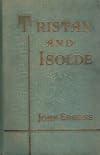
Rating: 4* of five
The Book Report: I cannot conceive that anyone who can type "www.LibraryThing.com" does not know the story of Tristan and Isolde, so I won't recap it here.
Palomedes/Palamede needs some explanation. He was the insertion of a thirteenth-century author into the Arthurian mythos, the Stranger Who Calls and stays. He was the son of a pagan king who, being educated by his father's Christian slave, decides to set off for Christendom and see what he can see. In Erskine's show more beautifully wrought novel, Palamede is more honorable and Christian than that adulterous lout Tristan; in the antique version, he's the close-second parfit gentil knight, the foil of His Perfectness Tristan.
I like Erskine's version a lot better.
My Review: John Erskine published this book in 1932. It wasn't a terribly optimistic time in American history, and that sense of gloom-and-doom is reflected in his use of the perfect outsider commenting on the foibles of the smug, self-satisfied host Westerners. They're all nobility, so equivalent to the plutocrats who, in that more enlightened time, got the proper degree of blame and suffered the proper degree of economic punishment (unlike our own pusillanimous age, fearful of taxing the wealthiest entities at appropriate levels); Erskine isn't in any way shy about blasting the bad behavior, selfishness, and all-around turpitude of these small-souled greed machines.
I *batten* on his outrage. I share it.
Well, anyway, should you read it? Yes. Yes indeed. It is beautifully, simply written, and it's an evergreen plot. Marvelous stuff. Save it from obscurity, and read it soon. show less
The Book Report: I cannot conceive that anyone who can type "www.LibraryThing.com" does not know the story of Tristan and Isolde, so I won't recap it here.
Palomedes/Palamede needs some explanation. He was the insertion of a thirteenth-century author into the Arthurian mythos, the Stranger Who Calls and stays. He was the son of a pagan king who, being educated by his father's Christian slave, decides to set off for Christendom and see what he can see. In Erskine's show more beautifully wrought novel, Palamede is more honorable and Christian than that adulterous lout Tristan; in the antique version, he's the close-second parfit gentil knight, the foil of His Perfectness Tristan.
I like Erskine's version a lot better.
My Review: John Erskine published this book in 1932. It wasn't a terribly optimistic time in American history, and that sense of gloom-and-doom is reflected in his use of the perfect outsider commenting on the foibles of the smug, self-satisfied host Westerners. They're all nobility, so equivalent to the plutocrats who, in that more enlightened time, got the proper degree of blame and suffered the proper degree of economic punishment (unlike our own pusillanimous age, fearful of taxing the wealthiest entities at appropriate levels); Erskine isn't in any way shy about blasting the bad behavior, selfishness, and all-around turpitude of these small-souled greed machines.
I *batten* on his outrage. I share it.
Well, anyway, should you read it? Yes. Yes indeed. It is beautifully, simply written, and it's an evergreen plot. Marvelous stuff. Save it from obscurity, and read it soon. show less

Rating: 3.75* of five
The Book Report: The story of Humanity, its divine origins and willful fall into mere mortal status, from the point of view of Adam. Detailing the relationships Adam has with God, Lilith, and Eve, the story expands upon the Biblical account to portray the ages and stages of a man's journey to adulthood. The parable ends with the birth of Cain, and we all know how THAT turned out.
My Review: Lilith, poor lamb, doesn't come across too well in this explanation of why Mankind show more is the way it is. I myownself would have preferred a humanity descended from Lilith's free-spirited sexually voracious self to one descended from Eve's pursey-mouthed, tight-assed control freakishness. But then I've always declined to accept female exceptionalism, viewing the proper position of the toilet seat to be the one the owner of the house chooses.
*ahem* Moving on.
If you can find this lovely book, you should read it. Author Erskine was a craftsman of a high order. He built lovely sentences, told a tale with great facility, and illuminated with a lovely lamplight glow the conditions of man's journey into posterity. His view of the relations between the genders is very much a traditional Western one, as is to be expected in a book written in the Twenties, published in 1927, and not by some horny Irish dude. In its day, in fact, it was probably considered racy because Lilith is a sexy beast; the way around it was to make Lilith soulless, a charge I contest based on the textual evidence of Erskine's own writing. I suppose it was merely a pragmatic solution to the howls of outrage he could have expected from the Moral Mother's Brigade of Decency Through Misery and Repression and the Union of Outraged Womanhood or whatever they called themselves then, had he portrayed Lilith sympathetically.
Still, the finest moment in the book, in my opinion, comes when Eve has delivered Cain...the first ever infant, keep in mind...and the newborn has colic for the first time. (Parents of infants past and present are now wincing and cringing in sympathy, I will wager.)
"Perhaps the nearness of death, even when you think you are happy, might serve to measure the importance of what you are doing. Beside the plight of his son, what were the pin-pricks of fate he had so far endured? As against the boy's life, what small matters were his adventures with nature and with the animals, and the women! He wouldn't mind dying now himself, if it would help the child." (p337, hardcover 1927 edition)
And there it is. The reason men don't rebel en masse and say so long to the tyranny of the feminine.
We love our children too much to seriously think about it. show less
The Book Report: The story of Humanity, its divine origins and willful fall into mere mortal status, from the point of view of Adam. Detailing the relationships Adam has with God, Lilith, and Eve, the story expands upon the Biblical account to portray the ages and stages of a man's journey to adulthood. The parable ends with the birth of Cain, and we all know how THAT turned out.
My Review: Lilith, poor lamb, doesn't come across too well in this explanation of why Mankind show more is the way it is. I myownself would have preferred a humanity descended from Lilith's free-spirited sexually voracious self to one descended from Eve's pursey-mouthed, tight-assed control freakishness. But then I've always declined to accept female exceptionalism, viewing the proper position of the toilet seat to be the one the owner of the house chooses.
*ahem* Moving on.
If you can find this lovely book, you should read it. Author Erskine was a craftsman of a high order. He built lovely sentences, told a tale with great facility, and illuminated with a lovely lamplight glow the conditions of man's journey into posterity. His view of the relations between the genders is very much a traditional Western one, as is to be expected in a book written in the Twenties, published in 1927, and not by some horny Irish dude. In its day, in fact, it was probably considered racy because Lilith is a sexy beast; the way around it was to make Lilith soulless, a charge I contest based on the textual evidence of Erskine's own writing. I suppose it was merely a pragmatic solution to the howls of outrage he could have expected from the Moral Mother's Brigade of Decency Through Misery and Repression and the Union of Outraged Womanhood or whatever they called themselves then, had he portrayed Lilith sympathetically.
Still, the finest moment in the book, in my opinion, comes when Eve has delivered Cain...the first ever infant, keep in mind...and the newborn has colic for the first time. (Parents of infants past and present are now wincing and cringing in sympathy, I will wager.)
"Perhaps the nearness of death, even when you think you are happy, might serve to measure the importance of what you are doing. Beside the plight of his son, what were the pin-pricks of fate he had so far endured? As against the boy's life, what small matters were his adventures with nature and with the animals, and the women! He wouldn't mind dying now himself, if it would help the child." (p337, hardcover 1927 edition)
And there it is. The reason men don't rebel en masse and say so long to the tyranny of the feminine.
We love our children too much to seriously think about it. show less
Well, it wasn't the salacious version that the title would seem to promise. It's got a certain homage to pay to Noel Coward and Oscar Wilde. Menelaus did forgive her and take her back home again after all that sailing and killing. So how does one live with her after that? Erskine's urbanity is a treasure.
Lists
Awards

You May Also Like


Associated Authors
Statistics
- Works
- 47
- Also by
- 11
- Members
- 556
- Popularity
- #44,899
- Rating
- 3.6
- Reviews
- 19
- ISBNs
- 76
- Languages
- 3