
Joseph Frank (1) (1918–2013)
Author of Dostoevsky: A Writer in His Time
For other authors named Joseph Frank, see the disambiguation page.
About the Author
Joseph Frank is the author of an award-winning multivolume biography of Dostoevsky. (Bowker Author Biography) Joseph Frank, was born Joseph Nathaniel Glassman on the Lower East Side of Manhattan on October 6, 1918. He never earned a bachelor's degree, but attended classes at New York University and show more briefly studied at the University of Wisconsin. In 1942, he took an editorial job in Washington at the Bureau of National Affairs, a publisher of informational journals on legislation, policy and like subjects. Throughout the 1940s, he published essays and criticism in literary journals. Spatial Form in Modern Literature, which was a discussion of experimental treatments of space and time by Eliot, Joyce, Proust, Pound and others was published in The Sewanee Review in 1945 and propelled him to prominence as a theoretician. He went to Paris on a Fulbright scholarship in 1950. In 1952, he was accepted by the Committee on Social Thought at the University of Chicago, where he eventually received a Ph.D. He taught at numerous universities including the University of Minnesota, Rutgers University, Princeton University, and Stanford University. His five-volume life of Fyodor Dostoevsky is frequently cited among the greatest of 20th-century literary biographies. In 2009, he published a one-volume synopsis of the entire opus entitled Dostoevsky: A Writer in His Time. He died from pulmonary failure on February 27, 2013 at the age of 94. (Bowker Author Biography) show less
Series
Works by Joseph Frank
Associated Works
Crime and Punishment [Norton Critical Edition, 3rd ed.] (1989) — Contributor — 1,334 copies, 6 reviews
Tagged
Common Knowledge
- Legal name
- Frank, Joseph Nathaniel
- Birthdate
- 1918-10-06
- Date of death
- 2013-02-27
- Gender
- male
- Education
- New York University
University of Wisconsin
University of Paris
University of Chicago (PhD) - Occupations
- professor (Comparative Literature and Slavic Languages and Literatures)
- Organizations
- University of Minnesota
Rutgers University
Princeton University
Stanford University - Awards and honors
- American Academy of Arts and Letters Academy Award (Literature, 1958)
- Short biography
- Married to Maguerite Frank, with two daughters, Claudine and Isabelle.
- Nationality
- USA
- Birthplace
- New York, New York, USA
- Places of residence
- Paris, France
Chicago, Illinois, USA - Place of death
- Palo Alto, California, USA
- Map Location
- New York, USA
Members
Reviews
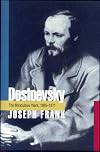
In which he knuckles down to writing novels. He marries his stenographer who seems to be the doormat-type. Yes, but see the last instalment of his life; and he's absolutely desperate to deliver his novels by deadline. Guess what the forfeit is if he doesn't? Abrogation of his rights to any profit from future works for the next ten years. So he hired a stenographer to go faster... and kept her. Most of the rest of this book is crit on the novels. What else did he have time for?
D. writes: "I show more am convinced that not a single one of our writers, whether past or present, ever wrote under the conditions in which I am continuously forced to write. Turgenev would die at the very thought." He also wrote, "My epilepsy has worsened so much that if I work for a week without interruption I have an attack, and the next week I cannot work because the result of two or three attacks would be -- apoplexy. And yet I must finish. That's my situation."
I find Frank's crit on the turgid side, but he's made me think of the novels as "ideological tragedies". I always knew they were about people driven mad by ideas, ideas worse than the people are: I guess he’s getting me more specific, as I slog through 50 pages on Crime & Punishment. Since Frank details the ideologies bubbling at the time, you see how Dostoyevsky extrapolated or pursued ideas to consquences no-one else had seen. Obviously people objected to that. 'Excuse me, we don't believe in knocking pawnbrokers on the head.' But that's the novelist's eyes, beyond ideology to what used to be called the universal human, eh? And why he makes sense to me, vital sense, and seems to be about ideas I’ve struck or half-had in my life, not what he found in a newspaper in Russia 1866. show less
D. writes: "I show more am convinced that not a single one of our writers, whether past or present, ever wrote under the conditions in which I am continuously forced to write. Turgenev would die at the very thought." He also wrote, "My epilepsy has worsened so much that if I work for a week without interruption I have an attack, and the next week I cannot work because the result of two or three attacks would be -- apoplexy. And yet I must finish. That's my situation."
I find Frank's crit on the turgid side, but he's made me think of the novels as "ideological tragedies". I always knew they were about people driven mad by ideas, ideas worse than the people are: I guess he’s getting me more specific, as I slog through 50 pages on Crime & Punishment. Since Frank details the ideologies bubbling at the time, you see how Dostoyevsky extrapolated or pursued ideas to consquences no-one else had seen. Obviously people objected to that. 'Excuse me, we don't believe in knocking pawnbrokers on the head.' But that's the novelist's eyes, beyond ideology to what used to be called the universal human, eh? And why he makes sense to me, vital sense, and seems to be about ideas I’ve struck or half-had in my life, not what he found in a newspaper in Russia 1866. show less
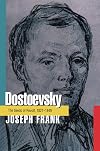
Though the event is not actually depicted or described in Seeds of Revolt, the specter of Russian uber-novelist Fyodor Dostoevsky's arrest, mock execution and sentence to Siberia looms large over this first of Joseph Frank's five-volume biography of the man. This should not be a spoiler for anyone; this fact and its timing (1849) are quite possibly the best-known and most-talked-about biographical detail in all Dostoevskiana, mentioned in every introduction, foreword, sketch and essay I've show more ever seen about the man. I might say it's as impossible not to know Dostoevsky was sent to Siberia as it is not to know that he wrote The Brothers Karamozov and Crime and Punishment, but then I run the risk of wandering into bless-me-what-do-they-teach-at-these-schools-ism.
What is not generally known to the casual Dostoevsky fan (which is what I would call myself; I certainly could not hold forth with Michael at Pink's for any length of time*) is the details of why and how this pivotal event came to happen. Enter the redoubtable Joseph Frank, whose staggering work I learned of, as is probably the case with everyone in my cliques and circles, through an essay by the late and much-lamented David Foster Wallace.** And before you ask, yes, I plan to read the other four volumes, for having completed this one I find myself a much less casual Dostoevsky fan and a Frank fan as well.
Frank could definitely go toe-to-toe with Michael at Pink's, and wouldn't even have to serve up a hot dog to keep the ordinary punter's attention while he did so.
As I said, the arrest looms large over this account, ominous and always feeling just around the corner even as Doestoevsky grows up with his strict father, suffers through military school, attracts the praise and attention of the great critic Vissarion Belinsky with his first novel Poor Folk (which I have yet to read but now very much want to) and then falls out with him, takes up other, nicer friends and watches them move away, writes, writes and writes and always wrings his hands over the plight of the enslaved peasantry of Russia (among whom he had had mostly happy formative experiences as a boy on his family's little estate) -- and then meets Petrashevsky, he of the circle accused of subversion and revolution and all sorts of other things that autocratic regimes do not like.
Frank's painstaking examination of the Petrashevsky circle -- a very informal salon in which members of the intelligentsia gathered of a Friday night to talk Socialist ideas, religion, politics and, occasionally, literature -- frankly gave me the chills, not so much because of what happened to them per se, or how they conducted themselves or what they talked about as what they resembled: they resembled Twitter, if not the entire internet. Everybody got a chance to spout off or argue, there was rarely a set agenda, anyone who wanted to could participate (within limits, of course, the physical and temporal ones of St. Petersburg of the 1840s. Of course.), anyone could get sucked in and, potentially (and later actually), everyone could become tarred with the same brush. So when some members started up a secret society with the aim of actually staging a revolution in Russia, everybody got busted.
Back then, of course, the government had to work hard at it, to infiltrate the circle with an actual person hanging out at actual gatherings at specific times; nowadays, we've turned everything inside-out, having our conversations in full public view, asynchronously, trusting the First Amendment and the odd pseudonymous identity and that those in power won't confuse rhetoric with intent. This may be very foolish of us. Especially as things like NDAA have been allowed to happen. I do not fear being mock-shot or sent to Siberia, but I do fear an internet fettered and stunted by corporate/government interests, or being cut off from it and thus my world. I fear falling into the prison of my own flesh.***
Such are the dark thoughts a good Dostoevsky biography can inspire. And this one is very, very good. And, as I said, I'm itching to get my hands on the other four volumes.
And I'll be sleeping with one eye open, and tweeting with a little more concern (though I'm sure I already damned myself long ago out of my own typing fingers. I've always been free with my opinions, and have paid the price for this before when they were misconstrued, misunderstood, or just unpopular). Dostoevsky was not a revolutionary or even much of a socialist, Frank says, but if you got him going defending literature that wasn't written purely as a dialectical tool for social reform, or, worse, on the plight of the peasantry, then he could potentially wind up out in the streets screaming and waving a red flag. As a friend of mine once observed, some people have buttons to push, others have a whole keyboard. Unca Fyodor had perhaps a modestly sized keyboard; mine is vast and varied).
But what of it, Orson Welles might ask. Go on singing.
*Wink wink at Unca Harlan Ellison, the modern writer of whom I was most reminded as I read this biography of Unca Fyodor. Go get your hands on a copy of Angry Candy, far and away my favorite of his short story collections and the one containing the amusing and awesome "Prince Myshkin and Hold the Relish."
**Which appears in his last essay collection Consider the Lobster, if you're wondering. I could not find a link to the complete text online. The book is worth acquiring or at least reading, though, and not just for the Frank/Dostoevsky piece!
***Wink wink at William Gibson. Of course. show less
What is not generally known to the casual Dostoevsky fan (which is what I would call myself; I certainly could not hold forth with Michael at Pink's for any length of time*) is the details of why and how this pivotal event came to happen. Enter the redoubtable Joseph Frank, whose staggering work I learned of, as is probably the case with everyone in my cliques and circles, through an essay by the late and much-lamented David Foster Wallace.** And before you ask, yes, I plan to read the other four volumes, for having completed this one I find myself a much less casual Dostoevsky fan and a Frank fan as well.
Frank could definitely go toe-to-toe with Michael at Pink's, and wouldn't even have to serve up a hot dog to keep the ordinary punter's attention while he did so.
As I said, the arrest looms large over this account, ominous and always feeling just around the corner even as Doestoevsky grows up with his strict father, suffers through military school, attracts the praise and attention of the great critic Vissarion Belinsky with his first novel Poor Folk (which I have yet to read but now very much want to) and then falls out with him, takes up other, nicer friends and watches them move away, writes, writes and writes and always wrings his hands over the plight of the enslaved peasantry of Russia (among whom he had had mostly happy formative experiences as a boy on his family's little estate) -- and then meets Petrashevsky, he of the circle accused of subversion and revolution and all sorts of other things that autocratic regimes do not like.
Frank's painstaking examination of the Petrashevsky circle -- a very informal salon in which members of the intelligentsia gathered of a Friday night to talk Socialist ideas, religion, politics and, occasionally, literature -- frankly gave me the chills, not so much because of what happened to them per se, or how they conducted themselves or what they talked about as what they resembled: they resembled Twitter, if not the entire internet. Everybody got a chance to spout off or argue, there was rarely a set agenda, anyone who wanted to could participate (within limits, of course, the physical and temporal ones of St. Petersburg of the 1840s. Of course.), anyone could get sucked in and, potentially (and later actually), everyone could become tarred with the same brush. So when some members started up a secret society with the aim of actually staging a revolution in Russia, everybody got busted.
Back then, of course, the government had to work hard at it, to infiltrate the circle with an actual person hanging out at actual gatherings at specific times; nowadays, we've turned everything inside-out, having our conversations in full public view, asynchronously, trusting the First Amendment and the odd pseudonymous identity and that those in power won't confuse rhetoric with intent. This may be very foolish of us. Especially as things like NDAA have been allowed to happen. I do not fear being mock-shot or sent to Siberia, but I do fear an internet fettered and stunted by corporate/government interests, or being cut off from it and thus my world. I fear falling into the prison of my own flesh.***
Such are the dark thoughts a good Dostoevsky biography can inspire. And this one is very, very good. And, as I said, I'm itching to get my hands on the other four volumes.
And I'll be sleeping with one eye open, and tweeting with a little more concern (though I'm sure I already damned myself long ago out of my own typing fingers. I've always been free with my opinions, and have paid the price for this before when they were misconstrued, misunderstood, or just unpopular). Dostoevsky was not a revolutionary or even much of a socialist, Frank says, but if you got him going defending literature that wasn't written purely as a dialectical tool for social reform, or, worse, on the plight of the peasantry, then he could potentially wind up out in the streets screaming and waving a red flag. As a friend of mine once observed, some people have buttons to push, others have a whole keyboard. Unca Fyodor had perhaps a modestly sized keyboard; mine is vast and varied).
But what of it, Orson Welles might ask. Go on singing.
*Wink wink at Unca Harlan Ellison, the modern writer of whom I was most reminded as I read this biography of Unca Fyodor. Go get your hands on a copy of Angry Candy, far and away my favorite of his short story collections and the one containing the amusing and awesome "Prince Myshkin and Hold the Relish."
**Which appears in his last essay collection Consider the Lobster, if you're wondering. I could not find a link to the complete text online. The book is worth acquiring or at least reading, though, and not just for the Frank/Dostoevsky piece!
***Wink wink at William Gibson. Of course. show less
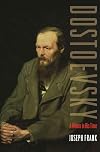
All definitive biography of undoubtedly one of the greatest novelist to ever put pen to paper, the shining lodestar that marks the 19th century Russian literature as of the most important epochs in world history.
His love for family and additive gambling, his epilepsy and violent literary disputes, his Siberian imprisonment and being a tutor to a czar, his reactionary youth circle to an adult nationalist, his miserly worldly existence and other worldly pride, paint him as much of a character show more as he writes his characters.
We see a flicker of the Prince and Stavrogin in the same man , a bit of Alyosha and some Sonya, Rodya and the underground man in this chronic gambler leading a double life in a village among the poor folks. show less
His love for family and additive gambling, his epilepsy and violent literary disputes, his Siberian imprisonment and being a tutor to a czar, his reactionary youth circle to an adult nationalist, his miserly worldly existence and other worldly pride, paint him as much of a character show more as he writes his characters.
We see a flicker of the Prince and Stavrogin in the same man , a bit of Alyosha and some Sonya, Rodya and the underground man in this chronic gambler leading a double life in a village among the poor folks. show less
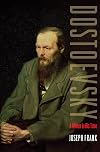
This is an almost perfect book: Frank combines fascinating history, insightful biography and above average literary criticism perfectly. I'm literally speechless; the only book I can think of to put beside this is MacDiarmid's 'Christianity: the first three thousand years,' which is similarly clear, stimulating, beautifully written and finely structured.
Aside from giving us a model for literary biographies, Frank also manages (possibly without knowing it) to write a perfect guidebook for show more writing novels: combine a deep fascination with your own time, an interest in human psychology, deep moral convictions, and a concern for the Big Ideas of human life in general. Then work your butt off. I'd like to think someone out there has managed to do that without being quite the twat that Dostoevsky became (yes- Russia (and by 'Russia' he of course means 'Orthodox peasants') will save the world). But I have no evidence of that as yet. If you like Dostoevsky's novels at all, this is well worth the effort.
Fun things that Dostoevsky said:
"You feel that one must have perpetual spiritual resistance and negation so as not to surrender, not to submit to the impression, not to bow before the fact and deify Baal, that is, not to accept the existing as one's own ideal." (376)
"The people are always the people.... but here you no longer see a people, but the systematic, submissive and induced lack of consciousness." (378)
"It is necessary to assume as author someone omniscient and faultless, who holds up to the view of all one of hte members of hte new generation." (480)
"'it is not worth doing good int eh world, for it is said, it will be destroyed.' There's something foolhardy and dishonest in this idea. Most of all, it's a very convenient idea for ordinary behavior: since everything is doomed, why exert oneself, why love to do good? Live for your paunch." (843) show less
Aside from giving us a model for literary biographies, Frank also manages (possibly without knowing it) to write a perfect guidebook for show more writing novels: combine a deep fascination with your own time, an interest in human psychology, deep moral convictions, and a concern for the Big Ideas of human life in general. Then work your butt off. I'd like to think someone out there has managed to do that without being quite the twat that Dostoevsky became (yes- Russia (and by 'Russia' he of course means 'Orthodox peasants') will save the world). But I have no evidence of that as yet. If you like Dostoevsky's novels at all, this is well worth the effort.
Fun things that Dostoevsky said:
"You feel that one must have perpetual spiritual resistance and negation so as not to surrender, not to submit to the impression, not to bow before the fact and deify Baal, that is, not to accept the existing as one's own ideal." (376)
"The people are always the people.... but here you no longer see a people, but the systematic, submissive and induced lack of consciousness." (378)
"It is necessary to assume as author someone omniscient and faultless, who holds up to the view of all one of hte members of hte new generation." (480)
"'it is not worth doing good int eh world, for it is said, it will be destroyed.' There's something foolhardy and dishonest in this idea. Most of all, it's a very convenient idea for ordinary behavior: since everything is doomed, why exert oneself, why love to do good? Live for your paunch." (843) show less
Lists
Awards


You May Also Like


Associated Authors
Statistics
- Works
- 15
- Also by
- 4
- Members
- 1,765
- Popularity
- #14,582
- Rating
- 4.2
- Reviews
- 14
- ISBNs
- 71
- Languages
- 7
- Favorited
- 1
