
John Lloyd (1) (1951–)
Author of The Book of General Ignorance
For other authors named John Lloyd, see the disambiguation page.
About the Author
John Lloyd produced Not the Nine O'Clock New, the Blackadders, and Spitting Image. (Publisher Provided)
Series
Works by John Lloyd
The Book of the Dead: Lives of the Justly Famous and the Undeservedly Obscure (2009) 613 copies, 12 reviews
If Ignorance Is Bliss, Why Aren't There More Happy People?: Smart Quotes for Dumb Times (2009) 144 copies, 2 reviews
QI: The B Series 6 copies
Series 3 [DVD] [2008] 4 copies
Associated Works
The Hitchhiker's Guide to the Galaxy 6: Hexagonal Phase: BBC Radio 4 Full Cast Dramatisation (2018) — Narrator — 38 copies
Tagged
Common Knowledge
- Canonical name
- Lloyd, John
- Legal name
- Lloyd, John Hardress Wilfred
- Birthdate
- 1951-09-30
- Gender
- male
- Education
- University of Cambridge (Trinity College ∙ Law)
The King's School, Canterbury
West Hill Park School, Titchfield, Hampshire, England, UK - Occupations
- producer
writer
presenter - Organizations
- BBC
- Awards and honors
- Order of the British Empire (Commander, 2011)
- Relationships
- Adams, Douglas (flatmate & friend)
- Nationality
- UK
- Birthplace
- Dover, England, UK
- Map Location
- England, UK
Members
Reviews
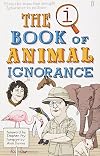
Like sliced ginger between sushi courses, it's tough to imagine a more tasty [brain] cleanse than this, which forces away all heavy thoughts in favor of repeatedly drawing focus to the miracle that is our existence and the delightful entities that cohabitate with us on this very weird, very beautiful planet.
Each of the hundred "chapters" is a headlining animal, a couple of sentences debunking misconceptions of same, a couple of sober facts, and, frequently, a couple of silly facts. show more Admittedly, it annoys the bejeezus out of the part of my brain that thinks reading should be productive, but I can't even listen to that part when I'm internally giggling and occasionally calling out to my daughter something like: "Did you know porcupines can be taught to dance?" (see quote)
The answer to all such questions, by the way, is: "yes, and also [some other crazy fact that may also be in the book but sometimes isn't]". Apparently animal science classes are way more fun than they were in my day. show less
Each of the hundred "chapters" is a headlining animal, a couple of sentences debunking misconceptions of same, a couple of sober facts, and, frequently, a couple of silly facts. show more Admittedly, it annoys the bejeezus out of the part of my brain that thinks reading should be productive, but I can't even listen to that part when I'm internally giggling and occasionally calling out to my daughter something like: "Did you know porcupines can be taught to dance?" (see quote)
The answer to all such questions, by the way, is: "yes, and also [some other crazy fact that may also be in the book but sometimes isn't]". Apparently animal science classes are way more fun than they were in my day. show less
Il libro dell'ignoranza. Che cosa è verità e che cosa è semplicemente una panzana? Il libro-gioco che svela le nostre false conoscenze by John Lloyd

Il problema di questo libro è smettere di leggerlo. Idealmente, andrebbe a fianco de "L'originale miscellanea di Schott", per la cacofonia di informazioni condensate a volte in una unica risposta a domande assolutamente banali e scontate. E' curioso, documentato, insolito, utile. Ogni tanto bisogna mettere i puntini sulle "i", e questo libro lo fa, scardinando i luoghi comuni che - tra le altre cose - fanno di Amerigo Vespucci il navigatore da cui prese nome l'America, identificano lo show more struzzo come l'animale che mette la testa sotto la sabbia, e identificano la Svezia come una nazione ad alto tasso di suicidi. show less
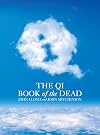
There's a cute statistical argument for predicting when the End of Days will occur, it goes something like this. Suppose you reach into my pocket and pull out some balls. Oi, no giggling, this is serious maths. I've got a number of balls in my pocket, and the balls are numbered 1, 2, 3, etc. up to the number of balls. If I have ten balls they're numbered one to ten, if I have a thousand balls they're numbered one to a thousand, if I have a billion balls then I have big pockets.
I don't tell show more you how many balls I have, but I will let you take three of my balls. So you dive in and pluck out three balls, and they have on them three numbers, for argument's sake let's say they're numbered 6, 7, and 46. Your task is to estimate how many balls I had in my pocket to start with. Clearly there must have been at least 46 since you found the 46th ball. But presumably not lots more than 46. If there were, say, a billion balls then it'd be incredibly strange that all the ones you found were so low in number. A statistical argument suggests that it's most likely there were about 60 balls given these three draws. If you're interested I used Wolfram Alpha to simulate the experiment and get those numbers, and I simulated it with 56 balls. Not bad, eh?
What's this got to do with the End of Days? Well replace balls with humans. Every human that's ever lived and that will ever live was/will be born in some order, so let's dispense with these illogical “names” we all have and just give everyone a number based on when we were born, a kind of human serial number. The first ever mutant homo sapiens sapiens to pop out of a startled homo sapiens idaltu will be number 1. You and I are numbered somewhere around 100 billion. And so on. Now suppose humanity, as a species, somehow manages to survive everything that nature, the Universe, and itself can throw at it. Suppose that humanity survives for billions more years, colonises the galaxy, and eventually numbers in the trillions. By the time we reach that stage the total number of humans that have ever lived will be in the quadrillions, maybe the quintillions. That's a lot of illions. If that's the case then the chances of me, number 100 billion, being alive right now is vanishingly small. Like me having a thousand numbered balls in my pocket and you picking out three balls numbered less than 1.
One explanation for this is that you and I are statistical anomalies, freaks living on the very edge of the bell curve. We're a hundred fair coin tosses coming up as a hundred heads: utterly implausible but not absolutely impossible. Another explanation is that we're nothing special. We were born at a statistically typical time. If that's the case then we can use the same maths as with the balls-in-my-pocket situation to determine that there won't be quadrillions of humans in the future, in fact the human race will die out in about 10 000 years sometime around the birth of human number 1.2 trillion.
It's an interesting argument because it's obviously totally wrong, but it's not difficult to learn enough maths to corroborate the argument, while spotting the problem with the statistics is rather more tricky. Still, if you believe the argument then you can accept that, roughly speaking, there are currently ten billion living humans, a hundred billion dead humans, and a thousand billion humans yet to be born. This QI Book of the Dead is a work of non-fiction so looks at a few dozen of those hundred billion dead humans. (Books about the humans that haven't been born yet are called “fiction”. Books about still living humans straddle the line between the two genres.)
The brief biographies get a little samey (kid overcomes adversity to become amazing adult – if they're male then they're probably gay) but it's not the authors' fault if we humans tend to fall into the same patterns over and over. Besides, the book is best dipped into sporadically rather than devoured in a single sitting. And (quite) interesting though it is, it's really a gateway book. You know the kind of thing. You're at a party one night and suddenly someone starts passing it around. “Go on,” they whisper, “just give it a little try.” Peer pressure conquers all so you take in a few pages, trying not to inhale. Then suddenly: BANG. You're reading a thousand page treatise on Ignácz Trebitsch Lincoln and a Richard Feynmann book on quantum electrodynamics. You have been warned. show less
I don't tell show more you how many balls I have, but I will let you take three of my balls. So you dive in and pluck out three balls, and they have on them three numbers, for argument's sake let's say they're numbered 6, 7, and 46. Your task is to estimate how many balls I had in my pocket to start with. Clearly there must have been at least 46 since you found the 46th ball. But presumably not lots more than 46. If there were, say, a billion balls then it'd be incredibly strange that all the ones you found were so low in number. A statistical argument suggests that it's most likely there were about 60 balls given these three draws. If you're interested I used Wolfram Alpha to simulate the experiment and get those numbers, and I simulated it with 56 balls. Not bad, eh?
What's this got to do with the End of Days? Well replace balls with humans. Every human that's ever lived and that will ever live was/will be born in some order, so let's dispense with these illogical “names” we all have and just give everyone a number based on when we were born, a kind of human serial number. The first ever mutant homo sapiens sapiens to pop out of a startled homo sapiens idaltu will be number 1. You and I are numbered somewhere around 100 billion. And so on. Now suppose humanity, as a species, somehow manages to survive everything that nature, the Universe, and itself can throw at it. Suppose that humanity survives for billions more years, colonises the galaxy, and eventually numbers in the trillions. By the time we reach that stage the total number of humans that have ever lived will be in the quadrillions, maybe the quintillions. That's a lot of illions. If that's the case then the chances of me, number 100 billion, being alive right now is vanishingly small. Like me having a thousand numbered balls in my pocket and you picking out three balls numbered less than 1.
One explanation for this is that you and I are statistical anomalies, freaks living on the very edge of the bell curve. We're a hundred fair coin tosses coming up as a hundred heads: utterly implausible but not absolutely impossible. Another explanation is that we're nothing special. We were born at a statistically typical time. If that's the case then we can use the same maths as with the balls-in-my-pocket situation to determine that there won't be quadrillions of humans in the future, in fact the human race will die out in about 10 000 years sometime around the birth of human number 1.2 trillion.
It's an interesting argument because it's obviously totally wrong, but it's not difficult to learn enough maths to corroborate the argument, while spotting the problem with the statistics is rather more tricky. Still, if you believe the argument then you can accept that, roughly speaking, there are currently ten billion living humans, a hundred billion dead humans, and a thousand billion humans yet to be born. This QI Book of the Dead is a work of non-fiction so looks at a few dozen of those hundred billion dead humans. (Books about the humans that haven't been born yet are called “fiction”. Books about still living humans straddle the line between the two genres.)
The brief biographies get a little samey (kid overcomes adversity to become amazing adult – if they're male then they're probably gay) but it's not the authors' fault if we humans tend to fall into the same patterns over and over. Besides, the book is best dipped into sporadically rather than devoured in a single sitting. And (quite) interesting though it is, it's really a gateway book. You know the kind of thing. You're at a party one night and suddenly someone starts passing it around. “Go on,” they whisper, “just give it a little try.” Peer pressure conquers all so you take in a few pages, trying not to inhale. Then suddenly: BANG. You're reading a thousand page treatise on Ignácz Trebitsch Lincoln and a Richard Feynmann book on quantum electrodynamics. You have been warned. show less
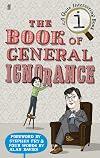
IN THE past year there have been a plethora of books which ask and answer those niggling little questions: Why don't penguins’ feet freeze? Can cows walk down stairs? And the origins of everyday things.
These excellent works give answers to a host of issues that might have perplexed you, as well as a host of others that never occurred to you, but are intriguing nonetheless.
The Book of General Ignorance is somewhat different: it corrects the answers to questions you thought you already show more knew. For example, how many wives did King Henry VIII have? No, not six — two, because he had four of his marriages annulled.
James Bond's preferred drink? Not a vodka martini but whisky. And the good news for him and everyone else who enjoys a tipple is that there is no scientific evidence that alcohol destroys brain cells. That was a story put about by 19th-century temperance propagandists, though booze does cause new cells to grow more slowly.
In fact, much that we believe implicitly today originates in the imaginations of devious Victorians; the idea of a flat earth was not really posited until the 19th century, “since around the 4th century BC almost no-one, anywhere, has believed that the earth is flat".
The Victorians also invented the myth of the Noble Lord Nelson’s eye patch — but on which eye did he wear that patch? Neither. Nelson never wore an eye patch because, although his right eye was damaged, it was not blind.
His lordship was vain, cruel and ruthless, and 19 admirals of the British Navy refused to attend his funeral.
And what about the Duke of Wellington, revered as one of England's greatest generals? Actually, he was Irish, serving in the Irish Parliament in 1790 and playing for the all-Ireland team in the first recorded game of cricket played in Ireland in 1792.
Then we have indoor sanitation: Thomas Crapper was happy to accept acclaim for the invention of the WC in the mid-19th century, but actually the first flush lavatory we know of dates back to 206 BC, and was found in China.
In an age when prostitution and paedophilia flourished on a grand scale, the Victorians are notorious for their strange attitude to sex, and more or less reinvented the chastity belt, which was used not to protect maidenly virtue but to prevent boys “defiling” themselves, since everybody knew indulgence in the “solitary vice” caused blindness and lunacy.
While there are many devices claiming to be medieval chastity belts (and/or instruments of torture), the majority have been removed from museums after being discovered to be of 19th- century manufacture.
The mass suicide of Lemmings? The theory originated in the sloppy observations of 19th-century naturalists. The clan tartans of Scotland? A romantic myth of the 19th century. And St Bernards never, ever carried a cask of brandy around their necks: in 1831 Landseer painted a scene featuring two St Bernards, one of whom he adorned with a cask “for interest”, and so the legend began.
The 20th century has spawned myths of its own: Hitler was a vegetarian — no, he wasn't. Concentration camps were invented by the British — no they weren't, those laurels belong to the Spanish in their 1895 struggle to retain Cuba. And Teflon was not a by-product of the space programme, but discovered back in 1938.
We know now, in the 21st century, that “work is a bigger killer than drink, drugs or war. About two million people die every year from work-related accidents or diseases", yet stomach ulcers are caused not by stress or diet but bacteria. Other interesting tit-bits include the fact that the Universe is beige, Nero invented ice cream, the Number of the Beast is 616, baseball was invented in England, and that George Washington's ill-fitting dentures were made not of wood but of hippopotamus and elephant ivory.
In his foreword the delightful British playwright and novelist Stephen Fry warns: “It's the ones who think they know what there is to be known that we have to look out for."
If your answer to “who said ‘let them eat cake'" is Marie Antoinette, if you didn't know the first man-made invention to break the sound barrier was the whip, if you thought the guillotine was invented in 1789 by Dr Joseph Guillotine, or that the French were the first to make champagne, I'm afraid you might be one of those people Fry is referring to.
John Lloyd observes in his introduction: “Biologists say our primal drives are food, sex and shelter, no different from the animals. We say there is a fourth drive that makes us uniquely human — curiosity."
As an unashamed devotee of that fourth drive in all its many forms, I urge everyone with an inquiring mind and all fans of trivia to read this book . show less
These excellent works give answers to a host of issues that might have perplexed you, as well as a host of others that never occurred to you, but are intriguing nonetheless.
The Book of General Ignorance is somewhat different: it corrects the answers to questions you thought you already show more knew. For example, how many wives did King Henry VIII have? No, not six — two, because he had four of his marriages annulled.
James Bond's preferred drink? Not a vodka martini but whisky. And the good news for him and everyone else who enjoys a tipple is that there is no scientific evidence that alcohol destroys brain cells. That was a story put about by 19th-century temperance propagandists, though booze does cause new cells to grow more slowly.
In fact, much that we believe implicitly today originates in the imaginations of devious Victorians; the idea of a flat earth was not really posited until the 19th century, “since around the 4th century BC almost no-one, anywhere, has believed that the earth is flat".
The Victorians also invented the myth of the Noble Lord Nelson’s eye patch — but on which eye did he wear that patch? Neither. Nelson never wore an eye patch because, although his right eye was damaged, it was not blind.
His lordship was vain, cruel and ruthless, and 19 admirals of the British Navy refused to attend his funeral.
And what about the Duke of Wellington, revered as one of England's greatest generals? Actually, he was Irish, serving in the Irish Parliament in 1790 and playing for the all-Ireland team in the first recorded game of cricket played in Ireland in 1792.
Then we have indoor sanitation: Thomas Crapper was happy to accept acclaim for the invention of the WC in the mid-19th century, but actually the first flush lavatory we know of dates back to 206 BC, and was found in China.
In an age when prostitution and paedophilia flourished on a grand scale, the Victorians are notorious for their strange attitude to sex, and more or less reinvented the chastity belt, which was used not to protect maidenly virtue but to prevent boys “defiling” themselves, since everybody knew indulgence in the “solitary vice” caused blindness and lunacy.
While there are many devices claiming to be medieval chastity belts (and/or instruments of torture), the majority have been removed from museums after being discovered to be of 19th- century manufacture.
The mass suicide of Lemmings? The theory originated in the sloppy observations of 19th-century naturalists. The clan tartans of Scotland? A romantic myth of the 19th century. And St Bernards never, ever carried a cask of brandy around their necks: in 1831 Landseer painted a scene featuring two St Bernards, one of whom he adorned with a cask “for interest”, and so the legend began.
The 20th century has spawned myths of its own: Hitler was a vegetarian — no, he wasn't. Concentration camps were invented by the British — no they weren't, those laurels belong to the Spanish in their 1895 struggle to retain Cuba. And Teflon was not a by-product of the space programme, but discovered back in 1938.
We know now, in the 21st century, that “work is a bigger killer than drink, drugs or war. About two million people die every year from work-related accidents or diseases", yet stomach ulcers are caused not by stress or diet but bacteria. Other interesting tit-bits include the fact that the Universe is beige, Nero invented ice cream, the Number of the Beast is 616, baseball was invented in England, and that George Washington's ill-fitting dentures were made not of wood but of hippopotamus and elephant ivory.
In his foreword the delightful British playwright and novelist Stephen Fry warns: “It's the ones who think they know what there is to be known that we have to look out for."
If your answer to “who said ‘let them eat cake'" is Marie Antoinette, if you didn't know the first man-made invention to break the sound barrier was the whip, if you thought the guillotine was invented in 1789 by Dr Joseph Guillotine, or that the French were the first to make champagne, I'm afraid you might be one of those people Fry is referring to.
John Lloyd observes in his introduction: “Biologists say our primal drives are food, sex and shelter, no different from the animals. We say there is a fourth drive that makes us uniquely human — curiosity."
As an unashamed devotee of that fourth drive in all its many forms, I urge everyone with an inquiring mind and all fans of trivia to read this book . show less
Lists
Awards

You May Also Like


Associated Authors
Statistics
- Works
- 55
- Also by
- 5
- Members
- 10,739
- Popularity
- #2,210
- Rating
- 3.8
- Reviews
- 164
- ISBNs
- 263
- Languages
- 18
- Favorited
- 2