
Michael Gross (1) (1952–)
Author of 740 Park: The Story of the World's Richest Apartment Building
For other authors named Michael Gross, see the disambiguation page.
About the Author
Michael Gross, the New York Times bestselling author of Model: The Ugly Business of Beautiful Women, 740 Park: The Story of the World's Richest Apartment Building, and House of Outrageous Fortune: Fifteen Central Park West, the World's Most Powerful Address, is the editor-in-chief of Avenue and a show more contributing editor for Departures, and his journalism and other writing have appeared in magazines and newspapers throughout the world, including the New York Times, New York, GQ, Esquire, and Vanity Fair. He lives in New York City. show less
Series
Works by Michael Gross
Rogues' Gallery: The Secret Story of the Lust, Lies, Greed, and Betrayals That Made the Metropolitan Museum of Art (2009) 290 copies, 2 reviews
House of Outrageous Fortune: Fifteen Central Park West, the World's Most Powerful Address (2014) 81 copies
My Generation: Fifty Years of Sex, Drugs, Rock, Revolution, Glamour, Greed, Valor, Faith, and Silicon Chips (2000) 50 copies, 1 review
Tagged
Common Knowledge
- Birthdate
- 1952
- Gender
- male
- Education
- Vassar College (BA | History)
- Occupations
- journalist
author
magazine editor - Organizations
- The New York Times
Travel + Leisure - Relationships
- Gross, Milton (father)
Gross, Jane (sister) - Nationality
- USA
- Birthplace
- New York, New York, USA
- Places of residence
- New York, New York, USA (birth)
- Associated Place (for map)
- New York, New York, USA
Members
Reviews
Rogues' gallery : the secret history of the moguls and the money that made the Metropolitan Museum by Michael Gross
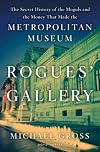
Note to self: don't donate to the Metropolitan Museum, apparently they don't want you. This narrative history of the museum's bosses may be the last blow to my desire to work there, which was on its last legs over the whole repatriation issue.
There are, frankly, too many damn people — I had a really hard time keeping track of who was who and what they were responsible for and what their relationships were to each other. Junior Rockefeller made the biggest impression, and seemed the sanest show more person in this entire book (a Rockefeller. Sane. I know.), while Tom Hoving was just endless. I was kind of surprised by how little attention was paid to Phillippe de Montebello, but that's probably a lack of historical perspective talking. show less
There are, frankly, too many damn people — I had a really hard time keeping track of who was who and what they were responsible for and what their relationships were to each other. Junior Rockefeller made the biggest impression, and seemed the sanest show more person in this entire book (a Rockefeller. Sane. I know.), while Tom Hoving was just endless. I was kind of surprised by how little attention was paid to Phillippe de Montebello, but that's probably a lack of historical perspective talking. show less
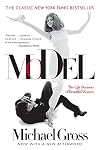
I really liked this book, which focuses on the history of modeling, from the 1920s or so up until the mid-1990s. The title and the back copy both make it seem like it's merely a collection of gossip and dirt, and while there's dirt a plenty, it's actually pretty serious. There are a LOT of names to keep track of, and I do think that in order to enjoy this book you need to have not only an appreciation for fashion but also some prior knowledge of prominent fashion photographers and models of show more the 20th century. My Pinterest is like 90% vintage fashion and fashion photography so I'm probably an ideal audience.
The first two-thirds of the book, which focus on the history of models and the industry up until the 1970s or so, were fascinating. The last third was a different story, because a lot of the focus left the models & photographers and instead focused on the agencies as the so-called "Modeling Wars" of the 1980s started. I have NO head for business, so the internecine conflicts within and between different agencies left me cold.
The tragic lives of many models, and the abuses perpetrated on naive young girls, are heartbreaking. It's a difficult book because it leaves you thinking, by enjoying these pictures and buying fashion magazines, am I perpetuating an abusive cycle? With art, there is always a question of, if the artist is a bad person, does that make the art bad? The addition of vulnerable human beings as the center of that art makes the question even more difficult in regards to fashion & fashion photography.
Anyway, if you have an interest in fashion and/or fashion photography, you'll probably enjoy this book. I give it four stars. show less
The first two-thirds of the book, which focus on the history of models and the industry up until the 1970s or so, were fascinating. The last third was a different story, because a lot of the focus left the models & photographers and instead focused on the agencies as the so-called "Modeling Wars" of the 1980s started. I have NO head for business, so the internecine conflicts within and between different agencies left me cold.
The tragic lives of many models, and the abuses perpetrated on naive young girls, are heartbreaking. It's a difficult book because it leaves you thinking, by enjoying these pictures and buying fashion magazines, am I perpetuating an abusive cycle? With art, there is always a question of, if the artist is a bad person, does that make the art bad? The addition of vulnerable human beings as the center of that art makes the question even more difficult in regards to fashion & fashion photography.
Anyway, if you have an interest in fashion and/or fashion photography, you'll probably enjoy this book. I give it four stars. show less
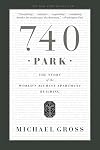
740 Park was designed by Rosario Candela, already renowned in NYC for his luxury high rise apartment buildings, which were rapidly replacing the private homes that once lined Park and Fifth Avenues. The builder James Thomas Aloysius Lee, an adventurous property developer, conceived of 740 Park as a cooperative for like-minded wealthy men and their families. (Today, T. A. Lee is probably most famous as Jacqueline Kennedy's grandfather.) The co-op concept did not take hold for Lee, who was show more forced to rent the units in order to pay the mortgage. In fact, the building never made him a profit. Apartments did not begin to appreciate in value until the mid-'80's and '90's.
The first people to move in were not really the cream of the old NY social crop, however, but men who themselves had made a fortune, or whose fathers' had. Still, they revered the old ways and did not flaunt their wealth excessively. The huge building at 740 Park actually had two entrances, and two addresses. Many of the least ostentatious tenants preferred the 71 Seventy-First Street address. Park Avenue was thought to be "too Jewish." It was fascinating to watch the population of the building change as the years went by. When the UN was built, foreign countries rented space for their representatives and for entertaining. "Black Jack" Bouvier and his sourpuss wife, Janet, were given an apartment by her father, T.A. Lee, who paid the rent for years. Captains of industry were gradually replaced by vulture capitalists real estate moguls and venture capitalists. Philanthropists were replaced by hedge fund managers. A huge number of these high flyers crashed and burned. Many died young, leaving their rich widows behind. If nothing else, this book is a testament to life's uncertainties.
As with many non-fiction books, the author sometimes steps over the line separating fascinating from stultifying detail. There are a few too many paragraphs devoted to how tenant X is connected by family or employment to tenant Y, but I thought that a small flaw compared to the wonderful social history of wealth in 20th C New York. show less
The first people to move in were not really the cream of the old NY social crop, however, but men who themselves had made a fortune, or whose fathers' had. Still, they revered the old ways and did not flaunt their wealth excessively. The huge building at 740 Park actually had two entrances, and two addresses. Many of the least ostentatious tenants preferred the 71 Seventy-First Street address. Park Avenue was thought to be "too Jewish." It was fascinating to watch the population of the building change as the years went by. When the UN was built, foreign countries rented space for their representatives and for entertaining. "Black Jack" Bouvier and his sourpuss wife, Janet, were given an apartment by her father, T.A. Lee, who paid the rent for years. Captains of industry were gradually replaced by vulture capitalists real estate moguls and venture capitalists. Philanthropists were replaced by hedge fund managers. A huge number of these high flyers crashed and burned. Many died young, leaving their rich widows behind. If nothing else, this book is a testament to life's uncertainties.
As with many non-fiction books, the author sometimes steps over the line separating fascinating from stultifying detail. There are a few too many paragraphs devoted to how tenant X is connected by family or employment to tenant Y, but I thought that a small flaw compared to the wonderful social history of wealth in 20th C New York. show less
The music pounds, the champagne flows. There is brimstone in the air along with poison and obsession and vendetta.it is the smell of a factory that feeds on young girls.
Model: The Ugly Business of Beautiful Women:
by Michael Gross
Positives: I liked the Author's writing. The dark side of t he fashion industry was absolutely captured. I feel the writer is quite talented.
The negatives? What I thought I'd like best was what I wound up liking least. I had been looking forward to reading about some show more of the models. But aspects were way to gossipy and focused so greatly on their love lives.
I guess I should have expected it..the book is about Fashion..and Models after all! But I really wanted to know more about the women themselves, the different personality aspects that made them who they are. I came at it from a more psychological perspective .
This book wasn't BAD or anything but it wasn't as powerful as I'd have liked and honestly? After awhile , the models started to blur into each other and I got bored. I had not imagined myself being bored with a book on an industry like this but there you go. It happened. show less
Model: The Ugly Business of Beautiful Women:
by Michael Gross
Positives: I liked the Author's writing. The dark side of t he fashion industry was absolutely captured. I feel the writer is quite talented.
The negatives? What I thought I'd like best was what I wound up liking least. I had been looking forward to reading about some show more of the models. But aspects were way to gossipy and focused so greatly on their love lives.
I guess I should have expected it..the book is about Fashion..and Models after all! But I really wanted to know more about the women themselves, the different personality aspects that made them who they are. I came at it from a more psychological perspective .
This book wasn't BAD or anything but it wasn't as powerful as I'd have liked and honestly? After awhile , the models started to blur into each other and I got bored. I had not imagined myself being bored with a book on an industry like this but there you go. It happened. show less
Lists
Gen X Library (1)
Which house? (1)
Awards

You May Also Like


Associated Authors
Statistics
- Works
- 12
- Members
- 1,269
- Popularity
- #20,210
- Rating
- 3.1
- Reviews
- 18
- ISBNs
- 101
- Languages
- 4