
Steven Gaines
Author of The Love You Make: An Insider's Story of the Beatles
About the Author
Steven Gaines is known for writing about one of America's pastimes: celebrities and pop culture icons. His works include The Love You Make (about the Beatles), Heroes and Villains (about the Beach Boys), Obsession: The Life and Times of Calvin Klein, and Philistines in the Hedgerow: Passion and show more Property in the Hamptons. (Bowker Author Biography) show less
Works by Steven Gaines
Associated Works
Tagged
Common Knowledge
- Other names
- Granit, Robert
- Birthdate
- 1946
- Gender
- male
- Occupations
- journalist
- Organizations
- Circus
Daily News (New York)
New York - Nationality
- USA
- Associated Place (for map)
- USA
Members
Reviews
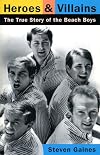
Steven Gaines shows his hand at the outset of his detailed group biography of The Beach Boys when he opens his narrative with a blow-by-blow account of the drowning death of Dennis Wilson, the middle brother, the group's drummer, dissipated by years of drug and alcohol abuse, diving time and again beneath his friend's boat in an LA marina, looking for an imaginary box of old coins, while his friends call to him from on deck to stop diving and come back aboard. This biography, we learn, is show more going to emphasize greatly the band's (and individual band members') troubles and disputes. And, in fact, that's what we get, with consideration of The Beach Boys' iconic music mostly relegated to brief mentions. It's all telling instead of showing when it comes to the creation, recording and onstage performances of the group, but we get shown and shown again the squabbles, alliances, dalliances, lawsuits and individual troubles of the band members, as they fight to hold the group together and continue to create in the face of a myriad of problems.
The Beach Boys were three Wilson brothers, Brian, Dennis and Carl, their cousin, Mike Love, and childhood friend, Al Jardine. The Wilson boys began life solidly behind the 8-ball, psychologically, despite their enormous musical talent, thanks to their domineering, demanding and abusive (both psychologically and physically) father, Murray. Brian, the oldest, came in particularly for the abuse, and was the brother who could never be good enough in Murray's judgement. And he certainly developed the most acute psychological problems. Carl, the youngest, was his mother's favorite, thereby receiving her protection from Murray, and, whether coincidentally or not, maintained the most emotional equilibrium throughout his career and life.
It's a sad tale, and the fact that these men were able to create so much fabulous and iconic music over, more or less, a 15-year recording career, is an amazing testament. Sadly, in this book, that creative process is mostly glossed over. I was a young boy with a transistor radio when The Beach Boys were at their early peak with songs like "I Get Around" and "Help Me, Rhonda" on the charts. Later, in my early and middle teens, I loved their more progressive albums like "Surf's Up" (still a favorite of mine) and "Holland." And then there's the tour de force that is "Pet Sounds," which I did not come to really appreciate until much later.
Gaines does describe well, in particular, Brian Wilson's struggles. His schizophrenia was, for a long time, hidden under his heavy drug use (considered more or less normal for rock stars at the time), his abnormal and reclusive behavior put down as the understandable eccentricity of the artistic genius. Even that "genius" appellation, settled on Brian after the release of "Pet Sounds" (and enhanced by the Beatles' avowed admiration for that album), became a heavy element in Brian Wilson's emotional burdens. And while Brian did have people trying to look out for him and keep him on an even keel (especially his wife, Marilyn), he was also surrounded by "drainers," sycophants always happy to gain acceptance into Brian's orbit by sneaking him drugs and booze.
And so on. All the members of the band, individually and collectively, come in for this sort of examination (with the exception of Jardine, the quite, calm one). Bad business decisions, money-wasting, fly-by-night schemes, Dennis Wilson's extended dalliance with Charles Manson and crew, we read about them all. But we spend precious little time with the musicians in the studio or onstage. It's amazing to realize that The Beach Boys (sans Brian, whose mental troubles early on caused him to stop performing live) remained one of the world's most popular and largest grossing live acts well into the 1980s. This is even though, by the end, the band was broken into two factions who, for the most part, hated each other. So we get told, of some important individual concert, that the band gave a great performance that brought down the house, there was evidently no attempt to find somebody describe what it was like to be at a Beach Boys concert at that time (let alone what it was like to be onstage during one).
A funny thing, though. By the end of the book, I actually did feel like I had a strong perception of what these people where like, and who they were. I'd even gained an affection for them. Who knows how accurate a perception that is, but still, I do feel like this book provides an effective description of a dysfunctional musical family, trying desperately to overcome that dysfunction and to emphasize the "love" element of their love-hate relationship with their father, their talent, their fame, and each other. There are dark sides to their behavior, to put it mildly. None of them were equipped emotionality for committed romantic relationships. Dennis, in particular, the good-looking one, reveled in his "playboy" behavior, even during his three or four (I lost count) marriages. Racism peeks through the narrative a few times, one of their business managers is fired when it's discovered that he's gay, and none of them thought twice about leveling anti-Semetic slurs when riled for one reason or another. So it's the old question of whether one is willing/able and/or desirous of separating the artists from the art. So this isn't the book to go to for a proper examination of The Beach Boys' music and creative process. But it's a pretty strong portrait of their lives (as far as I know), warts and all. show less
The Beach Boys were three Wilson brothers, Brian, Dennis and Carl, their cousin, Mike Love, and childhood friend, Al Jardine. The Wilson boys began life solidly behind the 8-ball, psychologically, despite their enormous musical talent, thanks to their domineering, demanding and abusive (both psychologically and physically) father, Murray. Brian, the oldest, came in particularly for the abuse, and was the brother who could never be good enough in Murray's judgement. And he certainly developed the most acute psychological problems. Carl, the youngest, was his mother's favorite, thereby receiving her protection from Murray, and, whether coincidentally or not, maintained the most emotional equilibrium throughout his career and life.
It's a sad tale, and the fact that these men were able to create so much fabulous and iconic music over, more or less, a 15-year recording career, is an amazing testament. Sadly, in this book, that creative process is mostly glossed over. I was a young boy with a transistor radio when The Beach Boys were at their early peak with songs like "I Get Around" and "Help Me, Rhonda" on the charts. Later, in my early and middle teens, I loved their more progressive albums like "Surf's Up" (still a favorite of mine) and "Holland." And then there's the tour de force that is "Pet Sounds," which I did not come to really appreciate until much later.
Gaines does describe well, in particular, Brian Wilson's struggles. His schizophrenia was, for a long time, hidden under his heavy drug use (considered more or less normal for rock stars at the time), his abnormal and reclusive behavior put down as the understandable eccentricity of the artistic genius. Even that "genius" appellation, settled on Brian after the release of "Pet Sounds" (and enhanced by the Beatles' avowed admiration for that album), became a heavy element in Brian Wilson's emotional burdens. And while Brian did have people trying to look out for him and keep him on an even keel (especially his wife, Marilyn), he was also surrounded by "drainers," sycophants always happy to gain acceptance into Brian's orbit by sneaking him drugs and booze.
And so on. All the members of the band, individually and collectively, come in for this sort of examination (with the exception of Jardine, the quite, calm one). Bad business decisions, money-wasting, fly-by-night schemes, Dennis Wilson's extended dalliance with Charles Manson and crew, we read about them all. But we spend precious little time with the musicians in the studio or onstage. It's amazing to realize that The Beach Boys (sans Brian, whose mental troubles early on caused him to stop performing live) remained one of the world's most popular and largest grossing live acts well into the 1980s. This is even though, by the end, the band was broken into two factions who, for the most part, hated each other. So we get told, of some important individual concert, that the band gave a great performance that brought down the house, there was evidently no attempt to find somebody describe what it was like to be at a Beach Boys concert at that time (let alone what it was like to be onstage during one).
A funny thing, though. By the end of the book, I actually did feel like I had a strong perception of what these people where like, and who they were. I'd even gained an affection for them. Who knows how accurate a perception that is, but still, I do feel like this book provides an effective description of a dysfunctional musical family, trying desperately to overcome that dysfunction and to emphasize the "love" element of their love-hate relationship with their father, their talent, their fame, and each other. There are dark sides to their behavior, to put it mildly. None of them were equipped emotionality for committed romantic relationships. Dennis, in particular, the good-looking one, reveled in his "playboy" behavior, even during his three or four (I lost count) marriages. Racism peeks through the narrative a few times, one of their business managers is fired when it's discovered that he's gay, and none of them thought twice about leveling anti-Semetic slurs when riled for one reason or another. So it's the old question of whether one is willing/able and/or desirous of separating the artists from the art. So this isn't the book to go to for a proper examination of The Beach Boys' music and creative process. But it's a pretty strong portrait of their lives (as far as I know), warts and all. show less
I cannot give this book enough stars. Loved it. I read it in January and I don't see how another book will become my favorite for this year. Gaines tells the story of a low (suicidally low) period of his life, but it tells it with such love, candor, and generosity, that, while tears will flow, somehow the reader finds great hope in living. He also has such a gift for description that I feel as if I've visited his old neighborhood and would know where everything used to be and how it all show more looked when he was growing up. Fantastic book. I cannot recommend it enough. show less

Wow. The all American band and their entire dirty laundry! It is amazing that any of them are still around. The book is from 1985 but it is a wonderful story of excess. I am also convinced there is a special place in hell for the father Murry Wilson, a true SOB. This book has everything from the multiple marriges and mistresses, to Dennis Wilson welcoming and then regretting inviting Charles Manson and "familly" to live in is house. Brian Wilson the music genious who is also completely show more damaged, The massive drug and alcohol abuse by everyone, and the extremely poor financial decisions that everyone in the band continued to make. This is a fantastic book. show less
All You Need Is Love: The Beatles in Their Own Words: Unpublished, Unvarnished, and Told by The Beatles and Their Inner Circle by Peter Brown
A compilation of interviews done roughly from 1978-1982 with many of the key players in the Beatles story, including some you rarely see interviewed like Allan Klein, Maureen Starkey and Magic Alex. Beatlemaniacs will probably find some interesting bits. Of special note are Paul & George’s comments on John Lennon, recorded prior to his death.
Awards


You May Also Like


Associated Authors
Statistics
- Works
- 18
- Also by
- 1
- Members
- 1,686
- Popularity
- #15,250
- Rating
- 3.7
- Reviews
- 27
- ISBNs
- 62
- Languages
- 2
- Favorited
- 1
