
David Rosenberg (1) (1943–)
Author of The book of J
For other authors named David Rosenberg, see the disambiguation page.
About the Author
David Rosenberg is the author of more than 20 books of poetry, translation, and essays, two of which have been named "New York Times Notable Books of the Year." A third, "A Poet's Bible", was given the PEN/Book-of-the-Month Club Prize in 1992, the first major literary award for a biblical show more translation. Rosenberg is editor in chief of the Jewish Publication Society. He lives in San Francisco. (Bowker Author Biography) show less
Image credit: By Rhonda Rosenberg - Rhonda Rosenberg, CC BY-SA 4.0, https://commons.wikimedia.org/w/index.php?curid=62432458
Works by David Rosenberg
The Book of David: A New Story of the Spiritual Warrior and Leader Who Shaped Our Inner Consciousness (1997) 95 copies
Genesis as It Is Written: Contemporary Writers on Our First Stories (1996) — Editor & Introduction — 69 copies
The Necessity of Poetry. 1 copy
Tagged
Common Knowledge
- Birthdate
- 1943-08-01
- Gender
- male
- Education
- The New School
University of Michigan
Syracuse University
University of Essex - Occupations
- poet
translator
journal editor - Organizations
- Jewish Publication Society
York University, Toronto, Ontario, Canada
City University of New York - Nationality
- USA
- Birthplace
- Detroit, Michigan, USA
- Places of residence
- Florida, USA
- Associated Place (for map)
- USA
Members
Reviews

The Book of J
Translated from the Hebrew by David Rosenberg
Interpreted by Harold Bloom
I started my quest to read “Bloom’s Western Canon“ two years or so ago. Along the way, I took a few detours from the western canon itself to read books that helped me better understand those classic works. I mainly buy my books at the annual used book sales conducted by my hometown libraries. Over the years, I’ve collected many books that, as luck would have it, supplement what I’m reading in the show more western canon. One of those books is called The Book of J, by Harold Bloom himself. Bloom, a literary critic, wrote an influential book, called The Western Canon: The Books and School of the Ages. I have not read The Western Canon, however, I am familiar with its famous list. I was interested in reading The Book of J not only because I wanted to read something by the man himself, but because it tied into my reading of the Bible and other books about Biblical times.
The Book of J is both a translation and an interpretation. First - the translation. “J”, which stands for Yahwist (Yahweh starts with the letter J in German) is one of the original authors (some would say scribes) of the first five books of what Christians call the Old Testament and what Jews call the Torah. There are other authors/scribes as well - all of whom have been “discovered” through close reading of surviving scrolls that have been studied for centuries. Some of the others are “E” for the Elohist, “P” for the Priestly scribe, and “R” for the Redactor. J got his (or her - as we shall see from Bloom’s intentionally controversial theory) moniker because of his focus on Yahweh as the protagonist of the first five books. David Rosenberg translates what we know of J’s writings from the Hebrew. What you get is a summary of the Torah with the focus being on Yahweh. We read of his creation of the world, how Adam and Hava (Eve) came to be, Noah, Abram (Abraham), Jacob (later Israel), Joseph (my personal favorite), Judah, Moses, and a host of interesting supporting figures. I really enjoyed Rosenberg’s translation and learning more about Yahweh’s relationship with these famous people.
Unfortunately, I was disappointed in Bloom’s interpretation. Besides his intentionally controversial contention that J may have been a woman - and possibly King David’s granddaughter, there were things about his interpretation that just plain irritated me. (I don’t care about the woman part but I do care about his intentional controversy just because he could.) He claimed that J was really writing about David and the entire “Book of J” was a sort of metaphor for the eventual glory of David’s reign and Yahweh’s love for him. In other words, J was a post-Davidic courtly writer who used themes from an archaic, prehistoric form of Judaism to glorify her supposed grandfather’s reign. I don’t mind controversial interpretations of anything but what irritated me was that Bloom gave no reason or research that explained how he came to his conclusions. He did say that, as a literary critic and not a Biblical scholar, he was interpreting the book purely as literature. Even still, literary critics typically cite sources or explain their reasoning.
Bloom, being such a widely read person and so steeped in literary theory, may not have felt the need to cite anything because he simply “knew” stuff. His interpretation felt more like a journal than a critique. It was as if he was writing his thoughts in preparation for publishing a more scholarly book but never got down to the scholarly part. The reader is left with no bibliography, no index, and nothing to go on other than to see what mysterious connections Bloom would make next.
After I finished the book, I searched some of my other books to see what Biblical scholars thought of Bloom’s interpretation. Robin Lane Fox, a favorite of mine, summed up my feelings pretty well: “Harold Bloom… builds extravagantly on R. Friedman [‘s book] Who Wrote the Bible… the dating, “irony”, sex, political message, and “covenant” of Bloom’s J are all unconvincing.” Extravagant is a great word for it.
I recommend The Book of J for Rosenberg’s translation, but not for Bloom’s interpretation. I’ll stick to relying on him for the canonical list and leave it at that. show less
Translated from the Hebrew by David Rosenberg
Interpreted by Harold Bloom
I started my quest to read “Bloom’s Western Canon“ two years or so ago. Along the way, I took a few detours from the western canon itself to read books that helped me better understand those classic works. I mainly buy my books at the annual used book sales conducted by my hometown libraries. Over the years, I’ve collected many books that, as luck would have it, supplement what I’m reading in the show more western canon. One of those books is called The Book of J, by Harold Bloom himself. Bloom, a literary critic, wrote an influential book, called The Western Canon: The Books and School of the Ages. I have not read The Western Canon, however, I am familiar with its famous list. I was interested in reading The Book of J not only because I wanted to read something by the man himself, but because it tied into my reading of the Bible and other books about Biblical times.
The Book of J is both a translation and an interpretation. First - the translation. “J”, which stands for Yahwist (Yahweh starts with the letter J in German) is one of the original authors (some would say scribes) of the first five books of what Christians call the Old Testament and what Jews call the Torah. There are other authors/scribes as well - all of whom have been “discovered” through close reading of surviving scrolls that have been studied for centuries. Some of the others are “E” for the Elohist, “P” for the Priestly scribe, and “R” for the Redactor. J got his (or her - as we shall see from Bloom’s intentionally controversial theory) moniker because of his focus on Yahweh as the protagonist of the first five books. David Rosenberg translates what we know of J’s writings from the Hebrew. What you get is a summary of the Torah with the focus being on Yahweh. We read of his creation of the world, how Adam and Hava (Eve) came to be, Noah, Abram (Abraham), Jacob (later Israel), Joseph (my personal favorite), Judah, Moses, and a host of interesting supporting figures. I really enjoyed Rosenberg’s translation and learning more about Yahweh’s relationship with these famous people.
Unfortunately, I was disappointed in Bloom’s interpretation. Besides his intentionally controversial contention that J may have been a woman - and possibly King David’s granddaughter, there were things about his interpretation that just plain irritated me. (I don’t care about the woman part but I do care about his intentional controversy just because he could.) He claimed that J was really writing about David and the entire “Book of J” was a sort of metaphor for the eventual glory of David’s reign and Yahweh’s love for him. In other words, J was a post-Davidic courtly writer who used themes from an archaic, prehistoric form of Judaism to glorify her supposed grandfather’s reign. I don’t mind controversial interpretations of anything but what irritated me was that Bloom gave no reason or research that explained how he came to his conclusions. He did say that, as a literary critic and not a Biblical scholar, he was interpreting the book purely as literature. Even still, literary critics typically cite sources or explain their reasoning.
Bloom, being such a widely read person and so steeped in literary theory, may not have felt the need to cite anything because he simply “knew” stuff. His interpretation felt more like a journal than a critique. It was as if he was writing his thoughts in preparation for publishing a more scholarly book but never got down to the scholarly part. The reader is left with no bibliography, no index, and nothing to go on other than to see what mysterious connections Bloom would make next.
After I finished the book, I searched some of my other books to see what Biblical scholars thought of Bloom’s interpretation. Robin Lane Fox, a favorite of mine, summed up my feelings pretty well: “Harold Bloom… builds extravagantly on R. Friedman [‘s book] Who Wrote the Bible… the dating, “irony”, sex, political message, and “covenant” of Bloom’s J are all unconvincing.” Extravagant is a great word for it.
I recommend The Book of J for Rosenberg’s translation, but not for Bloom’s interpretation. I’ll stick to relying on him for the canonical list and leave it at that. show less
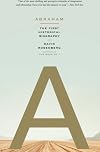
The world's major religions-Judaism, Christianity, and Islam-find a common root in one man: Abraham. Yet Abraham looms so large in the realm of world religions that he has remained a ward of the Divine rather than a flesh-and-blood citizen of Humanity. In his monumental new book, David Rosenberg provides a long-overdue history of the patriarch; while revealing that the original story embedded in the Bible is actually our oldest historical biography. We also discover that the wandering show more ascetic of tradition cannot explain our deep-seated feelings for Abraham and his God. The road that Abraham traveled was marked by signs of civilization that we still recognize: libraries, museums, hotels, and houses of worship. He is a sophisticated, educated Sumerian; an artisan who became the first Jew. Moreover, through Rosenberg's audacious translation of the Abraham story from Genesis, we learn that many of the core tenets of the monotheistic tradition-the idea of God's covenant and the soul-are Sumerian in origin. Rosenberg first finds Abraham at his father's workshop in the cosmopolitan city of ancient Ur and follows his journey through what is today the Middle East. What kind of baggage-emotional, material, and spiritual-would Abraham have taken with him on his migration to a new land? Abraham does more than present a founding spiritual figure and his dynamic relationships with father, wife, and son. We witness this man as he transforms his heritage into an anxious embrace of religion with secular culture-the human condition in which we are still enfolded today. show less
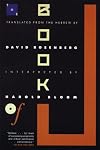
Here’s another of my favorites, published back in 1990. If you haven’t read it yet, it’s a must read, for the sheer pleasure of it.
Most scholars now accept that the Torah was written by at least four different authors. The first strand of Genesis, Exodus and Numbers was written by an author that scholars call “J,” who lived in the tenth century BC. This is your chance to read J’s story as it was written, extracted and reassembled from the Bible. Bloom admires J on the level of show more Homer, Shakespeare, and Tolstoy, and wonders if J wasn’t a woman. J’s story abounds in unforgettable characters and subtle irony, including a God (Yahweh) whose personality is unmatched by any later writers.
In the first half of the book, the text of J is translated brilliantly by Rosenberg, who brings the scripture to life. Then, Bloom takes the reins and provides commentary in the second half. If you have never read any of Bloom’s writings, you’re in for a treat. Wry and fresh, Bloom is one of my favorite authors.
J, as Bloom points out multiple times, is no moralist. Sin is not one of J’s concepts, but contempt is. Irony is. J will stoop to puns and rise to heroism if it helps portray her characters. You’ll forget you’re reading the Bible as you get lost in the storytelling, I promise. I can’t think of enough good adjectives to describe this one. show less
Most scholars now accept that the Torah was written by at least four different authors. The first strand of Genesis, Exodus and Numbers was written by an author that scholars call “J,” who lived in the tenth century BC. This is your chance to read J’s story as it was written, extracted and reassembled from the Bible. Bloom admires J on the level of show more Homer, Shakespeare, and Tolstoy, and wonders if J wasn’t a woman. J’s story abounds in unforgettable characters and subtle irony, including a God (Yahweh) whose personality is unmatched by any later writers.
In the first half of the book, the text of J is translated brilliantly by Rosenberg, who brings the scripture to life. Then, Bloom takes the reins and provides commentary in the second half. If you have never read any of Bloom’s writings, you’re in for a treat. Wry and fresh, Bloom is one of my favorite authors.
J, as Bloom points out multiple times, is no moralist. Sin is not one of J’s concepts, but contempt is. Irony is. J will stoop to puns and rise to heroism if it helps portray her characters. You’ll forget you’re reading the Bible as you get lost in the storytelling, I promise. I can’t think of enough good adjectives to describe this one. show less
A worthy attempt to look at part of the early Bible as a literary, as opposed to a religious, work. However, it depends a bit too much on Bloom's evocation of his authority as a critic to assert that it's a work of literary genius, rather than depending on his ability to let us see what he does. Mostly, it uses the standard device that critics use when they trust an author; any apparent infelicities become evidence of irony rather than actual problems. Still, useful as a way to jolt some show more newness into this text. show less
Lists
Awards


You May Also Like


Associated Authors
Statistics
- Works
- 26
- Members
- 2,574
- Popularity
- #9,981
- Rating
- 3.6
- Reviews
- 20
- ISBNs
- 108
- Languages
- 6