

Richard Elliott Friedman
Author of Who Wrote the Bible?
About the Author
Richard Elliott Friedman, a world-renowned biblical scholar, is Professor of Hebrew and Comparative Literature at the University of California, San Diego. He is the author of The Hidden Face of God and the bestselling Who Wrote the Bible?
Image credit: Regents of the University of California
Works by Richard Elliott Friedman
The Exile and Biblical Narrative: The Formation of the Deuteronomistic and Priestly Works (Harvard Semitic Monographs 22) (1981) 25 copies
The Creation of Sacred Literature: Composition and Redaction of the Biblical Text (University of California Publications. Near Eastern Studies, V. 22) (1981) 10 copies
the Bible 1 copy
Tagged
Common Knowledge
- Legal name
- Friedman, Richard Elliott
- Birthdate
- 1946-05-05
- Gender
- male
- Education
- Harvard University (ThD ∙ 1978)
- Occupations
- professor (UCSD ∙ 1994-2006)
professor (University of Georgia ∙ [2006]) - Organizations
- University of Georgia
University of California, San Diego - Nationality
- USA
- Birthplace
- Rochester, New York, USA
- Associated Place (for map)
- New York, USA
Members
Reviews

This book was absolutely fascinating, and also very well-written!! It deserves a place on the bookshelf of any serious student of Biblical or even just ancient near-eastern history, imho.
Five authors: the J, E, P, D and R are found in a great summary of modern Higher Literary criticism of the Biblical texts known to Christians as the Old Testament, and just the Bible or TNaCH to Jewish readers. The J and E are roughly contemporary, from the time of the Northern kingdom and the Kingdom of show more Yehuda (Solomon's kids southern kingdom): J=Jehovah vs E for Elohim via the Hebrew names for God: two ancient texts combined into one. The P was a priestly document which accounts for the various 'where he shall place his name' lines coming up seemingly randomly in sacrifce laws, D=Deuteronomist, and the Redactor edited it all together into one document, apparently without dropping a line, and coherent enough to inspire a national narrative going forward after the Babylonian exile! Now that is beautiful genius!
Overall, I found it reassuring that various groups of writers show different but clear motivations for writing the books that began as separate works. It was quite interesting to see why and when those books could have been combined due to changing historical circumstances.
It was also surprising for me to learn of the Judean refugees in Egypt. But this does explain the presence of the Jewish mercenaries on the Nile island of Elephantine. I loved his phrase on page 144: "from Egypt to Egypt" and also possibly related to that is a reference on page 146 that I must look up: Baba Batra 15a from the Talmud Bavli (I just found this note with no other context... but here is a source ref: https://www.sefaria.org/Bava_Batra.15a ).
I found it thrilling to see the idea of Jeremiah as writing Deuteronomy, and of Ezra or his scribe Baruch as the redactor. These findings closed for me what had previously been gaping wounds based on my own problems with the inconsistencies within the Biblical texts. Now I can read and study these texts in the knowledge that it is no secret that these writings were put together for a purpose by multiple people, yet serve a purpose greater perhaps than even the redactor himself could have forseen at the time. Hope, inspiration and magnificence all come from the pages written and redated into one whole, and this is an amazing example of the Divinity that human cooperation can produce.
27 June, 12017 HE
(Holocene or Human Era)
Shira show less
Five authors: the J, E, P, D and R are found in a great summary of modern Higher Literary criticism of the Biblical texts known to Christians as the Old Testament, and just the Bible or TNaCH to Jewish readers. The J and E are roughly contemporary, from the time of the Northern kingdom and the Kingdom of show more Yehuda (Solomon's kids southern kingdom): J=Jehovah vs E for Elohim via the Hebrew names for God: two ancient texts combined into one. The P was a priestly document which accounts for the various 'where he shall place his name' lines coming up seemingly randomly in sacrifce laws, D=Deuteronomist, and the Redactor edited it all together into one document, apparently without dropping a line, and coherent enough to inspire a national narrative going forward after the Babylonian exile! Now that is beautiful genius!
Overall, I found it reassuring that various groups of writers show different but clear motivations for writing the books that began as separate works. It was quite interesting to see why and when those books could have been combined due to changing historical circumstances.
It was also surprising for me to learn of the Judean refugees in Egypt. But this does explain the presence of the Jewish mercenaries on the Nile island of Elephantine. I loved his phrase on page 144: "from Egypt to Egypt" and also possibly related to that is a reference on page 146 that I must look up: Baba Batra 15a from the Talmud Bavli (I just found this note with no other context... but here is a source ref: https://www.sefaria.org/Bava_Batra.15a ).
I found it thrilling to see the idea of Jeremiah as writing Deuteronomy, and of Ezra or his scribe Baruch as the redactor. These findings closed for me what had previously been gaping wounds based on my own problems with the inconsistencies within the Biblical texts. Now I can read and study these texts in the knowledge that it is no secret that these writings were put together for a purpose by multiple people, yet serve a purpose greater perhaps than even the redactor himself could have forseen at the time. Hope, inspiration and magnificence all come from the pages written and redated into one whole, and this is an amazing example of the Divinity that human cooperation can produce.
27 June, 12017 HE
(Holocene or Human Era)
Shira show less
This book was absolutely fascinating, and also very well-written!! It deserves a place on the bookshelf of any serious student of Biblical or even just ancient near-eastern history, imho.
Five authors: the J, E, P, D and R are found in a great summary of modern Higher Literary criticism of the Biblical texts known to Christians as the Old Testament, and just the Bible or TNaCH to Jewish readers. The J and E are roughly contemporary, from the time of the Northern kingdom and the Kingdom of show more Yehuda (Solomon's kids southern kingdom): J=Jehovah vs E for Elohim via the Hebrew names for God: two ancient texts combined into one. The P was a priestly document which accounts for the various 'where he shall place his name' lines coming up seemingly randomly in sacrifce laws, D=Deuteronomist, and the Redactor edited it all together into one document, apparently without dropping a line, and coherent enough to inspire a national narrative going forward after the Babylonian exile! Now that is beautiful genius!
Overall, I found it reassuring that various groups of writers show different but clear motivations for writing the books that began as separate works. It was quite interesting to see why and when those books could have been combined due to changing historical circumstances.
It was also surprising for me to learn of the Judean refugees in Egypt. But this does explain the presence of the Jewish mercenaries on the Nile island of Elephantine. I loved his phrase on page 144: "from Egypt to Egypt" and also possibly related to that is a reference on page 146 that I must look up: Baba Batra 15a from the Talmud Bavli (I just found this note with no other context... but here is a source ref: https://www.sefaria.org/Bava_Batra.15a ).
I found it thrilling to see the idea of Jeremiah as writing Deuteronomy, and of Ezra or his scribe Baruch as the redactor. These findings closed for me what had previously been gaping wounds based on my own problems with the inconsistencies within the Biblical texts. Now I can read and study these texts in the knowledge that it is no secret that these writings were put together for a purpose by multiple people, yet serve a purpose greater perhaps than even the redactor himself could have forseen at the time. Hope, inspiration and magnificence all come from the pages written and redated into one whole, and this is an amazing example of the Divinity that human cooperation can produce.
27 June, 12017 HE
(Holocene or Human Era)
Shira show less
Five authors: the J, E, P, D and R are found in a great summary of modern Higher Literary criticism of the Biblical texts known to Christians as the Old Testament, and just the Bible or TNaCH to Jewish readers. The J and E are roughly contemporary, from the time of the Northern kingdom and the Kingdom of show more Yehuda (Solomon's kids southern kingdom): J=Jehovah vs E for Elohim via the Hebrew names for God: two ancient texts combined into one. The P was a priestly document which accounts for the various 'where he shall place his name' lines coming up seemingly randomly in sacrifce laws, D=Deuteronomist, and the Redactor edited it all together into one document, apparently without dropping a line, and coherent enough to inspire a national narrative going forward after the Babylonian exile! Now that is beautiful genius!
Overall, I found it reassuring that various groups of writers show different but clear motivations for writing the books that began as separate works. It was quite interesting to see why and when those books could have been combined due to changing historical circumstances.
It was also surprising for me to learn of the Judean refugees in Egypt. But this does explain the presence of the Jewish mercenaries on the Nile island of Elephantine. I loved his phrase on page 144: "from Egypt to Egypt" and also possibly related to that is a reference on page 146 that I must look up: Baba Batra 15a from the Talmud Bavli (I just found this note with no other context... but here is a source ref: https://www.sefaria.org/Bava_Batra.15a ).
I found it thrilling to see the idea of Jeremiah as writing Deuteronomy, and of Ezra or his scribe Baruch as the redactor. These findings closed for me what had previously been gaping wounds based on my own problems with the inconsistencies within the Biblical texts. Now I can read and study these texts in the knowledge that it is no secret that these writings were put together for a purpose by multiple people, yet serve a purpose greater perhaps than even the redactor himself could have forseen at the time. Hope, inspiration and magnificence all come from the pages written and redated into one whole, and this is an amazing example of the Divinity that human cooperation can produce.
27 June, 12017 HE
(Holocene or Human Era)
Shira show less
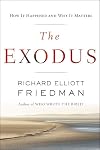
Like a detective on an intricate case no one has yet solved, pioneering Bible scholar and bestselling author of Who Wrote the Bible? Richard Elliott Friedman cuts through the noise — the serious studies and the wild theories — merging new findings with new insight. From a spectrum of disciplines, state-of-the-art archeological breakthroughs, and fresh discoveries within scripture, he brings real evidence of a historical basis for the exodus — the history behind the story. The biblical show more account of millions fleeing Egypt may be an exaggeration, but the exodus itself is not a myth. show less
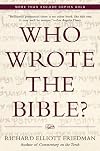
A short book presenting evidence that the Bible was written by many different authors, each adding passages that corresponded to their social and political environments at their time of living. Friedman does an excellent job presenting the evidence for this by showing differences in language and syntax found in the most famous stories, like Noah's Ark or Moses receiving the 10 commandments. These stories show up multiple times in the Bible but with different lines or certain words added, show more signifying that someone (or a group) changed the story around slightly. These have become known as the J, E, and P texts (Jahweh, Elohim, and Priestly).
I find it fascinating that so many people swear by it, follow it, praise it but know absolutely nothing about its history. It contains so many contradictions. I don't understand why people still continue to use the Bible as an authoritative text rather than use it as a means for spiritual guidance (although many parts of it that I've seen quoted are rather violent and primitive). I plan to read parts of it strictly as literature and for historical context, only because I find the Near East so interesting. show less
I find it fascinating that so many people swear by it, follow it, praise it but know absolutely nothing about its history. It contains so many contradictions. I don't understand why people still continue to use the Bible as an authoritative text rather than use it as a means for spiritual guidance (although many parts of it that I've seen quoted are rather violent and primitive). I plan to read parts of it strictly as literature and for historical context, only because I find the Near East so interesting. show less
Lists
Awards


You May Also Like


Associated Authors
Statistics
- Works
- 17
- Members
- 3,573
- Popularity
- #7,093
- Rating
- 4.0
- Reviews
- 39
- ISBNs
- 54
- Languages
- 8
- Favorited
- 4