
Frank Baker (1) (1908–1983)
Author of Miss Hargreaves
For other authors named Frank Baker, see the disambiguation page.
Works by Frank Baker
Mr. Allenby loses the way, 4 copies
Embers,: A winter tale 2 copies
Lease on life,: A novel 2 copies
Blessed are they; eight stories 2 copies
Sweet chariot: a romance 2 copies
Nearer to heaven 1 copy
Associated Works
Celtic Weird: Tales of Wicked Folklore and Dark Mythology (British Library Hardback Classics) (2022) — Contributor — 83 copies
Tagged
Common Knowledge
- Birthdate
- 1908-05-22
- Date of death
- 1983-11-06
- Gender
- male
- Nationality
- UK
- Associated Place (for map)
- UK
Members
Reviews
“Face downwards . . . face downwards. Always I have a picture of people lying on the ground with their faces buried away from the terror above them. Yes, the world was going mad.”
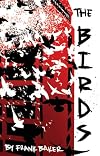
Somehow this novel from 1936 feels far more modern and American than it is. Which is to say, that it could’ve been written today. By an American. Which it isn’t. Not one micron. It’s Brits all the way: from the original to the Daphne du Maurier novella to the classic film directed by Hitchcock. In show more Baker’s autobiography, he cites Machen’s “The Terror” as an influence. Another goddamn Brit! Which I can totally see, even if that story was wet with Welsh fog and pungent with Butternut Burley smoke. What blend is this?! Exactly. Pick one punctuation, please. All the while the controversy of du Maurier pilfering from Baker’s novel playing second violin behind the folding screen. Has this been proved? Of course not. But the power of a story with supernatural agents acting upon mundane citizens in a very real world is just as undeniable in 1917 as it was in 1936 as it was in 1963 as it will continue to be so beyond 2017. The animals will rise! Mankind’s basest natures will be exposed by “all flocks and herds, and the animals of the wild”. We are not as dominant as we would believe. Or, at least not indefinitely. “The birds of the heavens . . .”
Baker’s novel flew ahead of its time on winds jetting just along the earth’s surface: bisexuality, homosexuality. The number of pages devoted to these personal subjects, and to the growing pains of a young man and an impending disaster, was quite unexpected. Not so much subtextual as intertextual; at least when considering the typical suppression of sexuality in its era. Those subcutaneous desires impossible to cover once nature’s true beast has shed its skin. They will rise!
The climactic scene in St. Paul’s Cathedral reminded me of a similar church scene in 𝘒𝘪𝘯𝘨𝘴𝘮𝘢𝘯: 𝘛𝘩𝘦 𝘚𝘦𝘤𝘳𝘦𝘵 𝘚𝘦𝘳𝘷𝘪𝘤𝘦—well, with birds of course, and without Samuel L. Jackson (then it would’ve felt uncannily American). Was the Devil involved? The devils within ourselves? Were those birds just sick of getting force-fed corn and decided to shit all over humanity? Now I don’t want to take anything away from Mrs. du Maurier’s nuanced prose, and I haven’t read her own avian thriller (yet), but I would be terrifically surprised if she would’ve stuffed social commentary and sexual repression between such grisly scenes with such ease.
“I do not know. But I am glad he lived so long, to enjoy all those blessings of life which we hold here, unclouded by the miseries which engulfed the old world, in the days before the Birds came.” show less
Somehow this novel from 1936 feels far more modern and American than it is. Which is to say, that it could’ve been written today. By an American. Which it isn’t. Not one micron. It’s Brits all the way: from the original to the Daphne du Maurier novella to the classic film directed by Hitchcock. In show more Baker’s autobiography, he cites Machen’s “The Terror” as an influence. Another goddamn Brit! Which I can totally see, even if that story was wet with Welsh fog and pungent with Butternut Burley smoke. What blend is this?! Exactly. Pick one punctuation, please. All the while the controversy of du Maurier pilfering from Baker’s novel playing second violin behind the folding screen. Has this been proved? Of course not. But the power of a story with supernatural agents acting upon mundane citizens in a very real world is just as undeniable in 1917 as it was in 1936 as it was in 1963 as it will continue to be so beyond 2017. The animals will rise! Mankind’s basest natures will be exposed by “all flocks and herds, and the animals of the wild”. We are not as dominant as we would believe. Or, at least not indefinitely. “The birds of the heavens . . .”
Baker’s novel flew ahead of its time on winds jetting just along the earth’s surface: bisexuality, homosexuality. The number of pages devoted to these personal subjects, and to the growing pains of a young man and an impending disaster, was quite unexpected. Not so much subtextual as intertextual; at least when considering the typical suppression of sexuality in its era. Those subcutaneous desires impossible to cover once nature’s true beast has shed its skin. They will rise!
The climactic scene in St. Paul’s Cathedral reminded me of a similar church scene in 𝘒𝘪𝘯𝘨𝘴𝘮𝘢𝘯: 𝘛𝘩𝘦 𝘚𝘦𝘤𝘳𝘦𝘵 𝘚𝘦𝘳𝘷𝘪𝘤𝘦—well, with birds of course, and without Samuel L. Jackson (then it would’ve felt uncannily American). Was the Devil involved? The devils within ourselves? Were those birds just sick of getting force-fed corn and decided to shit all over humanity? Now I don’t want to take anything away from Mrs. du Maurier’s nuanced prose, and I haven’t read her own avian thriller (yet), but I would be terrifically surprised if she would’ve stuffed social commentary and sexual repression between such grisly scenes with such ease.
“I do not know. But I am glad he lived so long, to enjoy all those blessings of life which we hold here, unclouded by the miseries which engulfed the old world, in the days before the Birds came.” show less
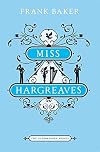
'Miss Hargreaves' (1940) is a strange book. It starts as a light-hearted and apparently lightweight comedy but steadily morphs into something much darker while retaining its humorous tone. With its High Anglican undertone, It reminded me of the far more serious fantasy work of Charles Williams.
The narrator and his father are, quite literally, congenital liars albeit without apparent malice, although Frank Baker makes his youthful protagonist into a far from nice person with a strong streak show more of unthinking cruelty and considerable irresponsibility.
The 'lie', conjured up by Norman Huntley and his pal Henry, at the expense of an Irish sexton results in the conjuring up of a 'Miss Hargreaves' who is a phantasm of their own making and yet who proves all-too-physically real. She proceeds to create total mayhem for Norman in his home town.
Miss Hargreaves is not just the physical embodiement of the lie in her own right but in her accoutrements which include a dog, a parrot, a harp, a bath (a result of the joke extending itself too far) and, it would seem, unlimited resources and connections. Reality is warped across the board.
It is interesting that, as soon as she achieves an accidental autonomy of will, she jettisons all the objects imposed on her by Norman and Henry including her poetry (which appears in an Appendix) except the money and the title and furnishings appropriate to her acquired station.
The existence of an independent will on her part is one of the mysteries and ambiguities that riddle the book and cannot help but raise the question whether any of us have any more or less autonomy of will as subjects of the social than she does.
Maybe we are all social phantasms created by the will and imaginations of others. In this respect, Baker, the small town English Anglican writer, seems to be hurtling into the world of continental philosophy by literary accident.
This should all be funny (a fantasy made manifest in a small town) - and it became a play with Margaret Rutherford wholly appropriate for the role of Hargreaves -but the realised phantasm is a bit of a monster even as she inspires a form of affectionate love simply as the creation of her creator.
The novel ceases to be lightweight after a while. It becomes a much more complex, hard to pin down, morality tale where it is hard to find out what exactly is being regarded as moral and what is not. The ambiguities make the reading not a little unnerving in this respect.
Is she a ghost? This is dismissed quite summarily. She is an imaginative creation of an imagination out of control. She is not bound by social norms any more than her creator secretly allows himself to be bound by social norms as a young Cathedral organist within a class-ridden small English town.
Baker gives us a reading of class that is as ambiguous as everything else in the book. Social snobbery and 'mob' culture are caricatured but not in any sense that we would call socially critical - this is a conservative book in questioning little in its satire.
Is the book, a fantasy that emulates Charles Williams only in a minor key, trying to say something? If so, you might struggle to find out what. Perhaps it is a version of the Frankenstein myth - do not meddle beyond the norm lest something happen that might destroy you.
But there are other themes as well. Huntley's affection for Hargreaves is as ambiguous as everything else - it is a form of vampirism as control over her ebbs and flows to the degree that she controls him and his emotional reactions. Is it sincere affection or manipulation?
Huntley's propensity to making errors of control simply by saying the wrong words moves the plot along. Words of power are, of course, a very magickal concept but are also inherent in religious ideas of prayer and worship. Magick is a-foot here and perhaps to be contrasted with religious restraint.
Is Hargreaves good, evil or neither? Does she exist in some way as an autonomous individual at any time in the story or is she bound entirely to her creative invention? Would killing her be a moral wrong? Would it be murder? Is such a dubious murder justified as self-defence?
The passing reference to J W Dunne suggests that Baker might be engaged here in a thought experiment about time and the nature of the soul that relates very much to its period. Hargreaves sometimes seems to be a memory of something as much as a creation.
Baker sets his tale in a very particular milieu of Trollopian church politics, town resentments, music, small bookshops, middle class family life and difficult girlfriends and, as such, for all the satire and fantasy, it is a nice reflection of interwar life in the comfortable middle class away from London.
The book misses greatness and must be classed as an oddity of literature but it should not be forgotten entirely. I suspect you will come out of it as I did wondering still about what exactly Miss Hargreaves was and just how bad things might have got if she had not been brought under control. show less
The narrator and his father are, quite literally, congenital liars albeit without apparent malice, although Frank Baker makes his youthful protagonist into a far from nice person with a strong streak show more of unthinking cruelty and considerable irresponsibility.
The 'lie', conjured up by Norman Huntley and his pal Henry, at the expense of an Irish sexton results in the conjuring up of a 'Miss Hargreaves' who is a phantasm of their own making and yet who proves all-too-physically real. She proceeds to create total mayhem for Norman in his home town.
Miss Hargreaves is not just the physical embodiement of the lie in her own right but in her accoutrements which include a dog, a parrot, a harp, a bath (a result of the joke extending itself too far) and, it would seem, unlimited resources and connections. Reality is warped across the board.
It is interesting that, as soon as she achieves an accidental autonomy of will, she jettisons all the objects imposed on her by Norman and Henry including her poetry (which appears in an Appendix) except the money and the title and furnishings appropriate to her acquired station.
The existence of an independent will on her part is one of the mysteries and ambiguities that riddle the book and cannot help but raise the question whether any of us have any more or less autonomy of will as subjects of the social than she does.
Maybe we are all social phantasms created by the will and imaginations of others. In this respect, Baker, the small town English Anglican writer, seems to be hurtling into the world of continental philosophy by literary accident.
This should all be funny (a fantasy made manifest in a small town) - and it became a play with Margaret Rutherford wholly appropriate for the role of Hargreaves -but the realised phantasm is a bit of a monster even as she inspires a form of affectionate love simply as the creation of her creator.
The novel ceases to be lightweight after a while. It becomes a much more complex, hard to pin down, morality tale where it is hard to find out what exactly is being regarded as moral and what is not. The ambiguities make the reading not a little unnerving in this respect.
Is she a ghost? This is dismissed quite summarily. She is an imaginative creation of an imagination out of control. She is not bound by social norms any more than her creator secretly allows himself to be bound by social norms as a young Cathedral organist within a class-ridden small English town.
Baker gives us a reading of class that is as ambiguous as everything else in the book. Social snobbery and 'mob' culture are caricatured but not in any sense that we would call socially critical - this is a conservative book in questioning little in its satire.
Is the book, a fantasy that emulates Charles Williams only in a minor key, trying to say something? If so, you might struggle to find out what. Perhaps it is a version of the Frankenstein myth - do not meddle beyond the norm lest something happen that might destroy you.
But there are other themes as well. Huntley's affection for Hargreaves is as ambiguous as everything else - it is a form of vampirism as control over her ebbs and flows to the degree that she controls him and his emotional reactions. Is it sincere affection or manipulation?
Huntley's propensity to making errors of control simply by saying the wrong words moves the plot along. Words of power are, of course, a very magickal concept but are also inherent in religious ideas of prayer and worship. Magick is a-foot here and perhaps to be contrasted with religious restraint.
Is Hargreaves good, evil or neither? Does she exist in some way as an autonomous individual at any time in the story or is she bound entirely to her creative invention? Would killing her be a moral wrong? Would it be murder? Is such a dubious murder justified as self-defence?
The passing reference to J W Dunne suggests that Baker might be engaged here in a thought experiment about time and the nature of the soul that relates very much to its period. Hargreaves sometimes seems to be a memory of something as much as a creation.
Baker sets his tale in a very particular milieu of Trollopian church politics, town resentments, music, small bookshops, middle class family life and difficult girlfriends and, as such, for all the satire and fantasy, it is a nice reflection of interwar life in the comfortable middle class away from London.
The book misses greatness and must be classed as an oddity of literature but it should not be forgotten entirely. I suspect you will come out of it as I did wondering still about what exactly Miss Hargreaves was and just how bad things might have got if she had not been brought under control. show less
When Norman Huntley and his friend Henry are on holiday in Ireland, they decide on a whim to visit the exceedingly ugly church of the village of Lusk. As their tour guide rhapsodizes about the church's history, he mentions one of its former clerics. Intending to make a joke at the tour guide's expense, Norman pretends to have heard of this cleric from a (fictional) common acquaintance, Miss Constance Hargreaves. He immediately -- with assistance from Henry, who plays along -- invents an show more entire personality and history for Miss Hargreaves, and after a while, the two young men almost believe she is real. But nothing can prepare Norman for the shock of discovering that a woman calling herself Miss Hargreaves is coming to visit him, and she is completely identical to the made-up description he and Henry had concocted! Miss Hargreaves soon embarrasses Norman with her eccentricities, and he begins to wish he could get rid of her -- but how can he do so? And if he is really responsible for her existence, should he?
When I first picked up this book, I expected it to be a light, fluffy comedic tale, similar to most of the other early-20th-century British fiction I've read. I mean, the synopsis almost sounds like something out of P.G. Wodehouse! But while this book does have its comic moments -- like everything that comes out of Norman's father's mouth! -- it's actually much more serious than it sounds. Norman's reaction to learning that he has (presumably) created another human being runs the gamut from shock to amusement to horror. He's often quite cruel to Miss Hargreaves when she doesn't show him the love and respect he feels are his due. In this sense, I think Baker was making a point about the dangers of playing God: Norman created Miss Hargreaves and is therefore in some sense responsible for her, but he is too proud and impatient and flawed to fulfill his responsbilities. Overall, this is an odd little book that raises some fairly serious philosophical questions. Recommended if the premise sounds interesting to you! show less
When I first picked up this book, I expected it to be a light, fluffy comedic tale, similar to most of the other early-20th-century British fiction I've read. I mean, the synopsis almost sounds like something out of P.G. Wodehouse! But while this book does have its comic moments -- like everything that comes out of Norman's father's mouth! -- it's actually much more serious than it sounds. Norman's reaction to learning that he has (presumably) created another human being runs the gamut from shock to amusement to horror. He's often quite cruel to Miss Hargreaves when she doesn't show him the love and respect he feels are his due. In this sense, I think Baker was making a point about the dangers of playing God: Norman created Miss Hargreaves and is therefore in some sense responsible for her, but he is too proud and impatient and flawed to fulfill his responsbilities. Overall, this is an odd little book that raises some fairly serious philosophical questions. Recommended if the premise sounds interesting to you! show less
Imagine if you and a friend created a fictitious person, and then that person showed up on your doorstep! That's exactly what happened to Norman Huntley and his friend Henry Beddow. While on holiday in Ireland, they visited a village church. To amuse themselves in conversation with the sexton, they invented Constance Hargreaves, lifelong friend of a former vicar at the church. They had a grand time pulling the sexton's leg, telling him about Miss Hargreaves' personality, her unusual pets, show more her interests in music and poetry, and on and on. After the visit, and still carrying on a bit, they sent a letter to Miss Hargreaves' address. When Norman received a letter in return, he was flabbergasted. Then Miss Hargreaves came to visit, and she was everything Norman and Henry had imagined.
Speechless, I sat down at a marble table and faced the Woman I had Made Up on the Spur of the Moment.
... 'It is such a very long time since we met; indeed, I cannot remember now when or what that was. My memory -- alas! -- works but spasmodically in this, the evening of my days. But what an evening! Oh, yes! It is no use disguising the fact; I am no longer young.' She leant forward across the table, tapped me on the chest with a silver pencil suspended from a chain around her neck. 'Eighty-three, Norman; eighty-three! Five reigns. And yet -- I feel as though I had been born last week! Youth' -- she declaimed, touching her heart -- 'lives here.' (p. 60)
Norman doesn't know how to explain the sudden arrival of a supposed dear friend. He's sure everyone would think he'd lost his mind. And well, perhaps they would, so he continually ducks the question. He begins to question himself: perhaps he really did meet Miss Hargreaves long ago? Miss Hargreaves proceeds to insert herself into Norman's life. She insists on meeting his family, and even goes so far as to buy property in the town. She completely monopolizes his time, but in a good way, just as you would expect from someone you've known for years. But Norman begins to chafe under all this attention, and under the questions and stares coming from his mother, his girlfriend, and others. Then he begins to discover his power over Miss Hargreaves: if he imagines her in a situation, he later learns the situation actually occurred. Some of his actions have permanent ramifications, altering their relationship. This creates a huge moral dilemma: if Norman can invent Miss Hargreaves, perhaps he can make her disappear. But does he want to? Could he bring himself to do such a thing?
I instantly liked Miss Hargreaves. Strutting about in her tweed jacket and absurd hat, spouting off with her opinions, reading her poetry aloud, drawing attention to herself and yet repeatedly protesting, "I abominate fuss." She made me laugh at every turn. There were times I wanted to smack Norman, especially when he was being weak or self-centered. And I really worried about him when he faced the moral dilemma, because up to then he had been alternately kind and cruel to Miss Hargreaves. So as not to spoil it for others, I'll just say the story wraps up in a way that follows the will of both characters, and feels perfectly right. I won't soon forget Miss Hargreaves. Perhaps I'll even meet her someday. :) show less
Speechless, I sat down at a marble table and faced the Woman I had Made Up on the Spur of the Moment.
... 'It is such a very long time since we met; indeed, I cannot remember now when or what that was. My memory -- alas! -- works but spasmodically in this, the evening of my days. But what an evening! Oh, yes! It is no use disguising the fact; I am no longer young.' She leant forward across the table, tapped me on the chest with a silver pencil suspended from a chain around her neck. 'Eighty-three, Norman; eighty-three! Five reigns. And yet -- I feel as though I had been born last week! Youth' -- she declaimed, touching her heart -- 'lives here.' (p. 60)
Norman doesn't know how to explain the sudden arrival of a supposed dear friend. He's sure everyone would think he'd lost his mind. And well, perhaps they would, so he continually ducks the question. He begins to question himself: perhaps he really did meet Miss Hargreaves long ago? Miss Hargreaves proceeds to insert herself into Norman's life. She insists on meeting his family, and even goes so far as to buy property in the town. She completely monopolizes his time, but in a good way, just as you would expect from someone you've known for years. But Norman begins to chafe under all this attention, and under the questions and stares coming from his mother, his girlfriend, and others. Then he begins to discover his power over Miss Hargreaves: if he imagines her in a situation, he later learns the situation actually occurred. Some of his actions have permanent ramifications, altering their relationship. This creates a huge moral dilemma: if Norman can invent Miss Hargreaves, perhaps he can make her disappear. But does he want to? Could he bring himself to do such a thing?
I instantly liked Miss Hargreaves. Strutting about in her tweed jacket and absurd hat, spouting off with her opinions, reading her poetry aloud, drawing attention to herself and yet repeatedly protesting, "I abominate fuss." She made me laugh at every turn. There were times I wanted to smack Norman, especially when he was being weak or self-centered. And I really worried about him when he faced the moral dilemma, because up to then he had been alternately kind and cruel to Miss Hargreaves. So as not to spoil it for others, I'll just say the story wraps up in a way that follows the will of both characters, and feels perfectly right. I won't soon forget Miss Hargreaves. Perhaps I'll even meet her someday. :) show less
Lists
You May Also Like


Associated Authors
Statistics
- Works
- 15
- Also by
- 12
- Members
- 584
- Popularity
- #42,937
- Rating
- 3.7
- Reviews
- 29
- ISBNs
- 47
- Languages
- 3
- Favorited
- 1