

Richard Hughes (1) (1900–1976)
Author of A High Wind in Jamaica
For other authors named Richard Hughes, see the disambiguation page.
Richard Hughes (1) has been aliased into Richard Arthur Warren Hughes.
Series
Works by Richard Hughes
Works have been aliased into Richard Arthur Warren Hughes.
Plays : The Sister's Tragedy, A Comedy of Good and Evil, The Man Born to Be Hanged, Danger (1966) 3 copies
A Night at a Cottage 2 copies
Richard Hughes: An Omnibus 2 copies
Best-in-Books: Squire / Quiet Under the Sun / High Wind in Jamaica / Captives / Paris / Green Hills of Africa (1955) 2 copies
The Ghost 1 copy
A Rabbit and a Leg 1 copy
Meditative ode on vision 1 copy
Ecstatic ode on vision 1 copy
Associated Works
Works have been aliased into Richard Arthur Warren Hughes.
Tagged
Common Knowledge
- Legal name
- Hughes, Richard Arthur Warren
- Birthdate
- 1900-04-19
- Date of death
- 1976-04-28
- Gender
- male
- Education
- Charterhouse, Godalming, Surrey, England
University of Oxford (Oriel College, graduated, 1922) - Occupations
- novelist
short story writer
playwright
poet - Organizations
- American Academy of Arts and Letters (Foreign Honorary, Literature, 1963)
- Awards and honors
- Order of the British Empire (Officer ∙ 1946)
Fellow of the Royal Society of Literature - Relationships
- Wells, C.M. (son-in-law)
- Nationality
- UK
- Birthplace
- Weybridge, Surrey, England, UK
- Places of residence
- Laugharne, Carmarthenshire, Wales, UK
- Place of death
- Harlech, Gwynedd, Wales
- Associated Place (for map)
- UK
Members
Reviews

Whether or not you think that Richard Hughes' "A High Wind in Jamaica" works as a whole, you've got to give him this: like Bill Watterson and Roald Dahl, he recognized that children occupy an entirely different psychological space than their elders. Of course, occasionally a judgement or fact from the world of adults does make it through to this novel's youthful protagonists, but it usually bears little resemblance to the lesson that the adults intended to teach, and the adults themselves show more never seem to realize this disconnect. As others have mentioned, the novel's most interested in the moral dimensions of childhood: does the children's lack of knowledge about the world around them contribute to a naturally occurring amorality? I'll leave that for other readers to figure out, though, because "A High Wind in Jamaica" could also be read as a case study in the uncanny resilience of children. The Bas-Thorton and Fernandez children adapt without hesitation to just about any situation they're thrown into, and Hughes seems intrigued by the existence of a stage of human development where our preconceptions are almost infinitely malleable. Emily, for example, reacts to a minor earthquake, a pirate kidnapping, and a pet alligator with varying levels of interest, boredom, and quiet delight – someone who lacks experience, as she does, can't be expected to tell the difference between the extraordinary and the merely ordinary, or the difference between right and wrong, for that matter. Still, I was also charmed by the way that the boys started planning their own careers in piracy almost from the moment that they were kidnapped. Hughes seems to realize that for imaginative children, life holds an almost unlimited number of possibilities: why should a lifetime spent on the high seas be considered any more remarkable than a quiet life lived in England?
Hughes, unlike, say, Harper Lee or Roald Dahl, who wrote their child characters using a friendly, accessible indirect third person, draws a careful distinction between his own authorial voice and the lives of his young protagonists. Instead of using the children as narrators, he describes childhood in the same way that an anthropologist might describe a foreign culture: he makes incisive descriptions, draws comparisons, and makes inferences about their self-made social and moral structures, but he relates their story in a style that is complex, eloquent, and undeniably adult. In fact, there are places where I'm not sure that Hughes wasn't satirizing, or perhaps criticizing, the Victorian age's own well-formed ideas about a "separate space" for children and their concerns. With its seafaring narrative and "A High Wind in Jamaica" and its wild scenes of play and children's games, this might be the first novel influenced in equal measure by "Peter Pan" and "Heart of Darkness." Some readers, will, I think, find these extreme tendencies hard to accept; this is a novel that makes it difficult to believe in childhood innocence at all. Still, I came away from it think that it's pity that Hughes wrote only four novels, and only two aimed at adults; I suspect that he would have written superbly on any subject he chose. show less
Hughes, unlike, say, Harper Lee or Roald Dahl, who wrote their child characters using a friendly, accessible indirect third person, draws a careful distinction between his own authorial voice and the lives of his young protagonists. Instead of using the children as narrators, he describes childhood in the same way that an anthropologist might describe a foreign culture: he makes incisive descriptions, draws comparisons, and makes inferences about their self-made social and moral structures, but he relates their story in a style that is complex, eloquent, and undeniably adult. In fact, there are places where I'm not sure that Hughes wasn't satirizing, or perhaps criticizing, the Victorian age's own well-formed ideas about a "separate space" for children and their concerns. With its seafaring narrative and "A High Wind in Jamaica" and its wild scenes of play and children's games, this might be the first novel influenced in equal measure by "Peter Pan" and "Heart of Darkness." Some readers, will, I think, find these extreme tendencies hard to accept; this is a novel that makes it difficult to believe in childhood innocence at all. Still, I came away from it think that it's pity that Hughes wrote only four novels, and only two aimed at adults; I suspect that he would have written superbly on any subject he chose. show less

I found this a rather difficult book to write about. At first I was a little disappointed as it wasn’t the straight forward adventure story that I expected. But as I read on it became clear that this was an absorbing psychological character study on the nature of children. A High Wind In Jamaica tells of a group of young children travelling from Jamaica to school in England that inadvertently are captured by pirates. The pirates have no idea of what to do with these children and after one show more half-hearted attempt to get rid of them, basically ignore them and let them run wild on their ship. I was very much reminded of The Lord of the Flies, in that the author appears fully convinced that children, once lacking in adult supervision, quickly deviate into savages, totally without empathy, kindness or morals.
This is a disturbing story of children, and in particular one young girl, Emily, who at the age of ten has the power to give one chills with her thoughts and inner conversations. The children lose one of their own through his own misadventure but actually give him very little thought, they seem much more concerned with the fate of their pet pig who is destined to become dinner. I don’t totally agree with the author’s point of view, I think most people, child or adult, are born with a compassionate, loving nature and it is life’s circumstances that can harden them.
A High Wind in Jamaica is also about the complex relationships that exist between children and adults. I would certainly not call this a YA or children’s book as it deals with very adult matters from murder, awakening sexuality to implied rape. Overall an interesting read but the author didn’t manage to change my viewpoint. show less
This is a disturbing story of children, and in particular one young girl, Emily, who at the age of ten has the power to give one chills with her thoughts and inner conversations. The children lose one of their own through his own misadventure but actually give him very little thought, they seem much more concerned with the fate of their pet pig who is destined to become dinner. I don’t totally agree with the author’s point of view, I think most people, child or adult, are born with a compassionate, loving nature and it is life’s circumstances that can harden them.
A High Wind in Jamaica is also about the complex relationships that exist between children and adults. I would certainly not call this a YA or children’s book as it deals with very adult matters from murder, awakening sexuality to implied rape. Overall an interesting read but the author didn’t manage to change my viewpoint. show less
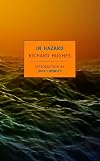
Considering it starts out like the technical chapters of Moby Dick, without bothering to tell you what any of the technical terms being used actually mean, this is one kick ass book. Hughes somehow manages to move from "here's how a steam boat's engine creates steam" to one of the better symbolic tales I've read. A few things to keep in mind, though, if you're thinking about reading it. The opening chapters really are boring, albeit boring with a purpose. So just know that. Also, it is so show more far from being a 'man vs nature' narrative that the only reason I can think for so many people to put it in that pigeon-hole is that they're uncomfortable with the fact that, really, man's biggest enemy is himself. Although the middle sections read like an adventure tale, the meat of the book is the stories of the crew, and what they've already been through before they get into this mess.
Also, a few reviewers complain that the book is racist. Here's a crash course on 'reading like a professor': just because a character says or thinks racist things doesn't mean the book is racist. In fact, the book goes to great, humorous lengths to show the stupidity of people making assumptions about others based on their race. But hey. It's much easier to quote some dipshit character than to read with any sort of care. show less
Also, a few reviewers complain that the book is racist. Here's a crash course on 'reading like a professor': just because a character says or thinks racist things doesn't mean the book is racist. In fact, the book goes to great, humorous lengths to show the stupidity of people making assumptions about others based on their race. But hey. It's much easier to quote some dipshit character than to read with any sort of care. show less
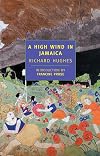
We had a snow storm that lasted 36 hours or so. While the wind howled outside, I sat by the fireplace with this book all day yesterday. I grabbed it again this morning and, funny thing, the storm let down about the time I finished it this afternoon. Now I don’t know if the storm was so bad as I recall it, or it was this disturbing story that made everything look so dark and disquieting for the past 2 days.
First things first, this is not a children’s story. It is not a young-adult story show more either. It is a very adult and distressing tale, where children happen to be the main protagonists. Hughes genius shows in how well he captures these children’s voices, in special the voice of Emily.
The most delightful passage in this story is when suddenly Emily realizes her own existence. She ponders further that maybe she was herself God. My son, now entering teenage years, also tells about the moment he became aware of his own existence. He was more precocious than Emily, but he does not verbalize the experience as she does either. The point is, we all must at one time come to the same conscious realization, and later forget it. Hughes brings it back in a way that is tender, but also rings with truth.
Most passages though carry a darkness that cannot be erased very easily by Emily’s existential questionings. There is death, murder, rape, lies, jealousy in every page.
The setting also deserves a comment: although I don’t deny that this story may be historically accurate – I would not doubt that newly freed slaves would not kill their previous masters, be it by starvation or more deliberately feeding them ground glass. Piracy was also probably still very common in the middle of the 19th century. Hangings certainly were, and the inefficiency of the judicial system still is. Hughes’ Jamaica and later London are not the Jamaica and London of this realm, but one from a parallel world, barely more colourful than reality, yet different, more comic or caricature.
It just occurred to me that Hughes might have wanted to tell a more real vision of childhood as opposed to Peter Pan – another English story about pirates. I should search this before writing about it, but I won’t. I am ready to let go of this tale, as much as I am ready for the Sun to start shining outside. I am giving it 5 stars because I think it defies genre and time, but I don’t think I will re-read it any time soon. I can only take bleakness on small doses. show less
First things first, this is not a children’s story. It is not a young-adult story show more either. It is a very adult and distressing tale, where children happen to be the main protagonists. Hughes genius shows in how well he captures these children’s voices, in special the voice of Emily.
The most delightful passage in this story is when suddenly Emily realizes her own existence. She ponders further that maybe she was herself God. My son, now entering teenage years, also tells about the moment he became aware of his own existence. He was more precocious than Emily, but he does not verbalize the experience as she does either. The point is, we all must at one time come to the same conscious realization, and later forget it. Hughes brings it back in a way that is tender, but also rings with truth.
Most passages though carry a darkness that cannot be erased very easily by Emily’s existential questionings. There is death, murder, rape, lies, jealousy in every page.
The setting also deserves a comment: although I don’t deny that this story may be historically accurate – I would not doubt that newly freed slaves would not kill their previous masters, be it by starvation or more deliberately feeding them ground glass. Piracy was also probably still very common in the middle of the 19th century. Hangings certainly were, and the inefficiency of the judicial system still is. Hughes’ Jamaica and later London are not the Jamaica and London of this realm, but one from a parallel world, barely more colourful than reality, yet different, more comic or caricature.
It just occurred to me that Hughes might have wanted to tell a more real vision of childhood as opposed to Peter Pan – another English story about pirates. I should search this before writing about it, but I won’t. I am ready to let go of this tale, as much as I am ready for the Sun to start shining outside. I am giving it 5 stars because I think it defies genre and time, but I don’t think I will re-read it any time soon. I can only take bleakness on small doses. show less
Lists
Awards


You May Also Like
Associated Authors
Statistics
- Works
- 22
- Also by
- 2
- Members
- 3,666
- Popularity
- #6,903
- Rating
- 3.8
- Reviews
- 106
- ISBNs
- 187
- Languages
- 10
- Favorited
- 7
