

Denise Hamilton (1) (1959–)
Author of The Jasmine Trade
For other authors named Denise Hamilton, see the disambiguation page.
About the Author
Image credit: Courtesy of Allen and Unwin
Series
Works by Denise Hamilton
Associated Works
Tagged
Common Knowledge
- Birthdate
- 1959
- Gender
- female
- Occupations
- journaliste
Romancière - Short biography
- Denise Hamilton is a Los Angeles-based writer-journalist whose work has appeared in the Los Angeles Times, Wired, Cosmopolitan, Der Spiegel, and New Times. A reporter for the L.A. Times for ten years, she covered not only L.A. stories, but also the collapse of communism in Eastern Europe, the breakup of the Soviet Union, and burgeoning youth movements in Japan. A Fulbright scholar, she taught in the former Yugoslavia during the Bosnian War. She lives in a Los Angeles suburb with her husband and two young children. Her first novel, The Jasmine Trade, received wide acclaim and was a finalist for the Edgar, Anthony, Macavity, and WILLA Awards.
- Nationality
- USA
- Associated Place (for map)
- USA
Members
Reviews
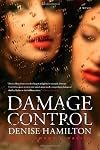
DAMAGE CONTROL by Denise Hamilton
Scribner (September 2011)
Review by Linda S. Brown
Author Denise Hamilton has a unique way of “drawing” various parts of Los Angeles: glamorous or gritty, her style is positively melodic. One thing is clear, however, you can’t take the investigator out of the author, a former reporter for the Los Angeles Times. In Maggie Silver, protagonist of this new mystery, DAMAGE CONTROL, there are hints of Hamilton’s popular journalist character, Eve Diamond, from show more her earlier series. What makes DAMAGE CONTROL unique from Hamilton’s earlier works are the interesting time jumps between 1993 – when Maggie and Anabelle were teenaged best friends – and 2009 (the period Hamilton has set as present day). History, particularly social events and technology, made great leaps during that brief span of time.
The opening scene is poetic in cadence, with an early hint of danger and intrigue. The setting is the summer of 1993, with Maggie as a high school student hanging at a party with some very cool kids in a very cool (if seedy) beach scene. As Maggie and her friend Anabelle approach the scene, they stop under a palm tree “for a lip gloss boost. Above us, something rustled, but when I looked up, it was only dead gray fronds trembling in the breeze. The air smelled of coconut oil, spilled beer, and Mr. Zog’s Sex Wax.” (The wax, by the way, is for surfboards.) “From the party bungalow came hoots and jeers, then the knifing soprano of a girl’s laugh. Black Flag blasted from fuzzy speakers. As the song ended, a wave crashed in perfect time just beyond the dunes.”
In late summer 2009, the now adult Maggie Silver works for The Blair Company, a public relations firm that specializes in cleaning up messes in which celebrities and politicians find themselves caught. Her boss, Jack Faraday, is a rather frightening figure, ruthless in his protection of the firm’s clients and relentless in his use of his employees. In addition to Maggie (public relations specialist), there is Fletch (resident computer geek), and Matt Tyler (company investigator). And there is the almost mythical Thomas Blair, the genius and power behind the curtain.
As mastermind Blair points out, “The Internet abhors a vacuum,” Blair said. “If you don’t talk, others will, and within hours you’ll have an electronic echo chamber of gossip and innuendo.” And in 2009, TMZ, Twitter, Facebook, MySpace and other blogs and online media outlets were taking the lead in releasing news to the public, particularly the public’s avaricious following of celebrity news and scandal.
DAMAGE CONTROL is about crisis management on a celebrity level, and Hamilton shines a very bright light on scandal. Blair sets up what the company calls a “truth squad” to confront media about attacks on their clients and “press mentions.” When they find a mistake they call up the culpable journalist, casting themselves as “crusaders for journalism ethics.”
Maggie thinks of it more as working magic. Occasionally, however, the magic turns nightmarish, as when she finds herself having to work “damage control” on the family she knew so well as a teen, the family of her teenaged best friend, Anabelle Paxton.
The methods of crisis management can be appalling to those being “managed”: the new client, U.S. Senator Henry Paxton, comes to The Blair Company when his young aide, Emily Mortimer, is discovered dead. The Blair CM team suggests a press conference with the Senator and the aide’s grieving parents. “Henry Paxton stared at Faraday with revulsed fascination.” Apparently, it doesn’t suit the senator’s East Coast prep school background and Pacific Palisades present-day lifestyle to use the tragedy of others’ to further his own cause. It does not, however, prevent him from holding the press conference.
There are times in this novel when the author appears uncomfortable with dialogue. It is almost as if dialogue is employed by reluctant necessity, as if the author has already allowed the reader to venture so far into the characters’ heads that spoken words should not be required.
Hamilton’s experience as a reporter shows in the thoroughness of her research: her character’s use of Adderall as a performance (neuro) enhancer, as well as politics, intrigue, and of all things, perfume, the special idiosyncrasy of Maggie.
There is, of course, romance, in addition to intrigue and murder: Maggie, Anabelle, Anabelle’s police captain husband Randall, Anabelle’s handsome brother Luke, the Blair investigator Matt – all find themselves in varying roles that need untangling throughout the novel, some past-tense, some in present time.
But the over-arching theme in DAMAGE CONTROL seems to be scent. Fragrance. Aroma. Perfume… This is the sense that plays the most significant role to Maggie. This reviewer asked the author about that topic in an online blog exchange:
LB: Denise, I'm fascinated by your use of perfume -- and other fragrances, scents, aromas -- in DAMAGE CONTROL. It's an incredible book, and almost causes sensory overload … What made you focus on scent as a motif?
DH: Hi Linda, I'm so glad you enjoyed my book. Regarding sensory overload, well, I guess that's how I experience the world on a daily basis - on the verge of sensory overload. I've always used a lot of sensory images in my books. In SUGAR SKULL, Eve Diamond is crawling through the dirt basement of an abandoned building damaged by an earthquake and I tried to imagine what it smelled like, that damp, dank smell of earth, of rotting wood, the chalky dust in the back of your throat from the plaster falling off and decaying. I also think that in LA we live in an olfactory paradise - the fragrant orange blossoms, night blooming jasmine, sage and thyme and rosemary of the hills...the salt tang of the sea. So that was all natural scents, and then with my interest in perfume, I added in more complex blended scents. I think that smell is the least appreciated and utilized of our five senses, and it was time to bring it back to the fore, especially in solving a mystery!
Hamilton excels in her use of various types of sensuality in her descriptions of surroundings – the sight of particular architecture, the smells of certain flowers, the sounds of music or the ocean – but in the sensual world of DAMAGE CONTROL there is no romance or relationship that hasn’t been tainted or spoiled or thwarted.
The question is can Maggie Silver stay in control of her own senses long enough to solve the murders – and protect herself from the “damage control” sought by others? show less
Scribner (September 2011)
Review by Linda S. Brown
Author Denise Hamilton has a unique way of “drawing” various parts of Los Angeles: glamorous or gritty, her style is positively melodic. One thing is clear, however, you can’t take the investigator out of the author, a former reporter for the Los Angeles Times. In Maggie Silver, protagonist of this new mystery, DAMAGE CONTROL, there are hints of Hamilton’s popular journalist character, Eve Diamond, from show more her earlier series. What makes DAMAGE CONTROL unique from Hamilton’s earlier works are the interesting time jumps between 1993 – when Maggie and Anabelle were teenaged best friends – and 2009 (the period Hamilton has set as present day). History, particularly social events and technology, made great leaps during that brief span of time.
The opening scene is poetic in cadence, with an early hint of danger and intrigue. The setting is the summer of 1993, with Maggie as a high school student hanging at a party with some very cool kids in a very cool (if seedy) beach scene. As Maggie and her friend Anabelle approach the scene, they stop under a palm tree “for a lip gloss boost. Above us, something rustled, but when I looked up, it was only dead gray fronds trembling in the breeze. The air smelled of coconut oil, spilled beer, and Mr. Zog’s Sex Wax.” (The wax, by the way, is for surfboards.) “From the party bungalow came hoots and jeers, then the knifing soprano of a girl’s laugh. Black Flag blasted from fuzzy speakers. As the song ended, a wave crashed in perfect time just beyond the dunes.”
In late summer 2009, the now adult Maggie Silver works for The Blair Company, a public relations firm that specializes in cleaning up messes in which celebrities and politicians find themselves caught. Her boss, Jack Faraday, is a rather frightening figure, ruthless in his protection of the firm’s clients and relentless in his use of his employees. In addition to Maggie (public relations specialist), there is Fletch (resident computer geek), and Matt Tyler (company investigator). And there is the almost mythical Thomas Blair, the genius and power behind the curtain.
As mastermind Blair points out, “The Internet abhors a vacuum,” Blair said. “If you don’t talk, others will, and within hours you’ll have an electronic echo chamber of gossip and innuendo.” And in 2009, TMZ, Twitter, Facebook, MySpace and other blogs and online media outlets were taking the lead in releasing news to the public, particularly the public’s avaricious following of celebrity news and scandal.
DAMAGE CONTROL is about crisis management on a celebrity level, and Hamilton shines a very bright light on scandal. Blair sets up what the company calls a “truth squad” to confront media about attacks on their clients and “press mentions.” When they find a mistake they call up the culpable journalist, casting themselves as “crusaders for journalism ethics.”
Maggie thinks of it more as working magic. Occasionally, however, the magic turns nightmarish, as when she finds herself having to work “damage control” on the family she knew so well as a teen, the family of her teenaged best friend, Anabelle Paxton.
The methods of crisis management can be appalling to those being “managed”: the new client, U.S. Senator Henry Paxton, comes to The Blair Company when his young aide, Emily Mortimer, is discovered dead. The Blair CM team suggests a press conference with the Senator and the aide’s grieving parents. “Henry Paxton stared at Faraday with revulsed fascination.” Apparently, it doesn’t suit the senator’s East Coast prep school background and Pacific Palisades present-day lifestyle to use the tragedy of others’ to further his own cause. It does not, however, prevent him from holding the press conference.
There are times in this novel when the author appears uncomfortable with dialogue. It is almost as if dialogue is employed by reluctant necessity, as if the author has already allowed the reader to venture so far into the characters’ heads that spoken words should not be required.
Hamilton’s experience as a reporter shows in the thoroughness of her research: her character’s use of Adderall as a performance (neuro) enhancer, as well as politics, intrigue, and of all things, perfume, the special idiosyncrasy of Maggie.
There is, of course, romance, in addition to intrigue and murder: Maggie, Anabelle, Anabelle’s police captain husband Randall, Anabelle’s handsome brother Luke, the Blair investigator Matt – all find themselves in varying roles that need untangling throughout the novel, some past-tense, some in present time.
But the over-arching theme in DAMAGE CONTROL seems to be scent. Fragrance. Aroma. Perfume… This is the sense that plays the most significant role to Maggie. This reviewer asked the author about that topic in an online blog exchange:
LB: Denise, I'm fascinated by your use of perfume -- and other fragrances, scents, aromas -- in DAMAGE CONTROL. It's an incredible book, and almost causes sensory overload … What made you focus on scent as a motif?
DH: Hi Linda, I'm so glad you enjoyed my book. Regarding sensory overload, well, I guess that's how I experience the world on a daily basis - on the verge of sensory overload. I've always used a lot of sensory images in my books. In SUGAR SKULL, Eve Diamond is crawling through the dirt basement of an abandoned building damaged by an earthquake and I tried to imagine what it smelled like, that damp, dank smell of earth, of rotting wood, the chalky dust in the back of your throat from the plaster falling off and decaying. I also think that in LA we live in an olfactory paradise - the fragrant orange blossoms, night blooming jasmine, sage and thyme and rosemary of the hills...the salt tang of the sea. So that was all natural scents, and then with my interest in perfume, I added in more complex blended scents. I think that smell is the least appreciated and utilized of our five senses, and it was time to bring it back to the fore, especially in solving a mystery!
Hamilton excels in her use of various types of sensuality in her descriptions of surroundings – the sight of particular architecture, the smells of certain flowers, the sounds of music or the ocean – but in the sensual world of DAMAGE CONTROL there is no romance or relationship that hasn’t been tainted or spoiled or thwarted.
The question is can Maggie Silver stay in control of her own senses long enough to solve the murders – and protect herself from the “damage control” sought by others? show less

The first in a new city-based series from Akashic Books, Speculative Los Angeles is a triumph. The stories range from magical realism, to Sci-Fi, to noir, to pure horror. These are not happy stories by any stretch of the imagination, but they will reach inside you, grab hold of your heart, your lungs, your stomach, and tear you apart. The first few were some of the hardest to read, for me. I sobbed almost the entire way through Alex Espinoza's "Detainment", and "Peak TV" by Ben H. Winters show more scared me so much I almost tossed the entire book in my freezer. The collection ends with "Sailing that Beautiful Sea" by Kathleen Kaufman, which was hauntingly beautiful and bittersweet. As for the tales in between, they were gray and desolate, exquisitely constructed stories of alternate realities, AI, and climate disasters. I'm a huge fan of the Akashic Noir series and I cannot wait to see what Akashic comes up with next. show less
 This review was written for LibraryThing Early Reviewers.
Frivolous and nonsubstantive, these noir stories are great as literary diversions. Fractured and irredeemable Los Angeles is given a nightmarish tinge and allowed to be nothing more than what it is, a rotting memory of so many transplants to the mythos of the doomland. Kathleen Kaufman gives a nice summation of the whole project, "She had learned long ago that tears had no place in the world--but it was a motion of grief, of recognition that nothing you ever do is enough, the truth that what show more we have to offer is not always adequate but will suffice nonetheless.' Perfect book for living through a pandemic. show less
This review was written for LibraryThing Early Reviewers.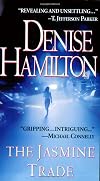
I cannot say enough about the writing style of Denise Hamilton. She not only knows the streets of LA, she breathes life into them through her every written word. It's chilling to read her books. Denise has the skill of a fine surgeon, knowing just when and where to place the razor and how to cut to release that last shred of skin between our belief and disbelief. Her hand is quick and so adept we hardly know we've been "had" until it's over and we're shocked to see our heart in our hands. show more She is a master writer of this genre. I have a feeling Denise is a masterful writer of anything she chooses to put her mind to. I thinks she's spoiled me for reading anyone else in noir fiction, female or male.
"The Jasmine Trade" is breathtaking. I was completely spellbound by the insider information and story surrounding a young girl killed outside a shop with her bridal dresses in her car! What starts out as a horrendous, but not that unusual these days, tale of a young girl's tragic murder, turned into a spider web of the macabre for me. Denise Hamilton unveiled layer after layer of LA's underside, teaching me things I had no idea existed; i.e., "parachute kids?" I'd never even heard this was happening in our country. And she shone a light into some dark dwellings both physical and psychological that left me shuttering.
What I found most exciting about Ms Hamilton's writing in both the novels I read (and her short story "Midnight In Silicon Alley" in her L. A. Noir Collection) was her ability to use an ordinary pace, an simple staccato of words and sentences to lay out the most astounding and dark situations. A clip of interchange between characters that conveyed more than just the words themselves...It was like reading the movements of a cat studying it's prey before pouncing! Glorious and so unusual I wanted to clap and yell, "Yes!!" several times through the books. This kind of writing is intense and so freaking rare!
Let me say a little bit about Eve Diamond, who is the journalist/investigative writer protagonist of "The Jasmine Trade." She is vulnerable, hard-core on the side of right, and devoted to her story. I'm a huge fan of this character. I loved everything about her. Hamilton hits just the right chords with her balance between a woman with the insecurities of a feminine sort, and a journalist looking for more than just the surface report in order to lift the scab off a deeper slash on the LA landscape. It's Denise's development of both these sides of her that makes Eve a remarkable character, but it's the use of Eve's vulnerabilities that makes the story itself just blast off the pages. She is unrelenting when looking for the truth behind a murder; but, bound up and driving that is the underlying concern for Asian children abandoned by their parents, for instance. Eve Diamond is a character I can happily read more about in Hamilton's other novels.
What was new to me about these books among all the books I've read? The dark tone of "voice." The descriptions of the underbelly of the city and the surrounding scruff and side-beaches. The brilliance of too much light at night and used tinsel garishness by day, both literally and figuratively. The "invisible" people that stray and strand along the sidelines of the glitz and glamour of Hollywood and LA. Concepts of evil hidden behind the flat, compliant faces of ordinary kids in designer label outfits- -apparently, no drugs applied. How swiftly calm, security and routine can be smashed in a smoky room, in an unknown section of town where you weren't aware that nobody speaks English, and you don't know how to get a ride home. The multi-cultural nature of a city that is a microcosom of our country and where we're headed.
I've tried to convey to you how unusual and how brilliant a writer Denise Hamilton really is. "Damage Control" will send ice splints through your veins. "The Jasmine Trade" will change the way you look at Asian children and their parents for a while; at least it changed things for me. I haven't been able to put these books, and Ms Hamilton's short story out of my mind. I keep returning to parts of them long after I've read them. When studying fine arts and art history I learned that one of the tests of a masterpiece is that we can't stop looking at it. We find ourselves continually drawn back into the painting, finding more things of interest and wanting to look at it longer. There is much of this quality in Denise Hamilton's books. They just keep coming back to haunt you show less
"The Jasmine Trade" is breathtaking. I was completely spellbound by the insider information and story surrounding a young girl killed outside a shop with her bridal dresses in her car! What starts out as a horrendous, but not that unusual these days, tale of a young girl's tragic murder, turned into a spider web of the macabre for me. Denise Hamilton unveiled layer after layer of LA's underside, teaching me things I had no idea existed; i.e., "parachute kids?" I'd never even heard this was happening in our country. And she shone a light into some dark dwellings both physical and psychological that left me shuttering.
What I found most exciting about Ms Hamilton's writing in both the novels I read (and her short story "Midnight In Silicon Alley" in her L. A. Noir Collection) was her ability to use an ordinary pace, an simple staccato of words and sentences to lay out the most astounding and dark situations. A clip of interchange between characters that conveyed more than just the words themselves...It was like reading the movements of a cat studying it's prey before pouncing! Glorious and so unusual I wanted to clap and yell, "Yes!!" several times through the books. This kind of writing is intense and so freaking rare!
Let me say a little bit about Eve Diamond, who is the journalist/investigative writer protagonist of "The Jasmine Trade." She is vulnerable, hard-core on the side of right, and devoted to her story. I'm a huge fan of this character. I loved everything about her. Hamilton hits just the right chords with her balance between a woman with the insecurities of a feminine sort, and a journalist looking for more than just the surface report in order to lift the scab off a deeper slash on the LA landscape. It's Denise's development of both these sides of her that makes Eve a remarkable character, but it's the use of Eve's vulnerabilities that makes the story itself just blast off the pages. She is unrelenting when looking for the truth behind a murder; but, bound up and driving that is the underlying concern for Asian children abandoned by their parents, for instance. Eve Diamond is a character I can happily read more about in Hamilton's other novels.
What was new to me about these books among all the books I've read? The dark tone of "voice." The descriptions of the underbelly of the city and the surrounding scruff and side-beaches. The brilliance of too much light at night and used tinsel garishness by day, both literally and figuratively. The "invisible" people that stray and strand along the sidelines of the glitz and glamour of Hollywood and LA. Concepts of evil hidden behind the flat, compliant faces of ordinary kids in designer label outfits- -apparently, no drugs applied. How swiftly calm, security and routine can be smashed in a smoky room, in an unknown section of town where you weren't aware that nobody speaks English, and you don't know how to get a ride home. The multi-cultural nature of a city that is a microcosom of our country and where we're headed.
I've tried to convey to you how unusual and how brilliant a writer Denise Hamilton really is. "Damage Control" will send ice splints through your veins. "The Jasmine Trade" will change the way you look at Asian children and their parents for a while; at least it changed things for me. I haven't been able to put these books, and Ms Hamilton's short story out of my mind. I keep returning to parts of them long after I've read them. When studying fine arts and art history I learned that one of the tests of a masterpiece is that we can't stop looking at it. We find ourselves continually drawn back into the painting, finding more things of interest and wanting to look at it longer. There is much of this quality in Denise Hamilton's books. They just keep coming back to haunt you show less
Awards


You May Also Like


Associated Authors
Statistics
- Works
- 11
- Also by
- 5
- Members
- 940
- Popularity
- #27,333
- Rating
- 3.6
- Reviews
- 51
- ISBNs
- 88
- Languages
- 1
- Favorited
- 1

