
Brian Doyle (1) (1935–2026)
Author of Hoping for Home: Stories of Arrival
For other authors named Brian Doyle, see the disambiguation page.
About the Author
Brian Doyle was shortlisted for the prestigious Hans Christian Andersen Award in 1998. He has won numerous Canadian awards, including three Canadian Library Association's Book of the Year for Children medals and two Mr. Christie's Book Awards. Brian's many American honors include being selected for show more ABA Pick of the Lists, the Horn Book Fanfare list, and the New York Public Library's Best Books for the Teen Age show less
Image credit: School Services of Canada
Series
Works by Brian Doyle
Associated Works
This Land : A Cross-Country Anthology of Canadian Fiction for Young Readers (1998) — Contributor — 39 copies, 1 review
Tagged
Common Knowledge
- Birthdate
- 1935-08-12
- Date of death
- 2026-01-01
- Gender
- male
- Occupations
- children's book author
- Awards and honors
- Vicky Metcalf Award (1991)
American Academy of Arts and Letters Academy Award (Literature, 2008) - Nationality
- Canada
- Birthplace
- Ottawa, Ontario, Canada
- Places of residence
- Chelsea, Québec, Canada
- Place of death
- Wakefield, Québec, Canada
- Associated Place (for map)
- Canada
Members
Reviews
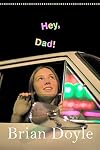
"If they seem big to you from here, they won't seem as big when you get there. Everything is different than it looks to be. The lakes that seem big and deep are small and shallow. The lakes that seem small and shallow are big and deep. The land that looks kind is cruel. The sky that looks fierce is friendly."
This book has only just over 100 pages but it has managed to make me fall asleep more times than any of the 600 page novels I read recently, and this even although the premise of the show more book looks interesting:
13-year-old Megan's family is spending the summer holidays on a road trip with her family. Packed up in the car the family drives from Ottawa all across Canada to Vancouver. The only problem - Megan does not want to be there. Very early on she falls out with her dad, and most of the book is about her being a (stereo-)typical teenager.
Doyle succeeds in capturing that mood of Megan's not wanting to go on the trip, and her boredom, and her embarrassment when her father tries too hard to be cool. Where the book falls flat is in the plot. Not much happens until the last quarter of the book, and even then, the narration is kept so short that many of the interesting points about this coming of age story are lost or aren't explored at all. show less
This book has only just over 100 pages but it has managed to make me fall asleep more times than any of the 600 page novels I read recently, and this even although the premise of the show more book looks interesting:
13-year-old Megan's family is spending the summer holidays on a road trip with her family. Packed up in the car the family drives from Ottawa all across Canada to Vancouver. The only problem - Megan does not want to be there. Very early on she falls out with her dad, and most of the book is about her being a (stereo-)typical teenager.
Doyle succeeds in capturing that mood of Megan's not wanting to go on the trip, and her boredom, and her embarrassment when her father tries too hard to be cool. Where the book falls flat is in the plot. Not much happens until the last quarter of the book, and even then, the narration is kept so short that many of the interesting points about this coming of age story are lost or aren't explored at all. show less
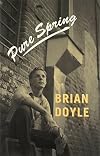
It begins with a lie. Martin O'Boy, anxious to get a job with the Pure Spring soft-drink company, tells his prospective employer, kindly Mr. Mirsky, that he's 16 when, in fact, he's a year younger. He gets the job, but his lie leads to his being blackmailed by his immediate boss, who forces the boy to assist in a scheme to rob their customers. Set in the early 1950s in Ottawa, this historical novel is a sequel of sorts to Doyle's Boy O'Boy (2004) but can be read independently. Like the show more first, it's invested with a sense of innocence, is rich in period detail, and is redolent of Doyle's nostalgia for the good old days. Its introduction of the Soviet defector Igor Gouzenko lends the story the air of a Saturday morning movie serial. Although this will have more appeal to adults than to teens, Martin and his grandpa Rip are engaging characters, and Doyle fans will welcome his latest effort. Reminds me of Richard PEeck's books! show less

Aimed at young adult readers, this novel tells us about the eccentric residents of the village, Mushrat Creek, in Eastern Quebec. The story centres around the covered bridge in the village as seen through the eyes of Hubbo, an orphan who has moved there with his aunt. He wonders why the local postman always stops for a few minutes in the bridge while making his twice daily delivery of the mail. Father Foley, the local priest is noted for his fiery Sunday sermons is found dead one morning in show more the bridge. What killed him? Then there is the crazy goat.
The narrative is spiced with humour and loveable characters who populate this village near the Gatineau River. Readers, who have a knowledge of the geography of the area, will recognize places such as Kazabazua, Brennan's Hill, Low and Farrelton. show less
The narrative is spiced with humour and loveable characters who populate this village near the Gatineau River. Readers, who have a knowledge of the geography of the area, will recognize places such as Kazabazua, Brennan's Hill, Low and Farrelton. show less
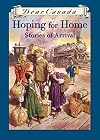
This entire series is a wonderful way to learn history or teach it to adolescents. I find today's generations seem to recall more when they learn through other people (pop songs, celebrity gossip, etc.), so what better way to teach history than through someone else's perspective? Yes, "authentic" diaries would be "better", but would the language really hold the modern student's attention? Did the diary writer know what WOULD be important in the context of history? Probably not.
Lists
Awards


You May Also Like


Associated Authors
Statistics
- Works
- 15
- Also by
- 5
- Members
- 602
- Popularity
- #41,740
- Rating
- 3.3
- Reviews
- 11
- ISBNs
- 213
- Languages
- 5