

Glen Huser
Author of Stitches
Works by Glen Huser
Tagged
Common Knowledge
Members
Reviews

“When I think that you came to this country—a kind of golden dream before you—and this is what the dream turned into, it makes me ashamed.”
Huser’s novel for older children and young adults focuses on Canada’s World War I internment of enemy aliens from the Austro-Hungarian Empire, most of them Ukrainian Canadians. The author brings this shameful piece of Canadian history to life through the story of two orphaned brothers, Alex and Marco Kaminsky. His telling is enriched with show more Slavic and Ukrainian folksongs and tales, art and music. As the book opens, Alex, who’s about 14, is living with his uncle; his older brother, Marco, has gone off to work as a farmhand on the Granger farm in Vegreville, Alberta. He is expected to return in December.
Uncle Andrew is known to love his moonshine. Drinking heavily late into the night, he knocks over a kerosene lamp and sets his farmhouse ablaze. Alex, awakened in the loft by the smoke, tries unsuccessfully to save his uncle, only to have his own hands and face badly burned. He’s rescued by neighbours and taken to the home of a local rural nurse. Once sufficiently recovered, he is determined to find Marco, who mysteriously and uncharacteristically did not return to Uncle Andrew’s farm when he said he would.
Huser’s novel details Alex’s quest to find his brother. Young, penniless, and not yet fluent in English, Alex is helped along the way by a postmaster/shopkeeper and a Norwegian carpenter, as well as a sensitive schoolteacher and the moneyed aunt who raised him. It turns out that a confrontation with the farmer who cheated him of his wages was enough to have Marco arrested, detained, and used as slave labour in an internment camp in Banff, Alberta. Conditions are brutal for men imprisoned there. Many become ill and die. Some try to escape: a few are successful; others are tracked down or shot.
While Alex’s determination to find his brother is rewarded, the story is ultimately one of great sadness.In his debilitated state, Marco has contracted TB and isn’t long for this world. A secondary plot strand focuses on Stella, a young Ukrainian-Canadian woman forced into marriage at 15 to a man over twice her age: Granger, the brutish farmer who held back Marco’s wages. During Marco’s time on her husband’s farm, Stella and the young man fell in love, which further fuelled Granger’s domestic abuse.
Huser manages to communicate a great deal about conditions in rural Alberta during the second decade of the twentieth century. Canada was then a rigidly WASPish place; bigotry towards Eastern Europeans was rampant and intense. Through Stella’s story, Huser also manages to give young readers a sense of immigrant women’s difficult lot—their lack of agency and access to education, poverty, and, once married, their endless pregnancies. (I know this fairly intimately, as my Ukrainian-Canadian grandmother was one of these women.)
I’ve read two other of Huser’s novels for young people and know him to be a sensitive and skillful writer. In this story, I believe he attempted to counterbalance the distrust and prejudice of many Anglo-Canadians towards immigrants by having his likeable main character assisted by people with great generosity of spirit, but I was not convinced that this would have been the way things were for a boy in Alex’s shoes. Given the sadness of the story, however, I understand that decision in a novel for young people. show less
Huser’s novel for older children and young adults focuses on Canada’s World War I internment of enemy aliens from the Austro-Hungarian Empire, most of them Ukrainian Canadians. The author brings this shameful piece of Canadian history to life through the story of two orphaned brothers, Alex and Marco Kaminsky. His telling is enriched with show more Slavic and Ukrainian folksongs and tales, art and music. As the book opens, Alex, who’s about 14, is living with his uncle; his older brother, Marco, has gone off to work as a farmhand on the Granger farm in Vegreville, Alberta. He is expected to return in December.
Uncle Andrew is known to love his moonshine. Drinking heavily late into the night, he knocks over a kerosene lamp and sets his farmhouse ablaze. Alex, awakened in the loft by the smoke, tries unsuccessfully to save his uncle, only to have his own hands and face badly burned. He’s rescued by neighbours and taken to the home of a local rural nurse. Once sufficiently recovered, he is determined to find Marco, who mysteriously and uncharacteristically did not return to Uncle Andrew’s farm when he said he would.
Huser’s novel details Alex’s quest to find his brother. Young, penniless, and not yet fluent in English, Alex is helped along the way by a postmaster/shopkeeper and a Norwegian carpenter, as well as a sensitive schoolteacher and the moneyed aunt who raised him. It turns out that a confrontation with the farmer who cheated him of his wages was enough to have Marco arrested, detained, and used as slave labour in an internment camp in Banff, Alberta. Conditions are brutal for men imprisoned there. Many become ill and die. Some try to escape: a few are successful; others are tracked down or shot.
While Alex’s determination to find his brother is rewarded, the story is ultimately one of great sadness.
Huser manages to communicate a great deal about conditions in rural Alberta during the second decade of the twentieth century. Canada was then a rigidly WASPish place; bigotry towards Eastern Europeans was rampant and intense. Through Stella’s story, Huser also manages to give young readers a sense of immigrant women’s difficult lot—their lack of agency and access to education, poverty, and, once married, their endless pregnancies. (I know this fairly intimately, as my Ukrainian-Canadian grandmother was one of these women.)
I’ve read two other of Huser’s novels for young people and know him to be a sensitive and skillful writer. In this story, I believe he attempted to counterbalance the distrust and prejudice of many Anglo-Canadians towards immigrants by having his likeable main character assisted by people with great generosity of spirit, but I was not convinced that this would have been the way things were for a boy in Alex’s shoes. Given the sadness of the story, however, I understand that decision in a novel for young people. show less
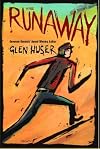
The year is 1923, and sixteen year old Leroy “Doodlebug” Barnstable is on the run from his abusive cousins. Leroy has not had the best of years. His father is killed in an automobile accident that cripples, and eventually kills, his mother as well. After his father’s death the family farm is sold off and Leroy and his mother move in with his mother’s sister-in-law and her terrifyingly stern sons. Leroy is forced to work long hours on the farm with no pay. When his mother passes away, show more Leroy steals what he feels he is owed from his cousin’s stash of cash, takes a horse, and rides off into the night. He doesn’t get as far as he would like. Leroy’s cousin catches up to him in the nearest town and Leroy is forced to hide inside the rail car of a Chautauqua show that is passing through town. Thus begins Leroy’s summer as an assistant and performer in the Chautauqua circuit. He makes a name for himself a caricature artist; making an impression on the boss’s daughter. Events culminate with a detrimental tent fire and Leroy coming face to face with his cousin.
Although The Runaway is a short read, I thoroughly enjoyed it. The characters may be developed quickly, but they are developed well. Huser’s writing style is simple with a vocabulary that is interesting without being too challenging. This piece of historical fiction vividly captures 1920’s America through the heartwarming story of a young man who has lost everything. My only wish is that the story would have lasted longer. I felt the ending was wrapped up too quickly. I would definitely recommend this book to both middle school and high school aged teens. show less
Although The Runaway is a short read, I thoroughly enjoyed it. The characters may be developed quickly, but they are developed well. Huser’s writing style is simple with a vocabulary that is interesting without being too challenging. This piece of historical fiction vividly captures 1920’s America through the heartwarming story of a young man who has lost everything. My only wish is that the story would have lasted longer. I felt the ending was wrapped up too quickly. I would definitely recommend this book to both middle school and high school aged teens. show less
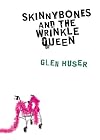
Tamara is a prickly teen who's been kicked out of foster homes. Jean Barclay is 89 and feisty, despite being sidelined by a hip replacement. The two meet when Tamara's high school class has a project at the senior home. Their hardheaded natures become collaborative assets as they plan a cross-Canada trip to pursue their dreams. This story of intergenerational friendship is light, funny and poignant. Although Tamara's and Miss Barclay's characters didn't seem deeply drawn to me, I enjoyed the show more development of their often prickly relationship. show less

This was a quick read. The plot formula is a tad familiar. What can two tough individuals, separated by a huge generational divide of 75 years, learn from each other? The road trip they embark upon is a bit fanciful - Tamara has virtually no experience driving a car and yet seems to manage the insane traffic of Greater Vancouver with only a couple of minor mishaps - and "lessons learned" doesn't seem to be high on either Tamara or Miss Barclay's agendas but I did enjoy the local setting of a show more road trip from Edmonton, Alberta to Seattle Washington and Vancouver, BC. It is obvious that the author is a fan of Charles Dickens' works and Wagner's operas, in particular Wagner's Ring Cycle. Huser manages to incorporate both of these into the story. Great Expectations is the book Tamara is reading as part of her Language Arts class at school so it isn't surprising for references to that story to abound here, with Tamara referring to Miss Barclay as "My own private Miss Havisham." and Miss Barclay reading various Dickens stories as a way to deal with her age-related insomnia.
Overall, one of those books one reads for the anticipated character personality clashes, the adventure of the road trip and for me, the bonus of familiar local settings. show less
Overall, one of those books one reads for the anticipated character personality clashes, the adventure of the road trip and for me, the bonus of familiar local settings. show less
Lists
Awards


You May Also Like


Associated Authors
Statistics
- Works
- 14
- Members
- 256
- Rating
- 3.7
- Reviews
- 11
- ISBNs
- 44
- Languages
- 1