
James Gunn (1) (1923–2020)
Author of The Joy Machine
For other authors named James Gunn, see the disambiguation page.
James Gunn (1) has been aliased into James E. Gunn.
About the Author
Image credit: James Edwin Gunn, SF author,
at the 2006 Nebula Awards
held in New York City, 2007
Copyright © 2007 Ron Hogan
at the 2006 Nebula Awards
held in New York City, 2007
Copyright © 2007 Ron Hogan
Series
Works by James Gunn
Works have been aliased into James E. Gunn.
The Best of Astounding: Classic Short Novels from the Golden Age of Science Fiction (1992) 22 copies
Asimov's Science Fiction: Vol. 45, No. 9 & 10 [September/October 2021] (2021) — Contributor — 7 copies
Against The Stars 2 copies
Transcendental - The Trilogy (The Transcendental Machine trilogy) (Transcendental / Transgalactic / Transformation) (2020) 2 copies
KAMPUS Easton Press 1 copy
Reclaiming The Stars 1 copy
Singular Days 1 copy
In Our Stars 1 copy
Quantum Theory 1 copy
Return From The Stars 1 copy
Consciousness: 4107's Story 1 copy
Witch Hunt 1 copy
If I Forget Thee {novella} 1 copy
Little Orphan Android 1 copy
The Stilled Patter 1 copy
Skin Game 1 copy
Everyday Is Christmas 1 copy
Survival Policy 1 copy
Trial By Fire 1 copy
Road to Science Fiction, The 1 copy
I fabbricanti di felicità 1 copy
The Boy With Five Fingers 1 copy
Witches Must Burn 1 copy
Patterns 1 copy
The Last Word 1 copy
Elixir 1 copy
Associated Works
Works have been aliased into James E. Gunn.
The War of the Worlds (1898) — Afterword, some editions; Introduction, some editions; Preface, some editions — 21,418 copies, 357 reviews
Mapping the World of Harry Potter: An Unauthorized Exploration of the Bestselling Fantasy Series of All Time (2005) — Contributor — 337 copies, 6 reviews
Taking the Red Pill: Science, Philosophy and Religion in The Matrix (2003) — Contributor — 311 copies, 4 reviews
Gateways: A Feast of Great New Science Fiction Honoring Grand Master Frederik Pohl (2010) — Contributor — 113 copies, 2 reviews
Science Fiction Today and Tomorrow: A Discursive Symposium (1974) — Contributor — 99 copies, 2 reviews
Nebula Awards 30: SFWA's Choices For The Best Science Fiction And Fantasy Of The Year (Nebula Awards Showcase) (1996) — Contributor — 87 copies, 2 reviews
Analog Science Fiction/Science Fact: Vol. XCVII, No. 3 (March 1977) (1977) — Contributor — 29 copies
Asimov's Science Fiction: Vol. 41, No. 11 & 12 [November/December 2017] (2017) — Contributor — 22 copies, 3 reviews
King Kong Is Back!: An Unauthorized Look at One Humongous Ape! (Smart Pop series) (2005) — Contributor — 19 copies
Asimov's Science Fiction: Vol. 41, No. 9 & 10 [September/October 2017] (2017) — Contributor — 17 copies, 2 reviews
Asimov's Science Fiction: Vol. 42, No. 1 & 2 [January/February 2018] (2018) — Contributor — 12 copies
Asimov's Science Fiction: Vol. 42, No. 3 & 4 [March/April 2018] (2018) — Contributor — 12 copies, 1 review
Asimov's Science Fiction: Vol. 38, No. 9 [September 2014] (2014) — Contributor — 10 copies, 1 review
Asimov's Science Fiction: Vol. 41, No. 7 & 8 [July/August 2017] (2017) — Contributor — 9 copies, 1 review
Analog Science Fiction and Fact: Vol. CXXXVI, No. 1 & 2 (January/February 2016) (2016) — Contributor — 9 copies
Asimov's Science Fiction: Vol. 43, No. 11 & 12 [November/December 2019] (2019) — Contributor — 5 copies
Asimov's Science Fiction: Vol. 44, No. 11 & 12 [November/December 2020] (2020) — Contributor — 3 copies
Albedo One, issue 38 — Interviewee — 1 copy
Tagged
Common Knowledge
- Legal name
- Gunn, James Edwin
- Other names
- James, Edwin
- Birthdate
- 1923-07-12
- Date of death
- 2020-12-23
- Gender
- male
- Education
- University of Kansas (BS ∙ Journalism)
- Occupations
- professor (English)
editor
novelist
short story writer - Organizations
- Science Fiction and Fantasy Writers of America (President)
Center for the Study of Science Fiction (Director)
United States Navy
University of Kansas (Director of Public Relations) - Awards and honors
- SFWA Grand Master (2007)
SFRA Pilgrim Award (1976) - Nationality
- USA
- Birthplace
- Kansas City, Missouri, USA
- Places of residence
- Kansas City, Missouri, USA
- Place of death
- Lawrence, Kansas, USA
- Associated Place (for map)
- Kansas City, Missouri, USA
Members
Reviews
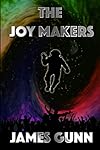
This novel is about what the word “happy” really means—and about freedom: “An unhappy man is a deadly focus of social disintegration” could almost be from George Orwell’s Nineteen Eighty-Four.
The story begins in the small town of Millville when a new company appears on the scene who, for a (huge) price, guarantee your happiness. Joshua Hunt’s initial scepticism gradually falters and, long dissatisfied with his life, he signs up for their services. What he finds himself show more increasingly drawn into is something called “hedonics”; but what is it exactly—a new form of psychotherapy, a new science or religion even? At its heart is a rigorous programme of self-discipline, using a combination of medical advances (if these really are “advances”) and an array of techniques for self-imposed mind-control. And Hedonics Inc. are ambitious: this is a whole ideology; and their aim, ultimately, is to create a new and perfect society. “That action is best which produces the greatest happiness of the greatest numbers.” And, “As long as we have these techniques available, nothing—no one—can make us unhappy. Like gods, we hold our own happiness in our own hands.” Mm, well maybe; but this is already sounding like Orwell, and the “perfect society” a dystopia.
A couple of extra things to say about this book. First, it’s divided into three parts, each set further into the future than the last, and was originally published (1954 and ̕55) as three novellas in various science-fiction magazines. Gunn claimed it wasn’t a classic “fix-up” though, that he wrote and sold them with this eventual single novel in mind.
And second, if you read it yourself be prepared for some pretty cringe-inducing 1950s stuff, such as this (talking about the colonisation of Venus): “It took Man four hundred years to conquer the relatively benign North American continent. In less than half that time he would change Venus’s alien, poisonous nature. Already he had tamed her, sweetened her breath, softened her hard bosom. Now he was making her fertile.” Gaah, I mean, where do you start? The way he saw himself, Western civilisation, colonisation, ourselves as a species, the environment, the planet and, of course, women all expressed in forty-five words! (But then, I have no doubt whatsoever that in another seven decades from now our descendants will be cringing, every bit as aghast, at our attitudes).
But if you can put up with that sort of thing, this is a really good read—some of the details in particular highly imaginative. I’m guessing it was mainly meant as a send-up of the Church of Scientology (“hedonics” a parody of scientology’s “dianetics”), which was brand-new back in the 1950s. I can’t help feeling, though, that Gunn must surely have also been influenced, as so many people were, by Orwell’s still-fresh nightmare which had been published only seven years earlier. show less
The story begins in the small town of Millville when a new company appears on the scene who, for a (huge) price, guarantee your happiness. Joshua Hunt’s initial scepticism gradually falters and, long dissatisfied with his life, he signs up for their services. What he finds himself show more increasingly drawn into is something called “hedonics”; but what is it exactly—a new form of psychotherapy, a new science or religion even? At its heart is a rigorous programme of self-discipline, using a combination of medical advances (if these really are “advances”) and an array of techniques for self-imposed mind-control. And Hedonics Inc. are ambitious: this is a whole ideology; and their aim, ultimately, is to create a new and perfect society. “That action is best which produces the greatest happiness of the greatest numbers.” And, “As long as we have these techniques available, nothing—no one—can make us unhappy. Like gods, we hold our own happiness in our own hands.” Mm, well maybe; but this is already sounding like Orwell, and the “perfect society” a dystopia.
A couple of extra things to say about this book. First, it’s divided into three parts, each set further into the future than the last, and was originally published (1954 and ̕55) as three novellas in various science-fiction magazines. Gunn claimed it wasn’t a classic “fix-up” though, that he wrote and sold them with this eventual single novel in mind.
And second, if you read it yourself be prepared for some pretty cringe-inducing 1950s stuff, such as this (talking about the colonisation of Venus): “It took Man four hundred years to conquer the relatively benign North American continent. In less than half that time he would change Venus’s alien, poisonous nature. Already he had tamed her, sweetened her breath, softened her hard bosom. Now he was making her fertile.” Gaah, I mean, where do you start? The way he saw himself, Western civilisation, colonisation, ourselves as a species, the environment, the planet and, of course, women all expressed in forty-five words! (But then, I have no doubt whatsoever that in another seven decades from now our descendants will be cringing, every bit as aghast, at our attitudes).
But if you can put up with that sort of thing, this is a really good read—some of the details in particular highly imaginative. I’m guessing it was mainly meant as a send-up of the Church of Scientology (“hedonics” a parody of scientology’s “dianetics”), which was brand-new back in the 1950s. I can’t help feeling, though, that Gunn must surely have also been influenced, as so many people were, by Orwell’s still-fresh nightmare which had been published only seven years earlier. show less
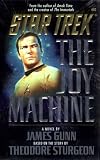
Of all of the Star Trek novels out there, there are none that I look forward to reading more than the ones by authors who also scripted episodes of the show itself, in no small part because they developed the canon upon which the entire series is based. Though Theodore Sturgeon's novel was developed from a plot outline for the series by another author (the under-appreciated James Gunn), to read a work originating from the writer of "Shore Leave" and the Vulcan-defining classic "Amok Time" show more was an exciting prospect, especially considering its origins as a proposed episode for the series.
The result proved every bit as good as I thought it would be. In it the Enterprise is dispatched to Timshel, a planet that has quarantined itself off from the rest of the Federation. Beaming down, Captain Kirk finds a population that has turned away from intellectual pursuits to a life structured around laboring daily for a nightly dose of stimulation from the Joy Machine a computer created to provide a life of perfect happiness for the people. As Kirk investigates further, he grapples with the moral questions entailed in ending the Joy Machine's rule, as well as the frightening prospect of falling under the machine's control himself.
Sturgeon and Gunn's plot evokes a lot of the tropes that often recurred in the original series, echoing in particular the first season episode "Return of the Archons" in which a computer's rule established a tranquil population by eliminating individual expression. What sets the novel apart from the episode is the extended exploration of the implications of the Joy Machine's rule. Often this takes the form of dialogues between various characters, as the Enterprise crew argues with both the computer and its subjects, who readily and even eagerly accept the computer's programmed regimen and who raise larger questions about the purpose of human lives in the process. In this respect it evokes the moral and ethical dilemmas posed in some of the best episodes of the show, which are explored in greater depth than was ever possible due to the constraints posed by the format. As such Gunn's novel possesses a fidelity to the original series often lacking in other products of the franchise, while at the same time showing just what fresh possibilities exist by exploring its themes using other media. show less
The result proved every bit as good as I thought it would be. In it the Enterprise is dispatched to Timshel, a planet that has quarantined itself off from the rest of the Federation. Beaming down, Captain Kirk finds a population that has turned away from intellectual pursuits to a life structured around laboring daily for a nightly dose of stimulation from the Joy Machine a computer created to provide a life of perfect happiness for the people. As Kirk investigates further, he grapples with the moral questions entailed in ending the Joy Machine's rule, as well as the frightening prospect of falling under the machine's control himself.
Sturgeon and Gunn's plot evokes a lot of the tropes that often recurred in the original series, echoing in particular the first season episode "Return of the Archons" in which a computer's rule established a tranquil population by eliminating individual expression. What sets the novel apart from the episode is the extended exploration of the implications of the Joy Machine's rule. Often this takes the form of dialogues between various characters, as the Enterprise crew argues with both the computer and its subjects, who readily and even eagerly accept the computer's programmed regimen and who raise larger questions about the purpose of human lives in the process. In this respect it evokes the moral and ethical dilemmas posed in some of the best episodes of the show, which are explored in greater depth than was ever possible due to the constraints posed by the format. As such Gunn's novel possesses a fidelity to the original series often lacking in other products of the franchise, while at the same time showing just what fresh possibilities exist by exploring its themes using other media. show less

3/5
This was a struggle for me to read and finish. Perhaps I was in a reading slump, but I suspect that my slump was at least in part caused by the book itself. The Joy Makers is a dystopian fix-up novel that centers around the main theme of hedonism. A company of unknown origin begins promising unlimited happiness of body and soul, for the small price of everything you own now and in the future, should you follow their dogmatic philosophy. They grow in power and prosperity, until they show more control the earth and its populace, all ruled by a board of governors that sit above their own laws. Eventually, a colonist from Venus travels back to Earth and discovers just how far the automation of humanities creation has taken the pure ideals of hedonism. Needless to say, the humans that inhabit this dystopia are not all happy. Who can be happy in a system that vilifies sadness?
It's a thematically dense book, uncompromising in it's exploration. What is happiness without suffering? Is present happiness worth sacrificing future happiness? Can happiness exist without free will? What are the innate desires of humanity, can we achieve them, and if we can, are they actually good for us? Indeed, what is more valuable on a personal or societal level than self gratification? It is in unraveling these questions that I think Gunn shows his strengths. Especially in last of the three novellas, Gunn does an excellent job not only creating a gripping end to the story, but also explores his philosophical ideas with a higher level of clarity and cohesion. Gunn makes a bold choice to lead every chapter with a real world philosophical musing on happiness. Some of these are fitting and prescient. Others not so much.
There are some moments of social prescience and creative imagining that stuck with me. I have to imagine that The Matrix was at least partially inspired by the embryonic cells that humans are confined too, where they float in a warm fluid, being fed by an omnipotent AI, given dreams to sedate and pacify them. Gunn also singles out Monsanto and DuPont as leaders in an increasingly corporate system, which couldn't be closer to the truth.
Unfortunately Gunn is not nearly as adept at writing the other layers of a truly great story. His prose is boring and monochromatic. Sentences bleed together with the same cadence, one after the other. Most characters are dull and two dimensional. Pacing is uneven. Action sequences are stilted. Setting is inadequately described, leaving most locations fuzzy in my mind. As with most fix-up novels, these different sections are wildly different in their quality, leading to jarring read. At least, as I stated before, the final novella is Gunn's best, which cleansed my palate from the first two.
The Joy Makers is a deeply uneven novel that focuses more on theme than cohesion or entertainment. I'm not of the opinion that every novel must entertain, but it becomes hard to understand and appreciate the richness of Gunn's thematic draw if there's hardly anything else to engage with. Brave New World springs to mind as an example of book that touches some of the same ideas and also manages to accomplish so much more. Nevertheless, I think that I'd be interested in reading this novel again in the future to see if it reads better.
Merged review:
3/5
This was a struggle for me to read and finish. Perhaps I was in a reading slump, but I suspect that my slump was at least in part caused by the book itself. The Joy Makers is a dystopian fix-up novel that centers around the main theme of hedonism. A company of unknown origin begins promising unlimited happiness of body and soul, for the small price of everything you own now and in the future, should you follow their dogmatic philosophy. They grow in power and prosperity, until they control the earth and its populace, all ruled by a board of governors that sit above their own laws. Eventually, a colonist from Venus travels back to Earth and discovers just how far the automation of humanities creation has taken the pure ideals of hedonism. Needless to say, the humans that inhabit this dystopia are not all happy. Who can be happy in a system that vilifies sadness?
It's a thematically dense book, uncompromising in it's exploration. What is happiness without suffering? Is present happiness worth sacrificing future happiness? Can happiness exist without free will? What are the innate desires of humanity, can we achieve them, and if we can, are they actually good for us? Indeed, what is more valuable on a personal or societal level than self gratification? It is in unraveling these questions that I think Gunn shows his strengths. Especially in last of the three novellas, Gunn does an excellent job not only creating a gripping end to the story, but also explores his philosophical ideas with a higher level of clarity and cohesion. Gunn makes a bold choice to lead every chapter with a real world philosophical musing on happiness. Some of these are fitting and prescient. Others not so much.
There are some moments of social prescience and creative imagining that stuck with me. I have to imagine that The Matrix was at least partially inspired by the embryonic cells that humans are confined too, where they float in a warm fluid, being fed by an omnipotent AI, given dreams to sedate and pacify them. Gunn also singles out Monsanto and DuPont as leaders in an increasingly corporate system, which couldn't be closer to the truth.
Unfortunately Gunn is not nearly as adept at writing the other layers of a truly great story. His prose is boring and monochromatic. Sentences bleed together with the same cadence, one after the other. Most characters are dull and two dimensional. Pacing is uneven. Action sequences are stilted. Setting is inadequately described, leaving most locations fuzzy in my mind. As with most fix-up novels, these different sections are wildly different in their quality, leading to jarring read. At least, as I stated before, the final novella is Gunn's best, which cleansed my palate from the first two.
The Joy Makers is a deeply uneven novel that focuses more on theme than cohesion or entertainment. I'm not of the opinion that every novel must entertain, but it becomes hard to understand and appreciate the richness of Gunn's thematic draw if there's hardly anything else to engage with. Brave New World springs to mind as an example of book that touches some of the same ideas and also manages to accomplish so much more. Nevertheless, I think that I'd be interested in reading this novel again in the future to see if it reads better. show less
This was a struggle for me to read and finish. Perhaps I was in a reading slump, but I suspect that my slump was at least in part caused by the book itself. The Joy Makers is a dystopian fix-up novel that centers around the main theme of hedonism. A company of unknown origin begins promising unlimited happiness of body and soul, for the small price of everything you own now and in the future, should you follow their dogmatic philosophy. They grow in power and prosperity, until they show more control the earth and its populace, all ruled by a board of governors that sit above their own laws. Eventually, a colonist from Venus travels back to Earth and discovers just how far the automation of humanities creation has taken the pure ideals of hedonism. Needless to say, the humans that inhabit this dystopia are not all happy. Who can be happy in a system that vilifies sadness?
It's a thematically dense book, uncompromising in it's exploration. What is happiness without suffering? Is present happiness worth sacrificing future happiness? Can happiness exist without free will? What are the innate desires of humanity, can we achieve them, and if we can, are they actually good for us? Indeed, what is more valuable on a personal or societal level than self gratification? It is in unraveling these questions that I think Gunn shows his strengths. Especially in last of the three novellas, Gunn does an excellent job not only creating a gripping end to the story, but also explores his philosophical ideas with a higher level of clarity and cohesion. Gunn makes a bold choice to lead every chapter with a real world philosophical musing on happiness. Some of these are fitting and prescient. Others not so much.
There are some moments of social prescience and creative imagining that stuck with me. I have to imagine that The Matrix was at least partially inspired by the embryonic cells that humans are confined too, where they float in a warm fluid, being fed by an omnipotent AI, given dreams to sedate and pacify them. Gunn also singles out Monsanto and DuPont as leaders in an increasingly corporate system, which couldn't be closer to the truth.
Unfortunately Gunn is not nearly as adept at writing the other layers of a truly great story. His prose is boring and monochromatic. Sentences bleed together with the same cadence, one after the other. Most characters are dull and two dimensional. Pacing is uneven. Action sequences are stilted. Setting is inadequately described, leaving most locations fuzzy in my mind. As with most fix-up novels, these different sections are wildly different in their quality, leading to jarring read. At least, as I stated before, the final novella is Gunn's best, which cleansed my palate from the first two.
The Joy Makers is a deeply uneven novel that focuses more on theme than cohesion or entertainment. I'm not of the opinion that every novel must entertain, but it becomes hard to understand and appreciate the richness of Gunn's thematic draw if there's hardly anything else to engage with. Brave New World springs to mind as an example of book that touches some of the same ideas and also manages to accomplish so much more. Nevertheless, I think that I'd be interested in reading this novel again in the future to see if it reads better.
Merged review:
3/5
This was a struggle for me to read and finish. Perhaps I was in a reading slump, but I suspect that my slump was at least in part caused by the book itself. The Joy Makers is a dystopian fix-up novel that centers around the main theme of hedonism. A company of unknown origin begins promising unlimited happiness of body and soul, for the small price of everything you own now and in the future, should you follow their dogmatic philosophy. They grow in power and prosperity, until they control the earth and its populace, all ruled by a board of governors that sit above their own laws. Eventually, a colonist from Venus travels back to Earth and discovers just how far the automation of humanities creation has taken the pure ideals of hedonism. Needless to say, the humans that inhabit this dystopia are not all happy. Who can be happy in a system that vilifies sadness?
It's a thematically dense book, uncompromising in it's exploration. What is happiness without suffering? Is present happiness worth sacrificing future happiness? Can happiness exist without free will? What are the innate desires of humanity, can we achieve them, and if we can, are they actually good for us? Indeed, what is more valuable on a personal or societal level than self gratification? It is in unraveling these questions that I think Gunn shows his strengths. Especially in last of the three novellas, Gunn does an excellent job not only creating a gripping end to the story, but also explores his philosophical ideas with a higher level of clarity and cohesion. Gunn makes a bold choice to lead every chapter with a real world philosophical musing on happiness. Some of these are fitting and prescient. Others not so much.
There are some moments of social prescience and creative imagining that stuck with me. I have to imagine that The Matrix was at least partially inspired by the embryonic cells that humans are confined too, where they float in a warm fluid, being fed by an omnipotent AI, given dreams to sedate and pacify them. Gunn also singles out Monsanto and DuPont as leaders in an increasingly corporate system, which couldn't be closer to the truth.
Unfortunately Gunn is not nearly as adept at writing the other layers of a truly great story. His prose is boring and monochromatic. Sentences bleed together with the same cadence, one after the other. Most characters are dull and two dimensional. Pacing is uneven. Action sequences are stilted. Setting is inadequately described, leaving most locations fuzzy in my mind. As with most fix-up novels, these different sections are wildly different in their quality, leading to jarring read. At least, as I stated before, the final novella is Gunn's best, which cleansed my palate from the first two.
The Joy Makers is a deeply uneven novel that focuses more on theme than cohesion or entertainment. I'm not of the opinion that every novel must entertain, but it becomes hard to understand and appreciate the richness of Gunn's thematic draw if there's hardly anything else to engage with. Brave New World springs to mind as an example of book that touches some of the same ideas and also manages to accomplish so much more. Nevertheless, I think that I'd be interested in reading this novel again in the future to see if it reads better. show less
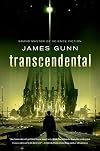
I've never read anything by SFWA Grand Master James Gunn, so I was very excited when I received a review copy of his newest novel, TRANSCENDENTAL from Tor.
TRANSCENDENTAL follows a variety of humans and aliens aboard a starship on a very unique pilgrimage - finding the machine that will help them achieve the mystical concept known as transcendence. The protagonist is Riley, a veteran of the recent Galactic War, who has been placed on the ship to find and kill the Prophet of the transcendence show more movement. As the journey progresses, though, it soon becomes clear that almost no one on the ship is what they seem.
I really enjoyed this book; it was a great science fiction yarn. It focuses a lot on universe-building and cool ideas, but is still fast-paced and entertaining (unlike quite a few classic sci-fi novels I could name). All of the pilgrims are fascinating characters individually, and together they give the impression of a very diverse and interesting universe. I thought the Canterbury Tales-style stories were a bit of a cheat at first, but the unreliable narration makes the stories multidimensional. The protagonist, Riley is a somewhat bland, but I think that actually strengthens the book - he's a good representative of the human race, not a special snowflake of a human.
I'm often sceptical of the combination of science fiction and spirituality, even though I think they go naturally together (you always need something that keeps the sense of wonder going), so I was worried about all the hype being built up around the Transcendental Machine. I think it was resolved very well, though, and I didn't have to suspend my disbelief as much as I thought I would.
I hope that there's a sequel to TRANSCENDENTAL, because I would really love to spend more time in this universe! show less
TRANSCENDENTAL follows a variety of humans and aliens aboard a starship on a very unique pilgrimage - finding the machine that will help them achieve the mystical concept known as transcendence. The protagonist is Riley, a veteran of the recent Galactic War, who has been placed on the ship to find and kill the Prophet of the transcendence show more movement. As the journey progresses, though, it soon becomes clear that almost no one on the ship is what they seem.
I really enjoyed this book; it was a great science fiction yarn. It focuses a lot on universe-building and cool ideas, but is still fast-paced and entertaining (unlike quite a few classic sci-fi novels I could name). All of the pilgrims are fascinating characters individually, and together they give the impression of a very diverse and interesting universe. I thought the Canterbury Tales-style stories were a bit of a cheat at first, but the unreliable narration makes the stories multidimensional. The protagonist, Riley is a somewhat bland, but I think that actually strengthens the book - he's a good representative of the human race, not a special snowflake of a human.
I'm often sceptical of the combination of science fiction and spirituality, even though I think they go naturally together (you always need something that keeps the sense of wonder going), so I was worried about all the hype being built up around the Transcendental Machine. I think it was resolved very well, though, and I didn't have to suspend my disbelief as much as I thought I would.
I hope that there's a sequel to TRANSCENDENTAL, because I would really love to spend more time in this universe! show less
Lists
Awards


You May Also Like
Associated Authors
Statistics
- Works
- 86
- Also by
- 44
- Members
- 3,075
- Popularity
- #8,305
- Rating
- 3.9
- Reviews
- 53
- ISBNs
- 220
- Languages
- 7
- Favorited
- 3