
Albert Robida (1848–1926)
Author of The Twentieth Century: The Electric Life
About the Author
Image credit: Joseph Uzanne, Figures contemporaines tirées de l’Album Mariani, Ernest Flammarion, Paris, vol I, 1894
Series
Works by Albert Robida
Moulin Fliquette 1 copy
La vieille France. Provence 1 copy
La vieille France. Normandie 1 copy
Grande Mascarade Parisienne 1 copy
Associated Works
Tagged
Common Knowledge
- Birthdate
- 1848-03-14
- Date of death
- 1926-10-11
- Gender
- male
- Nationality
- France
- Map Location
- France
Members
Reviews
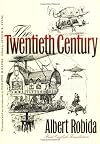
This is a review written after reading the novel in French - not the Evans / Williams translation.
Written in 1883 Le Vingtiem Siecle the story of a young woman fresh out of her provincial boarding school and suddenly faced with the need to find a job in the hectic world of tomorrow (1952!). It's a world where women are totally emancipated and, as a consequence, have all the responsibilities that that implies. Under the wing of her banker uncle - whose daughters she was at school with - she show more lurches from career to career unable to find anything she is any good at - basically this gives the author an excuse to take his readers on a guided tour of his imaginary world. It's a fun ride. Everyone travels by air buses or taxis (or over longer distances by vacuum tubes). It is wonderfully inventive and forward looking for its time, and funny. An early chapter has our heroine unable to sleep because the telephone built into her bed keeps waking her up with a continual stream of theatre reviews, reports of revolutions, disasters, and massacres from all corners the world. 24 hour rolling news! Her attempts to get some sleep end up with her setting off the house's built-in fire alarm/defence system. It's a world where everything is rendered as useful as possible. The classics of literature have been condensed to the point where the Illiad takes four lines of text and the history of western art in the Louvre can be quickly assimilated by riding the little tramway which takes you round the place in an hour, stopping in front of each work just long enough for a short pre-recorded audio description to play before moving on to the next...
Food is delivered to the home - at one point a dinner party is totally disrupted when the first course doesn't arrive - everyone repairs to the kitchen where repeated attempts to turn on the tap produce only the vaguest odour of soup. A neighbour across the road is phoned (one who subscribes to the same service as our heroes). He has no problems - they are on the point of calling the supply company when a servant rushes in to tell them the mistresses' bedroom was a meter deep in bisque. There's a burst in the pipes and a plumber is called.
Our heroine first tries her hand at the Law (in 1952 nearly all criminal defence lawyers are women), she accidentally gets a murderer a vastly reduced sentence and while she visits him in gaol has her watch stolen. Deciding the Law is no good for her, she is sent to school to learn politics, makes a total mess of that and becomes a journalist - though is dismayed to find that she has to fight a duel when someone objects to something she has written; a duel she wins by accident. She is still working as a journalist when the next scheduled revolution happens. Every ten years the French have scheduled, carefully choreographed revolutions where the old government is overthrown and a new one installed. This time they rebuild the Bastille just so they can storm it. Caught up in the fighting she loses her notes and is captured and so is unable to report on the final decisive act of the struggle when twelve Americans, carrying armoured sofas, enter the government’s redoubt and capture the sitting ministers.
The son of her uncle is sent to London on business and disappears - weeks later they receive a letter from him. He's in gaol where he was thrown for walking down Regent Street on a Sunday while being unmarried. Our heroine rushes to his rescue. England, it turns out, has been invaded by, and is firmly under the control of, the Mormons who fled their stronghold in Utah when it became inevitable that the German Empire on the East Coast or the Chinese Empire on the west (great shades of The Man in the High Castle!) were going to overwhelm it. After pretending to be his fiance they get back to France
Our heroine and the son find they have actually fallen in love and after the heroine spends a brief spell in a Marriage Agency the two manage to get together, trick the father who had already arranged an advantageous marriage for his son, and get hitched. They go round the world on their honeymoon and we discover that Russia no longer exists (some Nihilists blew it up and it sank). Arriving in New York they take a trip on our heroine’s old schoolmate's (now sister in law's) private submarine yacht and, on a quick trip through the Panama Canal, are wrecked when they hit a discarded torpedo left over from some previous war. They all make it to one of the floating island anchored at regular intervals around the globe put there for the comfort of shipwrecked sailors. Restless natives try to steal the island with them onboard and, now adrift, they sail to Tahiti. On the way the newly married son has a genius idea and, on arriving at Tahiti, sets in motion a scheme to backfill Polynesia and turn it into a new continent. His father - who has just bought Italy and had just finished turning it into a tourist attraction (skilfully avoiding a war with Monaco by promising not to install a roulette wheel), and whose Transatlantic Tunnel is proceeding apace, agrees to the venture and the new continent is knocked up in record time and named after our heroine.
Fin (there were two sequels).
I haven't had as much fun with a book in ages. Genuinely laugh out loud funny in places, the author bashing out ideas like a machine gun playing with them for a bit before dropping them for some new shiny ideas. I'm sure I missed stuff there must be all sorts of burlesques and digs at contemporaneous mores and events which sailed past my unenlightened ears but I'll savour any book that, in passing, mentions a performance of Moliere's Misanthrope translated into Comanche, and has a colossal actress who performs Racine (and other classics) while carrying a 250 cannon on her shoulders - a cannon she fires at the climax of her oration. Sarah Berhardt?! Pfah! show less
Written in 1883 Le Vingtiem Siecle the story of a young woman fresh out of her provincial boarding school and suddenly faced with the need to find a job in the hectic world of tomorrow (1952!). It's a world where women are totally emancipated and, as a consequence, have all the responsibilities that that implies. Under the wing of her banker uncle - whose daughters she was at school with - she show more lurches from career to career unable to find anything she is any good at - basically this gives the author an excuse to take his readers on a guided tour of his imaginary world. It's a fun ride. Everyone travels by air buses or taxis (or over longer distances by vacuum tubes). It is wonderfully inventive and forward looking for its time, and funny. An early chapter has our heroine unable to sleep because the telephone built into her bed keeps waking her up with a continual stream of theatre reviews, reports of revolutions, disasters, and massacres from all corners the world. 24 hour rolling news! Her attempts to get some sleep end up with her setting off the house's built-in fire alarm/defence system. It's a world where everything is rendered as useful as possible. The classics of literature have been condensed to the point where the Illiad takes four lines of text and the history of western art in the Louvre can be quickly assimilated by riding the little tramway which takes you round the place in an hour, stopping in front of each work just long enough for a short pre-recorded audio description to play before moving on to the next...
Food is delivered to the home - at one point a dinner party is totally disrupted when the first course doesn't arrive - everyone repairs to the kitchen where repeated attempts to turn on the tap produce only the vaguest odour of soup. A neighbour across the road is phoned (one who subscribes to the same service as our heroes). He has no problems - they are on the point of calling the supply company when a servant rushes in to tell them the mistresses' bedroom was a meter deep in bisque. There's a burst in the pipes and a plumber is called.
Our heroine first tries her hand at the Law (in 1952 nearly all criminal defence lawyers are women), she accidentally gets a murderer a vastly reduced sentence and while she visits him in gaol has her watch stolen. Deciding the Law is no good for her, she is sent to school to learn politics, makes a total mess of that and becomes a journalist - though is dismayed to find that she has to fight a duel when someone objects to something she has written; a duel she wins by accident. She is still working as a journalist when the next scheduled revolution happens. Every ten years the French have scheduled, carefully choreographed revolutions where the old government is overthrown and a new one installed. This time they rebuild the Bastille just so they can storm it. Caught up in the fighting she loses her notes and is captured and so is unable to report on the final decisive act of the struggle when twelve Americans, carrying armoured sofas, enter the government’s redoubt and capture the sitting ministers.
The son of her uncle is sent to London on business and disappears - weeks later they receive a letter from him. He's in gaol where he was thrown for walking down Regent Street on a Sunday while being unmarried. Our heroine rushes to his rescue. England, it turns out, has been invaded by, and is firmly under the control of, the Mormons who fled their stronghold in Utah when it became inevitable that the German Empire on the East Coast or the Chinese Empire on the west (great shades of The Man in the High Castle!) were going to overwhelm it. After pretending to be his fiance they get back to France
Our heroine and the son find they have actually fallen in love and after the heroine spends a brief spell in a Marriage Agency the two manage to get together, trick the father who had already arranged an advantageous marriage for his son, and get hitched. They go round the world on their honeymoon and we discover that Russia no longer exists (some Nihilists blew it up and it sank). Arriving in New York they take a trip on our heroine’s old schoolmate's (now sister in law's) private submarine yacht and, on a quick trip through the Panama Canal, are wrecked when they hit a discarded torpedo left over from some previous war. They all make it to one of the floating island anchored at regular intervals around the globe put there for the comfort of shipwrecked sailors. Restless natives try to steal the island with them onboard and, now adrift, they sail to Tahiti. On the way the newly married son has a genius idea and, on arriving at Tahiti, sets in motion a scheme to backfill Polynesia and turn it into a new continent. His father - who has just bought Italy and had just finished turning it into a tourist attraction (skilfully avoiding a war with Monaco by promising not to install a roulette wheel), and whose Transatlantic Tunnel is proceeding apace, agrees to the venture and the new continent is knocked up in record time and named after our heroine.
Fin (there were two sequels).
I haven't had as much fun with a book in ages. Genuinely laugh out loud funny in places, the author bashing out ideas like a machine gun playing with them for a bit before dropping them for some new shiny ideas. I'm sure I missed stuff there must be all sorts of burlesques and digs at contemporaneous mores and events which sailed past my unenlightened ears but I'll savour any book that, in passing, mentions a performance of Moliere's Misanthrope translated into Comanche, and has a colossal actress who performs Racine (and other classics) while carrying a 250 cannon on her shoulders - a cannon she fires at the climax of her oration. Sarah Berhardt?! Pfah! show less
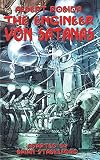
“That slut Science!”
Some novels have memorable taglines. That’s the one for the centerpiece of this omnibus, Albert Robida’s The Engineer von Satanas.
I doubt that Robida, writing in 1919, seriously thought that World War One would start up again in 1920.
But I don’t doubt the sincerity of this amazing work of vitriol and bitterness.
Robida the artist and writer did two short, illustrated stories called “War in the 20th Century”. One was published in 1883 and the other in 1887. show more Both are breezy japes full of future tech. While this book reprints Robida’s illustrations for The Engineer von Satanas, it omits his art for those earlier stories.
The first details the Australo-Mozambique War of 1975 started by Australians manipulating the Mozambicoville Stock Exchange. The weapons are submarines, “mobile fortresses” (essentially a very large tanks), balloons, “rocket-torpedoes”, balloons, railway artillery, “asphyxiating shells”, electrical weapons that induce epilepsy, and machine guns. The casualties are high but merely accepted. 290,000 Australians die at the final battle of Mayazamba. The whole thing is written as a piece of future hero with no central character.
Stableford notes that Robida narrows the distance between his contemporary reader and the story’s world in each iteration of his future war. The second story is even more comic than the first. It relates the exploits of Fabius Molinas, a French bachelor and reservist in the 18th Territorial Aeronauts. His vacation is interrupted by a war in 1945. The opponent is unnamed, but it’s pretty obvious it’s Germany. At story’s end, the Fabius ends up in Mexico and marries into the local aristocracy. The weapons are largely the same. The “mobile fortresses” of the 1883 version have become “mobile blockhouses”. The idea of an Offensive Medical Corps is introduced and they employ a variety of bacteriological munitions. Mediums show up as weapons: “… the most powerful magnetizers and suggestionists in Paris … marched slowly toward the enemy lines, emitting torrents of fluid by means of energetic processes.” There is more variety of chemical agents in this story.
One senses that most of the political speculation of Robida’s stories are there for mere comic preposterous, inversions of contemporary politics. “A great African nation” and Australia, both colonies in 1883, fighting a great war! How deliciously absurd! In the 1887 version the Danubian Empire is undergoing a civil war, an American attack on the coast of France has been repelled, and a Chinese naval expedition foundered on the rocks of Corsica. The only seeming sincerity seems a passing complaint about the high taxes that empire necessitates
The Engineer von Satanas opens with a couple of prologues. The first introduces us to the sinister Brother Schwarz. He’s been disturbing a medieval monastery with his alchemical pursuits and ultimately gives a local aristocrat the secret of gunpowder. The second prologue, set at the fictitious 1909 Peace Conference in the Hague, has the famous engineer von Satanas, who looks a lot like Brother Schwarz, showing delegates the military potential of new technologies, “all the ingenious things of which use would obviously never be made”.
Then we get the main story, the return to civilization of our hero Paul Jacquemin, a naturalist who left on an arctic exploration in April 1914. He returns to Europe after 15 years of being stranded with his fellow expedition members. The seas are strangely empty, the lighthouses dim. And then their ship hits a mine, and all but Jacquemin die. Floating in the sea, Jacquemin meets Marcel, the survivor of another sunken ship.
The two wash ashore and are immediately grabbed by the locals, bags put over their heads, and they’re whisked off to a cellar (to avoid a gas attack, it turns out). They meet the locals whose origins and injuries are tokens of the war’s reach and misery.
Paul also meets Robida’s mouthpiece, Dr. Christiansen. And, almost from his first words, he states what will become the refrain of book: "You’re a man of science? Me too, unfortunately. I’m not paying you any compliment – oh no! We’re colleagues, then; I’m a poor devil of a Danish scientist. Doctor of medicine and many other things … very repentant and disillusioned, I assure you. Oh that slut Science! The harlot! The whore!"
In the rubble, the survivors of that war scavenge for goods, hunt, and carry on with their lives. A love triangle even forms with Marcel and a local man wooing a woman in the “Age of Burrows”. Christiansen rails against science. Professor Jollimay rails against “the folly of domination … the imperialism of despots, their rage of domination and hegemony … the furious domination of a race of prey!” Imperialism, Robida says, seems to have had a high price.
In the end, Paul’s convinced and accepts the indictment against that “slut Science”. A novel that, apart from Paul’s comrades drowning at sea, has been free of onstage death, ends with Paul and his new comrades, armed with bows and arrows, off to assault the Boche holed up in the Palace of Peace.
The volume includes the reactions of two other French writers to the Great War.
Adrien Bertrand thought the war threatened something precious, so, even though he was a socialist and pacifist, he joined the French army immediately upon France being invaded. Shrapnel wounded his lungs in October 1914, and he ultimately died of those wounds in 1917. But, during that failed recovery, he managed to write the famous French war novel L’Appel du sol and some short pieces including “The Rain that surprised Candide in his Garden”.
That story is a post-mortem philosophical discussion that Vaissette, Bertrand’s alter-ego and also the hero of his novel, has with several characters from famous works of literature.
Besides mocking Homer and Achilles (who, it is pointed out, participated in very little combat), Bertrand talks of how he reconciled his pacifism with war to protect society from the “pillagers, the uncivilized, friends of vice, rapine and brigandage”.
And Bertrand talks of the beauty of commanding men running towards death: “ … I know that, deaf and blind in the unleashed tempest, while the heavens were exploding over our heads and the earth was being torn apart under our feet, we experienced the horror of a sacred frission!”
Bertrand, of course, died before peace – however temporary – began. But Vaissette speaks for Bertrand in hoping there will be a better “new order of things”, a wonderful harvest from peace.”
More in the way of a technocratic policy proposal wrapped in the gloating presentation of the victorious German General von Stick is Louis Baudry de Saunier’s “How Paris was destroyed in six hours on Easter Sunday, 20 April 1924”. Like Bertrand, Saunier was a journalist, pacifist, and socialist, but he also possessed a great interest in technology. He started out writing about bicycles and then moved to aviation and, during the war, wrote about the artillery and radio. Saunier’s story has the French throwing away their lead in aviation technology while the Germans, under the cover of developing a civil aviation industry, develop critical dual use technologies they use to knock out the political and logistical heart of France.
Bertrand’s and Saunier’s pieces are interesting examples, respectively, of pondering the war’s meaning and anxiety about more war. But Robida’s novel is truly a forgotten classic, readable in its own right as well as historically important. show less
Some novels have memorable taglines. That’s the one for the centerpiece of this omnibus, Albert Robida’s The Engineer von Satanas.
I doubt that Robida, writing in 1919, seriously thought that World War One would start up again in 1920.
But I don’t doubt the sincerity of this amazing work of vitriol and bitterness.
Robida the artist and writer did two short, illustrated stories called “War in the 20th Century”. One was published in 1883 and the other in 1887. show more Both are breezy japes full of future tech. While this book reprints Robida’s illustrations for The Engineer von Satanas, it omits his art for those earlier stories.
The first details the Australo-Mozambique War of 1975 started by Australians manipulating the Mozambicoville Stock Exchange. The weapons are submarines, “mobile fortresses” (essentially a very large tanks), balloons, “rocket-torpedoes”, balloons, railway artillery, “asphyxiating shells”, electrical weapons that induce epilepsy, and machine guns. The casualties are high but merely accepted. 290,000 Australians die at the final battle of Mayazamba. The whole thing is written as a piece of future hero with no central character.
Stableford notes that Robida narrows the distance between his contemporary reader and the story’s world in each iteration of his future war. The second story is even more comic than the first. It relates the exploits of Fabius Molinas, a French bachelor and reservist in the 18th Territorial Aeronauts. His vacation is interrupted by a war in 1945. The opponent is unnamed, but it’s pretty obvious it’s Germany. At story’s end, the Fabius ends up in Mexico and marries into the local aristocracy. The weapons are largely the same. The “mobile fortresses” of the 1883 version have become “mobile blockhouses”. The idea of an Offensive Medical Corps is introduced and they employ a variety of bacteriological munitions. Mediums show up as weapons: “… the most powerful magnetizers and suggestionists in Paris … marched slowly toward the enemy lines, emitting torrents of fluid by means of energetic processes.” There is more variety of chemical agents in this story.
One senses that most of the political speculation of Robida’s stories are there for mere comic preposterous, inversions of contemporary politics. “A great African nation” and Australia, both colonies in 1883, fighting a great war! How deliciously absurd! In the 1887 version the Danubian Empire is undergoing a civil war, an American attack on the coast of France has been repelled, and a Chinese naval expedition foundered on the rocks of Corsica. The only seeming sincerity seems a passing complaint about the high taxes that empire necessitates
The Engineer von Satanas opens with a couple of prologues. The first introduces us to the sinister Brother Schwarz. He’s been disturbing a medieval monastery with his alchemical pursuits and ultimately gives a local aristocrat the secret of gunpowder. The second prologue, set at the fictitious 1909 Peace Conference in the Hague, has the famous engineer von Satanas, who looks a lot like Brother Schwarz, showing delegates the military potential of new technologies, “all the ingenious things of which use would obviously never be made”.
Then we get the main story, the return to civilization of our hero Paul Jacquemin, a naturalist who left on an arctic exploration in April 1914. He returns to Europe after 15 years of being stranded with his fellow expedition members. The seas are strangely empty, the lighthouses dim. And then their ship hits a mine, and all but Jacquemin die. Floating in the sea, Jacquemin meets Marcel, the survivor of another sunken ship.
The two wash ashore and are immediately grabbed by the locals, bags put over their heads, and they’re whisked off to a cellar (to avoid a gas attack, it turns out). They meet the locals whose origins and injuries are tokens of the war’s reach and misery.
Paul also meets Robida’s mouthpiece, Dr. Christiansen. And, almost from his first words, he states what will become the refrain of book: "You’re a man of science? Me too, unfortunately. I’m not paying you any compliment – oh no! We’re colleagues, then; I’m a poor devil of a Danish scientist. Doctor of medicine and many other things … very repentant and disillusioned, I assure you. Oh that slut Science! The harlot! The whore!"
In the rubble, the survivors of that war scavenge for goods, hunt, and carry on with their lives. A love triangle even forms with Marcel and a local man wooing a woman in the “Age of Burrows”. Christiansen rails against science. Professor Jollimay rails against “the folly of domination … the imperialism of despots, their rage of domination and hegemony … the furious domination of a race of prey!” Imperialism, Robida says, seems to have had a high price.
In the end, Paul’s convinced and accepts the indictment against that “slut Science”. A novel that, apart from Paul’s comrades drowning at sea, has been free of onstage death, ends with Paul and his new comrades, armed with bows and arrows, off to assault the Boche holed up in the Palace of Peace.
The volume includes the reactions of two other French writers to the Great War.
Adrien Bertrand thought the war threatened something precious, so, even though he was a socialist and pacifist, he joined the French army immediately upon France being invaded. Shrapnel wounded his lungs in October 1914, and he ultimately died of those wounds in 1917. But, during that failed recovery, he managed to write the famous French war novel L’Appel du sol and some short pieces including “The Rain that surprised Candide in his Garden”.
That story is a post-mortem philosophical discussion that Vaissette, Bertrand’s alter-ego and also the hero of his novel, has with several characters from famous works of literature.
Besides mocking Homer and Achilles (who, it is pointed out, participated in very little combat), Bertrand talks of how he reconciled his pacifism with war to protect society from the “pillagers, the uncivilized, friends of vice, rapine and brigandage”.
And Bertrand talks of the beauty of commanding men running towards death: “ … I know that, deaf and blind in the unleashed tempest, while the heavens were exploding over our heads and the earth was being torn apart under our feet, we experienced the horror of a sacred frission!”
Bertrand, of course, died before peace – however temporary – began. But Vaissette speaks for Bertrand in hoping there will be a better “new order of things”, a wonderful harvest from peace.”
More in the way of a technocratic policy proposal wrapped in the gloating presentation of the victorious German General von Stick is Louis Baudry de Saunier’s “How Paris was destroyed in six hours on Easter Sunday, 20 April 1924”. Like Bertrand, Saunier was a journalist, pacifist, and socialist, but he also possessed a great interest in technology. He started out writing about bicycles and then moved to aviation and, during the war, wrote about the artillery and radio. Saunier’s story has the French throwing away their lead in aviation technology while the Germans, under the cover of developing a civil aviation industry, develop critical dual use technologies they use to knock out the political and logistical heart of France.
Bertrand’s and Saunier’s pieces are interesting examples, respectively, of pondering the war’s meaning and anxiety about more war. But Robida’s novel is truly a forgotten classic, readable in its own right as well as historically important. show less

This is one of those futuristic novels that doesn't have a story per se, but is more an exploration/travelogue of a fantastic future. It's a mix of utopianism and satire and deadly warnings-- some things are awesome, other things less so (emancipated women are so un-feminine they even have harsh names!), and other things are just supposed to be funny (the president is an automaton, which I feel like is the nineteenth-century equivalent of Futurama's disembodied heads). There's sky pirates show more and telephonic courtship and attempts at a fun revolution, but Nihilist bombings destroyed Russia so utterly there's neither Nihilists nor Russians anymore, and Italy has become a theme park for American tourists. There are also air-wars, but they seem more exciting than frightening.
Sometimes long-winded (seriously, very long), but the real highlight is that Robida illustrated it himself, so you get to see his fun futurism brought to life in a lively fashion on page after page. The text translated here is from the first French edition, but editor Arthur B. Evans selected illustrations from every edition in order to get the best set possible. More fun to look at than to read, but then, Robida was more illustrator than novelist. show less
Sometimes long-winded (seriously, very long), but the real highlight is that Robida illustrated it himself, so you get to see his fun futurism brought to life in a lively fashion on page after page. The text translated here is from the first French edition, but editor Arthur B. Evans selected illustrations from every edition in order to get the best set possible. More fun to look at than to read, but then, Robida was more illustrator than novelist. show less
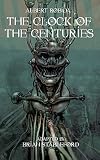
The most exciting part of The Clock of the Centuries is the prologue, where the earth is undergoing apocalyptic cataclysms and society is on the brink of extinction. With the entire world rearranged, the few survivors eventually realize that time is now running backwards - history is literally repeating itself, this time in reverse.
Maybe because Robida is a science fiction author, I took The Clock of the Centuries too seriously. The concept of the book, though intriguing, came off more as show more confusing and uninteresting. There were too many plot holes with how this concept would work - the biological clock is running backwards, but there's inconsistencies in society acting in reverse. Some people are returning before their times, so obviously not everything can happen again (only in reverse) the way it did before. I'll concede to Robida that technology regresses because of people's mindsets from previous eras because, well, society being better for returning to the past is kind of his point. Yet it was never clear to me whether or not people actually had choice in repeating their pasts; the author seemed to pick-and-choose some of the events that returned. Perhaps the novel's original humor would have added more spark to the story, but whatever satire there is didn't translate over very well from the French.
A note on the edition (Black Coat, 2008): I noticed a lot of typos and punctuation errors in my copy. This edition also includes Robida's 1890 short story "Yesterday Now," a satirical tale in which Louis XIV and his entourage appear in Paris in 1889. I caught more glimpses of humor in this story, though I think a greater familiarity with 17th-century French history would have allowed me to understand more of it. Stableford's occasional footnotes were helpful in understanding some of the subtleties of language that are more difficult to translate. show less
Maybe because Robida is a science fiction author, I took The Clock of the Centuries too seriously. The concept of the book, though intriguing, came off more as show more confusing and uninteresting. There were too many plot holes with how this concept would work - the biological clock is running backwards, but there's inconsistencies in society acting in reverse. Some people are returning before their times, so obviously not everything can happen again (only in reverse) the way it did before. I'll concede to Robida that technology regresses because of people's mindsets from previous eras because, well, society being better for returning to the past is kind of his point. Yet it was never clear to me whether or not people actually had choice in repeating their pasts; the author seemed to pick-and-choose some of the events that returned. Perhaps the novel's original humor would have added more spark to the story, but whatever satire there is didn't translate over very well from the French.
A note on the edition (Black Coat, 2008): I noticed a lot of typos and punctuation errors in my copy. This edition also includes Robida's 1890 short story "Yesterday Now," a satirical tale in which Louis XIV and his entourage appear in Paris in 1889. I caught more glimpses of humor in this story, though I think a greater familiarity with 17th-century French history would have allowed me to understand more of it. Stableford's occasional footnotes were helpful in understanding some of the subtleties of language that are more difficult to translate. show less
Lists
You May Also Like
Associated Authors
Statistics
- Works
- 37
- Also by
- 2
- Members
- 137
- Popularity
- #149,083
- Rating
- 3.5
- Reviews
- 7
- ISBNs
- 32
- Languages
- 4
- Favorited
- 1