
John Collier (1) (1901–1980)
Author of Fancies and Goodnights
For other authors named John Collier, see the disambiguation page.
Works by John Collier
Evening Primrose [short story] 9 copies
Back for Christmas 7 copies
The Chaser [short story] 5 copies
Thus I Refute Beelzy [short story] 5 copies
Witch's Money 4 copies
Bird of Prey 4 copies
Midnight Blue {short story} 3 copies
Wet Saturday [short story] 3 copies
The Touch of Nutmeg Makes It 3 copies
Man Overboard 3 copies
Incident on a Lake [short fiction] 2 copies
Little Memento 2 copies
Variation On A Theme 2 copies
Fallen Star 2 copies
Are You Too Late Or Was I Too Early 2 copies
Ah, the University [short story] 2 copies
Another American Tragedy 2 copies
Fancies and Goodnights: Evening Primrose, The Touch of Nutmeg Makes It, read by Vincent Price 1 copy
De stalen kat 1 copy
Over Insurance [short story] 1 copy
A Word to the Wise 1 copy
Season Of Mists 1 copy
Hell Hath No Fury 1 copy
Mary 1 copy
De Mortuis 1 copy
Three Bears Cottage 1 copy
Squirrels Have Bright Eyes 1 copy
Halfway To Hell 1 copy
Old Acquaintance 1 copy
The Frog Prince 1 copy
Great Possibilities 1 copy
Collaboration 1 copy
Gavin O Leary 1 copy
Sleeping Beauty 1 copy
Associated Works
75 Short Masterpieces: Stories from the World's Literature (1961) — Contributor — 319 copies, 2 reviews
American Fantastic Tales : Terror and the Uncanny from the 1940's to Now (2009) — Contributor — 299 copies, 5 reviews
Alfred Hitchcock Presents : Stories My Mother Never Told Me (1963) — Contributor — 94 copies, 2 reviews
Alfred Hitchcock Presents: 13 More Stories They Wouldn't Let Me Do On TV (1959) — Contributor — 92 copies, 2 reviews
The Best Fantasy Stories from the Magazine of Fantasy & Science Fiction (1985) — Contributor — 77 copies, 2 reviews
Famous Fantastic Mysteries: 30 Great Tales of Fantasy and Horror from the Classic Pulp Magazines Famous Fantastic Mysteries & Fantastic Novels (1991) — Contributor — 67 copies, 1 review
The Edge of the Chair: A Superlative Collection, Some Fact, Some Fiction, All Suspense (1967) — Contributor — 50 copies, 1 review
More Murder on Cue: Stage, Screen & Radio Favorites: Stories from Ellery Queen's Mystery Magazine (1990) — Contributor — 9 copies
Flora Curiosa: Cryptobotany, Mysterious Fungi, Sentient Trees, and Deadly Plants in Classic Science Fiction and Fantasy (2008) — Contributor — 7 copies
Vader is de beste — Author — 3 copies
American Aphrodite: A Quarterly for the Fancy-Free (Volume 4, Number 13) (1954) — Contributor — 2 copies
Rosanna McCoy [1949 film] — Writer — 1 copy
Tagged
Common Knowledge
- Legal name
- Collier, John Henry Noyes
- Birthdate
- 1901-05-03
- Date of death
- 1980-04-06
- Gender
- male
- Education
- privately educated
- Occupations
- writer
screenwriter - Relationships
- Collier, Vincent (uncle)
- Nationality
- UK
- Birthplace
- Brixton, Lambeth, London, England, UK
- Places of residence
- London, England, UK
USA - Place of death
- Pacific Palisades, California, USA
- Map Location
- England, UK
Members
Reviews

What. The fuck. Even.
Okay, so a friend of mine gave books away as wedding favors and I picked this because I was curious. It sounded like it could be funny, as the premise was about an intelligent monkey falling in love with an English teacher she met when he was on a mission in Africa. I also wanted to get a sense of who this book was written for (because, really, who wants to read about a monkey loving a man?) and at the very least, I figured it would be amusing.
Well I was wrong. This show more book is crap.
I know it was written in 1930 but one of my favorite books was written in the 1800s, so I don't feel the disconnect is because of the difference in time and society. I do think a lot has to do with Collier's prose - it was so wordy and flowy and he talked so much about gourd only knows what. To be honest, very little stuck in my head and I was constantly trying to find the parts that actually had to do with Emily (the chimp) and Mr. Fatigay (her weak-willed love interest).
In short, Emily is super smart. She thinks like a human (albeit a very subservient and martyrish one) and though she cannot speak she can read and so she falls in love with Mr F. He takes her back to England because he finds her amusing (having no clue how intelligent she really is), where Emily encounters Mr. F.'s bitch fiance, Amy. Amy is instantly jealous of Emily and makes her a slave. In the end, Emily threatens Amy with a knife on their wedding day, so they switch places at the alter and dumbass Mr. F. can't tell his lover from a chimp and so marries Emily. He finds out seconds later, banishes her and then falls on Amy's mercy. Amy, strange bird that she is, decides to use this as an out not to marry Mr. F. and tells him to get lost. He ends up nearly starving to death on the streets from despair, where Emily finds him. She's become a rich dancer (I can't even) and takes him in and he decides to keep her as his wife. Amy shows up later to crash the party, finally revealing that Emily threatened her and Mr. F. is shocked and upset for 2 seconds, but them Emily produces a letter she typed him explaining how she wanted to come clean, etc, etc and he forgives her and finally realizes that Amy is a conniving bitch. Then they move to Africa to live in marital bliss forever after.
No joke.
And this book wasn't funny, nor amusing. Nor did I find it "A work of genius" or "written with sly humor throughout and is illuminated by splendid similes and metaphors which mark the author as a true humorist" s the quotes on the book's page remark.
I still don't know who the intended audience of this book was, but it wasn't me. I didn't find Emily endearing or fascinating and I am more than a little creeped out by Mr. F.'s speech at the end, proclaiming the virtues of having a chimp for a lover! Is this just an intellectual romance or is there some bestiality going on here? Either way I'm glad it's over. show less
Okay, so a friend of mine gave books away as wedding favors and I picked this because I was curious. It sounded like it could be funny, as the premise was about an intelligent monkey falling in love with an English teacher she met when he was on a mission in Africa. I also wanted to get a sense of who this book was written for (because, really, who wants to read about a monkey loving a man?) and at the very least, I figured it would be amusing.
Well I was wrong. This show more book is crap.
I know it was written in 1930 but one of my favorite books was written in the 1800s, so I don't feel the disconnect is because of the difference in time and society. I do think a lot has to do with Collier's prose - it was so wordy and flowy and he talked so much about gourd only knows what. To be honest, very little stuck in my head and I was constantly trying to find the parts that actually had to do with Emily (the chimp) and Mr. Fatigay (her weak-willed love interest).
In short, Emily is super smart. She thinks like a human (albeit a very subservient and martyrish one) and though she cannot speak she can read and so she falls in love with Mr F. He takes her back to England because he finds her amusing (having no clue how intelligent she really is), where Emily encounters Mr. F.'s bitch fiance, Amy. Amy is instantly jealous of Emily and makes her a slave. In the end, Emily threatens Amy with a knife on their wedding day, so they switch places at the alter and dumbass Mr. F. can't tell his lover from a chimp and so marries Emily. He finds out seconds later, banishes her and then falls on Amy's mercy. Amy, strange bird that she is, decides to use this as an out not to marry Mr. F. and tells him to get lost. He ends up nearly starving to death on the streets from despair, where Emily finds him. She's become a rich dancer (I can't even) and takes him in and he decides to keep her as his wife. Amy shows up later to crash the party, finally revealing that Emily threatened her and Mr. F. is shocked and upset for 2 seconds, but them Emily produces a letter she typed him explaining how she wanted to come clean, etc, etc and he forgives her and finally realizes that Amy is a conniving bitch. Then they move to Africa to live in marital bliss forever after.
No joke.
And this book wasn't funny, nor amusing. Nor did I find it "A work of genius" or "written with sly humor throughout and is illuminated by splendid similes and metaphors which mark the author as a true humorist" s the quotes on the book's page remark.
I still don't know who the intended audience of this book was, but it wasn't me. I didn't find Emily endearing or fascinating and I am more than a little creeped out by Mr. F.'s speech at the end, proclaiming the virtues of having a chimp for a lover! Is this just an intellectual romance or is there some bestiality going on here? Either way I'm glad it's over. show less
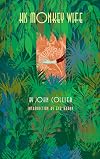
This really is quite a delight of a book, with a highly original and frequently laugh-out-loud narrative.
Alfred Fatigay is a young British man, out teaching in a remote village in the Congo. His fiancee, it transpires, has encouraged him to go...she seems in no hurry to tie the knot. Meanwhile he has acquired a pet chimpanzee, Emily. And while she never masters speech, Emily - sitting in on lessons- soon understands everything that is said, beside becoming highly literate, all unknown to her show more owner.
Actually Emily is undoubtedly the superior being of the three of them, for while Fatigay is a tad dense and even lowbrow, and his intended a pretty cold and selfish type, Emily resembles nothing so much as a Charlotte Bronte heroine, quiet, virtuous and utterly devoted to her master.
Collier writes in florid, high-Victorian prose; and Emily's thought processes are all in this Bronteesque style, emphasizing her fine mindset.
Thus on the ship back to England, Emily is considering her role in a forthcoming fancy dress party:
"Perhaps Elaine, the lily maid of Astolat...supposing he realized that he is my Sir Lancelot, and she his hard exacting Guinevere!...Or supposing I went as Ruth.."
"By Jove! I've got it!" suddenly cried Mr Fatigay, slapping his thigh with a crack like a pistol shot. "Where's that green velvet smoking jacket mother sent me? It'll be just the thing. I'll go as an organ-grinder and I'll get the stewardess to run up a little suit for Emily out of some red stuff, and she can be the monkey."
(The reader by this stage is glaringly aware of the inappropriateness of this.)
Back in England, Emily finds herself a skivvy to the callous and unlovely Amy, while Alfred vainly attempts to enthuse his betrothed in matrimony. Meanwhile Emily's dark looks and quiet demeanour attract various admirers, but her heart is devoted to the oblivious Alfred...
I did find some of the elaborate prose went on a tad, but very funny and original! show less
Alfred Fatigay is a young British man, out teaching in a remote village in the Congo. His fiancee, it transpires, has encouraged him to go...she seems in no hurry to tie the knot. Meanwhile he has acquired a pet chimpanzee, Emily. And while she never masters speech, Emily - sitting in on lessons- soon understands everything that is said, beside becoming highly literate, all unknown to her show more owner.
Actually Emily is undoubtedly the superior being of the three of them, for while Fatigay is a tad dense and even lowbrow, and his intended a pretty cold and selfish type, Emily resembles nothing so much as a Charlotte Bronte heroine, quiet, virtuous and utterly devoted to her master.
Collier writes in florid, high-Victorian prose; and Emily's thought processes are all in this Bronteesque style, emphasizing her fine mindset.
Thus on the ship back to England, Emily is considering her role in a forthcoming fancy dress party:
"Perhaps Elaine, the lily maid of Astolat...supposing he realized that he is my Sir Lancelot, and she his hard exacting Guinevere!...Or supposing I went as Ruth.."
"By Jove! I've got it!" suddenly cried Mr Fatigay, slapping his thigh with a crack like a pistol shot. "Where's that green velvet smoking jacket mother sent me? It'll be just the thing. I'll go as an organ-grinder and I'll get the stewardess to run up a little suit for Emily out of some red stuff, and she can be the monkey."
(The reader by this stage is glaringly aware of the inappropriateness of this.)
Back in England, Emily finds herself a skivvy to the callous and unlovely Amy, while Alfred vainly attempts to enthuse his betrothed in matrimony. Meanwhile Emily's dark looks and quiet demeanour attract various admirers, but her heart is devoted to the oblivious Alfred...
I did find some of the elaborate prose went on a tad, but very funny and original! show less
John Collier was a respected British short story writer who also contributed to a number of screenplays, most notably "The African Queen." In 1930 he published a short comic novel that, more than 80 years later, remains outrageous fun.
"His Monkey Wife" is about a man, Alfred Fatigay, who spends a few years teaching in Africa before returning to England to Amy, the sweetheart who has promised to marry him upon his return. As a gift to Amy he presents Emily, a chimpanzee he acquired as a pet show more while in Africa. From there, things do not go as Fatigay has imagined, however.
For one thing, Emily has fallen in love with him. She is an unusually intelligent chimp who has taught herself to read and, by the end of the novel, to type. She wants Alfred Fatigay for herself.
For another, Amy is not really the ideal woman he has pictured during his long stay in Africa. She is conniving and manipulative, always treating poor Alfred as if he were a naughty dog that has soiled the carpet. As for Emily, Amy turns her into an oppressed servant, and she plans to send Emily to the London zoo right after the wedding.
But Emily can be conniving and manipulative, too, and seeing how she ends up as the bride rather than the bridesmaid is good fun.
Collier's prose is flowery and wordy, at least one sentence continuing for more than a page. But it is also quite funny. Here is my favorite passage:
"The schoolchildren marched up with flags and music, and performed a masque in his honor on the lawn. In this, the Seven Deadly Sins were mimed with such energy that the pair who enacted Anger were carried gasping to the infirmary, Gluttony was sick on the spot, and when it came to the seventh, Mr. Fatigay was obliged to step down and marry the actors before they had completely finished with their parts."
"His Monkey Wife" was reissued as a paperback by Paul Dry Books in 2000. In an introduction for this edition, Eva Brann says Collier "wrote the best book of its kind before the kind existed." Since 1930 there have been a number of novels in which apes or chimpanzees take on human characteristics. She mentions "Brazzeville Beach," "The Woman and the Ape," and "Great Apes" in this category. We could also include "The Planet of the Apes" (the novel was written by French author Pierre Boulle, who also wrote "The Bridge Over the River Kwai") and the recent "Ape House" by Sara Gruen. show less
"His Monkey Wife" is about a man, Alfred Fatigay, who spends a few years teaching in Africa before returning to England to Amy, the sweetheart who has promised to marry him upon his return. As a gift to Amy he presents Emily, a chimpanzee he acquired as a pet show more while in Africa. From there, things do not go as Fatigay has imagined, however.
For one thing, Emily has fallen in love with him. She is an unusually intelligent chimp who has taught herself to read and, by the end of the novel, to type. She wants Alfred Fatigay for herself.
For another, Amy is not really the ideal woman he has pictured during his long stay in Africa. She is conniving and manipulative, always treating poor Alfred as if he were a naughty dog that has soiled the carpet. As for Emily, Amy turns her into an oppressed servant, and she plans to send Emily to the London zoo right after the wedding.
But Emily can be conniving and manipulative, too, and seeing how she ends up as the bride rather than the bridesmaid is good fun.
Collier's prose is flowery and wordy, at least one sentence continuing for more than a page. But it is also quite funny. Here is my favorite passage:
"The schoolchildren marched up with flags and music, and performed a masque in his honor on the lawn. In this, the Seven Deadly Sins were mimed with such energy that the pair who enacted Anger were carried gasping to the infirmary, Gluttony was sick on the spot, and when it came to the seventh, Mr. Fatigay was obliged to step down and marry the actors before they had completely finished with their parts."
"His Monkey Wife" was reissued as a paperback by Paul Dry Books in 2000. In an introduction for this edition, Eva Brann says Collier "wrote the best book of its kind before the kind existed." Since 1930 there have been a number of novels in which apes or chimpanzees take on human characteristics. She mentions "Brazzeville Beach," "The Woman and the Ape," and "Great Apes" in this category. We could also include "The Planet of the Apes" (the novel was written by French author Pierre Boulle, who also wrote "The Bridge Over the River Kwai") and the recent "Ape House" by Sara Gruen. show less

This opens as most of the Anglo-Irish have sold their estates and left. Not Ringwood.
“[He] inherited a family instinct, which prompted him to regard all Ireland as his domain, and to rejoice in its abundance of horses, foxes, salmon, game, and girls.”
Ringwood is calculated, predatory, very casual, and entitled in his “seignorial approach” to girls.
“He would have preferred a cottage girl, because he had no wish to waste time on elaborate approaches.”
His friend, Bates, is no show more better. Separately and together, they go “roving up and down the country in pursuit of fur, feathers, and girls”. They’re well-known, and people willingly tell them where the other one is, and what they’re up to. They're deferential to Ringwood, and complicit in his caddish pursuits.
Seeing a pretty “child in her teens” herding cows, Ringwood “felt an over-mastering desire for a cup of milk”. It’s hardly subtle, and certainly creepy.
Fear not. This is a feminist story, penned by a man, and published in The New Yorker in 1951.
His head is immediately turned by the eponymous Lady on the Grey:
“It was not a mere exchange of glances, it was wooing and a marriage, all complete and perfect in a mingling of the eyes.”
But she rides away.
Image: Line drawing of Morgan le Fay, with entourage, by Beatrice Clay (Source)
Back at the inn, he formulates a plan.
The next day, he returns:
“He… went along under the forlorn and dripping trees, which were so ivied and overgrown that the darkness was already thickening under them.”
The feminist tale takes a more magical turn, with echoes of classical myth and Arthurian legend, and with an excellent ending.
See also
• This is a sort of reversal of the tale of Bluebeard, but with added animals, because that’s what some men are. See my review of Angela Carter’s version of Bluebeard HERE .
• The Lady on the Grey appears twice in Neil Gaiman’s The Graveyard Book, with a slightly different slant Death, in general, rather than transforming people into animals .
• Bizarrely, Hitchcock was told this story was too terrifying for him to film. See HERE.
• If you like tales of love-'em-and-leave-'em types, there's George MacDonald Fraser's rather more exotic Flashman. See my review of the first one, HERE.
Short story club
I read this in Black Water: The Anthology of Fantastic Literature, by Alberto Manguel, from which I’m reading one story a week with The Short Story Club, starting 4 September 2023.
You can read this story here, starting at page 62.
You can join the group here. show less
“[He] inherited a family instinct, which prompted him to regard all Ireland as his domain, and to rejoice in its abundance of horses, foxes, salmon, game, and girls.”
Ringwood is calculated, predatory, very casual, and entitled in his “seignorial approach” to girls.
“He would have preferred a cottage girl, because he had no wish to waste time on elaborate approaches.”
His friend, Bates, is no show more better. Separately and together, they go “roving up and down the country in pursuit of fur, feathers, and girls”. They’re well-known, and people willingly tell them where the other one is, and what they’re up to. They're deferential to Ringwood, and complicit in his caddish pursuits.
Seeing a pretty “child in her teens” herding cows, Ringwood “felt an over-mastering desire for a cup of milk”. It’s hardly subtle, and certainly creepy.
Fear not. This is a feminist story, penned by a man, and published in The New Yorker in 1951.
His head is immediately turned by the eponymous Lady on the Grey:
“It was not a mere exchange of glances, it was wooing and a marriage, all complete and perfect in a mingling of the eyes.”
But she rides away.
Image: Line drawing of Morgan le Fay, with entourage, by Beatrice Clay (Source)
Back at the inn, he formulates a plan.
The next day, he returns:
“He… went along under the forlorn and dripping trees, which were so ivied and overgrown that the darkness was already thickening under them.”
The feminist tale takes a more magical turn, with echoes of classical myth and Arthurian legend, and with an excellent ending.
See also
• This is a sort of reversal of the tale of
• The Lady on the Grey appears twice in Neil Gaiman’s The Graveyard Book, with a slightly different slant
• Bizarrely, Hitchcock was told this story was too terrifying for him to film. See HERE.
• If you like tales of love-'em-and-leave-'em types, there's George MacDonald Fraser's rather more exotic Flashman. See my review of the first one, HERE.
Short story club
I read this in Black Water: The Anthology of Fantastic Literature, by Alberto Manguel, from which I’m reading one story a week with The Short Story Club, starting 4 September 2023.
You can read this story here, starting at page 62.
You can join the group here. show less
Lists
Awards


You May Also Like


Associated Authors
Statistics
- Works
- 78
- Also by
- 137
- Members
- 1,506
- Popularity
- #17,067
- Rating
- 3.8
- Reviews
- 33
- ISBNs
- 80
- Languages
- 4
- Favorited
- 10