
James Morton (1) (1938–)
Author of The First Detective: The Life and Revolutionary Times of Vidocq
For other authors named James Morton, see the disambiguation page.
About the Author
James Morton practiced law for twenty-five years before becoming editor of Law Journal and Criminal Lawyer. He is now a full-time writer and the author of many books, including the bestselling Gangland series.
Works by James Morton
Crimes of the Krays 1 copy
Gangland 1 copy
Associated Works
Murder Casebook - Investigations into the Ultimate Crime: 2 The Muswell Hill Murders, Dennis Nilsen (1990) — Contributor — 4 copies
Murder Casebook - Investigations into the Ultimate Crime: 6 The Acid Bath Murders, John George Haigh (1990) — Contributor — 4 copies
Murder Casebook - Investigations into the Ultimate Crime: 4 The Rillington Place Murders, John Christie (1990) — Contributor — 3 copies
Murder Casebook - Investigations into the Ultimate Crime: 1, The Yorkshire Ripper, Peter Sutcliffe (1989) — Contributor — 2 copies
Murder Casebook - Investigations into the Ultimate Crime: 5 The Boston Strangler, Albert DeSalvo (1990) — Contributor — 1 copy
Tagged
Common Knowledge
- Canonical name
- Morton, James
- Legal name
- Morton, James Severs
- Birthdate
- 1938-11-27
- Gender
- male
- Occupations
- lawyer
editor - Short biography
- James Morton practiced law for twenty-five years before becoming editor of New Law Journal and Criminal Lawyer. He is the author of many books, including the bestselling Gangland series. He lives in London. [from The First Detective (2011)]
- Nationality
- UK
- Associated Place (for map)
- UK
Members
Reviews

James Morton and Susanna Lobez have written a number of Australian true crime books together now, many of which are in anecdotal format. Whilst BENT tends towards that style again, it is considerably more detailed and employs a much clearer narrative connection than many of the earlier books this reviewer has read. As a result of this, it's a much stronger, considerably more informative read than originally expected.
Even when you realise that there's been an extensive culture of corruption show more throughout not just the Police in Australia since First Fleet Days, BENT really brings home how extensive, how protected and how blatant much of the corruption has been. Not just in the obvious locations such as Queensland in the Bjelke-Petersen era, and the NSW car crash of around the same time. The levels of corruption, and the length of time it was allowed to go on may have varied slightly state to state, but it is rather sobering to think that it's basically been everywhere. Whether it's disaffection, greed or temptation too great to resist, the thin line between the cops and crooks attempting to influence seems to be paper thin. Not helped by the witch hunts launched against so called whistleblowers (who let's face it are the ones who are attempting to do the right thing - yet we stigmatise / label...). What comes through so clearly is the need for leadership, supervision, guidance and intervention. Much of which is often missing, much of which seems to have been corrupted first.
BENT was fascinating and quite compelling reading. It's not a heavy academic treatise on the cause and affect, and likely ways of avoiding all corruption, but it does clarify a lot of intricacies and it certainly gives the reader a picture of the spread of the problem. And this time, because it's less choppy, and more structured and targeted it's extremely readable.
BENT leaves you considering the possible outcomes had the amount of effort, and the level of organisation that has been put into the crime side of the "policing" environments, had gone to actual crime solving.
http://www.austcrimefiction.org/review/review-bent-james-morton-susanna-lobez show less
Even when you realise that there's been an extensive culture of corruption show more throughout not just the Police in Australia since First Fleet Days, BENT really brings home how extensive, how protected and how blatant much of the corruption has been. Not just in the obvious locations such as Queensland in the Bjelke-Petersen era, and the NSW car crash of around the same time. The levels of corruption, and the length of time it was allowed to go on may have varied slightly state to state, but it is rather sobering to think that it's basically been everywhere. Whether it's disaffection, greed or temptation too great to resist, the thin line between the cops and crooks attempting to influence seems to be paper thin. Not helped by the witch hunts launched against so called whistleblowers (who let's face it are the ones who are attempting to do the right thing - yet we stigmatise / label...). What comes through so clearly is the need for leadership, supervision, guidance and intervention. Much of which is often missing, much of which seems to have been corrupted first.
BENT was fascinating and quite compelling reading. It's not a heavy academic treatise on the cause and affect, and likely ways of avoiding all corruption, but it does clarify a lot of intricacies and it certainly gives the reader a picture of the spread of the problem. And this time, because it's less choppy, and more structured and targeted it's extremely readable.
BENT leaves you considering the possible outcomes had the amount of effort, and the level of organisation that has been put into the crime side of the "policing" environments, had gone to actual crime solving.
http://www.austcrimefiction.org/review/review-bent-james-morton-susanna-lobez show less
Supergrasses and Informers: Informal History of Undercover Police Work: AND Bent Coppers: A Survey of Police Corruption by James Morton
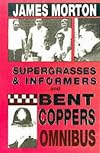
This is brilliant. All the things I was told about the Metropolitan Police as a child are true. There were some awful corrupt sods who rarely got their rightful comeuppance. What is shocking is that I am not shocked. Required reading for those who think it's just 'a few bad apples' in the Force: that's patently wishful thinking.
The First Detective: The Life and Revolutionary Times of Vidocq: Criminal, Spy and Private Eye by James Morton
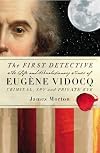
An interesting book. Morton's book on Vidocq is part biography and part critique of the memoirs written by Vidocq himself and others who encountered him during his life. Morton does a good job detailing Vidocq's life and delivers his story with some mild humor. Now, whether if this is due to Morton's own cleverness or just the eccentricities of Vidocq's life is debatable. Where Morton starts falling short is many of the details used to give context to events sometimes run long and take away show more from Vidocq. I would most likely recommend this book as a supplementary to a reader after reading Vidocq's memoirs. show less
The first detective : the life and revolutionary times of Vidocq, criminal, spy and private eye by James Morton

This book is a description of the life - I hesitate to use the word "biography" - of Eugene-Francois Vidocq, a man born in late 18th century France who led what was clearly an extremely colourful life as a thief, spy, policeman and adventurer. Described by the author as the "world's first private detective" this looked to be an interesting read. Unfortunately, this is one of the very few books that I have abandoned rather than finished.
Vidocq wrote his own memoirs and has subsequently been show more written about by many others (although I confess I had never heard of him before encountering this book.) The author clearly draws on these many sources and on some contemporary documents in France and elsewhere. He makes this clear in the introduction and the extensive bibliography, and the introduction itself appears to be a fairly good assessment of the quality and breadth of the existing material on Vidocq. All this holds out great promise as one starts the book.
The promise isn't borne out. The style switches continually from segments which are meticulously referenced back to their sources, either in the text or through footnotes, and other sections in which matters of far greater importance are simply asserted without any indication of their source. Given that other parts of the text make clear how unreliable many of the existing sources are (not least Vidocq's own memoirs) this is frustrating. At times the author adopts the style of a scholarly text, assuming a reading knowledge of 18thC french on the part of the reader, and at other times it reads like a celebrity biography, with the simplest of things spelt out for us in a way that made this reader feel talked-down-to.
The celebrity style is apparent elsewhere; Morton drops the names of aristocrats freely through the text, often it seems for little other purpose than name-dropping, and there's a sensation of oleaginous reverence that attaches to these. Often, these coincide with statements that assert that the subject "may well have met" these people, even though there is little evidence for it and no purpose, since they clearly have no bearing whatsoever on his life.
These failings become less surprising when I realised that the author is also the one behind celebrity exposes of life in British Royalty. If you like that sort of thing then possibly - just possibly - you may find something of interest in this book. Otherwise, whatever you are after - light reading or serious biography - this book manages to let you down.
Best avoided. show less
Vidocq wrote his own memoirs and has subsequently been show more written about by many others (although I confess I had never heard of him before encountering this book.) The author clearly draws on these many sources and on some contemporary documents in France and elsewhere. He makes this clear in the introduction and the extensive bibliography, and the introduction itself appears to be a fairly good assessment of the quality and breadth of the existing material on Vidocq. All this holds out great promise as one starts the book.
The promise isn't borne out. The style switches continually from segments which are meticulously referenced back to their sources, either in the text or through footnotes, and other sections in which matters of far greater importance are simply asserted without any indication of their source. Given that other parts of the text make clear how unreliable many of the existing sources are (not least Vidocq's own memoirs) this is frustrating. At times the author adopts the style of a scholarly text, assuming a reading knowledge of 18thC french on the part of the reader, and at other times it reads like a celebrity biography, with the simplest of things spelt out for us in a way that made this reader feel talked-down-to.
The celebrity style is apparent elsewhere; Morton drops the names of aristocrats freely through the text, often it seems for little other purpose than name-dropping, and there's a sensation of oleaginous reverence that attaches to these. Often, these coincide with statements that assert that the subject "may well have met" these people, even though there is little evidence for it and no purpose, since they clearly have no bearing whatsoever on his life.
These failings become less surprising when I realised that the author is also the one behind celebrity exposes of life in British Royalty. If you like that sort of thing then possibly - just possibly - you may find something of interest in this book. Otherwise, whatever you are after - light reading or serious biography - this book manages to let you down.
Best avoided. show less
You May Also Like


Associated Authors
Statistics
- Works
- 46
- Also by
- 5
- Members
- 481
- Popularity
- #51,316
- Rating
- 3.1
- Reviews
- 12
- ISBNs
- 149
- Languages
- 5