

Tom King (1) (1978–)
Author of The Vision, Vol. 1: Little Worse Than a Man
For other authors named Tom King, see the disambiguation page.
About the Author
Image credit: King during an appearance at Midtown Comics in Manhattan By Luigi Novi, CC BY 4.0, https://commons.wikimedia.org/w/index.php?curid=76658888
Series
Works by Tom King
Batman (2016-) #2 11 copies
Senhor Milagre Volume 02 6 copies
Mister Miracle (2017-) #1 6 copies
Black Death in America 5 copies
Mister Miracle (2017-) #11 — Author — 4 copies
Batman vs Bane 4 copies
Jenny Sparks (2024-) #7 3 copies
Wonder Woman (2023-) #4 3 copies
Héroes en Crisis núm. 06 (de 9) 3 copies
Strange Adventures núm. 3 de 12 (Strange Adventures (O.C.)) (Spanish Edition) (2020) 3 copies, 1 review
Mister Miracle (2017-) #7 — Author — 3 copies
Mister Miracle (2017-) #8 — Author — 3 copies
Wonder Woman (2023-) #9 3 copies
Wonder Woman (2023-) #7 3 copies
Wonder Woman (2023-) #6 3 copies
Wonder Woman (2023-) #5 3 copies
Mister Miracle (2017-) #10 — Author — 3 copies
Wonder Woman (2023-) #14 3 copies
Mister Miracle (2017-) #6 — Author — 3 copies
The Penguin (2023-) #9 3 copies
Wonder Woman (2023-) #10 3 copies
The Penguin (2023-) #1 2 copies
Wonder Woman (2023-) #13 2 copies
The Penguin (2023-) #6 2 copies
The Penguin (2023-) #2 2 copies
Helen of Wyndhorn #3 2 copies
The Penguin (2023-) #4 2 copies
The Penguin (2023-) #3 2 copies
Jenny Sparks (2024-) #1 2 copies
Wonder Woman (2023-) #12 2 copies
Grayson Annual (2014-) #2 2 copies
The Penguin (2023-) #5 2 copies
The Omega Men (2015-2016) #4 2 copies
Helen of Wyndhorn #4 2 copies
Jenny Sparks (2024-) #3 2 copies
Helen of Wyndhorn #2 2 copies
The Omega Men (2015-2016) #8 2 copies
Danger Street 2 copies
Helen of Wyndhorn #5 2 copies
Wonder Woman (2023-) #8 2 copies
The Penguin (2023-) #10 2 copies
The Omega Men (2015-2016) #6 2 copies
The Penguin (2023-) #11 2 copies
Wonder Woman (2023-) #11 2 copies
The Penguin (2023-) #7 2 copies
The Penguin (2023-) #8 2 copies
Wonder Woman (2023-) #18 2 copies
Jenny Sparks (2024-) #4 2 copies
Wonder Woman (2023-) #17 2 copies
Wonder Woman (2023-) #16 2 copies
Jenny Sparks (2024-) #5 2 copies
Helen of Wyndhorn #1 2 copies
Helen of Wyndhorn (2024) 006 — Author — 2 copies
Wonder Woman (2023-) #15 2 copies
Black Canary: Best of the Best 4 2 copies
Jenny Sparks (2024-) #2 2 copies
The Penguin (2023-) #12 2 copies
Mister Miracle (2017-) #12 2 copies
DC Sneak Peek: Grayson #1 2 copies
Strange Adventures #4 2 copies
Estranhas Aventuras Vol. 2 2 copies
Sheriff of Babylon #01 — Author — 2 copies
Human Target 2 copies
Urban Comics Nomad : Mister Miracle 2 copies
Batman the Brave and the Bold: The Winning Card — Author — 1 copy
Joker The Winning Card 1 copy
The Human Target (The Human Target #1-12) — Author — 1 copy
Rorschach 2 Variant 555 1 copy
Rorschach 3 Variant 555 1 copy
Batman/Catwoman 3 Variant 1 copy
Batman por Tom King # 02 1 copy
Batman por Tom King # 01 1 copy
Un homme sans importance 1 copy
alvo humano Ed. 2023 1 copy
Wonder Woman (2023-) #20 1 copy
Helen of Windhorn Vol 1 1 copy
Mr. Miracle 1 copy
Le Pingouin tome 1 1 copy
Wonder Woman (2023-) #19 1 copy
Wonder Woman (2023-) #25 1 copy
Wonder Woman (2023-) #24 1 copy
Batman Vol 3 #21 1 copy
Wonder Woman (2023-) #21 1 copy
Wonder Woman (2023-) #23 1 copy
Wonder Woman (2023-) #22 1 copy
Love Everlasting #14 1 copy
Love Everlasting #15 1 copy
Batman : Gotham to ja 1 copy
Love Everlasting #12 1 copy
Love Everlasting #11 1 copy
Wonder Woman (2023-) #26 1 copy
Grayson #16 1 copy
Grayson (2014-) #4 1 copy
Batman (2016/Rebirth) 1 copy
Strange Adventures #9 1 copy
Strange Adventures #5 1 copy
Strange Adventures #8 1 copy
Strange Adventures #7 1 copy
Rorschach #5 1 copy
Animal Pound #5 1 copy
Danger Street (2022-) #5 1 copy
Danger Street (2022-) #6 1 copy
Danger Street (2022-) #8 1 copy
Danger Street (2022-) #9 1 copy
Danger Street (2022-) #10 1 copy
Danger Street (2022-) #11 1 copy
Danger Street (2022-) #12 1 copy
Trinity Special 1 1 copy
The Omega Men (2015-2016) #7 1 copy
Animal Pound #4 1 copy
Love Everlasting #8 1 copy
Love Everlasting #9 1 copy
Love Everlasting #10 1 copy
Associated Works
Robin 80th Anniversary 100-Page Super Spectacular (2020) #1 (2020) — Contributor — 10 copies, 1 review
Tagged
Common Knowledge
- Canonical name
- King, Tom
- Birthdate
- 1978-07-15
- Gender
- male
- Education
- Columbia University
- Occupations
- author
comic book writer - Awards and honors
- Eisner Award for Best Writer 2019
Eisner Award for Best Writer 2018 - Nationality
- USA
- Birthplace
- California, USA
- Places of residence
- Washington, D.C., USA
- Associated Place (for map)
- USA
Members
Reviews
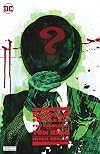
Honestly, this book caught me completely off guard. This, this is how you recreate the magic of *The Killing Joke*. I have never felt more dread at the ramblings of a madman. You can tell that Edward views the average human being as nothing more than mere props to his agenda. You can tell that he will never hesitate to take a life, for even the smallest reason. There is no madness in him, no purpose, no revenge. He does not kill to achieve, he kills because it does not matter to him. None of show more this matters to him. He is so above and beyond the capabilities of a human being that he could very well be a demigod looking down upon humanity with wretched indifference.
And all of it makes sense. We see the childhood that created the monster. We see the abuse. We see the emotional objectification. He never got to be a person, he was just a vessel for his intellect, for his father to project ambition onto. Edward was nothing more than an extension of his father's prestige, and the life laid out in front of him was almost his father's repentance for having a bastard son with a whore. Maybe he believed that by transforming Edward into the most brilliant and learned person in the planet, he could expunge his own sins.
We see Edward's first kill. His desperation manifested to the point of break. He tried negotiating, he tried asking for empathy, for justice. But instead was met with empty platitudes and once again, emotional and intellectual objectification. The professor did not see him, see him as he truly was, the suffering. He projected onto him a vision of a lost child, who just needed a few positive, charming words to strip him off the path he was walking upon. He was well intentioned, but that's not what Edward needed. Edward needed support, someone to listen, someone to take him seriously. But alas, that's not how the story plays out.
It's poetic really. That basketball field is where the professor told Edward to enjoy his life more, to take a break, to play a "game", and he had been almost following that advice religiously since. He didn't seem to care about anything other than playing "games" and having fun, no higher purpose or mission. No one could touch him intellectually, and the one that came the closest — Batman — even he was barely a match. We learn as much. He had visited Bruce Wayne's mansion multiple times, broken through every security the fucking Batman had conjured up, and reassembled everything so perfectly that no one had ever suspected a thing. But he had let himself be the butt of the joke, always laid out a maze for Batman to solve, elaborate perhaps, but never meant to actually be a challenge.
But recently something had happened. A henchmen had found out the whereabouts about his mother, the mother that has loomed so large over his life as a symbolic figure, the one who has cursed upon Edward his father's repentance and wrath, who never bothered to check in on her son once. And all at once, Edward's worldview collapsed. All that he was was a lost boy who missed his mother, who would have turned out differently if she had just been there. And she was, she was alive and there, just not in his life. He had been invisible, once again, all his life to another person who could have saved him and yet decided not to. And that could not be forgiven. He did not want to be driven by rage or madness. He wasn't one of those people. So he killed her.
And that began the madness. All of the madness in the book because he wanted to have a conversation with Batman, to show him the stakes, to clear the fog in his mind. He was not a "joke", he was not even really the "riddler". "Riddles are fun, I am not", he claims.
And he does what even the joker did not manage to do. He twists batman. He leaves him absolutely no choice but to kill him. He corners him in a way that leaves absolutely no room for any mercy. Locking him up will not do anything. His killings are going to be completely random so there would be no way for him to intervene. Nothing Batman could conjure would stand his intellect. Lives would just continue to be lost. And so it had to be done.
At the end of the day, I wonder if Edward was suicidal. If he had been suicidal his entire life, and this was a very elaborate riddle in the end. Riddle me this Batman, who promises to never kill regardless of circumstances, but only keeps his word in victory, and in defeat, breaks the only rule he ever created for himself, in the name of moral clarity and the greater good?
Oh, and did I mention that this is probably some of the best art humanity has ever created. I don't think I have ever seen just the art earn that 5/5 rating this fast, and the fact that the writing, by itself is also a 5/5 is just the cherry on top. Truly, I cannot understand why this book isn't constantly talked about and worshipped in the same way that *The Killing Joke* is. show less
And all of it makes sense. We see the childhood that created the monster. We see the abuse. We see the emotional objectification. He never got to be a person, he was just a vessel for his intellect, for his father to project ambition onto. Edward was nothing more than an extension of his father's prestige, and the life laid out in front of him was almost his father's repentance for having a bastard son with a whore. Maybe he believed that by transforming Edward into the most brilliant and learned person in the planet, he could expunge his own sins.
We see Edward's first kill. His desperation manifested to the point of break. He tried negotiating, he tried asking for empathy, for justice. But instead was met with empty platitudes and once again, emotional and intellectual objectification. The professor did not see him, see him as he truly was, the suffering. He projected onto him a vision of a lost child, who just needed a few positive, charming words to strip him off the path he was walking upon. He was well intentioned, but that's not what Edward needed. Edward needed support, someone to listen, someone to take him seriously. But alas, that's not how the story plays out.
It's poetic really. That basketball field is where the professor told Edward to enjoy his life more, to take a break, to play a "game", and he had been almost following that advice religiously since. He didn't seem to care about anything other than playing "games" and having fun, no higher purpose or mission. No one could touch him intellectually, and the one that came the closest — Batman — even he was barely a match. We learn as much. He had visited Bruce Wayne's mansion multiple times, broken through every security the fucking Batman had conjured up, and reassembled everything so perfectly that no one had ever suspected a thing. But he had let himself be the butt of the joke, always laid out a maze for Batman to solve, elaborate perhaps, but never meant to actually be a challenge.
But recently something had happened. A henchmen had found out the whereabouts about his mother, the mother that has loomed so large over his life as a symbolic figure, the one who has cursed upon Edward his father's repentance and wrath, who never bothered to check in on her son once. And all at once, Edward's worldview collapsed. All that he was was a lost boy who missed his mother, who would have turned out differently if she had just been there. And she was, she was alive and there, just not in his life. He had been invisible, once again, all his life to another person who could have saved him and yet decided not to. And that could not be forgiven. He did not want to be driven by rage or madness. He wasn't one of those people. So he killed her.
And that began the madness. All of the madness in the book because he wanted to have a conversation with Batman, to show him the stakes, to clear the fog in his mind. He was not a "joke", he was not even really the "riddler". "Riddles are fun, I am not", he claims.
And he does what even the joker did not manage to do. He twists batman. He leaves him absolutely no choice but to kill him. He corners him in a way that leaves absolutely no room for any mercy. Locking him up will not do anything. His killings are going to be completely random so there would be no way for him to intervene. Nothing Batman could conjure would stand his intellect. Lives would just continue to be lost. And so it had to be done.
At the end of the day, I wonder if Edward was suicidal. If he had been suicidal his entire life, and this was a very elaborate riddle in the end. Riddle me this Batman, who promises to never kill regardless of circumstances, but only keeps his word in victory, and in defeat, breaks the only rule he ever created for himself, in the name of moral clarity and the greater good?
Oh, and did I mention that this is probably some of the best art humanity has ever created. I don't think I have ever seen just the art earn that 5/5 rating this fast, and the fact that the writing, by itself is also a 5/5 is just the cherry on top. Truly, I cannot understand why this book isn't constantly talked about and worshipped in the same way that *The Killing Joke* is. show less
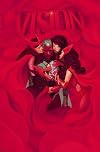
The price Vision has to pay to create a version of normal life for himself, when he and his family are not only synthezoids, but also subject to the demands and expectations and scrutiny of superheroes with their scientific surveillance and their mystical prophetic dreams, becomes the price he is willing to exact when that life is threatened or damaged. The construction of this story is exquisite, a finely tuned creation for squeezing tension and suspense out of every panel and putting the show more reader through the emotional wringer as likeable characters do terrible things for excellent reasons. Dark, measured, intense, occasionally shocking, it's a brilliant, unexpected and highly original merging of superheroes and psychological thriller. show less

Access a version of the below that includes illustrations on my blog.
Tom King definitely has a "thing." I've previously read his work in The Omega Men (2015-16), The Vision (2016-17), and Mister Miracle (2017-19), and in my review of the last one, I wrote, "This feels to me like it finishes a thematic trilogy.... Like those stories, it's about reconciling superpowered violence with living an everyday life." Well, the stories may be thematically connected, but his work on Strange Adventures show more shows that he's not done with those ideas yet. Through the story of Adam Strange, he refracts them in a different way, and I would describe what's as stake here as masculinity, violence, and empire—all through the medium of superhero adventure comics, of course.
Adam Strange is the "Man of the Two Worlds," a human from Earth who fights to defend the planet Rann. Strange Adventures follows him in two parallel stories: in the past, he fights alongside his wife Alanna to defend Rann from the deadly Pykkt invasion. In the present, the two now reside on Earth, where Adam has become a hero and celebrity for defeating the Pykkts... but their daughter is dead, and the promise of a Pykkt invasion of Earth looms. We see what Adam and Alanna did in sequences illustrated by Evan "Doc" Shaner in the past while the Stranges defend themselves against accusations of impropriety in the present, especially a Justice League investigation run by Mister Terrific.
Fundamentally, what King and his collaborators have done here is to take a Space Age gee-whiz comics concept and darken it. In the original series, Adam travels to Rann via zeta beam, fights alien monsters with science knowledge, kisses Alanna, and goes home, ad infinitum. I do feel like I could nitpick how King did this to death if I wanted to. Is this series doing anything that DC's last dark Adam Strange reinvention didn't? Well, actually, yes. Richard Bruning's series was interested in the histories of both Adam and Rann: what would make a person want to abandon his planet like this? why would a technologically advanced alien civilization need a guy from Earth to save them all the time? King doesn't really care about this; Adam's Space Age adventures are mostly there to contrast the horribleness and moral compromise of the Pykkt invasion. Along those lines, then, I actually wanted more deconstruction of the relationship between Adam and Rann: it kind of reads like the kind of thing we might now call a "white savior" narrative, and though there are hints of it, that's not really the story King is telling either, and I guess I can't begrudge him for that.
As you read the book, it becomes clear that the present-day story is Alanna's, not really Adam's. And, after all, the book is Strange Adventures, not Adam Strange: it doesn't specify which Strange in the title. The relationship between Adam and Alanna is the crux of the whole book, and it's fascinating and terrifying. Adam, as the book flags up on occasion, especially through Adam's media appearances on contemporary Earth, is a man. He's the kind of guy who does what needs to be done to save his people, and then romances a woman. This is shown to be Alanna's own doing in many ways: she shaped Adam into being the kind of man she wanted, and through extension, Rann needed. This worked for him for decades!
What Strange Adventures does is take that concept of masculinity and put it through the wringer. What if "what needs to be done" is more complicated than decisively implementing a science idea you've had? As the war against the Pykkts goes on, Adam must do more and more, pushed by Alanna on every step. Soon we see the dark side of that masculinity—and in the book's ultimate revelation, so does Alanna. Adam was pushed into a situation where his masculinity became untenable; in order to save the day in the way he was supposed to yet again, he had to betray the precepts he supposedly stood for. You can see both how Alanna pushed him into it... and how in becoming the person Alanna wanted him to be, he ultimately snapped, revealing the weaknesses at the heart of masculine identity. Alanna, in the end, recognizes this but doesn't let herself see it. In a sense, this story is about revealing that Adam Strange is a villain, but Adam is only a villain to the extent that masculinity has forced him to be one, and Alanna is the embodiment of the enforcement of masculinity. She makes him live up to an ideal that is ultimately impossible to live up to.
My biggest complaint would be the use of grawlixes, actually. You can show a guy's head explode, and show multiple sex scenes, but you can't use the work "fuck"? It threw me out of the moment almost every time.
So, yeah, there's a lot going on here, and I really enjoyed reading it. I think it might be my favorite of the Tom King comics I've read, though maybe that would also be The Omega Men. As a writer, King is replete with small touches that make things come alive. There are good jokes, some nice media and political commentary, a neat take on Mister Terrific, good characterization for all the different superhero cameos (Superman, Batman, and even Booster Gold), and interesting epigraphs. The art is perfect. I liked Mitch Gerads on Mister Miracle, but he absolutely kills it on the present-day sequences here, especially anything involving Alanna. Evan "Doc" Shaner has been a favorite of mine since I read his Convergence: Shazam miniseries, and his clear, heroic art is beautiful on its own terms and beautiful as a contrast to the horrific events it depicts. I assume Gerads and Shaner did their own coloring because there's no credited colorist, and the colors are great, too, really adding to the mood and tone and surrealism of the piece as appropriate.
If King stops doing his dark deconstructions of male superheroes here, it will be a worthy conclusion. But if he keeps going, I will be along for the ride. And when will Evan Shaner get something other than Future Quest to really shine on!?
DC Comics Space Heroes: « Previous in sequence
Side note: over the past few years, primarily beginning with 2009's Strange Adventures vol. 3, DC has associated Adam Strange with the title Strange Adventures. It's a natural association if you go by the name, but historically, Adam Strange's adventures mostly appeared in Mystery in Space. It occurred to me near the end of the volume that "Mystery in Space" would actually be a plausible collection for this story, too... and then like a page later, Alanna used it in text! show less
Tom King definitely has a "thing." I've previously read his work in The Omega Men (2015-16), The Vision (2016-17), and Mister Miracle (2017-19), and in my review of the last one, I wrote, "This feels to me like it finishes a thematic trilogy.... Like those stories, it's about reconciling superpowered violence with living an everyday life." Well, the stories may be thematically connected, but his work on Strange Adventures show more shows that he's not done with those ideas yet. Through the story of Adam Strange, he refracts them in a different way, and I would describe what's as stake here as masculinity, violence, and empire—all through the medium of superhero adventure comics, of course.
Adam Strange is the "Man of the Two Worlds," a human from Earth who fights to defend the planet Rann. Strange Adventures follows him in two parallel stories: in the past, he fights alongside his wife Alanna to defend Rann from the deadly Pykkt invasion. In the present, the two now reside on Earth, where Adam has become a hero and celebrity for defeating the Pykkts... but their daughter is dead, and the promise of a Pykkt invasion of Earth looms. We see what Adam and Alanna did in sequences illustrated by Evan "Doc" Shaner in the past while the Stranges defend themselves against accusations of impropriety in the present, especially a Justice League investigation run by Mister Terrific.
Fundamentally, what King and his collaborators have done here is to take a Space Age gee-whiz comics concept and darken it. In the original series, Adam travels to Rann via zeta beam, fights alien monsters with science knowledge, kisses Alanna, and goes home, ad infinitum. I do feel like I could nitpick how King did this to death if I wanted to. Is this series doing anything that DC's last dark Adam Strange reinvention didn't? Well, actually, yes. Richard Bruning's series was interested in the histories of both Adam and Rann: what would make a person want to abandon his planet like this? why would a technologically advanced alien civilization need a guy from Earth to save them all the time? King doesn't really care about this; Adam's Space Age adventures are mostly there to contrast the horribleness and moral compromise of the Pykkt invasion. Along those lines, then, I actually wanted more deconstruction of the relationship between Adam and Rann: it kind of reads like the kind of thing we might now call a "white savior" narrative, and though there are hints of it, that's not really the story King is telling either, and I guess I can't begrudge him for that.
As you read the book, it becomes clear that the present-day story is Alanna's, not really Adam's. And, after all, the book is Strange Adventures, not Adam Strange: it doesn't specify which Strange in the title. The relationship between Adam and Alanna is the crux of the whole book, and it's fascinating and terrifying. Adam, as the book flags up on occasion, especially through Adam's media appearances on contemporary Earth, is a man. He's the kind of guy who does what needs to be done to save his people, and then romances a woman. This is shown to be Alanna's own doing in many ways: she shaped Adam into being the kind of man she wanted, and through extension, Rann needed. This worked for him for decades!
What Strange Adventures does is take that concept of masculinity and put it through the wringer. What if "what needs to be done" is more complicated than decisively implementing a science idea you've had? As the war against the Pykkts goes on, Adam must do more and more, pushed by Alanna on every step. Soon we see the dark side of that masculinity—and in the book's ultimate revelation, so does Alanna. Adam was pushed into a situation where his masculinity became untenable; in order to save the day in the way he was supposed to yet again, he had to betray the precepts he supposedly stood for. You can see both how Alanna pushed him into it... and how in becoming the person Alanna wanted him to be, he ultimately snapped, revealing the weaknesses at the heart of masculine identity. Alanna, in the end, recognizes this but doesn't let herself see it. In a sense, this story is about revealing that Adam Strange is a villain, but Adam is only a villain to the extent that masculinity has forced him to be one, and Alanna is the embodiment of the enforcement of masculinity. She makes him live up to an ideal that is ultimately impossible to live up to.
My biggest complaint would be the use of grawlixes, actually. You can show a guy's head explode, and show multiple sex scenes, but you can't use the work "fuck"? It threw me out of the moment almost every time.
So, yeah, there's a lot going on here, and I really enjoyed reading it. I think it might be my favorite of the Tom King comics I've read, though maybe that would also be The Omega Men. As a writer, King is replete with small touches that make things come alive. There are good jokes, some nice media and political commentary, a neat take on Mister Terrific, good characterization for all the different superhero cameos (Superman, Batman, and even Booster Gold), and interesting epigraphs. The art is perfect. I liked Mitch Gerads on Mister Miracle, but he absolutely kills it on the present-day sequences here, especially anything involving Alanna. Evan "Doc" Shaner has been a favorite of mine since I read his Convergence: Shazam miniseries, and his clear, heroic art is beautiful on its own terms and beautiful as a contrast to the horrific events it depicts. I assume Gerads and Shaner did their own coloring because there's no credited colorist, and the colors are great, too, really adding to the mood and tone and surrealism of the piece as appropriate.
If King stops doing his dark deconstructions of male superheroes here, it will be a worthy conclusion. But if he keeps going, I will be along for the ride. And when will Evan Shaner get something other than Future Quest to really shine on!?
DC Comics Space Heroes: « Previous in sequence
Side note: over the past few years, primarily beginning with 2009's Strange Adventures vol. 3, DC has associated Adam Strange with the title Strange Adventures. It's a natural association if you go by the name, but historically, Adam Strange's adventures mostly appeared in Mystery in Space. It occurred to me near the end of the volume that "Mystery in Space" would actually be a plausible collection for this story, too... and then like a page later, Alanna used it in text! show less

I read the first half of Tom King and Gabriel Hernandez Walta's run on The Vision when it was a finalist for the Hugo Award for Best Graphic Story, and I loved it (it got my first place vote in that category... even though it came in sixth), so I knew that once a hard copy collection of the whole run was out, I would pick it up.
The Vision is a well-done comic, a meditation on both family and man's inhumanity to man told in the form of superpowered robots moving to the suburbs. Its power show more rests in its stark simplicity-- much like the power of its central character. Both narration and art are very matter-of-fact about violence; horrific things being related in unemotional terms. It's a solid piece of comics, really well put together, showing the power of the genre of superhero comics when you pluck at the strangeness of its edges. show less
The Vision is a well-done comic, a meditation on both family and man's inhumanity to man told in the form of superpowered robots moving to the suburbs. Its power show more rests in its stark simplicity-- much like the power of its central character. Both narration and art are very matter-of-fact about violence; horrific things being related in unemotional terms. It's a solid piece of comics, really well put together, showing the power of the genre of superhero comics when you pluck at the strangeness of its edges. show less
Lists
Awards


You May Also Like


Associated Authors
Statistics
- Works
- 570
- Also by
- 5
- Members
- 8,353
- Popularity
- #2,888
- Rating
- 3.8
- Reviews
- 376
- ISBNs
- 418
- Languages
- 11
- Favorited
- 4