
Mark Schultz (1) (1955–)
Author of The Stuff of Life: A Graphic Guide to Genetics and DNA
For other authors named Mark Schultz, see the disambiguation page.
Series
Works by Mark Schultz
Al Williamson's Flash Gordon : a lifelong vision of the heroic (2009) — Author — 37 copies, 1 review
Action Comics # 1,000,000 3 copies
Cadillacs and Dinosaurs #5 1 copy
Xenozoic Tales #14 1 copy
Superman 124/125 1 copy
Subhuman #2 1 copy
Marvel: Flash Gordon #2 1 copy
Aliens: Apocalypse 1 copy
Mark Schultz Blue Book 1 copy
Death Rattle vol.3 #01 1 copy
Associated Works
Bone Sharps, Cowboys, and Thunder Lizards: A Tale of Edward Drinker Cope, Othniel Charles Marsh, and the Gilded Age of Paleontology (2005) — Cover artist, some editions — 121 copies, 7 reviews
Tagged
Common Knowledge
- Birthdate
- 1955-06-07
- Gender
- male
- Education
- Kutztown University of Pennsylvania (BFA | Painting)
- Occupations
- writer
Penciller
Inker - Nationality
- USA
- Birthplace
- Philadelphia, Pennsylvania, USA
- Places of residence
- Pittsburgh, Pennsylvania, USA
Philadelphia, Pennsylvania, USA - Associated Place (for map)
- Pennsylvania, USA
Members
Reviews

Access a version of the below that includes illustrations on my blog in two parts here and here.
In the first story here, Return to Krypton, the sterile Krypton of John Byrne's Man of Steel reboot is revealed to be an illusion, and the "true" Krypton is something closer to the Krypton that we saw in the comics of the Silver Age; Jor-El created fake data about Krypton for Kal-El so that he wouldn't miss his home. It's a little convoluted-- retconning a retcon always is, I suppose-- and show more probably doesn't really track with the details of Man of Steel, which I remember really liking, though it's been over a decade since I've read it. In that story, people on Krypton no longer bore children, so baby Kal-El was sent to Earth in a "birthing matrix," and thus literally born in Kansas. Return to Krypton makes it clear that Lara bore Kal-El in her body, and then he was placed in the birthing matrix to be sent to Earth, so the story maintains some details of Man of Steel while ignoring its spirit.
Superman learns much of this from a message Jor-El left in his rocket in a crystal. Then, with the help of Professor Hamilton and John Henry Irons, he is able to use thought projection to make an image of Krypton in the Phantom Zone, into which he and Lois travel to see what the planet was "really" like before it was destroyed; the story is ambiguous about whether Clark and Lois actually traveled to Krypton of the past, or if only to a recreation of it. Clark is able to hang out with his parents briefly, but soon events get crazy: he helps Jor-El adjust Krypton's orbit so it won't be destroyed, but this drains his powers so Lara has to rescue him in a rocket, but space travel is against the law, so General Zod comes to arrest Jor-El and Lara, but they all go on the run, and Zod gets angry and deposes the Kryptonian leadership because he blames their complacency for the crisis, and then all of a sudden Jor-El has been made president in a counter-revolution. Whoa.
It's action-packed (particularly part three, Man of Steel #111), which is the big weakness of it all: I feel like this story should have had more emotional weight. This is momentous! But most of the story is spent 1) massaging the continuity to the preferred form of the 2000s writers, and 2) making things explode again and again. The human story gets lost in the middle of it all. I know this is a superhero comic, but I feel like there must have been a way to balance them better than they were.
One thing I do like about these comics is their emphasis on narration. Three of the five issues use narration: the prologue is Pa Kent, while parts one and three are narrated by Lois. This keeps some emphasis on character, and I particularly liked the focus on Lois, who I think could otherwise have very easily gotten lost in the shuffle.
As for the retcons... I dunno. The Stevil2001 criterion for judging retcons is that The new thing must be at least as interesting, if not more interesting, as the old thing being replaced. I did like Byrne's Man of Steel, especially its vision of Krypton, but I'm open to stories about other forms of Krypton being told. But based on this tale, this new old version of Krypton doesn't have more to offer, but I also believe it could. Weirdly, the story indicates Superman might actually have changed Kryptonian history (wouldn't that have wiped him from existence) and kind of hints that the Man of Steel Krypton still exists. I guess I'll see if either of these ideas are picked up in Adventures going forward.
My feelings about the sequel, Return to Krypton II, are more straightforwardly negative. It seems to me that both of these storylines threw away a potentially emotionally powerful premise in favor of a combination of empty action sequences and unnecessarily complicated continuity "fixes." In this story, the Jor-El of the Phantom Zone duplicate of Krypton manages to travel from the Zone into the real world, seeking Superman's help in pushing back against a tide of fundamentalist Kryptonian zealots who don't like Jor-El's new enlightened age. Honestly, for a supposed utopia, Krypton seems like a giant shithole, perpetually on the verge of complete social collapse at the drop of a hat. They ally themselves with General Zod's lackies against the zealots, trying to save Jor-El's wife and baby Kal-El before it's too late. It just all seems like pointless action sequences.
Then in the end, we finally get an explanation for this Krypton. I thought when reading the original Return to Krypton that all this was intended to retcon away John Byrne's Man of Steel vision of a sterile Krypton; that story claimed Jor-El presented a lie of a sterile Krypton to Kal-El so that he wouldn't feel so sad about his dead homeworld. This story rewrites that, so that we learn that after the Imperiex War (I think), Brainiac 13 time-travelled to pre-destruction Krypton (which really was the sterile world John Bryne showed us) and tried to kill Jor-El to stop Superman from being born. He failed, but made off with Jor-El's diaries and the Eradicator Matrix (I guess this is related to one-time Superman villain "the Eradicator," a.k.a. the Cyborg Superman, but I don't know enough to know), which he used in concert to make a fake Krypton as a trap for Superman. Only since Jor-El was a weirdo, his diaries recorded not the actuality of Krypton, but his dreamed, ideal Krypton. So this Krypton is a real place, a planet in the Phantom Zone, but it is not the real Krypton. Phew.
It's not an explanation that convinces. Why would Jor-El dream up a Krypton where the government is a fascist dictatorship that suppresses dissent with lethal force, and where psychotic fundamentalists lurk in every corner? Like, dream up an actual utopia, dude!
And why did Return II even need to retcon the retcon? This was published in Sept. 2002; exactly one year later, Superman: Birthright would begin publication, removing Byrne inventions like the birthing matrix from continuity just as the first Return seemed like it was going to. By the time Return II came out, editor Eddie Berganza had to have known those changes were coming, so I just don't even get why this story-- which retcons the retcon of a retcon-- even exists.
And if you subtract the continuity jiggery-pokery, there's nothing here worth discussing. None of the five Super title crossovers published during Joe Casey's run on Adventures were exactly great, but Return to Krypton II is definitely the worst of them.
(Incidentally, all of these retcons would themselves be retconned! In Superman: Infinite Crisis we're told that Kal-El's backstory changed because of Superboy-Prime punching at the edge of reality, and thus not because of any of these shenanigans.)
I did like that Krypto was in it, I guess, but Superman is not always a good dog-owner. show less
In the first story here, Return to Krypton, the sterile Krypton of John Byrne's Man of Steel reboot is revealed to be an illusion, and the "true" Krypton is something closer to the Krypton that we saw in the comics of the Silver Age; Jor-El created fake data about Krypton for Kal-El so that he wouldn't miss his home. It's a little convoluted-- retconning a retcon always is, I suppose-- and show more probably doesn't really track with the details of Man of Steel, which I remember really liking, though it's been over a decade since I've read it. In that story, people on Krypton no longer bore children, so baby Kal-El was sent to Earth in a "birthing matrix," and thus literally born in Kansas. Return to Krypton makes it clear that Lara bore Kal-El in her body, and then he was placed in the birthing matrix to be sent to Earth, so the story maintains some details of Man of Steel while ignoring its spirit.
Superman learns much of this from a message Jor-El left in his rocket in a crystal. Then, with the help of Professor Hamilton and John Henry Irons, he is able to use thought projection to make an image of Krypton in the Phantom Zone, into which he and Lois travel to see what the planet was "really" like before it was destroyed; the story is ambiguous about whether Clark and Lois actually traveled to Krypton of the past, or if only to a recreation of it. Clark is able to hang out with his parents briefly, but soon events get crazy: he helps Jor-El adjust Krypton's orbit so it won't be destroyed, but this drains his powers so Lara has to rescue him in a rocket, but space travel is against the law, so General Zod comes to arrest Jor-El and Lara, but they all go on the run, and Zod gets angry and deposes the Kryptonian leadership because he blames their complacency for the crisis, and then all of a sudden Jor-El has been made president in a counter-revolution. Whoa.
It's action-packed (particularly part three, Man of Steel #111), which is the big weakness of it all: I feel like this story should have had more emotional weight. This is momentous! But most of the story is spent 1) massaging the continuity to the preferred form of the 2000s writers, and 2) making things explode again and again. The human story gets lost in the middle of it all. I know this is a superhero comic, but I feel like there must have been a way to balance them better than they were.
One thing I do like about these comics is their emphasis on narration. Three of the five issues use narration: the prologue is Pa Kent, while parts one and three are narrated by Lois. This keeps some emphasis on character, and I particularly liked the focus on Lois, who I think could otherwise have very easily gotten lost in the shuffle.
As for the retcons... I dunno. The Stevil2001 criterion for judging retcons is that The new thing must be at least as interesting, if not more interesting, as the old thing being replaced. I did like Byrne's Man of Steel, especially its vision of Krypton, but I'm open to stories about other forms of Krypton being told. But based on this tale, this new old version of Krypton doesn't have more to offer, but I also believe it could. Weirdly, the story indicates Superman might actually have changed Kryptonian history (wouldn't that have wiped him from existence) and kind of hints that the Man of Steel Krypton still exists. I guess I'll see if either of these ideas are picked up in Adventures going forward.
My feelings about the sequel, Return to Krypton II, are more straightforwardly negative. It seems to me that both of these storylines threw away a potentially emotionally powerful premise in favor of a combination of empty action sequences and unnecessarily complicated continuity "fixes." In this story, the Jor-El of the Phantom Zone duplicate of Krypton manages to travel from the Zone into the real world, seeking Superman's help in pushing back against a tide of fundamentalist Kryptonian zealots who don't like Jor-El's new enlightened age. Honestly, for a supposed utopia, Krypton seems like a giant shithole, perpetually on the verge of complete social collapse at the drop of a hat. They ally themselves with General Zod's lackies against the zealots, trying to save Jor-El's wife and baby Kal-El before it's too late. It just all seems like pointless action sequences.
Then in the end, we finally get an explanation for this Krypton. I thought when reading the original Return to Krypton that all this was intended to retcon away John Byrne's Man of Steel vision of a sterile Krypton; that story claimed Jor-El presented a lie of a sterile Krypton to Kal-El so that he wouldn't feel so sad about his dead homeworld. This story rewrites that, so that we learn that after the Imperiex War (I think), Brainiac 13 time-travelled to pre-destruction Krypton (which really was the sterile world John Bryne showed us) and tried to kill Jor-El to stop Superman from being born. He failed, but made off with Jor-El's diaries and the Eradicator Matrix (I guess this is related to one-time Superman villain "the Eradicator," a.k.a. the Cyborg Superman, but I don't know enough to know), which he used in concert to make a fake Krypton as a trap for Superman. Only since Jor-El was a weirdo, his diaries recorded not the actuality of Krypton, but his dreamed, ideal Krypton. So this Krypton is a real place, a planet in the Phantom Zone, but it is not the real Krypton. Phew.
It's not an explanation that convinces. Why would Jor-El dream up a Krypton where the government is a fascist dictatorship that suppresses dissent with lethal force, and where psychotic fundamentalists lurk in every corner? Like, dream up an actual utopia, dude!
And why did Return II even need to retcon the retcon? This was published in Sept. 2002; exactly one year later, Superman: Birthright would begin publication, removing Byrne inventions like the birthing matrix from continuity just as the first Return seemed like it was going to. By the time Return II came out, editor Eddie Berganza had to have known those changes were coming, so I just don't even get why this story-- which retcons the retcon of a retcon-- even exists.
And if you subtract the continuity jiggery-pokery, there's nothing here worth discussing. None of the five Super title crossovers published during Joe Casey's run on Adventures were exactly great, but Return to Krypton II is definitely the worst of them.
(Incidentally, all of these retcons would themselves be retconned! In Superman: Infinite Crisis we're told that Kal-El's backstory changed because of Superboy-Prime punching at the edge of reality, and thus not because of any of these shenanigans.)
I did like that Krypto was in it, I guess, but Superman is not always a good dog-owner. show less
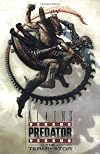
I was not expecting this to be a direct sequel to Alien: Resurrection! It isn’t the Ripley/Call lesbian adventure I requested (demanded, really), unfortunately, but it was still cool to see some non-canon continuation of their story. I thought the story was pretty good, overall. I certainly would’ve liked a bit more like big, messy indulgent three-way battles between the three titular menaces, and I can’t say the Terminators really felt all that… Terminator-like for the most part? show more But it was still a perfectly good read. show less

Access a version of the below that includes illustrations on my blog in three parts here, here, and here.
I am pretty sure this was the most giant Super titles crossover of them all. The crossover ran through 37 different issues across three months! The trade collects just 20 of those issues (I guess ones deemed essential), but is still almost 500 pages long.
Our Worlds at War had a different subtitle each month, the first of which is "Prelude to War!" It's not an entirely satisfying read, show more mostly because it's a lot of foreshadowing. First Superman goes into space to see if Pluto is back and ends up fighting the Fatal Five (from the Legion of Super-Heroes) and is warned something is coming; then he goes to a deserted military base and fights Manchester Black and a new Suicide Squad and is warned something is coming; then the inhabitants of Metropolis are abducted into space and Superman fights Darkseid and is warned something is coming; then goes to Germany and fights General Zod and is warned something is coming. Okay, I get it! But the hints are all so vague that I found them hard to put together into anything coherent as a reader. Plus it seems like Superman keeps punching people instead of actually trying to get explanations, and thus undermining his own purpose.
Part of the issue is, I think, that I'd only been reading Adventures of Superman for four issues prior to this. This story draws on a lot, and is clearly a climax for a number of long-running storylines. But that just gives me a lot of questions: what did happen to Pluto? Who is the woman Brainiac? Is there some kind of connection between Mongal and longtime Superman foe Mongul? Why is General Zod a guy from the Middle East? How do all the myriad different villains here relate to each other? I felt like I should look some of this up in my copy of the Essential Superman Encyclopedia, but I was worried I'd read spoilers for the later parts of the storyline.
There were two issues in the first third I wanted to comment on specifically. First, I thought the Man of Steel installment was the weakest component of Return to Krypton, so I was pleasantly surprised when its contribution here turned out to be the best part of Prelude to War! In "Metropolitan Rapture" (#115), all of the citizens of Metropolis wake up to find themselves in some kind of internment facility. Superman must try to investigate things without giving away who he is; Lois must try to organize everyone. It's a neat premise that stands on its own as a story. When Superman figures out what's going on-- a cabal of people including Adam Strange abducted everyone so that futuristic Metropolis's technology could be used in the coming war-- the answer actually makes sense, and thus the foreshadowing works. Plus, Adam Strange is 1) someone known to me, 2) not a villain, and 3) actually somewhat explains himself. A great example of how to do a single issue that still manages to inform a bigger story.
The other is the one issue here that's not actually part of the core Super titles: "Down And Out In Kansas" (Supergirl #59). I should say that near the end of Prelude to War! things actually start to happen instead of just being foreshadowed. At the end of Action #780, while Superman is fighting General Zod, a beam of energy hits Kansas, causing massive devastation. "Down And Out" follows Supergirl, who happened to be travelling through Kansas at the time, in the aftereffects of the blast, along with a friend of hers whose name I don't think is ever even mentioned but is clearly meant to be a loveable amoral jerk. (Also, judging by his over-the-top dialogue, English.) It's weird because between Supergirl having a concussion and the jerk's hijinks, it seems like writer Peter David is going for... comedy? In a story showing the ground-level devastation of a cosmic war? Of course it has its dark elements, but the result is a bizarre tonal mishmash that undermines what I imagine was the intended effect of closing out Prelude to War! with it.
Imperiex arrives in the solar system in force in the middle third, appropriately called "All-Out War!" Honestly, I found many aspects of the story confusing at first-- with a high focus on action, Superman vaults from escapade to escapade and there's not a lot of time spent explaining what's actually going on. Big events seem to happen off-page. Possibly they happen in tie-in comics not collected here, but still. (At one point, there's an alien armada coming to Earth's defense; at another, it's been destroyed.)
There's an issue of Wonder Woman (#172) collected here in addition to the Superman-focused titles, and I'm not really sure why from a storytelling standpoint, as it doesn't seem to add much to Superman's story (it expands on events from JLA: Our Worlds at War #1 and Action Comics #781 from Wonder Woman's perspective)... but I was so thankful it was included, because it contains a bunch of exposition clearly designed to bring Wonder Woman readers up to speed. However, this is all exposition that was never provided to readers of the actual Superman issues of Our Worlds at War! Finally, someone explains who Imperiex is, how he works, what his goals are, and how his weapons function. I'll come to the actual story later, but by God I was so grateful for this much-need dump of information the characters already know because no one had ever told me!
The stories here chronicle increasing desperation on the part of Earth in general and Superman in particular as Imperiex advances. Lots of big fights and big losses and big deaths: Lois's dad and Aquaman and John Henry Irons and Wonder Woman's mother all die, Atlantis is destroyed. Some are more about what happens than how or why, and those I struggled to engage with. Jeph Loeb usually uses character narration to keep things grounded, but both of his issues in this span populate their narration boxes with famous speeches that counterpoint the action: the Gettysburg Address in Superman #172 and FDR's Pearl Harbor speech in JLA:Our Worlds at War. It's not really interesting enough to have a noteworthy positive effect.
The best issues take you into Superman's head during all of this action. Joe Casey's Adventures of Superman story (#594) teams Superman up with Doomsday for a battle in space. It's called "The Doomsday Protocol," but I would argue that the "Doomsday protocol" of the title isn't Luthor's decision to release Doomsday and use him as a weapon to defend Earth, but Superman's decision to essentially become Doomsday in his mentality: "he has cut loose. Subsequently, the probes have offered little resistance. He can't help but think... if only he'd come to this conclusion on Earth, how many more might have been saved...? Is this how men like Luthor can walk between the raindrops...? By cultivating their inherent ruthlessness... their lack of conscience...?" I like how it's done, too-- a third person narration that's next to the imagery, not in it, giving it all a timeless feel, like you've lost track of time just as much as Superman has in the fight, pondering the difficult questions while the battle goes on automatically. It's well done and character driven, and I can also envision how it's going to contribute to Superman's legendary renunciation of violence whenever I get to that part of the run.
I also liked Action Comics #781, where we continue to see Superman's emotional self-isolation; an increasingly desperate Lois keeps reaching out to him, but he literally cannot hear her even though he can hear everything else, because he cannot afford to let himself hear her, otherwise he will break. At the end of the issue, he has this cold, heart-breaking moment with her. They're in public, so they can't acknowledge that they're married as he tries to say he's sorry for the death of her father. But then he turns to Luthor and says, "Tell me what to do, Mister President. Whatever it takes to win this... I'm yours." Wow. Heck of a way to end the chapter!
Which is why it's kind of a bummer that Wonder Woman #172 comes next. If it had to be included, I think it would have been better placed earlier, before Action #781. As it is, the Wonder Woman issue feels like a backtrack, but moved earlier, I think the chronology of Superman's actions would be more straightforward, and we'd have a better sense of what he's actually doing in Action. The first issue of the next chapter, Casualties of War!, picks up with Superman working for Luthor, so it seems like it should go right after the cliffhanger. Anyway, the issue itself is fine, and Phil Jimenez's art is great, but it's really a Wonder Woman story, clearly tying up some big emotional threads from that series that the reader has to struggle to catch up on if they haven't been reading it already.
On the whole, "All-Out War!" was okay, and better than the first chunk of Our Worlds at War because of the parts more focused on Superman himself. I was hopeful the story would continue to develop that approach going forward. It was also interesting to note that this set of issues are dated September 2001 and this story is all about how you respond to an existential violent threat without compromising your ideals, including an American president who is willing to put values aside for security. But the on-sale date was July 2001, and of course it would have all been plotted and written much earlier than that. Something was in the ether, I guess.
Unfortunately these themes were all basically dropped for the last part, "Casualties of War!", which kind of thuds to a close. In theory, things should be winding up, but instead, the story piles on unnecessary and seemingly un-thought out twists and complications that it has no time to explore the repercussions of.
At first, things get off to a good start. "The Red Badge of Courage" (Superman #173) kind of picks up from the end of All-Out War!, with Superman now voluntarily working for President Luthor (though at the end of All-Out War! he seemed very resigned and submissive, whereas here he's all confrontational), and still awkward around Lois. Superman leads a space expedition to destroy Imperiex with some American soldiers and Strange Visitor (back for the first time since Adventures of Superman #592), and this has some decent moments, though I thought it was a little cruel for the erstwhile Sergeant Rock to lecture Strange Visitor the way she did. She clearly did not ask for any of this, of course she doesn't know how it works!
At the end of this issue, though, things begin to spiral out of control. Imperiex is destroyed, but Warworld (from all the way back in the first issue of this storyline) reappears and absorbs Imperiex's power. Brainiac 13 somehow fires on Apokolips using LexCorp Towers (though the art here in confusing; when I first read the issue I though Warworld was firing on LexCorp Towers and on Apokolips), and Darkseid declares war on Earth, ending the alliance. I'm not sure why Darkseid is so dumb in this moment.
Superman goes to Apokolips to stop Darkseid, but is somehow surprised to learn Warworld is at fault even though we all saw it happen. Darkseid's son (?) Grayven says he's taking over Apokolips, but it's the worst conceived coup ever because Darkseid just shoots him with his eye-beams and throws him into a boom tube. Like, what did he think Darkseid would do?
Then things accelerate even more. The last two Super titles issues here, Superman: The Man of Steel #117 and Action Comics #782, are more exposition than story, piling explanation upon explanation about who Brainiac 13 is, what his plan is, what Imperiex (not actually dead) is up to, how they are going to be defeated, and how they are actually going to be defeated when that doesn't work. So much stuff happens in these two issues that it mostly has to be explained in narration boxes, and loses all of its potential impact. Maxima breaks the alliance (why?), Steel comes back to life, Wonder Woman volunteers to throw Paradise Island at Warworld, Jimmy Olsen has some kind of computer powers, the Amazons worship Darkseid to revitalize his depleted powers, the heroes decide to send Warworld back in time to jumpstart the Big Bang(!), and more. It's all a bit too much, and a bit too messy to be enjoyable.
A lot of things set up in the first third never really came into fruition. Like, why did the population of Metropolis have to be evacuated into space?
As always, there are a few issues of other titles sprinkled in here. Three star Young Justice and its members (Young Justice #36, Impulse #77, and Superboy #91). They were running medical aid missions during the space battle when they got sidetracked and crash-landed on Apokolips; the three issues follow their attempts to stay alive on the most inhopsitable planet in the universe. These are both fun and dark at the same time; I was surprised how much I liked them. I've never read any Young Justice before, but it's a group of well-meaning but often-at-odds characters trying to do their best, but often doing their worst, so of course I enjoyed them. The Superboy issue was particularly good (showing what's beneath his 1990s "attitude" as he writes a letter home from the war), but they're all good. The issues do feel pretty irrelevant to the big story, though, so I'm not sure why they're in here. I also wish the issue showing how they actually escaped Apokolips (Young Justice #37, I think) had been included, since as it is, their story just kind of stops, aside from a one-page appearance in the "Finale" epilogue.
There's also an issue of Wonder Woman again, "Amazons! Attack!"* (#173), which makes sense as some pretty dramatic things in Wonder Woman's life happen. It's oddly placed, though (I would have moved it to after Action #782), and doesn't really answer the big question I had after reading Man of Steel #117: why would Wonder Woman make such a dramatic choice as to destroy her homeland so easily? On the other hand, the mental powers of Aqualad (I think that's who this "Garth" fellow is) prove key to the final battle... but were never mentioned before it. It might have been nice to throw in whatever the relevant issue of the relevant title was beforehand.
The story is technically over before its final issue. "Finale" (World's Finest: Our Worlds at War #1) is an epilogue, showing various bits of fall-out: mourning for Aquaman (I forgot he died, actually), a ceremony for Wonder Woman's mother, Mongal (!) taking over Warworld, Strange Visitor's husband being mad, and so on. It's fine. Jeph Loeb's schtick of running famous speeches over the action of this series has lost its impact, though.
Overall, I feel like this series didn't live up to its potential. Too much spectacle, not enough humanity. The first third threw too many ideas out; the middle one had some great character hooks that never got followed up on because the last third got overtaken by the Big Action of the story.
* Note the two exclamation marks, which most indexers on the Internet seem to have missed. "Amazons Attack!" is something else entirely. show less
I am pretty sure this was the most giant Super titles crossover of them all. The crossover ran through 37 different issues across three months! The trade collects just 20 of those issues (I guess ones deemed essential), but is still almost 500 pages long.
Our Worlds at War had a different subtitle each month, the first of which is "Prelude to War!" It's not an entirely satisfying read, show more mostly because it's a lot of foreshadowing. First Superman goes into space to see if Pluto is back and ends up fighting the Fatal Five (from the Legion of Super-Heroes) and is warned something is coming; then he goes to a deserted military base and fights Manchester Black and a new Suicide Squad and is warned something is coming; then the inhabitants of Metropolis are abducted into space and Superman fights Darkseid and is warned something is coming; then goes to Germany and fights General Zod and is warned something is coming. Okay, I get it! But the hints are all so vague that I found them hard to put together into anything coherent as a reader. Plus it seems like Superman keeps punching people instead of actually trying to get explanations, and thus undermining his own purpose.
Part of the issue is, I think, that I'd only been reading Adventures of Superman for four issues prior to this. This story draws on a lot, and is clearly a climax for a number of long-running storylines. But that just gives me a lot of questions: what did happen to Pluto? Who is the woman Brainiac? Is there some kind of connection between Mongal and longtime Superman foe Mongul? Why is General Zod a guy from the Middle East? How do all the myriad different villains here relate to each other? I felt like I should look some of this up in my copy of the Essential Superman Encyclopedia, but I was worried I'd read spoilers for the later parts of the storyline.
There were two issues in the first third I wanted to comment on specifically. First, I thought the Man of Steel installment was the weakest component of Return to Krypton, so I was pleasantly surprised when its contribution here turned out to be the best part of Prelude to War! In "Metropolitan Rapture" (#115), all of the citizens of Metropolis wake up to find themselves in some kind of internment facility. Superman must try to investigate things without giving away who he is; Lois must try to organize everyone. It's a neat premise that stands on its own as a story. When Superman figures out what's going on-- a cabal of people including Adam Strange abducted everyone so that futuristic Metropolis's technology could be used in the coming war-- the answer actually makes sense, and thus the foreshadowing works. Plus, Adam Strange is 1) someone known to me, 2) not a villain, and 3) actually somewhat explains himself. A great example of how to do a single issue that still manages to inform a bigger story.
The other is the one issue here that's not actually part of the core Super titles: "Down And Out In Kansas" (Supergirl #59). I should say that near the end of Prelude to War! things actually start to happen instead of just being foreshadowed. At the end of Action #780, while Superman is fighting General Zod, a beam of energy hits Kansas, causing massive devastation. "Down And Out" follows Supergirl, who happened to be travelling through Kansas at the time, in the aftereffects of the blast, along with a friend of hers whose name I don't think is ever even mentioned but is clearly meant to be a loveable amoral jerk. (Also, judging by his over-the-top dialogue, English.) It's weird because between Supergirl having a concussion and the jerk's hijinks, it seems like writer Peter David is going for... comedy? In a story showing the ground-level devastation of a cosmic war? Of course it has its dark elements, but the result is a bizarre tonal mishmash that undermines what I imagine was the intended effect of closing out Prelude to War! with it.
Imperiex arrives in the solar system in force in the middle third, appropriately called "All-Out War!" Honestly, I found many aspects of the story confusing at first-- with a high focus on action, Superman vaults from escapade to escapade and there's not a lot of time spent explaining what's actually going on. Big events seem to happen off-page. Possibly they happen in tie-in comics not collected here, but still. (At one point, there's an alien armada coming to Earth's defense; at another, it's been destroyed.)
There's an issue of Wonder Woman (#172) collected here in addition to the Superman-focused titles, and I'm not really sure why from a storytelling standpoint, as it doesn't seem to add much to Superman's story (it expands on events from JLA: Our Worlds at War #1 and Action Comics #781 from Wonder Woman's perspective)... but I was so thankful it was included, because it contains a bunch of exposition clearly designed to bring Wonder Woman readers up to speed. However, this is all exposition that was never provided to readers of the actual Superman issues of Our Worlds at War! Finally, someone explains who Imperiex is, how he works, what his goals are, and how his weapons function. I'll come to the actual story later, but by God I was so grateful for this much-need dump of information the characters already know because no one had ever told me!
The stories here chronicle increasing desperation on the part of Earth in general and Superman in particular as Imperiex advances. Lots of big fights and big losses and big deaths: Lois's dad and Aquaman and John Henry Irons and Wonder Woman's mother all die, Atlantis is destroyed. Some are more about what happens than how or why, and those I struggled to engage with. Jeph Loeb usually uses character narration to keep things grounded, but both of his issues in this span populate their narration boxes with famous speeches that counterpoint the action: the Gettysburg Address in Superman #172 and FDR's Pearl Harbor speech in JLA:Our Worlds at War. It's not really interesting enough to have a noteworthy positive effect.
The best issues take you into Superman's head during all of this action. Joe Casey's Adventures of Superman story (#594) teams Superman up with Doomsday for a battle in space. It's called "The Doomsday Protocol," but I would argue that the "Doomsday protocol" of the title isn't Luthor's decision to release Doomsday and use him as a weapon to defend Earth, but Superman's decision to essentially become Doomsday in his mentality: "he has cut loose. Subsequently, the probes have offered little resistance. He can't help but think... if only he'd come to this conclusion on Earth, how many more might have been saved...? Is this how men like Luthor can walk between the raindrops...? By cultivating their inherent ruthlessness... their lack of conscience...?" I like how it's done, too-- a third person narration that's next to the imagery, not in it, giving it all a timeless feel, like you've lost track of time just as much as Superman has in the fight, pondering the difficult questions while the battle goes on automatically. It's well done and character driven, and I can also envision how it's going to contribute to Superman's legendary renunciation of violence whenever I get to that part of the run.
I also liked Action Comics #781, where we continue to see Superman's emotional self-isolation; an increasingly desperate Lois keeps reaching out to him, but he literally cannot hear her even though he can hear everything else, because he cannot afford to let himself hear her, otherwise he will break. At the end of the issue, he has this cold, heart-breaking moment with her. They're in public, so they can't acknowledge that they're married as he tries to say he's sorry for the death of her father. But then he turns to Luthor and says, "Tell me what to do, Mister President. Whatever it takes to win this... I'm yours." Wow. Heck of a way to end the chapter!
Which is why it's kind of a bummer that Wonder Woman #172 comes next. If it had to be included, I think it would have been better placed earlier, before Action #781. As it is, the Wonder Woman issue feels like a backtrack, but moved earlier, I think the chronology of Superman's actions would be more straightforward, and we'd have a better sense of what he's actually doing in Action. The first issue of the next chapter, Casualties of War!, picks up with Superman working for Luthor, so it seems like it should go right after the cliffhanger. Anyway, the issue itself is fine, and Phil Jimenez's art is great, but it's really a Wonder Woman story, clearly tying up some big emotional threads from that series that the reader has to struggle to catch up on if they haven't been reading it already.
On the whole, "All-Out War!" was okay, and better than the first chunk of Our Worlds at War because of the parts more focused on Superman himself. I was hopeful the story would continue to develop that approach going forward. It was also interesting to note that this set of issues are dated September 2001 and this story is all about how you respond to an existential violent threat without compromising your ideals, including an American president who is willing to put values aside for security. But the on-sale date was July 2001, and of course it would have all been plotted and written much earlier than that. Something was in the ether, I guess.
Unfortunately these themes were all basically dropped for the last part, "Casualties of War!", which kind of thuds to a close. In theory, things should be winding up, but instead, the story piles on unnecessary and seemingly un-thought out twists and complications that it has no time to explore the repercussions of.
At first, things get off to a good start. "The Red Badge of Courage" (Superman #173) kind of picks up from the end of All-Out War!, with Superman now voluntarily working for President Luthor (though at the end of All-Out War! he seemed very resigned and submissive, whereas here he's all confrontational), and still awkward around Lois. Superman leads a space expedition to destroy Imperiex with some American soldiers and Strange Visitor (back for the first time since Adventures of Superman #592), and this has some decent moments, though I thought it was a little cruel for the erstwhile Sergeant Rock to lecture Strange Visitor the way she did. She clearly did not ask for any of this, of course she doesn't know how it works!
At the end of this issue, though, things begin to spiral out of control. Imperiex is destroyed, but Warworld (from all the way back in the first issue of this storyline) reappears and absorbs Imperiex's power. Brainiac 13 somehow fires on Apokolips using LexCorp Towers (though the art here in confusing; when I first read the issue I though Warworld was firing on LexCorp Towers and on Apokolips), and Darkseid declares war on Earth, ending the alliance. I'm not sure why Darkseid is so dumb in this moment.
Superman goes to Apokolips to stop Darkseid, but is somehow surprised to learn Warworld is at fault even though we all saw it happen. Darkseid's son (?) Grayven says he's taking over Apokolips, but it's the worst conceived coup ever because Darkseid just shoots him with his eye-beams and throws him into a boom tube. Like, what did he think Darkseid would do?
Then things accelerate even more. The last two Super titles issues here, Superman: The Man of Steel #117 and Action Comics #782, are more exposition than story, piling explanation upon explanation about who Brainiac 13 is, what his plan is, what Imperiex (not actually dead) is up to, how they are going to be defeated, and how they are actually going to be defeated when that doesn't work. So much stuff happens in these two issues that it mostly has to be explained in narration boxes, and loses all of its potential impact. Maxima breaks the alliance (why?), Steel comes back to life, Wonder Woman volunteers to throw Paradise Island at Warworld, Jimmy Olsen has some kind of computer powers, the Amazons worship Darkseid to revitalize his depleted powers, the heroes decide to send Warworld back in time to jumpstart the Big Bang(!), and more. It's all a bit too much, and a bit too messy to be enjoyable.
A lot of things set up in the first third never really came into fruition. Like, why did the population of Metropolis have to be evacuated into space?
As always, there are a few issues of other titles sprinkled in here. Three star Young Justice and its members (Young Justice #36, Impulse #77, and Superboy #91). They were running medical aid missions during the space battle when they got sidetracked and crash-landed on Apokolips; the three issues follow their attempts to stay alive on the most inhopsitable planet in the universe. These are both fun and dark at the same time; I was surprised how much I liked them. I've never read any Young Justice before, but it's a group of well-meaning but often-at-odds characters trying to do their best, but often doing their worst, so of course I enjoyed them. The Superboy issue was particularly good (showing what's beneath his 1990s "attitude" as he writes a letter home from the war), but they're all good. The issues do feel pretty irrelevant to the big story, though, so I'm not sure why they're in here. I also wish the issue showing how they actually escaped Apokolips (Young Justice #37, I think) had been included, since as it is, their story just kind of stops, aside from a one-page appearance in the "Finale" epilogue.
There's also an issue of Wonder Woman again, "Amazons! Attack!"* (#173), which makes sense as some pretty dramatic things in Wonder Woman's life happen. It's oddly placed, though (I would have moved it to after Action #782), and doesn't really answer the big question I had after reading Man of Steel #117: why would Wonder Woman make such a dramatic choice as to destroy her homeland so easily? On the other hand, the mental powers of Aqualad (I think that's who this "Garth" fellow is) prove key to the final battle... but were never mentioned before it. It might have been nice to throw in whatever the relevant issue of the relevant title was beforehand.
The story is technically over before its final issue. "Finale" (World's Finest: Our Worlds at War #1) is an epilogue, showing various bits of fall-out: mourning for Aquaman (I forgot he died, actually), a ceremony for Wonder Woman's mother, Mongal (!) taking over Warworld, Strange Visitor's husband being mad, and so on. It's fine. Jeph Loeb's schtick of running famous speeches over the action of this series has lost its impact, though.
Overall, I feel like this series didn't live up to its potential. Too much spectacle, not enough humanity. The first third threw too many ideas out; the middle one had some great character hooks that never got followed up on because the last third got overtaken by the Big Action of the story.
* Note the two exclamation marks, which most indexers on the Internet seem to have missed. "Amazons Attack!" is something else entirely. show less
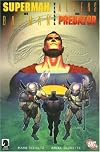
Not sure how people think this artwork is good. A better illustrator could have made the Aliens and Predators so much more menacing and threatening to our favorite heroes, which could have slightly saved the book. Imagine Saturday morning cartoon versions of Aliens and Predators fighting some of the most poorly written Batman and Superman characters ever, in a lackluster story that would be better served with fill-in-the-blank panels and speech bubbles.
Lists
Awards


You May Also Like


Associated Authors
Statistics
- Works
- 124
- Also by
- 20
- Members
- 1,523
- Popularity
- #16,883
- Rating
- 3.9
- Reviews
- 38
- ISBNs
- 142
- Languages
- 6
- Favorited
- 2