
Novalis (1) (1772–1801)
Author of Henry von Ofterdingen
For other authors named Novalis, see the disambiguation page.
About the Author
Novalis, one of the early poets of German romanticism, provided the movement with its best known symbol, the "blue flower," from his fragmentary novel Heinrich von Ofterdingen (1802). The blue flower became the symbol for the deep-rooted romantic yearning, the search that would never end. Novalis show more himself was a Saxon nobleman and a government official who was fated to die young from tuberculosis. His most famous work, Hymns to the Night, was written in memory of his fiance, Sophie von Kuhn, who died in 1797 at the age of 15. His Hymns eloquently express his grief and are a unique mixture of religious, mystical feeling and personal sadness. The Hymns were composed in 1800 and the death he celebrated struck him a year later. (Bowker Author Biography) show less
Image credit: Novalis vers 1799 par Franz Gareis
Huile sur toile
Huile sur toile
Series
Works by Novalis
Goldmann Klassiker mit Erläuterungen : Novalis : Hymnen an die Nacht + Heinrich von Ofterdingen (1981) — Author — 26 copies, 1 review
Heinrich von Ofterdingen und Die Lehrlinge zu Sais (Die grosse Erzähler-Bibliothek der Weltliteratur) (1978) — Author — 11 copies
The Birth of Novalis: Friedrich von Hardenberg’s Journal of 1797, with Selected Letters and Documents (2007) 8 copies
Schriften : die Werke Friedrich von Hardenbergs Bd. 1 Das dichterische Werk (1977) — Author — 4 copies
Christendom or Europe? 4 copies
Novalis Werke in einem Band 4 copies
Himnos a la noche Cánticos espirituales ; seguido de una selección de "Fragmentos" (2001) 4 copies, 2 reviews
Werke, Tagebücher und Briefe Friedrich von Hardenbergs, in 3 Bdn., Bd.1, Das dichterische Werk, Tagebücher und Briefe (1978) 4 copies
Los románticos alemanes — Contributor — 4 copies
Die Gedichte 3 copies
Novalis, sämtliche Werke, 4 Bände 3 copies
Werke : in einem Band 3 copies
Schriften : die Werke Friedrich von Hardenbergs; in vier Bänden und einem Begleitband 3 Das philosophische Werk (1984) — Author — 3 copies
Traum und Welt. Eine Auswahl aus Novalis' Dichtungen, Briefen, Tagebüchern, Fragmenten. (1912) 3 copies
Gedichte und Gedanken 3 copies
Gedichte und Hymnen 2 copies
Uren met Novalis 2 copies
Opere romantiche 2 copies
Novalis Schriften - Die Werke Friedrich von Hardenbergs Sechster Band / Teil 1: Der dichterische Jugendnachlass (1788-1791) und Stammbucheintragungen (1791-1793) - Text (1998) — Author — 2 copies
Ausgewählte Werke in einem Band 2 copies
Novalis Schriften 2 copies
6.2: Der dichterische Jugendnachlass (1788-1791) und Stammbucheintragungen (1791-1793). 2, Teilband: Kommentar (1999) — Author — 2 copies
Schriften : die Werke Friedrich von Hardenbergs Bd. 6 Teilbd. 3 Schriften und Dokumente aus der Berufstigkeit. Supplementa. Corrigenda Text (2006) — Author — 2 copies
Kommentar und Register 2 copies
Gesammelte Werke, Bd. 4 — Author — 1 copy
Gesammelte Werke, Bd. 3 — Author — 1 copy
Hymnen an die Nacht. Geistliche Lieder. Gedichte. Heinrich von Ofterdingen. Die Lehrlinge zu Sais 1 copy
Gesammelte Werke, Bd. 1 — Author — 1 copy
Werke in einem Band 1 copy
Novalis' Werke : T. 1/2 1 copy
Novalis' Werke : T. 3/4 1 copy
Gesammelte Werke. Bd. 1 1 copy
Die guten Geister 1 copy
Novalis zur Einfürung 1 copy
Erwartung - Erfüllung 1 copy
Giacinto e Fiorellin di Rosa 1 copy
Novalis Schriften - Die Werke Friedrich von Hardenbergs Vierter Band: Tagebücher, Briefwechsel, zeitgenössische Zeugnisse (1998) — Author — 1 copy
Deutsche romantische Märchen 1 copy
Novalis Werke : in einem Band — Author — 1 copy
Novalis Schriften - Die Werke Friedrich von Hardenbergs Sechster Band / Teil 4: Schriften und Dokumente aus der Berufstätigkeit - Kommentar und Dokumente — Author — 1 copy
Novalis Schriften - Die Werke Friedrich von Hardenbergs Fünfter Band: Materialien und Register (1988) — Author — 1 copy
Die Lehrlinge zu Sais. Klingsohrs M_rchen (Novalis) — Author — 1 copy
Blütenstaub/ Die Christenheit oder Europa: Fragmente und Studien (Fischer Klassik Plus 793) (2012) 1 copy
Sämtliche Werke Zweiter Band 1 copy
Novalis Gedichte 1 copy
Werke und Briefe in einem Band. ( Jubiläumsbibliothek der deutschen Literatur. ) Novalis (1980) 1 copy
Werke und Briefe; Herausgegeben und mit einem Nachwort versehen von Alfred Kelletat (1953) — Author — 1 copy
Sämtliche Werke Erster Band 1 copy
Sämtliche Werke Dritter Band 1 copy
Novalis - Auswahl Werke 1 copy
Novalis- Fragmenten 1 copy
Maurice Maeterlinck 1 copy
Novalis Schriften (5 Vols) 1 copy
Novalis Dichtungen und Prosa 1 copy
Sämtliche Werke Vierter Band 1 copy
Sämtliche Werke, Bd 1-4 1 copy
Intimni dnevnik 1 copy
Izabrane pesme 1 copy
Glauben und Liebe 1 copy
Gedichte.Erzählungen. Lieder 1 copy
Associated Works
Spells of Enchantment: The Wondrous Fairy Tales of Western Culture (1991) — Contributor — 603 copies, 5 reviews
World Poetry: An Anthology of Verse from Antiquity to Our Time (1998) — Contributor — 496 copies, 2 reviews
Deutschland erzählt. Von Johann Wolfgang von Goethe bis Ludwig Tieck (1970) — Contributor — 26 copies
Oogst Der Tijden. keur uit de werken van schrijvers en dichters aller volken en eeuwen (1940) — Contributor — 12 copies
Uit het leven van een nietsnut en andere verhalen — Contributor — 5 copies
Geschichtsphilosophische Positionen der deutschen Frühromantik : (F. Schlegel und Novalis) (1982) — Featured Artist — 4 copies
Dichtung der Romantik Bd. 12. Die Welt der Romantiker : Berichte u. Selbstdarstellungen. Briefe u. Urkunden — Contributor — 3 copies
Charakteristiken : die Romantiker in Selbstzeugnissen und Äusserungen ihrer Zeitgenossen — Contributor — 3 copies
The intellectual tradition of modern Germany : A collection of writings from the eighteenth to the twentieth century : Volume 2 : History and Society (1973) — Contributor — 3 copies
Fiction and fantasy of German romance; selections from the German romantic authors, 1790-1830 — Contributor — 3 copies
The intellectual tradition of modern Germany : A collection of writings from the eighteenth to the twentieth century (1973) — Contributor — 3 copies
Deutsche Literatur "Romantik" Band 3 Kunstanschauung der Frühromantik — Contributor — 2 copies
Dichtung der Romantik Bd. 9. Lyrik : Gedicht, Ballade, Scherz. Vaterländisches — Contributor — 2 copies
Dichtung der Romantik Bd. 11. Volkstum 2 : Volksbücher. Betrachtungen zur Dichtkunst, Musik, Bildenden Kunst, Philosophie u. Wissenschaft. Fragmente, Ideen, Aphorismen — Contributor — 2 copies
Dichtung der Romantik Bd. 5. Romane 1 : Novalis: Heinrich von Ofterdingen. Wilhelm Heinrich Wackenroder: Joseph Berglinger. Joseph von Eichendorff: Dichter und ihre Gesellen — Contributor — 2 copies
Dichtung der Romantik Bd. 4. Erzählungen 4 : Märchendichtung. Brentano, Fouqué, E. T. A. Hoffmann, Novalis, Runge — Contributor — 2 copies
Bij de uitverkorenen vertalingen uit het oeuvre van geliefde dichters — Contributor — 2 copies
Die Romantik in Deutschland — Featured Artist — 1 copy
Friedrich Schlegel und Novalis - Biographie einer Romantikerfreundschaft in ihren Briefen (1957) — Contributor — 1 copy
Eduard Mörike Werke und Briefe - Historisch-kritische Gesamtausgabe: Bearbeitung fremder Werke / Kritische Beratungen - Zu einzelnen Autoren (1968) — Contributor — 1 copy
Simbolul florii albastre la Novalis şi Eminescu — Associated Name — 1 copy
Novalis — Author, some editions — 1 copy
Tagged
Common Knowledge
- Canonical name
- Novalis
- Legal name
- Hardenberg, Georg Philipp Friedrich, Freiherr von
- Birthdate
- 1772-05-02
- Date of death
- 1801-03-25
- Gender
- male
- Education
- University of Jena
University of Leipzig
University of Wittenberg
Mining Academy of Freiberg - Occupations
- mine inspector
poet
philosopher - Organizations
- Giebichensteiner Dichterparadies
- Relationships
- Tieck, Ludwig (friend)
Schlegel, Friedrich von (friend) - Cause of death
- Phtisie
- Nationality
- Germany
- Birthplace
- Oberwiederstedt, Saxony, Prussia
- Places of residence
- Oberwiederstedt, Prussian Saxony (birth ∙ now Germany)
Weissenfels, Saxony (death ∙ now Germany)
Freiberg, Saxony - Place of death
- Weißenfels, Saxony
- Burial location
- Alter Friedhof, Weißenfels, Sachsen-Anhalt, Germany
Members
Reviews
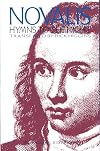
As German Romanticism isn't my thing I know I'd struggle to read a longer piece by Novalis, so Hymns to the Night was perfect as it's relatively short and rounds off my recent The Blue Flower reading nicely (Novalis wrote this in his grief over his child-fiancée's death).
It's hard not feel for poor Sophie (Novali's muse), as not only did she die an early death at the age of 15, in life she seemed to be entirely vapid and lacking in anything remotely interesting to say. All the more bizarre show more that someone with Novalis' / von Hardenberg's brilliance should fall for this dull little child (and apparently her physical beauty was nothing to write home about either). Here's an extract from her diaries which give you an idea of Sophie's intellect:
March 1. Today Hartenberch visited again nothing happened.
March 11. We were alone today and nothing at all happened.
March 12. Today was like yesterday nothing at all happened.
March 13. Today was repentance day and Hartenb. was here.
March 14. Today Hartenber. was still here he got a letter from his brother.
Scintillating stuff. Anyone, beauty is in the eye of the beholder so they say, and Novalis obviously saw something in the young Sophie that eluded everyone else.
I was delighted to enjoy Hymns to the Night much more than I expected. Given how hard and inexplicably Novalis loved Sophie in life, it was unsurprising that his mourning of her should be nothing short of dramatic despair in the romantic tragedy of it. Yet this account of his pull to the night as he mourns her was nothing short of beautiful. A short mixture of prose and poetry, Novalis describes how in grief he is drawn to the night, when he feels much closer to Sophie through the mysterious spirituality of the darkness than he does in the cold light of day when his loss is most keenly felt. I expect that many who have lost someone close might argue that the night-time is the hardest part of the grieving day, when the sense of loss and isolation is at its most intense, but Novalis finds comfort in the single night-time dream that brought his Sophie once more 'to life', and the keenness of that spirituality which he feels only in the darkness.
Hymns to the Night mixes both religious spiritually with his spiritual sense of Sophie reaching out to him through the stars. It is fatalist writing, with Novalis comforted by his inevitable journey to his grave and the life beyond where love endures and pain is left behind. In the interim (which, bless him, wasn't long to wait), he writes of this heavenly comfort that the night-time brings:
Once when I was shedding bitter tears, when, dissolved in pain, my hope was melting away, and I stood alone by the barren mound which in its narrow dark bosom hid the vanished form of my Life, lonely as never yet was lonely man, driven by anxiety unspeakable, powerless, and no longer anything but a conscious misery;--as there I looked about me for help, unable to go on or to turn back, and clung to the fleeting, extinguished life with an endless longing: then, out of the blue distances -- from the hills of my ancient bliss, came a shiver of twilight -- and at once snapt the bond of birth, the chains of the Light. Away fled the glory of the world, and with it my mourning; the sadness flowed together into a new, unfathomable world.
4 stars - even for non-poetry lovers like myself, this is prose to romantically immerse oneself in. Indulgent reading out loud is mandatory. show less
It's hard not feel for poor Sophie (Novali's muse), as not only did she die an early death at the age of 15, in life she seemed to be entirely vapid and lacking in anything remotely interesting to say. All the more bizarre show more that someone with Novalis' / von Hardenberg's brilliance should fall for this dull little child (and apparently her physical beauty was nothing to write home about either). Here's an extract from her diaries which give you an idea of Sophie's intellect:
March 1. Today Hartenberch visited again nothing happened.
March 11. We were alone today and nothing at all happened.
March 12. Today was like yesterday nothing at all happened.
March 13. Today was repentance day and Hartenb. was here.
March 14. Today Hartenber. was still here he got a letter from his brother.
Scintillating stuff. Anyone, beauty is in the eye of the beholder so they say, and Novalis obviously saw something in the young Sophie that eluded everyone else.
I was delighted to enjoy Hymns to the Night much more than I expected. Given how hard and inexplicably Novalis loved Sophie in life, it was unsurprising that his mourning of her should be nothing short of dramatic despair in the romantic tragedy of it. Yet this account of his pull to the night as he mourns her was nothing short of beautiful. A short mixture of prose and poetry, Novalis describes how in grief he is drawn to the night, when he feels much closer to Sophie through the mysterious spirituality of the darkness than he does in the cold light of day when his loss is most keenly felt. I expect that many who have lost someone close might argue that the night-time is the hardest part of the grieving day, when the sense of loss and isolation is at its most intense, but Novalis finds comfort in the single night-time dream that brought his Sophie once more 'to life', and the keenness of that spirituality which he feels only in the darkness.
Hymns to the Night mixes both religious spiritually with his spiritual sense of Sophie reaching out to him through the stars. It is fatalist writing, with Novalis comforted by his inevitable journey to his grave and the life beyond where love endures and pain is left behind. In the interim (which, bless him, wasn't long to wait), he writes of this heavenly comfort that the night-time brings:
Once when I was shedding bitter tears, when, dissolved in pain, my hope was melting away, and I stood alone by the barren mound which in its narrow dark bosom hid the vanished form of my Life, lonely as never yet was lonely man, driven by anxiety unspeakable, powerless, and no longer anything but a conscious misery;--as there I looked about me for help, unable to go on or to turn back, and clung to the fleeting, extinguished life with an endless longing: then, out of the blue distances -- from the hills of my ancient bliss, came a shiver of twilight -- and at once snapt the bond of birth, the chains of the Light. Away fled the glory of the world, and with it my mourning; the sadness flowed together into a new, unfathomable world.
4 stars - even for non-poetry lovers like myself, this is prose to romantically immerse oneself in. Indulgent reading out loud is mandatory. show less

This brief collection from the works of arch-Romantic Philosoph F.P. von Hardenburg ("Novalis") is more than worthy of attention. Charles Passage provides translations and an introduction for four distinct pieces.
"Hymns to the Night" itself is simply awesome. It consists of six introspective, elegiac and mystical "hymns." Though they were all originally drafted as free verse, their first publication -- reflected in this translation -- had them as a mixture of prose and poetry, with the show more former increasingly giving place to the latter in the progress of the text, so that the sixth alone is entirely in verse. Besides its plain aesthetic value, this text should speak quite strongly to those who have been initiated to the Life Within. Curiously, Passage's translations of the verse are stronger and more lucid than his work with the prose, where the English vocabulary is sometimes a bit off: e.g. "skyey" (9).
The second piece, here entitled "Klingsohr's Fairy Tale," is excerpted from a novel in which Novalis had embedded it, although it was probably first written independently. Passage in his introduction offers a long and rather detailed synopsis of the plot of the fairy tale, which notes I skimmed past at first, thinking that I would rather approach the story without extra editorial baggage. As it turned out, I ended up returning to the summary as a help while reading: the glut of fantastic imagery in the tale is so overwhelming that it is hard to keep track of the course of events. Also, Passage's allegorical reading is not at all tendentious. The story itself is wonderful, telling of a series of adventures leading to the reunion of the heavenly court of Arcturus with the terrestrial household of humanity, and the triumph of Eternity over Time. While it is reminiscent of the Hypnerotomachia and Bruno's Expulsion of the Triumphant Beast, I can easily imagine it as a Hayao Miyazaki movie.
"Christendom or Europe" is an essay attempting dialectical history, with a chiliast resolution. Passage notes how it anticipates Hegel, but it also recalls Joachim of Fiore. Novalis mourns decrepit and dead Catholicism, and he execrates divisive and degrading Protestantism. He looks forward to a "new, enduring Church" with a vision that I found alternately cheering and chilling, but in historical retrospect unfilfilled.
This volume concludes with a "purely random selection" (65) of fifty aphorisms by Novalis. They are indeed a mixed bag, but when he "hits," he does so solidly. "Man is a sun and his senses are his planets" (72). show less
"Hymns to the Night" itself is simply awesome. It consists of six introspective, elegiac and mystical "hymns." Though they were all originally drafted as free verse, their first publication -- reflected in this translation -- had them as a mixture of prose and poetry, with the show more former increasingly giving place to the latter in the progress of the text, so that the sixth alone is entirely in verse. Besides its plain aesthetic value, this text should speak quite strongly to those who have been initiated to the Life Within. Curiously, Passage's translations of the verse are stronger and more lucid than his work with the prose, where the English vocabulary is sometimes a bit off: e.g. "skyey" (9).
The second piece, here entitled "Klingsohr's Fairy Tale," is excerpted from a novel in which Novalis had embedded it, although it was probably first written independently. Passage in his introduction offers a long and rather detailed synopsis of the plot of the fairy tale, which notes I skimmed past at first, thinking that I would rather approach the story without extra editorial baggage. As it turned out, I ended up returning to the summary as a help while reading: the glut of fantastic imagery in the tale is so overwhelming that it is hard to keep track of the course of events. Also, Passage's allegorical reading is not at all tendentious. The story itself is wonderful, telling of a series of adventures leading to the reunion of the heavenly court of Arcturus with the terrestrial household of humanity, and the triumph of Eternity over Time. While it is reminiscent of the Hypnerotomachia and Bruno's Expulsion of the Triumphant Beast, I can easily imagine it as a Hayao Miyazaki movie.
"Christendom or Europe" is an essay attempting dialectical history, with a chiliast resolution. Passage notes how it anticipates Hegel, but it also recalls Joachim of Fiore. Novalis mourns decrepit and dead Catholicism, and he execrates divisive and degrading Protestantism. He looks forward to a "new, enduring Church" with a vision that I found alternately cheering and chilling, but in historical retrospect unfilfilled.
This volume concludes with a "purely random selection" (65) of fifty aphorisms by Novalis. They are indeed a mixed bag, but when he "hits," he does so solidly. "Man is a sun and his senses are his planets" (72). show less

The unfinished novel Heinrich von Ofterdingen is Novalis's best-known prose work. He only completed about half of it before his death, but it was intended as the first in a series of at least six major novels in which he would deal in turn with all the arts and sciences.
This first novel in the series deals with the most important art, poetry (i.e. "literature" in modern terms). It is set out as a classic Bildungsroman, a response to Goethe's Wilhelm Meister, dealing with the poetic show more education of the eponymous hero, the legendary 13th century poet who figures in the story of the Sängerkrieg at the Wartburg, and was sometimes credited with being the author of the Nibelungenlied, but is now generally considered to have been a fictional character.
In any case, Novalis doesn't pretend to be writing a realistic historical novel. Heinrich is moved to become a poet as a result of a dream in which he sees a mysterious, beautiful and unattainable blue flower, and he completes his poetic education in a series of encounters in the course of a journey from Eisenach to Augsburg and a one-day poetry workshop in Augsburg with the ubiquitous and equally legendary Klingsohr. During the coffee-breaks he meets, falls in love with and marries Klingsohr's daughter, Mathilde, who is identified with the blue flower image. Unfortunately, she has a child and dies offstage whilst we are busy with an allegorical story-within-a-story, and as Part Two opens, Heinrich is off on his travels again as a journeyman poet. And that's about as far as Novalis got.
Most of the text is taken up by the interpolated stories, songs and poems that Heinrich picks up in the course of his travels, and the foreground narrative consists of little more than short bridging passages. It's a book to read as a linked short-story collection, really, and each story adds a dimension to Novalis's vision of what literature should be and from where the poet needs to approach it. It's interesting to see how this isn't just a simple attack on the rationalism of the previous century, as we might expect, but a more complex invitation to the potential poet to study and learn as much as he can about the physical world, whilst being open to emotional and metaphysical ways of understanding and reacting to it.
Very interesting, and often also very entertaining (the first lesson Heinrich learns from his fellow travellers on the road to Augsburg is that the poet must be an entertainer), but what strikes you continually as a modern reader is how self-centred, even solipsistic, it all is. The poet isn't really meant to be interested in anyone except himself and his literary predecessors, with the possible exception of his love-object (who is anyway just a blank screen onto which the poet projects his idea of what a love-object should be). show less
This first novel in the series deals with the most important art, poetry (i.e. "literature" in modern terms). It is set out as a classic Bildungsroman, a response to Goethe's Wilhelm Meister, dealing with the poetic show more education of the eponymous hero, the legendary 13th century poet who figures in the story of the Sängerkrieg at the Wartburg, and was sometimes credited with being the author of the Nibelungenlied, but is now generally considered to have been a fictional character.
In any case, Novalis doesn't pretend to be writing a realistic historical novel. Heinrich is moved to become a poet as a result of a dream in which he sees a mysterious, beautiful and unattainable blue flower, and he completes his poetic education in a series of encounters in the course of a journey from Eisenach to Augsburg and a one-day poetry workshop in Augsburg with the ubiquitous and equally legendary Klingsohr. During the coffee-breaks he meets, falls in love with and marries Klingsohr's daughter, Mathilde, who is identified with the blue flower image. Unfortunately, she has a child and dies offstage whilst we are busy with an allegorical story-within-a-story, and as Part Two opens, Heinrich is off on his travels again as a journeyman poet. And that's about as far as Novalis got.
Most of the text is taken up by the interpolated stories, songs and poems that Heinrich picks up in the course of his travels, and the foreground narrative consists of little more than short bridging passages. It's a book to read as a linked short-story collection, really, and each story adds a dimension to Novalis's vision of what literature should be and from where the poet needs to approach it. It's interesting to see how this isn't just a simple attack on the rationalism of the previous century, as we might expect, but a more complex invitation to the potential poet to study and learn as much as he can about the physical world, whilst being open to emotional and metaphysical ways of understanding and reacting to it.
Very interesting, and often also very entertaining (the first lesson Heinrich learns from his fellow travellers on the road to Augsburg is that the poet must be an entertainer), but what strikes you continually as a modern reader is how self-centred, even solipsistic, it all is. The poet isn't really meant to be interested in anyone except himself and his literary predecessors, with the possible exception of his love-object (who is anyway just a blank screen onto which the poet projects his idea of what a love-object should be). show less

More a treatise on poetry than a traditional tale, it has a simplicity of prose yet high mindedness of ideas. How dearly I despair that it was never finished. Yet even an unfinished painting may show beauty and so does Henrich Von OfterDingen
Lists
Awards


You May Also Like


Associated Authors
Statistics
- Works
- 228
- Also by
- 40
- Members
- 2,255
- Popularity
- #11,371
- Rating
- 3.9
- Reviews
- 36
- ISBNs
- 305
- Languages
- 20
- Favorited
- 13

