
Ruth Adam (1) (1907–1977)
Author of I'm Not Complaining
For other authors named Ruth Adam, see the disambiguation page.
Works by Ruth Adam
War on Saturday Week 2 copies
Tagged
Common Knowledge
- Other names
- King, Ruth Augusta (birth name)
Adam, Ruth Augusta King - Birthdate
- 1907-12-14
- Date of death
- 1977-02-03
- Gender
- female
- Education
- St Elphin's girls' boarding school, Darley Dale, Derbyshire, England, UK
- Occupations
- journalist
novelist
radio broadcaster - Organizations
- Fisher Group
- Relationships
- Adam, Kenneth (husband)
Muggeridge, Kitty (co-author)
Jay, Peggy (co-founder of Fisher Group) - Nationality
- England
UK - Birthplace
- Arnold, Nottinghamshire, England, UK
- Places of residence
- Nottinghamshire, England, UK
Manchester, England, UK
London, England, UK - Place of death
- Marylebone, London, England, UK
- Associated Place (for map)
- England, UK
Members
Reviews

At the end of that week the winter began in deadly earnest, as though the cold days before had been merely a temporary substitute for the real thing. I had a persistent sensation, as we plunged deeper into those short, icy days, with their lowering fogs, that the town was plunging down with us. It was frightening. We all seemed to be one -- the huge husks of the great factory buildings whose heart-beats had stopped -- the grey, stained houses round them, the tragic men who stood for ever at show more street-corners, and the children who came to school in fewer and fewer warm clothes, because as the weather got colder they were pawned for food. I would like to have been detached from it -- a visitor, coming down to work and then going away. But I could not get the feeling of detachment. I was part of it, bound irrevocably to their miseries because my work was their children. (p. 154)
Madge Brigson is in her 30s, single by choice, and committed to the teaching profession. By day she manages a room full of primary school children; on certain evenings she also conducts classes for unemployed young women. The Nottinghamshire town of Bronton has been hit hard by the Great Depression; factories have closed and unemployment is high. Most of the students come from families who were already poor, and are now suffering even more. Despite the gloomy setting, there's a great deal of humor in this book. Adam provides amusing portrayals of parents, children, and townspeople, and takes shots at the government and the educational hierarchy:
We were all at loggerheads that day because the Scripture had been inspected. It seemed silly, because the Scripture is the one inspection that does not matter at all from the point of view of one's career. It is the merest matter of form. ... if you care to teach the children that Jesus Christ lived in the Ark with Noah, the only thing that will happen to you is that some old parson, wihtout any power at the Office at all, will gently remonstrate with you, and the next inspection will be by a member of some religious sect who probably believes something equally odd about Bible history himself. So I did not worry. (p. 43)
Madge's co-workers are a varied lot: Miss Harford is the no-nonsense head teacher. Other teachers include an older woman, Miss Jones; middle-aged Miss Thornby; Freda Simpson, a firebrand with communist leanings; and the beautiful and somewhat promiscuous Jenny Lambert. In those days, teachers had to leave their jobs when they married. Madge and her colleagues have resisted societal pressures, but found that it's not always easy to be an independent woman. Through a year in the life of these strong women, Ruth Adam serves up excellent social commentary on the role of women in society. Each woman has a life-changing experience -- some more so than others. There are moments of deep emotion; Madge herself has to cope with sudden tragedy, and the reader is right there, sharing her grief. Madge is also faced with some significant decisions that will set her course for some time to come. I was pleased with the way Adam handled these issues, ensuring Madge could serve as a role model for others in her day. show less
Madge Brigson is in her 30s, single by choice, and committed to the teaching profession. By day she manages a room full of primary school children; on certain evenings she also conducts classes for unemployed young women. The Nottinghamshire town of Bronton has been hit hard by the Great Depression; factories have closed and unemployment is high. Most of the students come from families who were already poor, and are now suffering even more. Despite the gloomy setting, there's a great deal of humor in this book. Adam provides amusing portrayals of parents, children, and townspeople, and takes shots at the government and the educational hierarchy:
We were all at loggerheads that day because the Scripture had been inspected. It seemed silly, because the Scripture is the one inspection that does not matter at all from the point of view of one's career. It is the merest matter of form. ... if you care to teach the children that Jesus Christ lived in the Ark with Noah, the only thing that will happen to you is that some old parson, wihtout any power at the Office at all, will gently remonstrate with you, and the next inspection will be by a member of some religious sect who probably believes something equally odd about Bible history himself. So I did not worry. (p. 43)
Madge's co-workers are a varied lot: Miss Harford is the no-nonsense head teacher. Other teachers include an older woman, Miss Jones; middle-aged Miss Thornby; Freda Simpson, a firebrand with communist leanings; and the beautiful and somewhat promiscuous Jenny Lambert. In those days, teachers had to leave their jobs when they married. Madge and her colleagues have resisted societal pressures, but found that it's not always easy to be an independent woman. Through a year in the life of these strong women, Ruth Adam serves up excellent social commentary on the role of women in society. Each woman has a life-changing experience -- some more so than others. There are moments of deep emotion; Madge herself has to cope with sudden tragedy, and the reader is right there, sharing her grief. Madge is also faced with some significant decisions that will set her course for some time to come. I was pleased with the way Adam handled these issues, ensuring Madge could serve as a role model for others in her day. show less
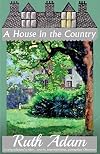
It was a plain hardback book without a dust jacket, sitting on a shelf waiting to catch somebody’s eye. Many people would have passed it by but I recognised the name of an author who has been published by both Virago and Persephone. It had a title that I was sure I had read about, and that suggested the book might well be my kind of book.
It was.
Whether it is fact or fiction isn’t entirely clear, but the author’s words and my reading makes me think that it is fiction lightly show more fictionalised, to smooth rough edges and make it work as a story.
‘This is a cautionary tale, and true.
Never fall in love with a house. The one we fell in love with wasn’t even ours. If she had been, she would have ruined us just the same. We found out some things about her afterwards, among them what she did to that poor old parson, back in the eighteen-seventies. If we had found them out earlier… ? It wouldn’t have made any difference. We were in that maudlin state when reasonable argument is quite useless.’
It began during the war as a group of Londoners, family and friends, spun stories of the home they would love to have when peace finally came.
‘It must be one of those houses that’s been built, bit by bit. over hundred of years.’
‘It must have great windows that let all the sunlight in’
‘It ought to have a river running through the garden.’
‘There’ll be three or four kitchens, with red-flagged floors and hams hanging from the ceiling and we shan’t have to live in any of them.’
‘It must stand alone. Not another house within half a mile, at the very least. There must be miles and miles of green fields, washing right up to its garden walls.’
They hadn’t thought that it would ever be a reality, but not long after the war one of them saw an advertisement in the personal column of The Times that sounded just like their house.
When they thought about it, they realised that if they pooled their resources the dream could become a reality; and when they went down to see the house they agreed that it must.
‘They say that when a stranger’s face seems familiar, it is because it is like a forgotten face of your childhood. I don’t know if that is true about people. But I know it is about houses. When I stood for the first time in the hall of the manor, it was not strange to me. It was the house I had promised to have, so that my mother could come and stay in it.’
The house was everything they had hoped it would be, but of course there were practicalities and problems that they hadn’t considered. In the post-war world the house had come relatively cheaply because many people had realised that there were more comfortable ways to live. War-time regulations still on place put limits on the refurbishment of the property, and the age where people either were or had household staff was over.
There were wonderful tales told as maids came and went. One girl arrived with a suitor in the forces, went out in clothes she took from the wardrobe of one of the household and left expecting a baby; another had a husband who pilfered money from the box by the telephone; and another seemed perfect until she went for the cook with a knife. Finally they found two girls who worked happily and effectively together, and later they employed a married couple who were hardworking but possibly a little too down-to-earth ….
Luckily the group was blessed with a gardener cum handyman who loved the house and knew how everything worked and how to keep the wheels running smoothly.
The house itself was a joy
‘Every bedroom had a dressing-room. We all became remarkably tidy. You wouldn’t have known our bedrooms as belonging to the same people who had once had coats flung on the bed and overflowing suitcases on all the chairs. The house imposed order upon us, whether we liked it or not. When you have thirty-three rooms, you feel obliged to keep something in each one, and the possessions which had filled the little suburban house to bursting-point now vanished quietly into the depths of the manor.’
Most of the management of the household fell onto the shoulders of the author, because she was the only one who didn’t go out to work and because she and her husband – who worked for the BBC – were the only ones who had brought children. She coped wonderfully, with the people, with the kitchens, and with everything else that came with running a manor house and grounds.
She loved it, but she saw it clear-sightedly.
‘She was an aristocratic lady on our hands. All ideas for making her work for a living were wrecked on the fact that she was born to be served and not to serve.’
Her tone and her storytelling were wonderful. She caught the changing times perfectly, and she wove in some astute social commentary.
‘The gracious life in the front wing, after all, depended entirely upon service in the back wing, and it didn’t seem a justifiable way of living.’
The story is very focused on the house and the experience. I couldn’t tell you much at all about her children, the other members of the household, or what happened before or after. That served the book well, and the account of life in the house – the stories that could be told and the small details that could be recalled – were so engaging and so well drawn that I only thought about that when I put the book down.
Inevitably, over a period of time, the household changed. One man grew tired of commuting, and of living with other people’s children. One woman, who had been romantically involved with some-one else in the household, married someone who definitely didn’t one to move in. Another man was sent to work overseas.
That meant that the household finances were terribly stretched. Sub-letting part of the property was an unhappy experience, but providing lodgings for holiday-makers was much more successful and provided some lovely stories.
‘She loved to hear someone tell a long, painstakingly funny story brought back from the village pub. She never could follow the story. It was the reception she waited for.
“So the English really do laugh out loud when friends are together,” she would say contentedly.
We supplied her with ‘The Edwardians’ to read in the evenings, explaining the phrases to her when she got stuck. Then we sent her off, with a packet of sandwiches to spend the day at Knole, telling her it was Chevron House, in which the book was set. We awaited her return with sympathetic interest. She came in and looked at us speechlessly.
“It’s too much,” she said at last. “It was too beautiful, and too large. I’m going straight to bed.” ‘
The author continued to love the house – her bond deepened when her fourth child was born there – but in the end she had to acknowledge that the workload was too great and the finances could not be managed.
She was philosophical.
‘In April when we bought daffodils off a street- barrow and say to each other when we go home, ” I suppose the magnolia must be out,” we always add, “Thank goodness someone else has got to sweep up the fallen petals.” ‘
I am so pleased that I found this book, and it would be lovely if it could be reissued; because I can think of many other people who would love it too. show less
It was.
Whether it is fact or fiction isn’t entirely clear, but the author’s words and my reading makes me think that it is fiction lightly show more fictionalised, to smooth rough edges and make it work as a story.
‘This is a cautionary tale, and true.
Never fall in love with a house. The one we fell in love with wasn’t even ours. If she had been, she would have ruined us just the same. We found out some things about her afterwards, among them what she did to that poor old parson, back in the eighteen-seventies. If we had found them out earlier… ? It wouldn’t have made any difference. We were in that maudlin state when reasonable argument is quite useless.’
It began during the war as a group of Londoners, family and friends, spun stories of the home they would love to have when peace finally came.
‘It must be one of those houses that’s been built, bit by bit. over hundred of years.’
‘It must have great windows that let all the sunlight in’
‘It ought to have a river running through the garden.’
‘There’ll be three or four kitchens, with red-flagged floors and hams hanging from the ceiling and we shan’t have to live in any of them.’
‘It must stand alone. Not another house within half a mile, at the very least. There must be miles and miles of green fields, washing right up to its garden walls.’
They hadn’t thought that it would ever be a reality, but not long after the war one of them saw an advertisement in the personal column of The Times that sounded just like their house.
When they thought about it, they realised that if they pooled their resources the dream could become a reality; and when they went down to see the house they agreed that it must.
‘They say that when a stranger’s face seems familiar, it is because it is like a forgotten face of your childhood. I don’t know if that is true about people. But I know it is about houses. When I stood for the first time in the hall of the manor, it was not strange to me. It was the house I had promised to have, so that my mother could come and stay in it.’
The house was everything they had hoped it would be, but of course there were practicalities and problems that they hadn’t considered. In the post-war world the house had come relatively cheaply because many people had realised that there were more comfortable ways to live. War-time regulations still on place put limits on the refurbishment of the property, and the age where people either were or had household staff was over.
There were wonderful tales told as maids came and went. One girl arrived with a suitor in the forces, went out in clothes she took from the wardrobe of one of the household and left expecting a baby; another had a husband who pilfered money from the box by the telephone; and another seemed perfect until she went for the cook with a knife. Finally they found two girls who worked happily and effectively together, and later they employed a married couple who were hardworking but possibly a little too down-to-earth ….
Luckily the group was blessed with a gardener cum handyman who loved the house and knew how everything worked and how to keep the wheels running smoothly.
The house itself was a joy
‘Every bedroom had a dressing-room. We all became remarkably tidy. You wouldn’t have known our bedrooms as belonging to the same people who had once had coats flung on the bed and overflowing suitcases on all the chairs. The house imposed order upon us, whether we liked it or not. When you have thirty-three rooms, you feel obliged to keep something in each one, and the possessions which had filled the little suburban house to bursting-point now vanished quietly into the depths of the manor.’
Most of the management of the household fell onto the shoulders of the author, because she was the only one who didn’t go out to work and because she and her husband – who worked for the BBC – were the only ones who had brought children. She coped wonderfully, with the people, with the kitchens, and with everything else that came with running a manor house and grounds.
She loved it, but she saw it clear-sightedly.
‘She was an aristocratic lady on our hands. All ideas for making her work for a living were wrecked on the fact that she was born to be served and not to serve.’
Her tone and her storytelling were wonderful. She caught the changing times perfectly, and she wove in some astute social commentary.
‘The gracious life in the front wing, after all, depended entirely upon service in the back wing, and it didn’t seem a justifiable way of living.’
The story is very focused on the house and the experience. I couldn’t tell you much at all about her children, the other members of the household, or what happened before or after. That served the book well, and the account of life in the house – the stories that could be told and the small details that could be recalled – were so engaging and so well drawn that I only thought about that when I put the book down.
Inevitably, over a period of time, the household changed. One man grew tired of commuting, and of living with other people’s children. One woman, who had been romantically involved with some-one else in the household, married someone who definitely didn’t one to move in. Another man was sent to work overseas.
That meant that the household finances were terribly stretched. Sub-letting part of the property was an unhappy experience, but providing lodgings for holiday-makers was much more successful and provided some lovely stories.
‘She loved to hear someone tell a long, painstakingly funny story brought back from the village pub. She never could follow the story. It was the reception she waited for.
“So the English really do laugh out loud when friends are together,” she would say contentedly.
We supplied her with ‘The Edwardians’ to read in the evenings, explaining the phrases to her when she got stuck. Then we sent her off, with a packet of sandwiches to spend the day at Knole, telling her it was Chevron House, in which the book was set. We awaited her return with sympathetic interest. She came in and looked at us speechlessly.
“It’s too much,” she said at last. “It was too beautiful, and too large. I’m going straight to bed.” ‘
The author continued to love the house – her bond deepened when her fourth child was born there – but in the end she had to acknowledge that the workload was too great and the finances could not be managed.
She was philosophical.
‘In April when we bought daffodils off a street- barrow and say to each other when we go home, ” I suppose the magnolia must be out,” we always add, “Thank goodness someone else has got to sweep up the fallen petals.” ‘
I am so pleased that I found this book, and it would be lovely if it could be reissued; because I can think of many other people who would love it too. show less

Set in 1930's England, it's about a group of elementary schoolteachers. I didn't really know what to expect, not having read anything by Ruth Adam before; not much happened, but then again, a lot happened, if you know what I mean. At times I wasn't sure if I was reading about the 1970's or the 1930's, because an open marriage was discussed and one of the schoolteachers had a number of boyfriends. One thing that shocked me was when one set of parents left their seven kids at home to look for show more work in London and tied the youngest baby to the bed so it wouldn't fall off! The schoolteachers were generally considered spinsters by thirty and it was assumed that they were all desperate to be married. And when one of them got married at an older age, it wasn't really an improvement.
'The whole weight of public opinion which believes that there is something comical and humiliating in being an unmarried woman, and something rather dashing and enviable in being an unmarried young man, left me without an answer to crush him.' show less
'The whole weight of public opinion which believes that there is something comical and humiliating in being an unmarried woman, and something rather dashing and enviable in being an unmarried young man, left me without an answer to crush him.' show less

In I'm Not Complaining, the narrator is the type who tells it like it is with no interfering idealism or sentimentality. She's a teacher in a school for poor children in an industrial town in Northern England and if you're looking for "if I can reach just one child"-style idealism a la "Up the Down Staircase" you won't find it here. Madge Brigson has no illusions about her students or how most of them will turn out, and sometimes the modern reader will find her a bit harsh in her judgments show more but she is certainly not without compassion or genuine feeling. I think it's her utter lack of hypocrisy that makes the narrator, and thus this novel, so appealing. show less
Lists
You May Also Like


Associated Authors
Statistics
- Works
- 10
- Members
- 381
- Popularity
- #63,386
- Rating
- 3.8
- Reviews
- 10
- ISBNs
- 10
- Languages
- 1