

John Christopher (1) (1922–2012)
Author of The White Mountains
For other authors named John Christopher, see the disambiguation page.
John Christopher (1) has been aliased into Stanley Winchester.
Series
Works by John Christopher
Works have been aliased into Stanley Winchester.
Socrates [short story] 4 copies
Der Fürst von morgen (sf6t) Sammelband mit: Fürst von Morgen - Hinter dem brennenden Land - Das Schwert des Geistes (1977) 2 copies
Man of Destiny [short story] 2 copies
Christmas Tree [short story] 2 copies
The Drop [short story] 2 copies
Balance [short story] 2 copies
I tripodi 1 copy
Dreibeinige Monster auf Erdkurs. Auf der Flucht vor den außerirdischen Herrschern der Welt (1971) 1 copy
Os Possessores Livro 1 1 copy
Il confine nella metropoli. 1 copy
Weapon [short story] 1 copy
Colonial [short story] 1 copy
Vacation [short story] 1 copy
Associated Works
Works have been aliased into Stanley Winchester.
Menace of the Monster: Classic Tales of Creatures from Beyond (2019) — Contributor — 42 copies, 2 reviews
Beyond Human Ken: 21 Startling Stories of Science Fiction and Fantasy (1952) — Contributor — 20 copies
Gateway to the Stars: A Science Fiction Anthology — Contributor — 2 copies
Authentic Science Fiction Monthly No. 32 (April 1953) — Contributor — 1 copy
Tagged
Common Knowledge
- Legal name
- Youd, Sam Christopher
- Other names
- Youd, Christopher
Christopher, John (pseudonym)
Winchester, Stanley (pseudonym)
Ford, Hilary (pseudonym)
Godfrey, William (pseudonym)
Vine, William (pseudonym) (show all 9)
Graaf, Peter (pseudonym)
Nichols, Peter (pseudonym)
Rye, Anthony (pseudonym) - Birthdate
- 1922-04-16
- Date of death
- 2012-02-03
- Gender
- male
- Occupations
- novelist
- Organizations
- Royal Signals Corps
- Agent
- Scovil Galen Ghosh Literary Agency
- Cause of death
- cancer (bladder)
- Nationality
- UK
- Birthplace
- Knowsley, Lancashire, England, UK
- Places of residence
- Rye, East Sussex, England, UK
- Place of death
- Bath, Somerset, England, UK
- Map Location
- England, UK
Members
Discussions
John Christopher is Not Amused in Good Show Sir! — bad science fiction and fantasy covers (September 2024)
Found: YA SF novel lunar underground-dwelling polymorphic creature found by two teenage boys in Name that Book (May 2024)
post apocalyptic fantasy trilogy in Name that Book (October 2020)
70s-80s?, fantasy, post-apocalyptic, journey, YA?, trilogy in Name that Book (December 2013)
Sci/fi trilogy: creatures killed by hitting their noses, boy riding a hot air balloon on the cover in Name that Book (January 2013)
Samuel Youd (John Christopher) 1922-2012 in Science Fiction Fans (June 2012)
Reviews

The somewhat depressing conclusion to the eponymous trilogy. Luke's pride and lack of emotional maturity see him veer from obliviousness to the growing romance between Blodwen (the bride he won in "Beyond the Burning Lands" but who's heart he made no effort to win) and his best friend Edmund. When his eyes are opened to their attraction his response is to punish and he is set on a trajectory of loss, vengeance and violence. Today we could use him as an example of "toxic masculinity" - show more emotionally stunted, possessive, proud, quick to take offence - with these qualities both gaining him all he wants and then losing him all he wants. Thank goodness that there are other patterns of manhood to offset Luke - his oldest friends - truth-seeking Martin and the more self assured and thus, prepared to be vulnerable Edmund. And the briefly encountered Jok of the Bell People who gives Luke one last chance to turn aside from the path of self destruction and join their idealised communal life. The underlying theme of the Seer's use of Luke as a tool to bring back civilisation is derailed by Luke's tragic flaws and their ultimate relocation to the land of the more tolerant Wilsh seems a little too neat an ending. The Seers have their own toxic flaws - not least their willingness to use people as pawns and to bring back artillery to a chivalrous world to further their ends of bringing back "civilisation". Not a cheerful book, but interesting. show less
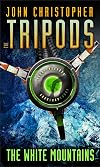
Thematically, this has a lot in common with one of my favorite books, [b:The Giver|3636|The Giver (The Giver #1)|Lois Lowry|https://d.gr-assets.com/books/1342493368s/3636.jpg|2543234]. It's about a boy who discovers that the tranquility of his community comes at a great cost--and then that boy faces a choice. Does he accept a world where most people have easy, lobotomized lives, or does he rage against the powers that are subduing humanity? (In The Giver it's a totalitarian government, in show more The White Mountains it's aliens.) I don't think this book is as good as Lois Lowry's, but it's got a more adventurous feel to it. There are a lot of heart-pounding moments and there are more terrifying villains.
My main criticism of this book is that the author takes for granted that only boys would be recruited to join the resistance against the Tripods. Ugh, as if! The book was written in 1967, so I suppose the author didn't even consider including a girl in his trio of Tripod resisters. There is only one significant female character in the book, a princess named Eloise, who seems to represent everything Will (the hero) stands against.
If you can get past the sexism, this would be a good read-alike for fans of [b:The Hunger Games|2767052|The Hunger Games (The Hunger Games, #1)|Suzanne Collins|https://d.gr-assets.com/books/1358275334s/2767052.jpg|2792775]. It's less violent so I'd give it to younger readers who are dying to read HG but probably not ready for the murder and politics of Panem. show less
My main criticism of this book is that the author takes for granted that only boys would be recruited to join the resistance against the Tripods. Ugh, as if! The book was written in 1967, so I suppose the author didn't even consider including a girl in his trio of Tripod resisters. There is only one significant female character in the book, a princess named Eloise, who seems to represent everything Will (the hero) stands against.
If you can get past the sexism, this would be a good read-alike for fans of [b:The Hunger Games|2767052|The Hunger Games (The Hunger Games, #1)|Suzanne Collins|https://d.gr-assets.com/books/1358275334s/2767052.jpg|2792775]. It's less violent so I'd give it to younger readers who are dying to read HG but probably not ready for the murder and politics of Panem. show less

Having re-read The White Mountains, I couldn't exactly stop there. The second in the trilogy is where our inept hero (but at least he can catch, right?!) gets his ass saved by Beanpole at least twice. But not a single live woman exists in this book. The only woman in the trilogy is now dead and on display as a literal museum piece in the City of Gold and Lead.
I started wondering how the rebels living in the White Mountains could hope to sustain themselves without, you know, having kids. How show more exactly is a group of literally 100% men going to save the world if they have to replenish their stock all the time? I guess this is science fiction, where everything is possible, especially if it excludes women. show less
I started wondering how the rebels living in the White Mountains could hope to sustain themselves without, you know, having kids. How show more exactly is a group of literally 100% men going to save the world if they have to replenish their stock all the time? I guess this is science fiction, where everything is possible, especially if it excludes women. show less
4/5
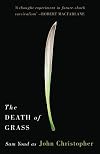
This is my first introduction to what I think is referred to as 'cosy catastrophe' type novels. While The Death of Grass is certainly a brutal and dark story, everything is viewed through the lens of the 'stiff upper lip' of stereotypical British sensibilities. Characters spring back from traumatic events rather quickly, and more often than not they think that they could've had it worse, even as society crumbles around them. This ties into the authors criticism of both British show more exceptionalism, and government inadequacy. It's clear that Christopher has a pessimistic view on both, as both the characters in the story and their government fail to prepare for the oncoming storm at all, even when given several years warning.
Christopher also explores the psychological effects that a catastrophe like this might have on their survivors. How fast will someone change their morals and values for survival? What will we sacrifice to help our tribe? Would we relish a new power structure regardless of who it exploited if we were at the top? Christoper goes to some dark places to showcase just how slippery of a slope it is to go from a mild mannered suburbanite, to a feudalistic warlord.
The novel itself was extremely well-paced. I was never bored or stalled in my reading. The characters are unique and all easily hate-able in their own way. I enjoyed being given context on the world outside of Britain in the form of the characters listening to the radio during their travels, a really smart way to build the world. The conclusion is morally depressing, but satisfying and well-written. Overall, I really enjoyed it. I think it stacks up well to other post-apocalyptic classics, though obviously set at the beginning of events instead of after. show less
This is my first introduction to what I think is referred to as 'cosy catastrophe' type novels. While The Death of Grass is certainly a brutal and dark story, everything is viewed through the lens of the 'stiff upper lip' of stereotypical British sensibilities. Characters spring back from traumatic events rather quickly, and more often than not they think that they could've had it worse, even as society crumbles around them. This ties into the authors criticism of both British show more exceptionalism, and government inadequacy. It's clear that Christopher has a pessimistic view on both, as both the characters in the story and their government fail to prepare for the oncoming storm at all, even when given several years warning.
Christopher also explores the psychological effects that a catastrophe like this might have on their survivors. How fast will someone change their morals and values for survival? What will we sacrifice to help our tribe? Would we relish a new power structure regardless of who it exploited if we were at the top? Christoper goes to some dark places to showcase just how slippery of a slope it is to go from a mild mannered suburbanite, to a feudalistic warlord.
The novel itself was extremely well-paced. I was never bored or stalled in my reading. The characters are unique and all easily hate-able in their own way. I enjoyed being given context on the world outside of Britain in the form of the characters listening to the radio during their travels, a really smart way to build the world. The conclusion is morally depressing, but satisfying and well-written. Overall, I really enjoyed it. I think it stacks up well to other post-apocalyptic classics, though obviously set at the beginning of events instead of after. show less
Lists
Read in 2007 (1)
Best First Lines (1)
1980s (1)
al.vick-series (1)
Ambleside Year 7 (4)
Ambleside Books (4)
1960s (3)
Best Dystopias (2)
Best Young Adult (2)
Awards


You May Also Like
Associated Authors
Statistics
- Works
- 55
- Also by
- 36
- Members
- 13,426
- Popularity
- #1,728
- Rating
- 3.8
- Reviews
- 281
- ISBNs
- 497
- Languages
- 14
- Favorited
- 21
