
Bill James (2) (1929–)
Author of Roses, Roses
For other authors named Bill James, see the disambiguation page.
Bill James (2) has been aliased into James Tucker.
About the Author
Image credit: Allan James 'Jim' Tucker, aka Bill James, David Craig, Judith Jones
Series
Works by Bill James
Works have been aliased into James Tucker.
Associated Works
Works have been aliased into James Tucker.
Murder by the Book: Literary Mysteries from Alfred Hitchcock Mystery Magazine and Ellery Queen's Mystery Magazine (1995) — Contributor — 71 copies
Tagged
Common Knowledge
- Legal name
- Tucker, James
- Other names
- James, Bill (pseudonym)
Craig, David (pseudonym)
Jones, Judith (pseudonym) - Birthdate
- 1929
- Gender
- male
- Occupations
- reporter
- Organizations
- Royal Air Force (WWII)
- Nationality
- UK
- Associated Place (for map)
- UK
Members
Reviews
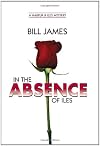
"In the Absence of Iles," by Bill James, is a unique and fascinating police procedural that relies more on dialogue and exposition than on action to convey background information and clarify the characters' thoughts and behavior. Whether two police officers confer on a case, a judge instructs a jury, a self-pitying and envious husband verbally abuses his wife, or instructors teach crucial lessons to high-ranking officers, James shows how words can be used for good or ill. This novel goes show more back and forth in time, so readers need to pay close attention to details. At the end, the various subplots coalesce satisfyingly.
Assistant Chief Constable Esther Davidson went undercover back in the day, and she remembers how frightened and vulnerable she felt. Now, she and other members of the Association of Chief Police Officers are attending a management course taught by people who have successfully infiltrated criminal organizations. Esther is conflicted about sending anyone undercover, especially since she knows the high price of failure. However, she and her colleagues have made futile attempts to bring down the Cromax Turton Guild, a powerful enterprise run by crafty hoodlums who are guilty of theft, drug dealing, and murder. Esther chooses deputy chief of CID Richard Channing to oversee an operation in which Detective Sergeant Dean Martlew will pose as a member of the Cromax Turton Guild. Martlew plans to keep his eyes and ears open in an attempt to obtain evidence against the higher-ups that, if all goes well, will lead to a successful prosecution.
ACC Desmond Iles makes cameo appearances. He has never gotten over losing one of his men in a botched undercover operation, and he has caustic words for England's toothless legal system. Iles is convinced that certain judges bend over backwards to protect the rights of homicidal thugs. What make this book unusual and fascinating are the quirky verbal jousting, literary and cultural allusions, and philosophical discussions about morally questionable deeds. When speakers have something to hide, they obfuscate, change the subject, or pretend they haven't heard what was said. Some engage in subtle and not so subtle digs, make sarcastic remarks, and hurl insults at one another. Once in a while, there is a frank and civil conversation with a productive exchange of ideas. Along with an abundance of of black humor, "In the Absence of Iles" has passages of bitter irony and tragedy. At least he author offers a sympathetic view of police officers who are determined to do better after falling on their faces. Someday, he implies, they might get it right. show less
Assistant Chief Constable Esther Davidson went undercover back in the day, and she remembers how frightened and vulnerable she felt. Now, she and other members of the Association of Chief Police Officers are attending a management course taught by people who have successfully infiltrated criminal organizations. Esther is conflicted about sending anyone undercover, especially since she knows the high price of failure. However, she and her colleagues have made futile attempts to bring down the Cromax Turton Guild, a powerful enterprise run by crafty hoodlums who are guilty of theft, drug dealing, and murder. Esther chooses deputy chief of CID Richard Channing to oversee an operation in which Detective Sergeant Dean Martlew will pose as a member of the Cromax Turton Guild. Martlew plans to keep his eyes and ears open in an attempt to obtain evidence against the higher-ups that, if all goes well, will lead to a successful prosecution.
ACC Desmond Iles makes cameo appearances. He has never gotten over losing one of his men in a botched undercover operation, and he has caustic words for England's toothless legal system. Iles is convinced that certain judges bend over backwards to protect the rights of homicidal thugs. What make this book unusual and fascinating are the quirky verbal jousting, literary and cultural allusions, and philosophical discussions about morally questionable deeds. When speakers have something to hide, they obfuscate, change the subject, or pretend they haven't heard what was said. Some engage in subtle and not so subtle digs, make sarcastic remarks, and hurl insults at one another. Once in a while, there is a frank and civil conversation with a productive exchange of ideas. Along with an abundance of of black humor, "In the Absence of Iles" has passages of bitter irony and tragedy. At least he author offers a sympathetic view of police officers who are determined to do better after falling on their faces. Someday, he implies, they might get it right. show less
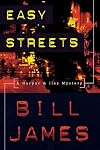
The cover of this book calls it "A Harpur & Iles Mystery", which must be one of the most remarkable pieces of copywriting idiocy ever to appear. It is, for a start, not a mystery.
What is this book exactly? It's a crime novel, and it has cops in it called Harpur and Iles. But it's not in any real sense a mimetic novel. Instead, it's a sort of extraordinarily mannered semi-comedy of manners, semi-Jacobean tragedy. In an unnamed British city, the controllers of the drug trade are trying to show more adapt to the fact that the street price of their merchandise is plummeting dues to the easing of governmental attitudes toward dope. So they jostle for supremacy in an attempt to restructure the marketplace, killing each other in the process. And the cops seem complicit in all this. And, toward the end of the book, I didn't care in the slightest what happened so long as I got to page 191 and could read something else instead.
Bill James is a much-loved writer -- there are quotes all over the cover from hifalutin critics -- but not one for me. I have a feeling that, many years ago, I was deceived by the strapline into reading a different "Harpur & Iles Mystery" and spent much of the relevant time fighting a potent urge to throw it at the wall. A I imply, different readers may well have a completely different take on this book than I did. show less
What is this book exactly? It's a crime novel, and it has cops in it called Harpur and Iles. But it's not in any real sense a mimetic novel. Instead, it's a sort of extraordinarily mannered semi-comedy of manners, semi-Jacobean tragedy. In an unnamed British city, the controllers of the drug trade are trying to show more adapt to the fact that the street price of their merchandise is plummeting dues to the easing of governmental attitudes toward dope. So they jostle for supremacy in an attempt to restructure the marketplace, killing each other in the process. And the cops seem complicit in all this. And, toward the end of the book, I didn't care in the slightest what happened so long as I got to page 191 and could read something else instead.
Bill James is a much-loved writer -- there are quotes all over the cover from hifalutin critics -- but not one for me. I have a feeling that, many years ago, I was deceived by the strapline into reading a different "Harpur & Iles Mystery" and spent much of the relevant time fighting a potent urge to throw it at the wall. A I imply, different readers may well have a completely different take on this book than I did. show less

I was worried I was beginning to tire of Bill James and his cast of characters, but soon I was yet again drawn in to the dark and shady world of Panicking Ralph, Mansel Shale, Harpur and, ofcourse, Desmond Iles, still one of fictions most brilliant creations. The plot? Who cares? I don't read these for the plots, I read them for the wit, the left-of-field observations, dialogue and uniqueness of vision. Which Pay Days delivered on in a grand style.
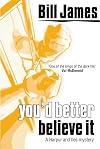
As an avid fan of detective fiction, I am always on the look out for new authors and so, when I found this book for 50 pence in a second hand emporium, I could not resist. My interest was heightened by the praise upon the cover of this paperback edition the Daily Telegraph, the Sunday Times and Booklist, all ladled praise upon Mr James.
The book is reasonably well written and, thankfully, ignores the bad language and graphic descriptions of gory murder, which is so much the mark for modern show more whodunnits. It is also crisply produced with none of the paraphernalia that adorns so many crime stories. We do not spend pages upon Harpur, our hero, and discover that work has turned him into an alcoholic wife-beater, but a loveable man really. Page one puts us into the adventure and the last sentence resolves matters.
Now for the gripes; sadly none of the characters became, either real, or odd enough to be of interest; the story was all. This is OK, but to pull it off, the tale must be strong and I was somewhat disappointed when the main villain, who Harpur had been chasing throughout the book, was killed by a bit character without our even being present, in a literary sense. Harpur is told of the murder afterwards and I, for one, felt somewhat cheated as the tale was recounted. show less
The book is reasonably well written and, thankfully, ignores the bad language and graphic descriptions of gory murder, which is so much the mark for modern show more whodunnits. It is also crisply produced with none of the paraphernalia that adorns so many crime stories. We do not spend pages upon Harpur, our hero, and discover that work has turned him into an alcoholic wife-beater, but a loveable man really. Page one puts us into the adventure and the last sentence resolves matters.
Now for the gripes; sadly none of the characters became, either real, or odd enough to be of interest; the story was all. This is OK, but to pull it off, the tale must be strong and I was somewhat disappointed when the main villain, who Harpur had been chasing throughout the book, was killed by a bit character without our even being present, in a literary sense. Harpur is told of the murder afterwards and I, for one, felt somewhat cheated as the tale was recounted. show less
Lists
Awards


You May Also Like
Associated Authors
Statistics
- Works
- 63
- Also by
- 7
- Members
- 1,236
- Popularity
- #20,767
- Rating
- 3.2
- Reviews
- 12
- ISBNs
- 392
- Languages
- 4
- Favorited
- 1
