
Gary Frank (2)
Author of Batman: Earth One
For other authors named Gary Frank, see the disambiguation page.
About the Author
Gary Frank was born 1969 in Britain. He began his professional career in 1991, illustrating covers and interior short stories for publications like Doctor Who Magazine and Toxic!. This led to a stint at Marvel UK in 1992, as regular series' artist on Motormouth & Killpower. In 1992, Frank was show more recruited by Marvel Comics to illustrate covers for The Incredible Hulk, beginning with issue #400. Shortly thereafter, he was hired as the series' ongoing artist. During his initial time at Marvel, Frank also contributed covers, interiors, and pin-up illustrations for various series, such as X-Men Unlimited, The Sabretooth Special, X-Men Classic, X-Men Prime, and Doctor Strange, Sorcerer Supreme, among others. He also provided covers for Acclaim Comics' Ninjak and Harris Comics' Vampirella. In 1996, Frank moved to DC Comics, where he worked on various loose assignments that included a Birds of Prey one-shot and covers for the mini-series. The same year, Frank was hired as part of the art team on DC new Supergirl series. Frank has also worked on other series such as Gen¹³, Tom Strong and Top Cow. He has teamed up with author Geoff Johns for such works as The Avengers and Batman Earth One which made The New York Times Best Sellers List for 2012. (Bowker Author Biography) show less
Image credit: Image of comic book creator Gary Frank at New York Comic Con, 2008. By Original scanner.Uploaded by CmdrClow at en.wikipedia - Personal scan by CmdrClow (talk · contribs).Transferred from en.wikipedia by SreeBot, Public Domain, https://commons.wikimedia.org/w/index.php?curid=17736548
Series
Works by Gary Frank
Midnight Nation, No. 8, July 2001: Somewhere Between Nearly There and There (2001) — Illustrator — 4 copies
Wonder Woman, Vol. 3 Annual #1 — Illustrator — 2 copies
Kin #s 1,3-6 1 copy
Associated Works
J. Michael Straczynski's Rising Stars, Book 1: Born in Fire (2002) — Cover artist, some editions — 72 copies, 1 review
Marvel Knights Fantastic Four, Vol. 5: The Resurrection of Nicholas Scratch (2006) — Cover artist — 17 copies, 1 review
Tom Strong #07 - Sons and Heirs, Showdown in the Shimmering City — Cover artist — 7 copies, 1 review
The Batman Chronicles #10 — Writer, some editions — 4 copies
The Incredible Hulk [1999] #100 — Illustrator — 3 copies
Marvel Knights 4 #26 — Cover artist — 3 copies
Marvel Knights 4 #30 — Cover artist — 3 copies
Tagged
Common Knowledge
- Gender
- male
Members
Reviews
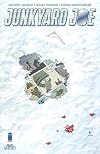
(Full disclosure: I received a free e-ARC for review through Netgalley. Content warning for depictions of war, PTSD, and racism. Also: death of a parent and spouse.)
Today, the world knows him as Morrie "Muddy" Davis, the artist behind the long-running Junkyard Joe comic strip. But in 1972, he was Private Davis, just one of millions of Americans deployed to Vietnam. All he wanted was to get back to his farm in Melody Hills, Indiana - and into the arms of his "girl," Rita. When his platoon is show more ambushed, Muddy is the sole survivor - him, and a mysterious robot soldier he and his comrades nicknamed "Junkyard Joe." Lying concussed in a military hospital bed, the doctors convince him to quit all the robot talk, lest he be labeled crazy. In time, Muddy even manages to convince himself that he imagined the whole thing - though this doesn't stop him from channeling his experience into his art. Until, that is, Junkyard Joe shows up on his doorstep. Hot on "Project Beta's" tail? His now disgraced rogue creator.
With the comic-within-a-comic design, JUNKYARD JOE has a meta feel to it. Johns explores wartime violence and PTSD with compassion; both Davis and Junkyard Joe are memorable protagonists with rather touching journeys. While Davis's life has been upended - again - by the death of his wife and his subsequent retirement of Junkyard Joe, Joe is haunted by memories of the war and desperately in search of a place to call home. They both find their salvation in Melody Hills, which welcomes these hometown heroes with open arms. (Hopefully the kids at Melody Hills High will extend the same compassion to the mixed-race Munn kids.)
More than anything, I found myself falling in love with Junkyard Joe - no surprise, considering I'm team Cylon all the way. He's every bit as human as you and I - and maybe more so than his nefarious creator. After defending his platoon through an act of deadly violence, Joe develops an aversion to cruelty, smashing every gun he encounters into smithereens. His compassion extends to nonhuman animals, such that when he stumbles upon a group of hunters gathered around a dying buck, he destroys their guns, chases them off, and mourns the fallen deer. (Giving HARRY AND THE HENDERSONS.)
I didn't realize it when I requested this title on NetGalley, but JUNKYARD JOE is part of Geoff Johns's "The Unnamed Universe" world (also known as "The Geigerverse"). Whereas GEIGER is set twenty-five years in the future, JUNKYARD JOE begins in 1972 and ends in present day. Though Junkyard Joe makes his first appearance in GEIGER #5 (and The Northerner is introduced at the end of JUNKYARD JOE), I think it's safe to read them out of order. In any case, GEIGER definitely jumped to the top of my reading list. show less
Today, the world knows him as Morrie "Muddy" Davis, the artist behind the long-running Junkyard Joe comic strip. But in 1972, he was Private Davis, just one of millions of Americans deployed to Vietnam. All he wanted was to get back to his farm in Melody Hills, Indiana - and into the arms of his "girl," Rita. When his platoon is show more ambushed, Muddy is the sole survivor - him, and a mysterious robot soldier he and his comrades nicknamed "Junkyard Joe." Lying concussed in a military hospital bed, the doctors convince him to quit all the robot talk, lest he be labeled crazy. In time, Muddy even manages to convince himself that he imagined the whole thing - though this doesn't stop him from channeling his experience into his art. Until, that is, Junkyard Joe shows up on his doorstep. Hot on "Project Beta's" tail? His now disgraced rogue creator.
With the comic-within-a-comic design, JUNKYARD JOE has a meta feel to it. Johns explores wartime violence and PTSD with compassion; both Davis and Junkyard Joe are memorable protagonists with rather touching journeys. While Davis's life has been upended - again - by the death of his wife and his subsequent retirement of Junkyard Joe, Joe is haunted by memories of the war and desperately in search of a place to call home. They both find their salvation in Melody Hills, which welcomes these hometown heroes with open arms. (Hopefully the kids at Melody Hills High will extend the same compassion to the mixed-race Munn kids.)
More than anything, I found myself falling in love with Junkyard Joe - no surprise, considering I'm team Cylon all the way. He's every bit as human as you and I - and maybe more so than his nefarious creator. After defending his platoon through an act of deadly violence, Joe develops an aversion to cruelty, smashing every gun he encounters into smithereens. His compassion extends to nonhuman animals, such that when he stumbles upon a group of hunters gathered around a dying buck, he destroys their guns, chases them off, and mourns the fallen deer. (Giving HARRY AND THE HENDERSONS.)
I didn't realize it when I requested this title on NetGalley, but JUNKYARD JOE is part of Geoff Johns's "The Unnamed Universe" world (also known as "The Geigerverse"). Whereas GEIGER is set twenty-five years in the future, JUNKYARD JOE begins in 1972 and ends in present day. Though Junkyard Joe makes his first appearance in GEIGER #5 (and The Northerner is introduced at the end of JUNKYARD JOE), I think it's safe to read them out of order. In any case, GEIGER definitely jumped to the top of my reading list. show less

Access a version of the below that includes illustrations on my blog.
So this takes place prior to Legion of 3 Worlds, but I actually read it afterwards. I wonder what I would think if I'd read them in the proper order, because as it is, this read like a less successful widescreen Legion action story in much the same vein as Legion of 3 Worlds. There are some good ideas here (I like the idea that a 31st-century nativist group has made the Earth's sun red as a giant "screw-you" to show more Kryptonians), but the story never clicked with me like Legion of 3 Worlds did, was never quite as fun or brash or crowd-pleasing.
At least part of this is due to the art, I think. Gary Frank is a good artist, but his linework makes young people look old, and youth is one of the essential qualities of the Legion, and everything was a bit too fussy. I guess what I'm saying is that he's no George Pérez. And yes, I know that's unfair. (I also don't really care for his costume designs.)
There's a good idea here-- the diversity of the Legion standing against nativism-- but Johns doesn't quite pull off the thematic resonances, the end of the story getting kind of bogged down in a giant fight and gratuitous appearances by the Legion of Substitute Heroes. The Legion's large cast is, as always, its strength and its weakness. show less
So this takes place prior to Legion of 3 Worlds, but I actually read it afterwards. I wonder what I would think if I'd read them in the proper order, because as it is, this read like a less successful widescreen Legion action story in much the same vein as Legion of 3 Worlds. There are some good ideas here (I like the idea that a 31st-century nativist group has made the Earth's sun red as a giant "screw-you" to show more Kryptonians), but the story never clicked with me like Legion of 3 Worlds did, was never quite as fun or brash or crowd-pleasing.
At least part of this is due to the art, I think. Gary Frank is a good artist, but his linework makes young people look old, and youth is one of the essential qualities of the Legion, and everything was a bit too fussy. I guess what I'm saying is that he's no George Pérez. And yes, I know that's unfair. (I also don't really care for his costume designs.)
There's a good idea here-- the diversity of the Legion standing against nativism-- but Johns doesn't quite pull off the thematic resonances, the end of the story getting kind of bogged down in a giant fight and gratuitous appearances by the Legion of Substitute Heroes. The Legion's large cast is, as always, its strength and its weakness. show less
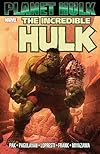
I've been told I needed to read this for ages, and now I can see why. My knowledge of The Hulk is pretty general, and based on Wikipedia and the cartoon I watched as a child. I've never been particularly interested in him, but wow this story is great. My rating is really a 4.5 stars. I can't help but feel that if I was more familiar with the character I'd have appreciated some more of the nuances. Even coming at it with hardly any background knoweldge I really enjoyed this, I was stuck to it show more and had some real trouble putting it down.
So Hulk has been tricking by his so-called "friends" and sent off into space, obviously he's not happy about that! He ends up landing on strange planet (not the one the Illuminati intended, being kind of weak at the time he's captured and becomes a gladiator for the Red King, along with a bunch of other "monsters." What follow is kind of like The Gladiator, with a really sad ending and a big cliff hanger. I won't say more because I don't want to spoil it.
I've never read a Hulk comic before so I've got nothing to compare it to, but this was an intelligent, engaging and surprisingly emotional story with lots of twists and turns. I was genuinely sad towards the end of this story! I build up a lot of sympathy for The Hulk who is often misunderstood by others but also himself. I definitely want to read what happens next in World War Hulk.
The only bit I wasn't do keen on was the last story, which had a dramatic change in artwork that I really didn't like (I found it too kiddy) and introduced a new character (Amadeus Cho) I'm not sold on yet. It sets up the direction for what is to follow though, and like I said I want more Hulk! show less
So Hulk has been tricking by his so-called "friends" and sent off into space, obviously he's not happy about that! He ends up landing on strange planet (not the one the Illuminati intended, being kind of weak at the time he's captured and becomes a gladiator for the Red King, along with a bunch of other "monsters." What follow is kind of like The Gladiator, with a really sad ending and a big cliff hanger. I won't say more because I don't want to spoil it.
I've never read a Hulk comic before so I've got nothing to compare it to, but this was an intelligent, engaging and surprisingly emotional story with lots of twists and turns. I was genuinely sad towards the end of this story! I build up a lot of sympathy for The Hulk who is often misunderstood by others but also himself. I definitely want to read what happens next in World War Hulk.
The only bit I wasn't do keen on was the last story, which had a dramatic change in artwork that I really didn't like (I found it too kiddy) and introduced a new character (Amadeus Cho) I'm not sold on yet. It sets up the direction for what is to follow though, and like I said I want more Hulk! show less
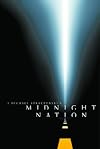
Graphic Novel Book Club January 2016
A reread, but another title I brought to the group. I have an outstanding and long-lived love for anything that JMS touches, and I remember when he came back to comics, originally, while I was managing a comic store at the end of my teenage years. I loved it overwhelmingly, and voraciously ate up everything he wrote, and I'm pleased to get to introduce it to others now.
I love this series. I love the mythology of it, and the way it handles homelessness, show more falling through the cracks and starting not to see people (which has stayed with me and how I try to look at the world, especially the homeless people in it, since reading it the first time). I love the ending, with how painful and beautiful and flawed the main character still is. show less
A reread, but another title I brought to the group. I have an outstanding and long-lived love for anything that JMS touches, and I remember when he came back to comics, originally, while I was managing a comic store at the end of my teenage years. I loved it overwhelmingly, and voraciously ate up everything he wrote, and I'm pleased to get to introduce it to others now.
I love this series. I love the mythology of it, and the way it handles homelessness, show more falling through the cracks and starting not to see people (which has stayed with me and how I try to look at the world, especially the homeless people in it, since reading it the first time). I love the ending, with how painful and beautiful and flawed the main character still is. show less
Lists
Awards


You May Also Like


Associated Authors
Statistics
- Works
- 33
- Also by
- 32
- Members
- 2,797
- Popularity
- #9,193
- Rating
- 3.8
- Reviews
- 95
- ISBNs
- 152
- Languages
- 10