
John Foster (8) (1966–)
Author of Cambrian Ocean World: Ancient Sea Life of North America
For other authors named John Foster, see the disambiguation page.
About the Author
John Foster is Curator of Paleontology at the Museum of Western Colorado.
Works by John Foster
Jurassic West: The Dinosaurs of the Morrison Formation and Their World (Life of the Past) (2007) 37 copies, 1 review
Tagged
Common Knowledge
- Canonical name
- Foster, John
- Legal name
- Foster, John Russell
- Birthdate
- 1966-11-03
- Gender
- male
- Education
- University of Colorado
South Dakota School of Mines and Technology
Occidental College - Occupations
- paleontologist
museum director
museum curator - Organizations
- Museum of Moab
Museum of Western Colorado
Utah Geological Survey
Colorado Mesa University - Nationality
- USA
- Associated Place (for map)
- USA
Members
Reviews
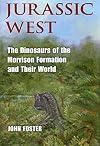
Very good indeed. What I liked best about Jurassic West was the paleobiology. The book gives all the typical information that you might want on Morrison Formation fauna (although it’s a little weak on flora) such as history of collecting, sites, species lists, and so on, but also devotes a lot of time to ecology of the animals and their era. For example, author John Foster joins the warm-blooded-dinosaur debate by suggesting that large sauropods may have been inertially homoeothermic – show more so large that their temperature didn’t vary much – or digestively homoeothermic – so much plant matter was fermenting in their digestive tracts that it raised their body temperature.
Foster also does a lot with resource partitioning. The Morrison has a number of sauropods which at first look seem almost identical – huge things with long necks and tails. However, detailed examination of the find sites and analysis of skeletal structure allows some inferences as to what the animals were doing. Diplodocus, for example, despite the frequent reconstructions with a swan-curve neck, doesn’t seem to have been able to raise its head more than 15 degrees from the horizontal and is therefore assumed to have browsed low-growing foliage (“low-growing” is a relative term; even with the limited neck angle, Diplodocus still could have reached things 14 feet off the ground). Camarasaurus went after mid-level vegetation, and Brachiosaurus went for the treetops.
The predator-pray relationships are also interesting. In terms of total numbers, Allosaurus was far and away the most prevalent. There’s considerable speculation on just what Allosaurus did for a living. Calculations of the animal’s bite force, based on the size and location of muscle attachment scars in the skull, concludes that unlike Tyrannosaurus its bite was very weak – about the same level as a modern wolf or mountain lion, in an animal many times that size. On the other hand, the skull is greatly “overbuilt” – much stronger than it needs to be. This leads to the possibility that Allosaurus may have used a “hatchet” attack – rather than trying to bite and hold prey it brought its head down, delivered a blow, and raked with the teeth. Studies of shed Allosaurus teeth show a surprising large number around ancient bodies of water, leading at least on author to conclude that the animal fed on fish. Could be, but places near bodies of water are the most likely to promote fossilization.
Foster gives a lot of attention to paleoclimate. He doesn’t come right out and say anything about anthropogenic global warming, but he comments at length on how the Quaternary is an unusually cold period in the history of climate and how it has an unusually low level of atmospheric carbon dioxide (the level in the Jurassic was about three times current).
The last chapter is unfortunately a little “gimmicky”; it’s the log of an intrepid group of time-travelers trudging from Montana to New Mexico during Morrison time. It’s intended to show the variety of climate, topographic and vegetation conditions that would be encountered, but a couple of maps would have served better. Nevertheless, I’m very positive about the book overall. show less
Foster also does a lot with resource partitioning. The Morrison has a number of sauropods which at first look seem almost identical – huge things with long necks and tails. However, detailed examination of the find sites and analysis of skeletal structure allows some inferences as to what the animals were doing. Diplodocus, for example, despite the frequent reconstructions with a swan-curve neck, doesn’t seem to have been able to raise its head more than 15 degrees from the horizontal and is therefore assumed to have browsed low-growing foliage (“low-growing” is a relative term; even with the limited neck angle, Diplodocus still could have reached things 14 feet off the ground). Camarasaurus went after mid-level vegetation, and Brachiosaurus went for the treetops.
The predator-pray relationships are also interesting. In terms of total numbers, Allosaurus was far and away the most prevalent. There’s considerable speculation on just what Allosaurus did for a living. Calculations of the animal’s bite force, based on the size and location of muscle attachment scars in the skull, concludes that unlike Tyrannosaurus its bite was very weak – about the same level as a modern wolf or mountain lion, in an animal many times that size. On the other hand, the skull is greatly “overbuilt” – much stronger than it needs to be. This leads to the possibility that Allosaurus may have used a “hatchet” attack – rather than trying to bite and hold prey it brought its head down, delivered a blow, and raked with the teeth. Studies of shed Allosaurus teeth show a surprising large number around ancient bodies of water, leading at least on author to conclude that the animal fed on fish. Could be, but places near bodies of water are the most likely to promote fossilization.
Foster gives a lot of attention to paleoclimate. He doesn’t come right out and say anything about anthropogenic global warming, but he comments at length on how the Quaternary is an unusually cold period in the history of climate and how it has an unusually low level of atmospheric carbon dioxide (the level in the Jurassic was about three times current).
The last chapter is unfortunately a little “gimmicky”; it’s the log of an intrepid group of time-travelers trudging from Montana to New Mexico during Morrison time. It’s intended to show the variety of climate, topographic and vegetation conditions that would be encountered, but a couple of maps would have served better. Nevertheless, I’m very positive about the book overall. show less

A very attractive introduction to animal life of the Cambrian period (542 to 488 million years ago), concentrating, as the subtitle says, on North American forms. One might have wished for all illustrations to have been in colour - otherwise I can say pretty much only good things about the book. Presuming little previous knowledge but fully referenced, it should appeal to a wide spectrum of readers.
Lists
You May Also Like
Associated Authors
Statistics
- Works
- 3
- Members
- 92
- Popularity
- #202,475
- Rating
- 4.4
- Reviews
- 2
- ISBNs
- 661
- Languages
- 6