
Matt Wilson (2)
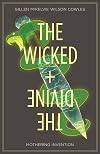
Author of The Wicked + The Divine, Vol. 7: Mothering Invention
For other authors named Matt Wilson, see the disambiguation page.
Works by Matt Wilson
Cry Havoc Vol. 1 1 copy
Associated Works
Tagged
Common Knowledge
- Canonical name
- Wilson, Matt
- Gender
- male
Members
Reviews
This volume brings the different elements of this series together in a satisfying way while pushing out most of the weaknesses.
The storytelling is especially strong. Ditching some melodrama, the pacing and structure were thankfully great. Everything is focused on the larger narrative and jam-packed into this installment. We finally understand the motives and reasons behind our main villain and even what the “gods” of this story are. We also see the train wreck the characters have caused show more start to unravel as they realize the truth. From start to end the story was interesting, somber, and energizing. It was also excellently structured as we start with the past that has led to the present and end with our main character Laura, being broken down into a version of her past self. This structure is powerful and really sells the theme of this graphic novel.
The characters also get dynamic room to move here. Our main character is in flux. A lot of her motivation and change come from internal dialogue, but it is used well. Her mental struggle and costly choices add to good characterization. Every few pages new choices shake the foundations of the pantheon. The side characters also standout. Damnation is balanced with hope as Laura starts to heal and let go.
The themes of this volume are progression and regression. How the stories we dictate to ourselves determine how we perceive the large narratives around us. Every panel and page adds to this idea and explores it. We get to see the ramification of a story gone haywire and a story stuck in neutral. The characters and even the pacing add to this exploration and make it as thoughtful as it is fun to read.
The storytelling is doing the majority of the work in this volume and the art serves it instead of saves it. This is also a much quieter chapter than the previous ones. For the fact that it requires more contemplation. Like the main character cloistering themselves to ask the nature of their story, the reader must seek out meaning.
This volume expresses the potential I saw in this series and the set-up. show less
The storytelling is especially strong. Ditching some melodrama, the pacing and structure were thankfully great. Everything is focused on the larger narrative and jam-packed into this installment. We finally understand the motives and reasons behind our main villain and even what the “gods” of this story are. We also see the train wreck the characters have caused show more start to unravel as they realize the truth. From start to end the story was interesting, somber, and energizing. It was also excellently structured as we start with the past that has led to the present and end with our main character Laura, being broken down into a version of her past self. This structure is powerful and really sells the theme of this graphic novel.
The characters also get dynamic room to move here. Our main character is in flux. A lot of her motivation and change come from internal dialogue, but it is used well. Her mental struggle and costly choices add to good characterization. Every few pages new choices shake the foundations of the pantheon. The side characters also standout. Damnation is balanced with hope as Laura starts to heal and let go.
The themes of this volume are progression and regression. How the stories we dictate to ourselves determine how we perceive the large narratives around us. Every panel and page adds to this idea and explores it. We get to see the ramification of a story gone haywire and a story stuck in neutral. The characters and even the pacing add to this exploration and make it as thoughtful as it is fun to read.
The storytelling is doing the majority of the work in this volume and the art serves it instead of saves it. This is also a much quieter chapter than the previous ones. For the fact that it requires more contemplation. Like the main character cloistering themselves to ask the nature of their story, the reader must seek out meaning.
This volume expresses the potential I saw in this series and the set-up. show less
This volume opens with a flash back of 6,000 years. Two sisters, Ananke and Persephone meet each other in the desert to make their bargain that will set the stage for the future. Ananke is pursuing her sister to kill her. She is working a ritual to guarantee her immortality. They set their terms and Persephone is killed.
Back in modern day, Persephone and Cass are able to escape from Woden with the help of the two other Norns. Meanwhile, Woden is piecing together the part that Minerva is show more playing. Cass and Persephone are also suspicious of Mini but don't know what her game is.
In another flashback (this time to the 1920s) we see Minerva and Ananke working together to kill the last of the gods and steal heads for their ritual. Ananke and Minerva disagree before Minerva kills the old god and completes the ritual herself.
In the modern day, Woden interrogates Minerva but she is able to convince him not to kill her. She also continues to play the rest of the Pantheon against itself by informing Cass of Woden's questions. She also tells them that Baal also has a hidden room. When Persephone goes to investigate it, she discovers evidence of child sacrifice. It turns out that Baal is actually the child-killing Baal and he's been making regular sacrifices to keep the great darkness at bay.
More flashbacks show Ananke and Persephone through the millennia. Usually they fight and one of them dies. Sometimes they embrace as sisters. Across all the earth, across countless cultures, the sisters are locked into their murderous game.
Back in the present day, Baal and Persephone face off in the sacrificial chamber. Persephone confesses that she is pregnant and she doesn't know who the father is. Baal lets her leave and the torches Valhalla.
Back in a flashback, we see Minerva trying to perform the ritual in a cycle where she wasn't able to get four heads. It backfires and consumes her. 90 years of darkness pass. She swears never to let this happen again.
Back in the present day, Persephone has gone to the underground to talk to Baphomet. The Morrigan appears and attacks Persephone. Baph is horrified by her behavior and takes the opportunity to break up with her. The two fight and Baph is killed but then brought back to life by Morrigan. This final exertion kills her. Baph takes her body to the shrine they built together and Persephone tells him she is pregnant.
The Norns have been locked back up after having a very public meltdown. They are now essentially Woden's captives and he has them divine the location of the heads. Minerva goes with Woden to the ritual chamber and warns him not to touch anything because who knows what Ananke could have been doing with the heads. She has already sewed the head's mouths shut so they can't spill the beans.
Meanwhile Persephone has come to a realization. She has decided to give up. Shortly afterwards, Baal tells Minerva that Persephone is pregnant. This terrifies her and she makes the Norns divine Persephone's location. But they tell her that Persephone has ceased to be.
We flash back again to the first ritual. Persephone's final bargaining point with Ananke was that if her god ever has a baby the cycle will be broken and the great darkness will claim her.
Back to the present and ten days have passed before anyone has sighted Persephone. When the Valkyries track her down, they discover that she is no longer a god. Persephone has had an abortion and decided not to be a god anymore. They let her go in disgust.
One final flashback reveals that the original Persephone has decided to lie to her sister. It's clear that the childbirth thing was merely a distraction to fool her sister into a feeling of safety. There is another way to end the cycle, and she is confident that the Pantheon will eventually discover it.
I really enjoyed this latest volume. The flashbacks to points in history were very interesting and added a new dimension to this unfolding puzzle. show less
Back in modern day, Persephone and Cass are able to escape from Woden with the help of the two other Norns. Meanwhile, Woden is piecing together the part that Minerva is show more playing. Cass and Persephone are also suspicious of Mini but don't know what her game is.
In another flashback (this time to the 1920s) we see Minerva and Ananke working together to kill the last of the gods and steal heads for their ritual. Ananke and Minerva disagree before Minerva kills the old god and completes the ritual herself.
In the modern day, Woden interrogates Minerva but she is able to convince him not to kill her. She also continues to play the rest of the Pantheon against itself by informing Cass of Woden's questions. She also tells them that Baal also has a hidden room. When Persephone goes to investigate it, she discovers evidence of child sacrifice. It turns out that Baal is actually the child-killing Baal and he's been making regular sacrifices to keep the great darkness at bay.
More flashbacks show Ananke and Persephone through the millennia. Usually they fight and one of them dies. Sometimes they embrace as sisters. Across all the earth, across countless cultures, the sisters are locked into their murderous game.
Back in the present day, Baal and Persephone face off in the sacrificial chamber. Persephone confesses that she is pregnant and she doesn't know who the father is. Baal lets her leave and the torches Valhalla.
Back in a flashback, we see Minerva trying to perform the ritual in a cycle where she wasn't able to get four heads. It backfires and consumes her. 90 years of darkness pass. She swears never to let this happen again.
Back in the present day, Persephone has gone to the underground to talk to Baphomet. The Morrigan appears and attacks Persephone. Baph is horrified by her behavior and takes the opportunity to break up with her. The two fight and Baph is killed but then brought back to life by Morrigan. This final exertion kills her. Baph takes her body to the shrine they built together and Persephone tells him she is pregnant.
The Norns have been locked back up after having a very public meltdown. They are now essentially Woden's captives and he has them divine the location of the heads. Minerva goes with Woden to the ritual chamber and warns him not to touch anything because who knows what Ananke could have been doing with the heads. She has already sewed the head's mouths shut so they can't spill the beans.
Meanwhile Persephone has come to a realization. She has decided to give up. Shortly afterwards, Baal tells Minerva that Persephone is pregnant. This terrifies her and she makes the Norns divine Persephone's location. But they tell her that Persephone has ceased to be.
We flash back again to the first ritual. Persephone's final bargaining point with Ananke was that if her god ever has a baby the cycle will be broken and the great darkness will claim her.
Back to the present and ten days have passed before anyone has sighted Persephone. When the Valkyries track her down, they discover that she is no longer a god. Persephone has had an abortion and decided not to be a god anymore. They let her go in disgust.
One final flashback reveals that the original Persephone has decided to lie to her sister. It's clear that the childbirth thing was merely a distraction to fool her sister into a feeling of safety. There is another way to end the cycle, and she is confident that the Pantheon will eventually discover it.
I really enjoyed this latest volume. The flashbacks to points in history were very interesting and added a new dimension to this unfolding puzzle. show less

Mothering Invention brings the series closer to its complicated endgame, explaining much of the series's backstory and incorporating a variety of plot twists. Quite frankly, Kieron Gillen and Jamie McKelvie are often too clever for their own good. One issues, for example, is entirely made of up six-panel pages, where each panel is ninety years after the previous, showing Ananke killing some member of the Pantheon, from 3862 B.C. to 2014 A. D. Is anyone really reading this issue panel by show more panel? Seems doubtful. In another, there are ten pages of all-black nine-panel grids, showing how a character is dead for all ninety years between Pantheons! Okay, I guess they are playing with the conventions of what comics can do... but shouldn't it also be interesting to actually read? As always, my ability to invest in the plot is dampened by the fact that I feel like I ought to care about the characters more than I actually do. show less
This series lost the thread somewhere in the middle. The second half of this book tried really hard to bring it all back together - and honestly, I'd have preferred if we ditched the main character all together to focus on all the secondary characters who had actual motivations. The series worked best when it wasn't second-guessing itself, but we spent so much time wallowing in the main character's self pity that it infected the storytelling.
This book was so creative, so inventive. I loved show more the world-building. But the story deserved more time in the oven. It's half-cooked at best. show less
This book was so creative, so inventive. I loved show more the world-building. But the story deserved more time in the oven. It's half-cooked at best. show less
Lists
Awards

You May Also Like
Associated Authors
Statistics
- Works
- 6
- Also by
- 9
- Members
- 354
- Popularity
- #67,647
- Rating
- 4.0
- Reviews
- 16
- ISBNs
- 33
- Languages
- 5