
Helen DeWitt
Author of The Last Samurai
About the Author
Helen Dewitt was born in 1957 in Takoma Park, Maryland. She grew up mainly in South America. She started a degree at Smith College in 1975 and dropped out twice, the first time to read Eliot and Proust, the second time to go to Oxford to study classics and philosophy. She received a B. A. at Lady show more Margaret Hall and a doctorate at Brasenose, then spent a year as junior research fellow at Somerville before deciding to give up academic life in 1989. She now lives in England. (Bowker Author Biography) show less
Works by Helen DeWitt
Son Samuray 1 copy
Associated Works
Significant Objects: 100 Extraordinary Stories about Ordinary Things (2012) — Contributor — 65 copies, 1 review
Tagged
Common Knowledge
- Birthdate
- 1957
- Gender
- female
- Occupations
- laundry worker
- Nationality
- USA
- Birthplace
- Takoma Park, Maryland, USA
- Places of residence
- London, England, UK
Berlin, Germany
Ecuador
Colombia
Members
Reviews
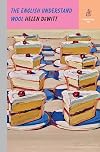
Marguerite’s maman is a woman of high standards. She goes to Scotland to purchase a bolt of fine tweed. But she takes that tweed to London to have it made into clothes. Linen is purchased in Ireland but is cut for clothes in Paris. There are other strictures to her routine and Marguerite has taken all of them on board. So the sudden disappearance of Marguerite’s “parents” is less traumatic than might be expected. Even that these characters had made off with $100 million dollars of show more Marguerite’s real inheritance is not troublesome for her. She had, after all, been given a perfectly splendid education, and expressing dismay now would certainly display mauvais ton.
Helen DeWitt’s creation is an absolute delight. So measured and controlled. And, despite her youth, so wise. Even the brevity of the book is not distressing. An excess would, in Marguerite’s understanding, be mauvais ton.
Definitely recommended. Enjoy! show less
Helen DeWitt’s creation is an absolute delight. So measured and controlled. And, despite her youth, so wise. Even the brevity of the book is not distressing. An excess would, in Marguerite’s understanding, be mauvais ton.
Definitely recommended. Enjoy! show less
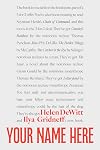
Rating: 4.5* of five
The Publisher Says: A major literary event over two decades in the making, Your Name Here marks the seismic return of Helen DeWitt (The Last Samurai), and will introduce readers to the riveting voice of Ilya Gridneff.
A book of unparalleled scope and vision, Your Name Here is a spectacular honeycomb of books-within-books. In this death-defying feat of ambition, collaborators Helen Dewitt and Ilya Gridneff weave together America’s “War on Terror,” countless years of show more literary history, authorial sleight of hand, Scientology, dream analysis, multiple languages, emails, images, graphs, into something wondrous and unique.
A metafictional Pygmalion story reminiscent of Charlie Kaufman‘s Oscar-nominated Adaptation, or Italo Calvino’s If On a Winter’s Night a Traveler; Your Name Here is a rare work of art that captures the process of becoming itself. A reminder that a masterpiece and a doomed voyage look the same at the start.
I RECEIVED A DRC FROM THE PUBLISHER VIA EDELWEISS+. THANK YOU.
My Review: A literary landscape infested with "pullulating DaVinci Codeed masses" decried, a celebration of Arabic language and literature "unthinkable fifty, even ten years ago", a six hundred-page high-concept literary jape that does gymnastics sophisticated enough to impress the literati and cow the middlebrow into quiescence...did I get it? does anyone get it?...this will gatekeep the hell out of Literature and that's a shame. It's fun. I know a lot of people will bounce off the idea of first, second (ugh) *and* third-person narratives in thirty pages, still less the nods and winks to multitudes of novels, writers, stories, movements, that form the matter behind this book. It's a lot. It's meant to be a lot. It's not making the read easy for you.
In 2026 you have immense resources, all free to use and instantly available 24/7/365. to follow rabbit holes to look stuff up. I love that fact, I enjoy that experience; that means I enjoy this read. (I'm not calling it a story, it's not one, it's either no story at all or skatey-eight skabillion of them.) If you're worried someone is Judging You for your uneducated, unsophisticated take on Your Name Here, you're right—they are doing that; turn it around. Judge them for being so snobbish. For making this complicated, convoluted read a critical darling...question their motives, impugn their legitimacy to judge what is or is not Literature. Challenge gatekeepers; good ones, who want to protect standards and increase others' knowledge bases, rise to the challenge to say *why*; snobs sneer and walk away.
Both responses are valid and supported...somewhere...in the text.
I'm not hopeful that masses of y'all will be rushing to get your ten-dollar ebooks of this title. I realize what I've said so far is going to break some brains, tire some eyes, and fail to ignite the fuel of fun that lies inside this chunky book. It's a commitment of time and energy. It's arch, the way Ducks, Newburyport and Milkman (two books I deeply enjoyed) were arch: playing very complex games with The Rules℠, like pretending Pynchon and Italo Calvino aren't difficult to read, will always put some readers...intelligent readers, people who love the act of reading as much as anyone can...right off a book.
I'm hopeful you'll give the book a try. Take it slowly, read it in chunks. Stop wherever it changes tense, for example, and come back later. Try, in other words, different ways to relate to reading a novel. This is a novel that can reward you making that effort if anything you read can.
I've been gate-kept out of offering my opinion on this read because so many have praised it immoderately, and so many have slagged it off so intently for the same reasons others have praised it. That makes writing about a book in any kind of helpful (or intended to be helpful) mode an invitation to those who do not agree with one's opinion to get mouthy. That's tiresome and tiring, and I really did not want to get into it.
I read the most fulsome and the most dismissive reviews I could find. It was amazing to me the precise same book I read, described in similar terms to each other, could lead to such very different personal conclusions. It made me feel the work was well worth calling still more attention to, because this dichotomy of opinion can't be solely about craft; it's about the point of the read.
I found it to be a worthwhile use of my shrinking supply of eyeblinks. I can't give it a perfect rating, I was never panting to get back to it or chewing over some insight until long into the night. It's snobby in the same way I am. It's beautiful in the way I resonate to but know others won't. It's too long.
And I would read it again. show less
The Publisher Says: A major literary event over two decades in the making, Your Name Here marks the seismic return of Helen DeWitt (The Last Samurai), and will introduce readers to the riveting voice of Ilya Gridneff.
A book of unparalleled scope and vision, Your Name Here is a spectacular honeycomb of books-within-books. In this death-defying feat of ambition, collaborators Helen Dewitt and Ilya Gridneff weave together America’s “War on Terror,” countless years of show more literary history, authorial sleight of hand, Scientology, dream analysis, multiple languages, emails, images, graphs, into something wondrous and unique.
A metafictional Pygmalion story reminiscent of Charlie Kaufman‘s Oscar-nominated Adaptation, or Italo Calvino’s If On a Winter’s Night a Traveler; Your Name Here is a rare work of art that captures the process of becoming itself. A reminder that a masterpiece and a doomed voyage look the same at the start.
I RECEIVED A DRC FROM THE PUBLISHER VIA EDELWEISS+. THANK YOU.
My Review: A literary landscape infested with "pullulating DaVinci Codeed masses" decried, a celebration of Arabic language and literature "unthinkable fifty, even ten years ago", a six hundred-page high-concept literary jape that does gymnastics sophisticated enough to impress the literati and cow the middlebrow into quiescence...did I get it? does anyone get it?...this will gatekeep the hell out of Literature and that's a shame. It's fun. I know a lot of people will bounce off the idea of first, second (ugh) *and* third-person narratives in thirty pages, still less the nods and winks to multitudes of novels, writers, stories, movements, that form the matter behind this book. It's a lot. It's meant to be a lot. It's not making the read easy for you.
In 2026 you have immense resources, all free to use and instantly available 24/7/365. to follow rabbit holes to look stuff up. I love that fact, I enjoy that experience; that means I enjoy this read. (I'm not calling it a story, it's not one, it's either no story at all or skatey-eight skabillion of them.) If you're worried someone is Judging You for your uneducated, unsophisticated take on Your Name Here, you're right—they are doing that; turn it around. Judge them for being so snobbish. For making this complicated, convoluted read a critical darling...question their motives, impugn their legitimacy to judge what is or is not Literature. Challenge gatekeepers; good ones, who want to protect standards and increase others' knowledge bases, rise to the challenge to say *why*; snobs sneer and walk away.
Both responses are valid and supported...somewhere...in the text.
I'm not hopeful that masses of y'all will be rushing to get your ten-dollar ebooks of this title. I realize what I've said so far is going to break some brains, tire some eyes, and fail to ignite the fuel of fun that lies inside this chunky book. It's a commitment of time and energy. It's arch, the way Ducks, Newburyport and Milkman (two books I deeply enjoyed) were arch: playing very complex games with The Rules℠, like pretending Pynchon and Italo Calvino aren't difficult to read, will always put some readers...intelligent readers, people who love the act of reading as much as anyone can...right off a book.
I'm hopeful you'll give the book a try. Take it slowly, read it in chunks. Stop wherever it changes tense, for example, and come back later. Try, in other words, different ways to relate to reading a novel. This is a novel that can reward you making that effort if anything you read can.
I've been gate-kept out of offering my opinion on this read because so many have praised it immoderately, and so many have slagged it off so intently for the same reasons others have praised it. That makes writing about a book in any kind of helpful (or intended to be helpful) mode an invitation to those who do not agree with one's opinion to get mouthy. That's tiresome and tiring, and I really did not want to get into it.
I read the most fulsome and the most dismissive reviews I could find. It was amazing to me the precise same book I read, described in similar terms to each other, could lead to such very different personal conclusions. It made me feel the work was well worth calling still more attention to, because this dichotomy of opinion can't be solely about craft; it's about the point of the read.
I found it to be a worthwhile use of my shrinking supply of eyeblinks. I can't give it a perfect rating, I was never panting to get back to it or chewing over some insight until long into the night. It's snobby in the same way I am. It's beautiful in the way I resonate to but know others won't. It's too long.
And I would read it again. show less
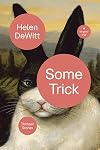
The stories in this collection remind you repeatedly that Helen DeWitt is fiercely intelligent. Many of her protagonists are also fiercely intelligent. And it would be fascinating to witness her sitting down with them at a dinner party, but rather too frightening for one to attend. Many of these stories are from her early days in Oxford and efficiently take that as their setting. Others are set about the world and unsurprisingly involve characters with a profusion of languages. The subjects show more of the stories range wildly but all involve some sort of intellectual problem that needs resolution or at least confrontation. You will either find such esoteric manias thrilling or distressing.
The writing is always crisp and sometimes pointed. It can border on the introspective but interiority of this form is typically also expressive in some fashion. Probably best not to worry too much about it; just go along with the story and it will work itself out.
Easy to recommend but probably not for everyone. show less
The writing is always crisp and sometimes pointed. It can border on the introspective but interiority of this form is typically also expressive in some fashion. Probably best not to worry too much about it; just go along with the story and it will work itself out.
Easy to recommend but probably not for everyone. show less
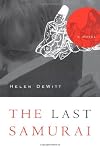
Helen DeWitt's extraordinary debut, The Last Samurai, centers on the relationship between Sibylla, a single mother of precocious and rigorous intelligence, and her son, who, owing to his mother's singular attitude to education, develops into a prodigy of learning. Ludo reads Homer in the original Greek at 4 before moving on to Hebrew, Japanese, Old Norse, and Inuit; studying advanced mathematical techniques (Fourier analysis and Laplace transformations); and, as the title hints, endlessly show more watching and analyzing Akira Kurosawa's masterpiece, The Seven Samurai. But the one question that eludes an answer is that of the name of his father: Sibylla believes the film obliquely provides the male role models that Ludo's genetic father cannot, and refuses to be drawn on the question of paternal identity. The child thinks differently, however, and eventually sets out on a search, one that leads him beyond the certainties of acquired knowledge into the complex and messy world of adults.The novel draws on themes topical and perennial--the hothousing of children, the familiar literary trope of the quest for the (absent) father--and as such, divides itself into two halves: the first describes Ludo's education, the second follows him in his search for his father and father figures. The first stresses a sacred, Apollonian pursuit of logic, precise (if wayward) erudition, and the erratic and endlessly fascinating architecture of languages, while the second moves this knowledge into the world of emotion, human ambitions, and their attendant frustrations and failures.The Last Samurai is about the pleasure of ideas, the rich varieties of human thought, the possibilities that life offers us, and, ultimately, the balance between the structures we make of the world and the chaos that it proffers in return. Stylistically, the novel mirrors this ambivalence: DeWitt's remarkable prose follows the shifts and breaks of human consciousness and memory, capturing the intrusions of unspoken thought that punctuate conversation while providing tantalizing disquisitions on, for example, Japanese grammar or the physics of aerodynamics. It is remarkable, profound, and often very funny. Arigato DeWitt-sensei. --Burhan Tufail show less
Lists
Awards


You May Also Like


Associated Authors
Statistics
- Works
- 7
- Also by
- 6
- Members
- 3,775
- Popularity
- #6,715
- Rating
- 4.0
- Reviews
- 133
- ISBNs
- 59
- Languages
- 13
- Favorited
- 15