
Alison Booth (2)
Author of Stillwater Creek
For other authors named Alison Booth, see the disambiguation page.
Alison Booth (2) has been aliased into Alison L. Booth.
Series
Works by Alison Booth
Works have been aliased into Alison L. Booth.
Associated Works
Works have been aliased into Alison L. Booth.
Tagged
Common Knowledge
There is no Common Knowledge data for this author yet. You can help.
Members
Reviews
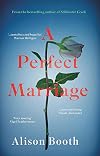
A Perfect Marriage is a book that appealed to me straightaway. The cover imagery of a broken rose suggests all in the marriage contained within is not perfect at all.
The book begins with Sally Lachlan on a plane on her way to a conference. Whilst en route she meets Anthony Blake, a fellow scientist and there is an instant connection. This whole thing with Anthony was something I found fascinating to see develop but, despite this being the opening to the book, it's not really the main strand show more of the story. That belongs to Sally's marriage to Jeff, something she needs to get over before her relationship with Anthony can progress.
The story is divided into sections entitled 'Then' and 'Now'. The reader is thrown back and forth between the two and the 'Then' sections are not in linear order. I loved the way the story of what had happened in the past unfolded and titbits were thrown at me, the reader, to enable me to put it all together like a patchwork quilt. I like being challenged this way, putting the puzzle pieces together to make a whole at the end. That's not to say that any of it was confusing as key events were used as signposts to make it clear which bit of the story was being referred to.
This is not a book with a huge twist. More, it is a slice of life story of a woman looking back at her marriage, or maybe you could call it a psychological drama. I'd call it interesting and I know that that sounds like a bit of a 'meh' way of describing it. But it truly is interesting to read. It's the anatomy of a marriage, a life, a family. It's like being a fly on the wall - something that nosy people like me would love to be!
I found it immensely readable and really liked the author's writing style. I think it showcases the fact that massive plot twists are not necessary when the writing is of good quality and the plotting is tight and clever. I shall look forward to Booth's next book. show less
The book begins with Sally Lachlan on a plane on her way to a conference. Whilst en route she meets Anthony Blake, a fellow scientist and there is an instant connection. This whole thing with Anthony was something I found fascinating to see develop but, despite this being the opening to the book, it's not really the main strand show more of the story. That belongs to Sally's marriage to Jeff, something she needs to get over before her relationship with Anthony can progress.
The story is divided into sections entitled 'Then' and 'Now'. The reader is thrown back and forth between the two and the 'Then' sections are not in linear order. I loved the way the story of what had happened in the past unfolded and titbits were thrown at me, the reader, to enable me to put it all together like a patchwork quilt. I like being challenged this way, putting the puzzle pieces together to make a whole at the end. That's not to say that any of it was confusing as key events were used as signposts to make it clear which bit of the story was being referred to.
This is not a book with a huge twist. More, it is a slice of life story of a woman looking back at her marriage, or maybe you could call it a psychological drama. I'd call it interesting and I know that that sounds like a bit of a 'meh' way of describing it. But it truly is interesting to read. It's the anatomy of a marriage, a life, a family. It's like being a fly on the wall - something that nosy people like me would love to be!
I found it immensely readable and really liked the author's writing style. I think it showcases the fact that massive plot twists are not necessary when the writing is of good quality and the plotting is tight and clever. I shall look forward to Booth's next book. show less
4.25 Stars. My first experience with Alison Booth’s writing, I was enthralled by The Philosopher’s Daughters literary narrative. The sisters’ free-thinking upbringing cultivates a simmering tension as they embark on their adult lives within an 1890s English society shackled by strict conventions, particularly for women. This tension is enhanced when they separately travel to Australia, and readers see through their inquiring eyes (and suffragist beliefs) the rampant racial show more discrimination.
The leading women are very well characterised, despite (I think ironically) being referred to by way of the patriarchy in the novel title. Each of the philosopher’s daughters are independent, but they view and respond to the world in distinctly different ways. Harriet’s interpretation is that of a painter (brush strokes, planes of light) while keen pianist Sarah interprets the world through music. Continue reading review >> https://www.bookloverbookreviews.com/2020/04/the-philosophers-daughters-alison-b... show less
The leading women are very well characterised, despite (I think ironically) being referred to by way of the patriarchy in the novel title. Each of the philosopher’s daughters are independent, but they view and respond to the world in distinctly different ways. Harriet’s interpretation is that of a painter (brush strokes, planes of light) while keen pianist Sarah interprets the world through music. Continue reading review >> https://www.bookloverbookreviews.com/2020/04/the-philosophers-daughters-alison-b... show less
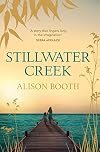
Stillwater Creek explores a small town setting in the 1950s and the intricacies of the people who live there. The setting is strongly grounded in the Australia of the period. The description of the people and their attitudes resonates; and the depiction of the coastal landscape of southern NSW is vivid.
Ilona Talivaldis is a Latvian concentration camp survivor who migrated with her husband to Australia in the early 1950s. Oleskii, her husband, is an accomplished musician but can only find show more work in a factory in Sydney. He is resentful when Ilona decides to augment their meagre income by teaching music. After Oleskii's death in 1957, Ilona and her young daughter Zidra travel to the remote coastal town of Stillwater Creek, searching for peace and an opportunity to start anew.
But this Australian small town is not quite the utopia it seems.
Zidra finds this new environment daunting. She is embarrassed by her mother's accent and her difference. She responds to taunts about being a “reffo” by hiding her exotic sandwiches in her bloomers so she doesn't look out of place. Zidra is befriended by a local Aboriginal girl, Lorna, who teaches her much about surviving difference in this small town. Zidra is devastated when Lorna is taken from her family by the welfare and sent to the Gudgiegalah Girls’ Home because she is a half-caste. Then there is Bill Bates, the publican, whose wife, Cherry, is having an affair with the apparently straightlaced school mistress, Pat Nesbitt. But Bill is not the affable man he seems. When Cherry discovers his interest in child pornography, she tries to conceal it. George Cadwallader, the local butcher, is a kind hearted man whose wife treats him with contempt. He sublimates his feelings of rejection and disappointment into his shop front window display and time spent alone at night contemplating the stars. His sons, Jim and Andy, are chalk and cheese. Jim is smart boy who could fulfil George's dream of escape through education if he wins a scholarship to a school in the city. Eileen, his wife, is a bitter and twisted woman who thinks education is pointless, and objects to any chance of advancement for Jim over her favoured son, Andy. Jim's observant views of life are sometimes more adult than those of the people around him. He befriends Zidra and becomes her protector. Peter Vincent is a loner, holed up on a nearby farming property since his return from a POW camp in WW2. He is initially drawn to Ilona because of their experiences during the war.
As these disparate lives entwine, a rich and powerful tale unfolds. The blurb compares this with The Guernsey Literary and Potato Peel Society – and there are many similarities. It is ultimately a tale of redemption and hope written with tenderness and sharp insight. show less
Ilona Talivaldis is a Latvian concentration camp survivor who migrated with her husband to Australia in the early 1950s. Oleskii, her husband, is an accomplished musician but can only find show more work in a factory in Sydney. He is resentful when Ilona decides to augment their meagre income by teaching music. After Oleskii's death in 1957, Ilona and her young daughter Zidra travel to the remote coastal town of Stillwater Creek, searching for peace and an opportunity to start anew.
But this Australian small town is not quite the utopia it seems.
Zidra finds this new environment daunting. She is embarrassed by her mother's accent and her difference. She responds to taunts about being a “reffo” by hiding her exotic sandwiches in her bloomers so she doesn't look out of place. Zidra is befriended by a local Aboriginal girl, Lorna, who teaches her much about surviving difference in this small town. Zidra is devastated when Lorna is taken from her family by the welfare and sent to the Gudgiegalah Girls’ Home because she is a half-caste. Then there is Bill Bates, the publican, whose wife, Cherry, is having an affair with the apparently straightlaced school mistress, Pat Nesbitt. But Bill is not the affable man he seems. When Cherry discovers his interest in child pornography, she tries to conceal it. George Cadwallader, the local butcher, is a kind hearted man whose wife treats him with contempt. He sublimates his feelings of rejection and disappointment into his shop front window display and time spent alone at night contemplating the stars. His sons, Jim and Andy, are chalk and cheese. Jim is smart boy who could fulfil George's dream of escape through education if he wins a scholarship to a school in the city. Eileen, his wife, is a bitter and twisted woman who thinks education is pointless, and objects to any chance of advancement for Jim over her favoured son, Andy. Jim's observant views of life are sometimes more adult than those of the people around him. He befriends Zidra and becomes her protector. Peter Vincent is a loner, holed up on a nearby farming property since his return from a POW camp in WW2. He is initially drawn to Ilona because of their experiences during the war.
As these disparate lives entwine, a rich and powerful tale unfolds. The blurb compares this with The Guernsey Literary and Potato Peel Society – and there are many similarities. It is ultimately a tale of redemption and hope written with tenderness and sharp insight. show less
A couple of years ago I read Alison Booth's previous novel, A Perfect Marriage, which I really enjoyed. I therefore jumped at the chance to read this, her latest book. They are very different though, with this being historical rather than contemporary.
The Philosopher's Daughters begins in London in 1890 and concentrates on Sarah and Harriet, sisters in their early 20s. They're a very progressive pair for the era, indeed the first scenes see Sarah at a Women's Franchise League meeting. show more Somewhat surprisingly, it's their father who encourages this independence in them. Sarah later travels with her husband to Australia, first to Sydney and then into the outback. When tragedy strikes at home, Harriet decides to follow her sister out there. I think both of them are surprised to find that they adapt to life there quite well.
I liked both of the sisters. I loved that Sarah didn't just bow down to her husband, and I loved that Harriet was determined to be an independent woman. Both showed incredible bravery whilst in Australia too. I can't imagine how hard it must have been to travel so far at that time. Now we have access to so much information about other countries but they must have been travelling into a certain level of the unknown.
It's an atmospheric read with a strong sense of setting. I thought it was fascinating to read about the outback and the Aborigines. They were treated appallingly and yet still managed to be courageous and good.
I liked how the chapter headings were made up of a snippet of the chapter ahead. It meant I spent a bit of time flicking backwards and forwards but it made a change from chapters just being numbered. The ending made me smile too. One for the historical fiction fans, especially if you want to be transported to a remote backdrop. show less
The Philosopher's Daughters begins in London in 1890 and concentrates on Sarah and Harriet, sisters in their early 20s. They're a very progressive pair for the era, indeed the first scenes see Sarah at a Women's Franchise League meeting. show more Somewhat surprisingly, it's their father who encourages this independence in them. Sarah later travels with her husband to Australia, first to Sydney and then into the outback. When tragedy strikes at home, Harriet decides to follow her sister out there. I think both of them are surprised to find that they adapt to life there quite well.
I liked both of the sisters. I loved that Sarah didn't just bow down to her husband, and I loved that Harriet was determined to be an independent woman. Both showed incredible bravery whilst in Australia too. I can't imagine how hard it must have been to travel so far at that time. Now we have access to so much information about other countries but they must have been travelling into a certain level of the unknown.
It's an atmospheric read with a strong sense of setting. I thought it was fascinating to read about the outback and the Aborigines. They were treated appallingly and yet still managed to be courageous and good.
I liked how the chapter headings were made up of a snippet of the chapter ahead. It meant I spent a bit of time flicking backwards and forwards but it made a change from chapters just being numbered. The ending made me smile too. One for the historical fiction fans, especially if you want to be transported to a remote backdrop. show less
Awards

You May Also Like
Associated Authors
Statistics
- Works
- 7
- Also by
- 1
- Members
- 92
- Popularity
- #202,475
- Rating
- 3.6
- Reviews
- 12
- ISBNs
- 70
- Languages
- 1