
Dáithí Ó hÓgáin
Author of The Lore of Ireland: An Encyclopaedia of Myth, Legend and Romance
About the Author
Daithi O hOgain is Associate Professor of Irish Folklore at University College, Dublin.
Image credit: via portraidi.ie
Works by Dáithí Ó hÓgáin
Islanders and water-dwellers : proceedings of the Celtic-Nordic-Baltic folklore symposium held at University College Dublin 16-19 June 1996 (1999) — Contributor — 8 copies
Binneas Thar Meon: A Collection of Songs and Airs Made by Liam de Noraidh in East Munster (Folklore Studies) (1994) 3 copies
Scéalta Nua 1 copy
Breacadh 1 copy
Associated Works
Gold Under the Furze Studies in Folk Tradition — Editor — 2 copies
Tagged
Common Knowledge
- Canonical name
- Ó hÓgáin, Dáithí
- Legal name
- Ó hÓgáin, Dáithí
- Birthdate
- 1949
- Gender
- male
- Education
- University College Dublin (BA ∙ Modern Languages ∙ MA ∙ Language and Literature ∙ PhD ∙ Folklore)
- Occupations
- professor
writer
folklorist - Organizations
- UNESCO
- Nationality
- Ireland
- Birthplace
- Bruff, Co. Limerick, Ireland
- Places of residence
- Bray, County Wicklow, Ireland
- Associated Place (for map)
- Ireland
Members
Reviews
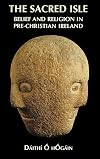
In some ways quite satisfying but in others quite generic and I think some of the leaps of faith he makes are interesting and I'm not sure that some of the cognates he posits are quite true, he could be right but he didn't convince me in the text. The final chapter about the "defeat" of Paganism and the "Triumph of Christianity" glossed over many of the pagan holdovers and while most of the information that we have about paganism in Ireland is from Christian sources, Irish Christianity has a show more lot of pagan influences.
It's a bit dry and lacks a lot of detail about the practice of paganism in the pre-Christian period, I didn't really find anything more over what I already knew and honestly the writing style left me reading it in small chunks. show less
It's a bit dry and lacks a lot of detail about the practice of paganism in the pre-Christian period, I didn't really find anything more over what I already knew and honestly the writing style left me reading it in small chunks. show less
An interesting and worthwhile discussion, covering the peoples and cultures of Ireland from the stone age to the arrival of Christianity. Strongest where he teases out new information about the Druids from later Christian writings, and perhaps weakest where he wanders off into comparative folklore. Particularly recommended to anyone interested in the Irish Iron Age.
I had a few problems reading this book.
1. I had no clue to whom Dáithí Ó hÓgáin was referring when he used the term "Celt" - as I am used to Celtic being a reference to certain languages that had grown out of those areas that traded with mainland Europe, not a people who invaded or settled certain lands - and the nearest I could discern was that the Celts arrived sometime between the start of the Iron Age and the arrival of Christianity in Ireland. Perhaps another reader might find show more where the term Celt is clearly defined in the book.
2. From what I could gather, Dáithí Ó hÓgáin is equating all male deities with the sun and all female deities with planet earth (either as land or water), which seems at odds with other books I have read on the subject. All names were traced back to "fierce", "bright", "red", "light" and are thus representative of the sun.
3. My understanding has been that the gods of the peoples of the British Isles (in which I include Ireland) were more localised, associated more with the immediate landscape; i.e. the same gods were not worshipped across the nations, except perhaps one or two and whilst Dáithí Ó hÓgáin does look at each of the four/five provinces of Ireland, the impression given is, in all provinces, the people worship a/the sun god (though possibly by a different name).
I feel though these problems are because of my lack of any knowledge on the history of Ireland - something I am attempting to rectify. Perhaps my confusion arises from reading both more recent releases on history (which can now include DNA research and other advances in the field of archaeology) and books written more than 10 years ago.
At this point, I am just not sure I can recommend this book. show less
1. I had no clue to whom Dáithí Ó hÓgáin was referring when he used the term "Celt" - as I am used to Celtic being a reference to certain languages that had grown out of those areas that traded with mainland Europe, not a people who invaded or settled certain lands - and the nearest I could discern was that the Celts arrived sometime between the start of the Iron Age and the arrival of Christianity in Ireland. Perhaps another reader might find show more where the term Celt is clearly defined in the book.
2. From what I could gather, Dáithí Ó hÓgáin is equating all male deities with the sun and all female deities with planet earth (either as land or water), which seems at odds with other books I have read on the subject. All names were traced back to "fierce", "bright", "red", "light" and are thus representative of the sun.
3. My understanding has been that the gods of the peoples of the British Isles (in which I include Ireland) were more localised, associated more with the immediate landscape; i.e. the same gods were not worshipped across the nations, except perhaps one or two and whilst Dáithí Ó hÓgáin does look at each of the four/five provinces of Ireland, the impression given is, in all provinces, the people worship a/the sun god (though possibly by a different name).
I feel though these problems are because of my lack of any knowledge on the history of Ireland - something I am attempting to rectify. Perhaps my confusion arises from reading both more recent releases on history (which can now include DNA research and other advances in the field of archaeology) and books written more than 10 years ago.
At this point, I am just not sure I can recommend this book. show less
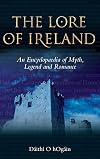
I stumbled upon this book in the Dickson Street Bookshop and it might have even been the first book I bought from them (which makes sense because it's bottomless and overwhelming if you don't walk in with a list!). I have always been drawn to anything Irish and this book was just another impulse buy that showed my cards. It's just an encyclopedia but it has all sorts of fun things about Ireland and the magical parts about it that are so interesting.
You May Also Like


Associated Authors
Statistics
- Works
- 40
- Also by
- 2
- Members
- 515
- Popularity
- #48,204
- Rating
- 3.9
- Reviews
- 5
- ISBNs
- 44
- Languages
- 4