
Anne Ross (1) (1925–2012)
Author of The Life and Death of a Druid Prince
For other authors named Anne Ross, see the disambiguation page.
About the Author
Dr Anne Ross, who lives in Wales, is one of Britain's leading Celtic scholars
Works by Anne Ross
The Celts 1 copy
Associated Works
To Illustrate the Monuments: Essays on Archaeology Presented to Stuart Piggott on the Occasion of his Sixty-Fifth Birthday (1976) — Contributor — 8 copies
Tagged
Common Knowledge
- Legal name
- Feachem, Anne Ross
- Other names
- Grant, Anne
- Birthdate
- 1925-09-28
- Date of death
- 2012-08-29
- Gender
- female
- Education
- University of Edinburgh (PhD|Celtic studies)
University of Edinburgh (MA) - Occupations
- archaeologist
anthropologist
Celtic scholar
folklorist - Organizations
- West Highland Survey
University of Edinburgh, School of Scottish Studies
University of Southampton
University College of Wales, Aberystwyth - Relationships
- Feachem, Richard (husband)
- Short biography
- Anne Ross was a distinguished Gaelic-speaking Celtic scholar and archeologist. She earned her MA and PhD degrees at the University of Edinburgh and was a senior research fellow at the School of Scottish Studies there. She was a research fellow in Archaeology at the University of Southampton before becoming a professor at the University College of Wales, Aberystwyth. Her many publications included the classic works Pagan Celtic Britain (1967) and Folklore of the Scottish Highlands (1983), as well as Life and Death of a Druid Prince (1991).
- Nationality
- UK
- Birthplace
- Northumberland, England, UK
- Places of residence
- Isle of Skye, Scotland, UK
Southampton, England, UK
Devizes, Wiltshire, England, UK
Llandre, Wales, UK - Place of death
- Llandre, Wales, UK
- Associated Place (for map)
- UK
Members
Reviews
The Life and Death of a Druid Prince: The Story of Lindow Man an Archaeological Sensation by Anne Ross

In 1984, peat cutters on Lindow Moss (about 15 miles south of Manchester) came up with a human leg along with the peat. Which must have been disconcerting. The local police were called in, and after some examination and probing around some more remains were found. Interestingly, the body was, in fact, a murder victim – he’d been garroted (the noose was still around his neck), bashed on the head hard enough to fracture his skull, and had his throat cut – somebody really wanted him dead show more – but the murder was committed in the first century AD.
The gentlemen picked up the name “Lindow Man” and is currently entertaining visitors in the British Museum.
The Life and Death of a Druid Prince purports to be the story of Lindow Man, but stretches the evidence way beyond what it justifies. The authors claim to know Lindow Man’s name (Lovernios), his ethnic origins (Irish), the exact date of his death (April 30, 61 AD) and why he was killed (as a human sacrifice to placate Celtic gods and persuade them to intervene against the Roman conquest).
None of the authors’ arguments for each step of their theory is particularly farfetched – for example, Lindow Man was naked except for a fox fur armband and “Lovernios” means “fox” in Gaulish Celtic – but the odds of stringing together so many hypotheses to make a theory like this is vanishingly small, even if each individual hypothesis is fairly likely. Some of the data collected is quite interesting – the possibly survival of various Celtic rituals into recent times as folk traditions, for example – and the simple facts about Lindlow Man – height, weight, facial reconstruction, gut contents, etc. – are worth reading. The rest of it, however, reads like the authors had suddenly begun channeling Eric von Daniken. show less
The gentlemen picked up the name “Lindow Man” and is currently entertaining visitors in the British Museum.
The Life and Death of a Druid Prince purports to be the story of Lindow Man, but stretches the evidence way beyond what it justifies. The authors claim to know Lindow Man’s name (Lovernios), his ethnic origins (Irish), the exact date of his death (April 30, 61 AD) and why he was killed (as a human sacrifice to placate Celtic gods and persuade them to intervene against the Roman conquest).
None of the authors’ arguments for each step of their theory is particularly farfetched – for example, Lindow Man was naked except for a fox fur armband and “Lovernios” means “fox” in Gaulish Celtic – but the odds of stringing together so many hypotheses to make a theory like this is vanishingly small, even if each individual hypothesis is fairly likely. Some of the data collected is quite interesting – the possibly survival of various Celtic rituals into recent times as folk traditions, for example – and the simple facts about Lindlow Man – height, weight, facial reconstruction, gut contents, etc. – are worth reading. The rest of it, however, reads like the authors had suddenly begun channeling Eric von Daniken. show less
The life and death of a Druid prince : the story of Lindow Man, an archaeological sensation by Anne Ross

The life and death of a Druid prince is the story of the Lindow man who was found in a peat bog in the early 1980's; other bodies were found in the same location and all were at least 1000 years old or more. The authors, Anne Ross and Don Robins, both experts in Celtic England and the Druids, have taken the bare "bones" of the story and hypothesized the rest. All we really know from the remains found is that he was a relatively healthy male in his 20s wearing nothing but an armband. He was show more brutally killed, using torture devices, and his last meal was identified. Ross and Robins have gone beyond the facts to posit a story about a Druid priest or other high ranking official from Ireland named Llovernio who came to England during the dark time when the Romans battled the Celts in Britain. Through a retelling of ancient history as well as a multitude of maps, the authors make their case. I believe it is a well crafted story, not fact.
In addition to the maps and the many illustrations, there is a bibliography and index. The text is not footnoted, as it would have been if this were a serious scholarly work. The bibliography has many books of interest listed, all published before 1989. There are many newer articles and books including a recent one by The British Museum. If you want to know the real facts about the Lindow man, you need to read more than this book. show less
In addition to the maps and the many illustrations, there is a bibliography and index. The text is not footnoted, as it would have been if this were a serious scholarly work. The bibliography has many books of interest listed, all published before 1989. There are many newer articles and books including a recent one by The British Museum. If you want to know the real facts about the Lindow man, you need to read more than this book. show less
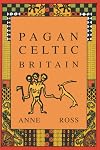
This book is full of archeological and anthropological evidence which is used to provide proof for the various cults of the Celts. Along the way the reader is introduced to many deities, their attributes and localities as well as the reasoning why they had a following among the ancient Celts.
Anne Ross is obviously well versed in her subject and is very capable of demonstrating her knowledge in a manner that is easy to follow. There is a fluidity of thought and content that increases the show more understanding and knowledge of the reader in a logical and methodical manner that one is not nearly ware of until retrospect is utilized, something that I have found to be of profound worth when studying texts that deal with weighty matter. Cross referencing with other works, annotating, and sometimes clarifying from references that Ross makes, helps enormously build upon the foundation of understanding into the lives of the Ancestors in Celtic Britain, members of what she refers to as the ‘Druidic Caste’ (p79).
Rather than use what I call a ‘shotgun approach’ by blasting the reader with general knowledge of the lives of the ancients, Anne Ross divides their beliefs into a coherent series of cults that she demonstrates and emphasizes with plates of artifacts and factual documentation from archeological finds throughout Britain. The eight sections or chapters that she divides the beliefs into, when examined with mentions in other sources of similar content, provide a very clear picture of why, how, and when the various groups of Celtic people in Britain employed the use of these beliefs. She explains her use of the word ‘cult’ on page 94 as, “…a convenient term to apply to the different religious ideas prevalent among the pagan Celts, but it would be incorrect to imagine rigid barriers between them or think that they were mutually exclusive.”
Ross starts with perhaps the most obvious; the sanctuaries, temples and various cult sites. Perhaps one of the most definitive descriptions or explanations as to the importance of these sites is found on pages 50-51 where she states, “It is clear that the early Celtic peoples regarded all such places as entrances to the otherworld…” One simple line that immediately puts so much into context! It is a well known fact that the Celts carried a strong belief of the Otherworld with them throughout their travels. That the Otherworld played an integral part in their lives is obvious from the many references in literature that have been preserved from that time and for me at least, the concept that these structures provide a portal to the Otherworld is not something I had ever considered seriously enough before. I acknowledged that they were worship sites much like the temples of the classical Greek and Roman deities but to view them as distinct portals was something new to me.
This leads immediately and smoothly into the transmigration of souls where Ross introduces the Cult of Graves and the belief that, “Death is regarded as a stage in the progression of life.” (p65) This section explains in quite a bit of detail as to why graves and burial rites were so predominant in their lives. It is clear that contrary to Judeo-Christian belief that while there is an afterlife it is designated as either a paradise or a hell, whereas the ancient Celtic people saw everything as a step or stage in an ongoing process whereby one might learn and forever progress. This is something akin to existentialism in which each person must take responsibility for their own actions and by learning as they progress shape their own destinies and future.
Quite a lot of space is dedicated to the Horned God in Britain and Ross compares, again with archeological and anthropological proof, the importance and correlation of this deity with those in other Celtic realms. In fact, so much is written about him (Cernunnos) that one is led to believe that his role and importance is often understated or overlooked in many works. Yet Ross states that this cult is, “…perhaps second only in importance to the cult of the head.” A statement that makes one wonder if this is perhaps a personal observation on her part or if there is a whole colony of belief that the Cult of the Head was the preeminent cult among these people. Certainly she discusses the importance of the head in detail in that particular section and accounts for the prevalence of heads in statuary and coins that have been found. But a question for me that requires further research on my part is how can one cult be determined to be of more significance than another?
Anne Ross devotes space to the Warrior God in Britain, the Goddesses, Sacred and Magic Birds, and finally Divine Animals. Each of these sections is insightful, explanatory, well correlated and documented fully with examples of the Celts. It is of particular interest the manner in which she outlines the relevance of each deity, animal or bird and how the festivals were used in conjunction with each significant entity. Being a nature people as the Celts were it is easy to understand why they saw symbolism in their lives and how each sign or manifestation had deep and intense meaning for them. Ross provides a background that brings clarity to the reader whose knowledge is not as insightful as hers and in such a manner that a reflective attitude is required in order to assimilate all that is provided.
As a resource for those who Hearth Culture is Celtic, this is a work worth having. This is not a book that can be read then left on the shelf however. It should be used continually to provide explanation, background, evidence and practical knowledge for those following the Path. It may not be the ‘One’ essential book for this purpose but it certainly fulfils a need that is lacking in many works. To understand the world of the Celts may not ever be totally achieved but Pagan Celtic Britain certainly helps the reader along the way to reaching this goal. Any knowledge obtained that brings the lives and culture of the Celts into perspective is worth any effort required to gain insight. show less
Anne Ross is obviously well versed in her subject and is very capable of demonstrating her knowledge in a manner that is easy to follow. There is a fluidity of thought and content that increases the show more understanding and knowledge of the reader in a logical and methodical manner that one is not nearly ware of until retrospect is utilized, something that I have found to be of profound worth when studying texts that deal with weighty matter. Cross referencing with other works, annotating, and sometimes clarifying from references that Ross makes, helps enormously build upon the foundation of understanding into the lives of the Ancestors in Celtic Britain, members of what she refers to as the ‘Druidic Caste’ (p79).
Rather than use what I call a ‘shotgun approach’ by blasting the reader with general knowledge of the lives of the ancients, Anne Ross divides their beliefs into a coherent series of cults that she demonstrates and emphasizes with plates of artifacts and factual documentation from archeological finds throughout Britain. The eight sections or chapters that she divides the beliefs into, when examined with mentions in other sources of similar content, provide a very clear picture of why, how, and when the various groups of Celtic people in Britain employed the use of these beliefs. She explains her use of the word ‘cult’ on page 94 as, “…a convenient term to apply to the different religious ideas prevalent among the pagan Celts, but it would be incorrect to imagine rigid barriers between them or think that they were mutually exclusive.”
Ross starts with perhaps the most obvious; the sanctuaries, temples and various cult sites. Perhaps one of the most definitive descriptions or explanations as to the importance of these sites is found on pages 50-51 where she states, “It is clear that the early Celtic peoples regarded all such places as entrances to the otherworld…” One simple line that immediately puts so much into context! It is a well known fact that the Celts carried a strong belief of the Otherworld with them throughout their travels. That the Otherworld played an integral part in their lives is obvious from the many references in literature that have been preserved from that time and for me at least, the concept that these structures provide a portal to the Otherworld is not something I had ever considered seriously enough before. I acknowledged that they were worship sites much like the temples of the classical Greek and Roman deities but to view them as distinct portals was something new to me.
This leads immediately and smoothly into the transmigration of souls where Ross introduces the Cult of Graves and the belief that, “Death is regarded as a stage in the progression of life.” (p65) This section explains in quite a bit of detail as to why graves and burial rites were so predominant in their lives. It is clear that contrary to Judeo-Christian belief that while there is an afterlife it is designated as either a paradise or a hell, whereas the ancient Celtic people saw everything as a step or stage in an ongoing process whereby one might learn and forever progress. This is something akin to existentialism in which each person must take responsibility for their own actions and by learning as they progress shape their own destinies and future.
Quite a lot of space is dedicated to the Horned God in Britain and Ross compares, again with archeological and anthropological proof, the importance and correlation of this deity with those in other Celtic realms. In fact, so much is written about him (Cernunnos) that one is led to believe that his role and importance is often understated or overlooked in many works. Yet Ross states that this cult is, “…perhaps second only in importance to the cult of the head.” A statement that makes one wonder if this is perhaps a personal observation on her part or if there is a whole colony of belief that the Cult of the Head was the preeminent cult among these people. Certainly she discusses the importance of the head in detail in that particular section and accounts for the prevalence of heads in statuary and coins that have been found. But a question for me that requires further research on my part is how can one cult be determined to be of more significance than another?
Anne Ross devotes space to the Warrior God in Britain, the Goddesses, Sacred and Magic Birds, and finally Divine Animals. Each of these sections is insightful, explanatory, well correlated and documented fully with examples of the Celts. It is of particular interest the manner in which she outlines the relevance of each deity, animal or bird and how the festivals were used in conjunction with each significant entity. Being a nature people as the Celts were it is easy to understand why they saw symbolism in their lives and how each sign or manifestation had deep and intense meaning for them. Ross provides a background that brings clarity to the reader whose knowledge is not as insightful as hers and in such a manner that a reflective attitude is required in order to assimilate all that is provided.
As a resource for those who Hearth Culture is Celtic, this is a work worth having. This is not a book that can be read then left on the shelf however. It should be used continually to provide explanation, background, evidence and practical knowledge for those following the Path. It may not be the ‘One’ essential book for this purpose but it certainly fulfils a need that is lacking in many works. To understand the world of the Celts may not ever be totally achieved but Pagan Celtic Britain certainly helps the reader along the way to reaching this goal. Any knowledge obtained that brings the lives and culture of the Celts into perspective is worth any effort required to gain insight. show less
The Life and Death of a Druid Prince: The Story of Lindow Man, an Archaeological Sensation by Anne Ross
Interesting results on the scientific investigation of Lindow Man and some good folklore material, but also a great deal of Olympic-caliber jumping-to-conclusions regarding the practices of the ancient Druids.
You May Also Like


Associated Authors
Statistics
- Works
- 12
- Also by
- 2
- Members
- 1,233
- Popularity
- #20,820
- Rating
- 3.8
- Reviews
- 12
- ISBNs
- 56
- Languages
- 3