
Tim Hollis
Author of Mouse Tracks: The Story of Walt Disney Records
About the Author
Tim Hollis specializes in topics pertaining to broadcasting, popular culture, and all things nostalgic. For this work, Hollis scoured his own collection of tourism memorabilia, as well as those belonging to former employees and park visitors, resulting in the most comprehensive retrospective to show more date about this short-lived but fondly remembered attraction. show less
Image credit: Courtesy of Birmingham Alabama Public Library (Flickr) ~ Photo by Larry O. Gay
Works by Tim Hollis
The Great Golf Game of Oz 1 copy
The Deadly Desert of Oz 1 copy
Tagged
Common Knowledge
- Gender
- male
- Nationality
- USA
- Places of residence
- Birmingham, Alabama, USA
- Associated Place (for map)
- Alabama, USA
Members
Reviews
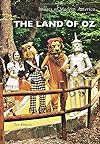
This thin little volume is essentially a photo gallery between two paperback covers—or, if you like, a budget-conscious coffee table book. It takes about an hour to read, at most, and almost every page contains a couple of large photographs or, in later sections, a scan of an ad, brochure, sign, or map. You might think of it is being like one of those photo books they sell in a visitors center or gift shop that includes a couple hundred photos of local town history.
Fortunately, for what it show more is, it's really quite nice. Almost all of the photographs are in color, which is great from the perspective of historical preservation. It can also be useful just to help define what's happening in the picture; these are mostly 1970-era shots, and they usually aren't from the idealized angles we can manage with our smartphones fifty years hence. Lack of light is a problem in a couple of pictures, but more often, it's simply a combination of distance and (lack of) focus. "Oh, that's a mouse costume?" you say to yourself. "Okay, then..."
Happily, author Tim Hollis clearly knows what he's talking about, and the pictures are accompanied by nice, chunky captions (as well as a two-page text introduction). I knew some vague details about the Land of Oz theme park before I started the book, but Hollis helped to throw it all into a much tighter chronological cause-and-effect progression. I knew Debbie Reynolds had been there to open the park on its first day, but no real clue why; I knew the park had become derelict around 1980, with no clear understanding why; and I knew that the costumes had, at some point, changed to something a little less homemade/nightmarish, again, without knowing what precipitated that change. All of those things I understand much better now.
The heart of the book really is in the original Oz park, 1970-75. The 1976-80 iteration, after the big fire (spoiler!), is given comparatively short shrift, and the modern incarnation of the park as a special event every summer and fall is only mentioned three or four times. I think if you're looking for a lot of detail on either of these topics, you'll need to keep looking. Hollis' interest is firmly on taking you through the history of the mark 1 Land of Oz theme park, and as such, his book succeeds well. show less
Fortunately, for what it show more is, it's really quite nice. Almost all of the photographs are in color, which is great from the perspective of historical preservation. It can also be useful just to help define what's happening in the picture; these are mostly 1970-era shots, and they usually aren't from the idealized angles we can manage with our smartphones fifty years hence. Lack of light is a problem in a couple of pictures, but more often, it's simply a combination of distance and (lack of) focus. "Oh, that's a mouse costume?" you say to yourself. "Okay, then..."
Happily, author Tim Hollis clearly knows what he's talking about, and the pictures are accompanied by nice, chunky captions (as well as a two-page text introduction). I knew some vague details about the Land of Oz theme park before I started the book, but Hollis helped to throw it all into a much tighter chronological cause-and-effect progression. I knew Debbie Reynolds had been there to open the park on its first day, but no real clue why; I knew the park had become derelict around 1980, with no clear understanding why; and I knew that the costumes had, at some point, changed to something a little less homemade/nightmarish, again, without knowing what precipitated that change. All of those things I understand much better now.
The heart of the book really is in the original Oz park, 1970-75. The 1976-80 iteration, after the big fire (spoiler!), is given comparatively short shrift, and the modern incarnation of the park as a special event every summer and fall is only mentioned three or four times. I think if you're looking for a lot of detail on either of these topics, you'll need to keep looking. Hollis' interest is firmly on taking you through the history of the mark 1 Land of Oz theme park, and as such, his book succeeds well. show less
Remember growing up where every toy you got had some cartoon or movie character on it? Record players, cups, plates, toys, watches, anything that you could imagine having, had your favorite cartoon character on it. Disney, the Muppets, Snoopy, and oh so, so many more have dominated our cultural landscape for a long time. In this book author Tim Hollis takes a closer look at how all of this came to be.
While Hollis primarily focuses on the post-World War II, baby boom years, he gives a good show more introduction to how the practice started back in the early 1900’s with Buster Brown and his shoes leading to Disney and to others that followed in his footsteps. While this may sound like a boring, and somewhat academic topic, Hollis does a good job with keeping the discussion lively and taking the reader step by step through what happened, why it happened, and when it changed. He then moves into his primary focus, the period that he grew up with, discussing post-World War II, where companies like Disney and many others, started to see a decline in placement and want of products, to their rise again. Hollis walks us through storybooks, comic books, records, board games, holiday paraphernalia, even food!, roadside attractions, and more, where retailers and attractions brought the magic of the cartoon...to life, all in an effort to bring in a few more dollars.
When I come across a title like “Toons in Toyland” that’s going to discuss the story of cartoon merchandise I have to wonder...what type of story am I going to get? Am I going to get a boring serious story? A marketing story? Or something else altogether? For me, I’m happy that this book falls into the latter category, because seriously how can you not have fun with a topic about toons in (on) toys? Hollis is passionate about what he’s talking about and it comes across clearly in his writing. He’s been into these toys since he was a wee lad growing up and he’s excited to share his knowledge and his extensive collection (he has a large majority of these toys) with us, the reader. And that’s what makes this book so much fun to read.
The one downside to this book, is that sometimes the stories and facts being presented are coming directly from companies, such as Disney, that are still in existence today. This becomes a problem, in my mind, because most companies at some point have tweaked stories along the way, either by the original founders, or those afterwards seeking to protect the company. While this doesn’t drastically alter the stories, some of the facts should perhaps be taken with a grain of salt or two. Hollis though does a good job of presenting the rise of cartoon and toys, why they remain popular, and the variety of merchandising that they appeared on. I mean seriously, I had no idea that there were food items (bread pudding apparently??) that some toons reached out into.
Hollis’s passion and ability to tell a good story with facts makes this a book that any fan of cartoons and comics should pick up. I give the book 4 out of 5 stars.
ARC provided by NetGalley show less
While Hollis primarily focuses on the post-World War II, baby boom years, he gives a good show more introduction to how the practice started back in the early 1900’s with Buster Brown and his shoes leading to Disney and to others that followed in his footsteps. While this may sound like a boring, and somewhat academic topic, Hollis does a good job with keeping the discussion lively and taking the reader step by step through what happened, why it happened, and when it changed. He then moves into his primary focus, the period that he grew up with, discussing post-World War II, where companies like Disney and many others, started to see a decline in placement and want of products, to their rise again. Hollis walks us through storybooks, comic books, records, board games, holiday paraphernalia, even food!, roadside attractions, and more, where retailers and attractions brought the magic of the cartoon...to life, all in an effort to bring in a few more dollars.
When I come across a title like “Toons in Toyland” that’s going to discuss the story of cartoon merchandise I have to wonder...what type of story am I going to get? Am I going to get a boring serious story? A marketing story? Or something else altogether? For me, I’m happy that this book falls into the latter category, because seriously how can you not have fun with a topic about toons in (on) toys? Hollis is passionate about what he’s talking about and it comes across clearly in his writing. He’s been into these toys since he was a wee lad growing up and he’s excited to share his knowledge and his extensive collection (he has a large majority of these toys) with us, the reader. And that’s what makes this book so much fun to read.
The one downside to this book, is that sometimes the stories and facts being presented are coming directly from companies, such as Disney, that are still in existence today. This becomes a problem, in my mind, because most companies at some point have tweaked stories along the way, either by the original founders, or those afterwards seeking to protect the company. While this doesn’t drastically alter the stories, some of the facts should perhaps be taken with a grain of salt or two. Hollis though does a good job of presenting the rise of cartoon and toys, why they remain popular, and the variety of merchandising that they appeared on. I mean seriously, I had no idea that there were food items (bread pudding apparently??) that some toons reached out into.
Hollis’s passion and ability to tell a good story with facts makes this a book that any fan of cartoons and comics should pick up. I give the book 4 out of 5 stars.
ARC provided by NetGalley show less
If you vacationed in Gatlinburg or Pigeon Forge in the 1960s, 1970s, or 1980s, you'll enjoy a trip down memory lane with the photos in this book. The co-authors have done a good job of selecting representative photographs and organizing them around themes like restaurants and celebrity attractions. One chapter is devoted to the pre-Dollywood history of the theme park, from Rebel Railroad to Goldrush Junction to Silver Dollar City. My family made a lot of trips to Silver Dollar City when I show more was in middle school and my preacher father led non-denominational services in the chapel for a couple of seasons. As popular as Dollywood has become, I still miss Silver Dollar City features like the Hatfield and McCoy feud, the Medicine Man show, and the saloon show. It was fun to revisit those memories in the pages of this book (although the Medicine Man didn't make the cut). show less

As a native Floridian, I've been to a handful of sites discussed in this book, like Silver Springs and Weeki Wachee. My mother loved to tell me about how she and my grandparents would go there decades ago, and how the area has changed so much since then. This book nicely illustrates this, giving tons of historical photos, with some modern shots for comparison. I must admit though, that this isn't the reason why I got this book.
There is a VFW post in Fort McCoy, Florida, that has an show more authentic G-26 Missile on display. This is the only example of this type of missile, part of the Navaho missile, that exists in the world, outside of Cape Canaveral. As a Navaho enthusiast, I am deeply curious to know how the missile came to be at the VFW. Nobody there could tell me much beyond the fact that it was once in a museum. Further research identified the museum as the Early American Museum, which is featured in this book. I was delighted to find a couple of photos of the missile on display at the museum (even though it NEVER would have been painted like that in real life). The author seemed to think the missile wasn't real. He kept referring to it as a "replica" of a rocket ship. Okay, I have a problem with the term "rocket ship" on principle. This is a missile with a nuclear payload, not a prop from Flash Gordon.
I had hoped there would be more information on this artifact, but there was't probably because the author thought it was fake. No sir, it is real, and it has a real history. I hope that one day I'll find out how it escaped scrapping and wound up in central Florida.
If you are interested in Silver Springs and related sites in Central Florida, this will probably be very interesting to you. A nice nostalgia trip for people who actually visited these places back in the day. show less
There is a VFW post in Fort McCoy, Florida, that has an show more authentic G-26 Missile on display. This is the only example of this type of missile, part of the Navaho missile, that exists in the world, outside of Cape Canaveral. As a Navaho enthusiast, I am deeply curious to know how the missile came to be at the VFW. Nobody there could tell me much beyond the fact that it was once in a museum. Further research identified the museum as the Early American Museum, which is featured in this book. I was delighted to find a couple of photos of the missile on display at the museum (even though it NEVER would have been painted like that in real life). The author seemed to think the missile wasn't real. He kept referring to it as a "replica" of a rocket ship. Okay, I have a problem with the term "rocket ship" on principle. This is a missile with a nuclear payload, not a prop from Flash Gordon.
I had hoped there would be more information on this artifact, but there was't probably because the author thought it was fake. No sir, it is real, and it has a real history. I hope that one day I'll find out how it escaped scrapping and wound up in central Florida.
If you are interested in Silver Springs and related sites in Central Florida, this will probably be very interesting to you. A nice nostalgia trip for people who actually visited these places back in the day. show less
You May Also Like


Associated Authors
Statistics
- Works
- 43
- Members
- 362
- Popularity
- #66,318
- Rating
- 3.9
- Reviews
- 14
- ISBNs
- 75