
About the Author
Image credit: John Burlinson, Oct. 14, 2007
Works by David J. Linden
The Compass of Pleasure: How Our Brains Make Fatty Foods, Orgasm, Exercise, Marijuana, Generosity, Vodka, Learning, and Gambling Feel So Good (2011) 343 copies, 11 reviews
The Accidental Mind: How Brain Evolution Has Given Us Love, Memory, Dreams, and God (2007) 323 copies, 8 reviews
David J. Linden: Touch : The Science of Hand, Heart, and Mind (Hardcover); 2015 Edition (1672) 1 copy
Mintea ca întâmplare 1 copy
Tagged
Common Knowledge
- Birthdate
- 1961
- Gender
- male
- Education
- University of California, Berkeley
- Occupations
- professor
- Organizations
- Johns Hopkins University
Members
Reviews
The Accidental Mind: How Brain Evolution Has Given Us Love, Memory, Dreams, and God by David J. Linden
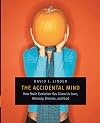
Linden sets out to prove that our brains more closely resemble inefficient clunkers reflecting millions of years of evolutionary tinkering, rather than sophisticated, well-designed and amazing intelligent creations. He discusses the structure of our brain from the lower evolutionary parts of the brain stem and cerebellum through the more recent frontal lobes and cortex. When discussing the brain’s design, he uses a cool example of a supermodern racecar built on the Ford T plan, in which show more nothing of the original Ford T plan is to be dropped or replaced, and the new systems are to be built in addition and/or on top of the old ones. This is precisely how we ended up having two visual and two auditory systems in our brains- one ancient and one more modern. This is how congenitally blind people can in fact perceive movement and objects even though they don’t consciously realize that. It’s their ancient visual system at work. Linden also discusses the way our brain communicates within itself and how we come up with a picture of the world that is both physical and abstract. From what I understand, even though there are parts of the brain designated to perform specialized functions, the whole brain with all its parts creates the memories and images of what we perceive and know. Worldviews, dreams and religious views are an inherent feature of our brains creating narratives.
All in all, the book is a wonderfully balanced review of what we do and don’t know about the brain and the best debunking of intelligent design I have read in a while.
As a PS, there were some nice observations on sex in mammals and how humans compare to others. What caught my attention was the discussion of ovulation in females and the fact that the hidden ovulation of human females keeps males around since they never know when females are fertile. The joke is that females don’t know either, so they have to keep the males around as well (that wasn't in the book;), so the pair bonding is a must here because of that.
A note for audiobook fans. It's read in an outstandingly clear performance by Ray Porter. show less
All in all, the book is a wonderfully balanced review of what we do and don’t know about the brain and the best debunking of intelligent design I have read in a while.
As a PS, there were some nice observations on sex in mammals and how humans compare to others. What caught my attention was the discussion of ovulation in females and the fact that the hidden ovulation of human females keeps males around since they never know when females are fertile. The joke is that females don’t know either, so they have to keep the males around as well (that wasn't in the book;), so the pair bonding is a must here because of that.
A note for audiobook fans. It's read in an outstandingly clear performance by Ray Porter. show less
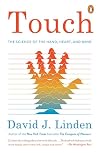
Никогда не задумывались, почему ваши многочисленные внутренние органы никогда не чешутся, но при этом могут болеть, а глаза не боятся самого лютого мороза, от которого все остальное обмораживается? Да, скромное чувство осязания, о котором мы практически не задумываемся show more (кроме редких случаев вроде 12-часовых перелетов в эконом-классе, когда выясняется, что пятая точка может болеть), оказывается, куда более богато нюансами и загадками, чем мы осознаем.
Как живут люди, нечувствительные к боли из-за мутации гена? Удивитесь, но не сильно лучше тех, у кого другая мутация там же вызывает непрекращающуюся боль (сейчас и тем, и другим научились помогать). Пощекотать себя можно лишь с повреждениями мозжечка, хотя это получается и у некоторых шизофреников, а за ощущение влажности предметов и вообще информацию о касаниях и контактах отвечает остроумная комбинация различных по функционалу клеток. А когда дети лягут спать, можно почитать о том, можно ли читать Брайль не только пальцами, но и другими чувствительными местами. show less
Как живут люди, нечувствительные к боли из-за мутации гена? Удивитесь, но не сильно лучше тех, у кого другая мутация там же вызывает непрекращающуюся боль (сейчас и тем, и другим научились помогать). Пощекотать себя можно лишь с повреждениями мозжечка, хотя это получается и у некоторых шизофреников, а за ощущение влажности предметов и вообще информацию о касаниях и контактах отвечает остроумная комбинация различных по функционалу клеток. А когда дети лягут спать, можно почитать о том, можно ли читать Брайль не только пальцами, но и другими чувствительными местами. show less
This has the subtitle The Science of the Sense that Makes Us Human, but nowhere in it will you find an explanation as to why touch apparently makes us any more human than, say, salmon.
Nevertheless, Touch has all you ever wanted to know about how we (humans) feel. This ranges from the physics of how it works to situations when there’s nothing more involved than our mental assumptions. This is an engaging read for the most part, and there’s lots here that I’ll remember.
I’ll not forget show more the story of M. the woman who lost feeling in her forehead but developed an itch there so bad that she literally scratched through her skull into her brain. I’ll not forget the cutaneous rabbit. I’ll not forget how horrific Onchocersiasis is, (although I might forget how to say it) and I’ll not forget that no other species has five-year-old offspring that cannot survive independently. Even salmon.
However, I’ve already forgotten what TNF alpha signalling is, exactly what temperatures TRPV1 and TRPM8 are associated with and what the anterior cingulate cortex does.
But it doesn’t matter. There’s an awful lot of interesting stuff here so that, if the technical explanations get the better of you, you can just gloss over that page or so and you’ll find yourself in something far more fascinating. Linden writes pretty well and keeps things bouncing along.
However, while I don’t object to the use of footnotes, he can’t seem to make up his mind what they’re for. Because of that, you have to turn to every single one of them to see whether it’s a simple reference to an experiment or an entire page of information about what you’ve just read. And as his 210 pages have no fewer than 247 footnotes, this gets, shall we say, on one’s nerves.
I think it’s safe to say that you can probably skip over them completely or, if that makes you feel guilty, gloss over them at the end of each chapter. You’ll not miss out a huge amount by omitting them. This is an interesting book which, probably due to the large number of popular science books out there, will hardly make any impression in the annals of popular science literature. It’s worth a read though if you feel inclined. show less
Nevertheless, Touch has all you ever wanted to know about how we (humans) feel. This ranges from the physics of how it works to situations when there’s nothing more involved than our mental assumptions. This is an engaging read for the most part, and there’s lots here that I’ll remember.
I’ll not forget show more the story of M. the woman who lost feeling in her forehead but developed an itch there so bad that she literally scratched through her skull into her brain. I’ll not forget the cutaneous rabbit. I’ll not forget how horrific Onchocersiasis is, (although I might forget how to say it) and I’ll not forget that no other species has five-year-old offspring that cannot survive independently. Even salmon.
However, I’ve already forgotten what TNF alpha signalling is, exactly what temperatures TRPV1 and TRPM8 are associated with and what the anterior cingulate cortex does.
But it doesn’t matter. There’s an awful lot of interesting stuff here so that, if the technical explanations get the better of you, you can just gloss over that page or so and you’ll find yourself in something far more fascinating. Linden writes pretty well and keeps things bouncing along.
However, while I don’t object to the use of footnotes, he can’t seem to make up his mind what they’re for. Because of that, you have to turn to every single one of them to see whether it’s a simple reference to an experiment or an entire page of information about what you’ve just read. And as his 210 pages have no fewer than 247 footnotes, this gets, shall we say, on one’s nerves.
I think it’s safe to say that you can probably skip over them completely or, if that makes you feel guilty, gloss over them at the end of each chapter. You’ll not miss out a huge amount by omitting them. This is an interesting book which, probably due to the large number of popular science books out there, will hardly make any impression in the annals of popular science literature. It’s worth a read though if you feel inclined. show less
The Compass of Pleasure: How Our Brains Make Fatty Foods, Orgasm, Exercise, Marijuana, Generosity, Vodka, Learning, and Gambling Feel So Good by David J. Linden
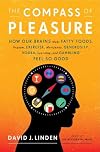
I should have been a neuroscientist. I love this stuff so much! Linden does a great job here of explaining without either oversimplifying or obfuscating. I learned a lot about the pleasure circuitry of the brain. Perhaps my favorite bit was near the end, where Linden takes on Kurzweil's singularity as it relates to the brain. I wish there was more on exercise, of course, but it's not Linden's fault that the measuring is so damnably fuzzy that it's difficult to come up with data. This book show more made my dopamine levels fluctuate madly. I recommend it. show less
Awards


You May Also Like


Associated Authors
Statistics
- Works
- 8
- Members
- 856
- Popularity
- #29,895
- Rating
- 3.6
- Reviews
- 25
- ISBNs
- 44
- Languages
- 6
- Favorited
- 1