
Claire Rudolf Murphy
Author of Marching with Aunt Susan: Susan B. Anthony and the Fight for Women's Suffrage
About the Author
Writer Claire Rudolph Murphy uses her firsthand knowledge of Alaska to create interesting and educational stories including The Prince and the Salmon People, A Child's Alaska, and Gold Rush Women. (Bowker Author Biography)
Works by Claire Rudolf Murphy
Marching with Aunt Susan: Susan B. Anthony and the Fight for Women's Suffrage (2011) — Author — 167 copies, 18 reviews
My Country, 'Tis of Thee: How One Song Reveals the History of Civil Rights (2014) 96 copies, 7 reviews
Daughters of the Desert: Stories of Remarkable Women from Christian, Jewish and Muslim Traditions (2003) 94 copies, 1 review
Children of Alcatraz 1 copy
Gold Rush Dogs 1 copy
Tagged
Common Knowledge
- Gender
- female
- Education
- Santa Clara University (BA|history)
University of California, Berkeley (teaching credential)
MFA (creative writing) - Occupations
- teacher
- Nationality
- USA
- Places of residence
- Alaska, USA
Spokane, Washington, USA - Associated Place (for map)
- USA
Members
Reviews
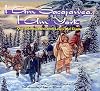
Telling the story of Lewis and Clark's expedition from the point of view of Sacajawea and York, Clark's slave, this version of events keeps it way real. Sacajawea and Clark are controlled by white men who need them and yet do not consider them equals. Sacajawea and York grumble, they commiserate, they acknowledge each other's talents, and they do what they have to do to survive. This book shows that some of the greatest achievements in U.S. history were built on the backs of slaves and the show more oppressed. The Lewis and Clark Expedition is not something Sacajawea and York chose to do, but they did make it possible. Maps, an afterword, a pronunciation guide and recommended additional sources enhance the reading experience. show less
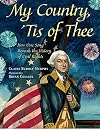
This book follows the history of the song “America” and how the lyrics evolved over the years to reflect the political exigencies of the day. Because it is such a well known tune, and because it is such an iconic statement of about the ideals of America, generations of protestors have changed the words as part of their struggles for rights.
The author explains that the song first appeared in England in the 1740s as “God Save the King.” She then takes the song across the Atlantic where show more the colonists sang it, altering the words when they declared independence.
In 1831, Samuel Francis Smith published the version we sing today that begins with “My country, ’tis of thee, Sweet land of liberty, of thee I sing.” But women, blacks, Native Americans, and labor activists later issued adaptations of the song to reflect their lack of liberty.
In each instance, the author explains the context and supplies some of the new verses.
She continues her journey through American history, culminating with the stirring speech of Martin Luther King, Jr. in 1963 when he spoke of his dream of transforming the nation into one of brotherhood, declaring:
And this will be the day -- this will be the day when all of God's children will be able to sing with new meaning: My country 'tis of thee, sweet land of liberty, of thee I sing…."
She concludes by noting that forty-five years after Martin Luther King, Jr.’s plea, the first person of color was elected to be President of the United States, and Aretha Franklin sang “America” at the inauguration.
But she doesn’t suggest the struggle for equal rights has ended. She writes:
"Now it’s your turn. Write a new verse for a cause you believe in. Help freedom ring.”
At the end of the book, the author provides source notes, a bibliography, links to further resources, and sheet music for the song as we know it today.
Multiple award-winning illustrator Bryan Collier uses dramatic two-page mixtures of watercolors and collage. As always, he doesn’t just illustrate the text; his imagery adds his own commentary, enhancing the text with additional meaning.
Evaluation: This is an excellent way to teach children American history from a unique perspective, in two senses: one is that it provides an encapsulation of American history from the viewpoint of minorities, and two, it uses a clever and interesting approach with its focus on the changing lyrics of one song. show less
The author explains that the song first appeared in England in the 1740s as “God Save the King.” She then takes the song across the Atlantic where show more the colonists sang it, altering the words when they declared independence.
In 1831, Samuel Francis Smith published the version we sing today that begins with “My country, ’tis of thee, Sweet land of liberty, of thee I sing.” But women, blacks, Native Americans, and labor activists later issued adaptations of the song to reflect their lack of liberty.
In each instance, the author explains the context and supplies some of the new verses.
She continues her journey through American history, culminating with the stirring speech of Martin Luther King, Jr. in 1963 when he spoke of his dream of transforming the nation into one of brotherhood, declaring:
And this will be the day -- this will be the day when all of God's children will be able to sing with new meaning: My country 'tis of thee, sweet land of liberty, of thee I sing…."
She concludes by noting that forty-five years after Martin Luther King, Jr.’s plea, the first person of color was elected to be President of the United States, and Aretha Franklin sang “America” at the inauguration.
But she doesn’t suggest the struggle for equal rights has ended. She writes:
"Now it’s your turn. Write a new verse for a cause you believe in. Help freedom ring.”
At the end of the book, the author provides source notes, a bibliography, links to further resources, and sheet music for the song as we know it today.
Multiple award-winning illustrator Bryan Collier uses dramatic two-page mixtures of watercolors and collage. As always, he doesn’t just illustrate the text; his imagery adds his own commentary, enhancing the text with additional meaning.
Evaluation: This is an excellent way to teach children American history from a unique perspective, in two senses: one is that it provides an encapsulation of American history from the viewpoint of minorities, and two, it uses a clever and interesting approach with its focus on the changing lyrics of one song. show less
First Line: Legions of treasure seekers during the Alaska-Yukon gold rush era depended on the loyalty and hard work of their dogs.
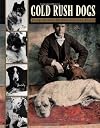
Murphy and Haigh set out to tell us about the most famous dogs during the gold rush era, and they do an admirable job. This book is filled with photographs of the day: the dogs, their owners, and the places where they lived and worked. Those pictures do a lot to place the reader right in the thick of things.
Of the nine dogs written about in this book, I was show more familiar with three, having already read a book about the sled dogs responsible for getting vaccine to Nome, Alaska, in the winter of 1925. Dogs did more than pull sleds however. One accompanied naturalist John Muir in his treks over glaciers. Another met all incoming ships at the piers in Juneau. My favorite was Nero, the companion of the richest woman in the Klondike, Belinda Mulrooney. Mulrooney would load Nero with heavy sacks of gold dust to take on an 18-mile walk to the bank. On one such journey, Nero slipped while crossing a deep stream. The weight of the gold dust kept him from saving himself. I'd tell you what happened next, but why ruin the best chapter in a very good book?
This is a marvelous book for any dog lover. It is filled to the brim with interesting stories, history and photos. There is much to be learned in its pages. The only quibble I have with Gold Rush Dogs is its layout. Interspersed amongst the stories of the dogs are other snippets of history. Although related to the information of the chapter they're in, more than once these side stories interrupt the flow of the story of the dog. I found it more than a bit irritating and thought that there should have been a better way of including these extras. That one complaint aside, I enjoyed this book and found it to be a fitting companion to a previous book by the authors: Gold Rush Women. show less
Murphy and Haigh set out to tell us about the most famous dogs during the gold rush era, and they do an admirable job. This book is filled with photographs of the day: the dogs, their owners, and the places where they lived and worked. Those pictures do a lot to place the reader right in the thick of things.
Of the nine dogs written about in this book, I was show more familiar with three, having already read a book about the sled dogs responsible for getting vaccine to Nome, Alaska, in the winter of 1925. Dogs did more than pull sleds however. One accompanied naturalist John Muir in his treks over glaciers. Another met all incoming ships at the piers in Juneau. My favorite was Nero, the companion of the richest woman in the Klondike, Belinda Mulrooney. Mulrooney would load Nero with heavy sacks of gold dust to take on an 18-mile walk to the bank. On one such journey, Nero slipped while crossing a deep stream. The weight of the gold dust kept him from saving himself. I'd tell you what happened next, but why ruin the best chapter in a very good book?
This is a marvelous book for any dog lover. It is filled to the brim with interesting stories, history and photos. There is much to be learned in its pages. The only quibble I have with Gold Rush Dogs is its layout. Interspersed amongst the stories of the dogs are other snippets of history. Although related to the information of the chapter they're in, more than once these side stories interrupt the flow of the story of the dog. I found it more than a bit irritating and thought that there should have been a better way of including these extras. That one complaint aside, I enjoyed this book and found it to be a fitting companion to a previous book by the authors: Gold Rush Women. show less
Marching with Aunt Susan: Susan B. Anthony and the Fight for Women's Suffrage by Claire Rudolf Murphy
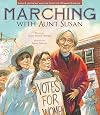
Bessie is frustrated when she isn't allowed to go hiking with her father and brother, only because she's a girl. She's stuck staying at home with her mother, but little did she know, the suffrage tea she attended that day would change her life! Upon meeting Susan B. Anthony and hearing about the fight for equal rights, Bessie is inspired to join her mom, her aunt, and Anthony to help fight. She gets her friend to join her helping at the suffrage headquarters. When Bessie sees the countless show more girls working in a factory, unable to attend school due to poverty, she is rattled by their willingness to give a donation. Bessie paints banners, marches at rallies, fold pamphlets, and everything else she can do. Some men are rude, some even throw eggs at her, but thankfully, her father is supportive of her ventures. They find out that the women lost the vote, her mom asks Bessie to teach her to ride a bike, saying that riding a bike gives women freedom and relating never giving up when learning to ride to fighting for suffrage. Bessie is still upset, but her father even offers to take her hiking with her brothers and to come with her and her mom to the next suffrage campaign.
I tagged this book as K-gr. 3, but it would definitely be geared for second grade and up with support. There are difficult concepts (such as sexism) and a lot of historical background knowledge (such as the suffrage movement and Susan B. Anthony that kids would most likely need help understanding. I liked that the author chose to write the book about a real ten-year-old girl who was inspired by Anthony to take action, showing students that we can all make a difference. This book was inspiring, and I liked how they showcased the inherent sexism of the time period by little comments such as saying girls aren't strong enough to hike and that the father counts every penny for her friend's household. show less
I tagged this book as K-gr. 3, but it would definitely be geared for second grade and up with support. There are difficult concepts (such as sexism) and a lot of historical background knowledge (such as the suffrage movement and Susan B. Anthony that kids would most likely need help understanding. I liked that the author chose to write the book about a real ten-year-old girl who was inspired by Anthony to take action, showing students that we can all make a difference. This book was inspiring, and I liked how they showcased the inherent sexism of the time period by little comments such as saying girls aren't strong enough to hike and that the father counts every penny for her friend's household. show less
Awards


You May Also Like


Associated Authors
Statistics
- Works
- 20
- Members
- 1,009
- Popularity
- #25,560
- Rating
- 4.1
- Reviews
- 38
- ISBNs
- 51