
Ari Berk
Author of Nightsong
About the Author
Image credit: via Simon & Schuster
Series
Works by Ari Berk
Divovi - Tajna povijest 1 copy
Associated Works
Tagged
Common Knowledge
- Birthdate
- 1967-03-07
- Gender
- male
- Education
- Ph.D., University of Arizona, 1998
M.A., University of Arizona, 1994
Post Graduate Research, Oxford University, 1993
B.A., Humboldt State University, 1991 - Places of residence
- Michigan, USA
- Associated Place (for map)
- Michigan, USA
Members
Discussions
3 YA fantasy/sci fi books in Name that Book (September 2013)
Reviews
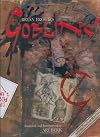
Using a camera illegally borrowed from the basement of the Cottington Archive, Brian Froud did something remarkable. He slightly altered the valuable artefact for the purposes of photographing dairymaids in a dimly lit barn. When no dairymaids were available he took a photo regardless and inadvertently captured a blurry and obscure image. With his second photo he discovered that this indecipherable image was in reality a goblin.
Here enters Ari Berk and the Codex Goblinensis, an ancient show more goblin text part historical document, part phone book, part fish sandwich. With this codex and the goblin Gargle, whom these two noble and inquisitive fools have trapped in the downstairs toilet, the study and analysis of these irksome and troublemaking creatures and their disgusting and chaotic kingdom has now been made possible. However there will be consequences for this terrible knowledge.
Goblins! A nonsensical and inconsequential study into the Goblin World, containing photographs taken by Brian Froud, sketches drawn in a frenzied haste, and notes put together by Ari Berk from the Goblin Codex itself. Beware, letting these pesky little creatures into your home will only bring you trouble. A quirky and dangerous book that will either have you laughing at these creatures eccentric antics or curled up in fear at their terrorising ways. show less
Here enters Ari Berk and the Codex Goblinensis, an ancient show more goblin text part historical document, part phone book, part fish sandwich. With this codex and the goblin Gargle, whom these two noble and inquisitive fools have trapped in the downstairs toilet, the study and analysis of these irksome and troublemaking creatures and their disgusting and chaotic kingdom has now been made possible. However there will be consequences for this terrible knowledge.
Goblins! A nonsensical and inconsequential study into the Goblin World, containing photographs taken by Brian Froud, sketches drawn in a frenzied haste, and notes put together by Ari Berk from the Goblin Codex itself. Beware, letting these pesky little creatures into your home will only bring you trouble. A quirky and dangerous book that will either have you laughing at these creatures eccentric antics or curled up in fear at their terrorising ways. show less
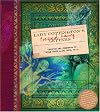
All of Brian Froud's books are filled with whimsical magic, and Lady Cottington's collection of letters (displayed alongside another selection of her trademark faeries) is not exception. The faeries, even in their squished forms, display lovely artistic techniques, as Froud is a master of the watercolour medium and the human (fey) form which brings each subject to life. Well, maybe not life, but you know what I mean. Ostensibly the book is not meant to be another collection of faeries, and show more is meant to be a book of letters collected for the writer's sister as she searches for a way to contact her ghost, btut in true Cottington fashion the faeries refuse to leaver her alone and must therefore be squashed! This plotline, as such, is not very successful in terms of providing a real narrative, but the letters themselves are still a great read. Lady Cottington corresponds with the who's who in Victorian (and occasionally earlier) folklore and fantasists, from William Shakespeare to J.M. Barrie, so it was great fun imaging the friendship amongst this fictional group. Each letter is carefully crafted in terms of content to showcase the unique personalities' voice and opinions on the subject of faeries, and Froud's innovative design work integrates the letters into the illustrated pages with style. I definitely wish that they had made this book longer or written a sequel, because we're barely given a taste of what could have been a far more developed narrative. But, like many historical archives, there are pieces of the story missing, so instead maybe we should use this as an opportunity to continue the story on our own! show less
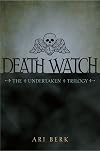
Ari Berk's Death Watch is, without doubt, one of the most beautifully-written books I've had the pleasure of reading. His prose is lyrical, gothic, and drenched with meaning. The discussions of life, death, and family are thought-provoking and touching. For the prose alone, this book is a hundred percent worth reading. Berk has massive talent and, though I can't say this series, is perfect for me, I will be keeping an eye on his career.
The catalyst of Death Watch is the disappearance of Amos show more Umber, Silas' father. Silas and his mother are turned out of their home, for it belongs to his Uncle. With little recourse available to them, they agree to move back to Lichport, the hometown of both his parents and his own birthplace, to live with his Uncle. There, he must confront his father's disappearance and his destiny, and try to help Lichport in the process.
The world depicted in Death Watch feels both real and fantastical, modern and historical. Lichport feels like a place out of time, a town where the realm of the dead is closer than anywhere else. Ghosts roam the streets, inhabit houses, and attempt murders. Berk captures the eerieness perfectly, but also the magic. Ghosts are like people; they aren't all bad, and they come in all sorts of forms. In fact, some ghosts are even corporeal, lingering almost like zombies, simply unwilling to accept that they're dead. The world building is fantastic and rich, full of ghost lore. The family dynamics are like Lemony Snicket meets Hamlet, which basically means it's dark and messed up, but a bit fanciful. Actually, much of the story recalls Shakespeare or classic literature.
Where Death Watch came up short for me was in plotting and characterization. So far as the plot goes, I would have liked more of it. Death Watch is hefty at over 500 pages, and it felt long too. There's a lot of meandering to the plot, and, despite that, I felt like most of the actual plot elements were dealt with so swiftly as to be unsatisfying. Berk focuses more on the quiet reflection than on the active moments, like Silas having to separate from his ghostly girlfriend and the takedown of the villain.
Though I like Silas, I don't feel any strong emotions towards him, and I can't be bothered about anyone else in Death Watch. I felt a definite distance from him that never diminished. He also never really does much growing through the course of the book, and certainly the others don't. His troubled relationship with his mother is never really resolved or satisfactorily confronted. His brief courtship of the ghostly girl is told in such a way that it elicited no feels from me, though it is a tragic experience for him. He's a character I feel I should have liked, but the story focuses so much more on the writing and world building than on building up characters. Also, on a side note, this novel really doesn't strike me as young adult and, if anything, would fall more under the new adult umbrella, as Silas is over 18 and deals with issues of becoming an adult, like finding a profession and moving out of his parents' home.
Anyone who enjoys ghost stories or gothic literature will be doing themselves a disservice by not reading Death Watch. show less
The catalyst of Death Watch is the disappearance of Amos show more Umber, Silas' father. Silas and his mother are turned out of their home, for it belongs to his Uncle. With little recourse available to them, they agree to move back to Lichport, the hometown of both his parents and his own birthplace, to live with his Uncle. There, he must confront his father's disappearance and his destiny, and try to help Lichport in the process.
The world depicted in Death Watch feels both real and fantastical, modern and historical. Lichport feels like a place out of time, a town where the realm of the dead is closer than anywhere else. Ghosts roam the streets, inhabit houses, and attempt murders. Berk captures the eerieness perfectly, but also the magic. Ghosts are like people; they aren't all bad, and they come in all sorts of forms. In fact, some ghosts are even corporeal, lingering almost like zombies, simply unwilling to accept that they're dead. The world building is fantastic and rich, full of ghost lore. The family dynamics are like Lemony Snicket meets Hamlet, which basically means it's dark and messed up, but a bit fanciful. Actually, much of the story recalls Shakespeare or classic literature.
Where Death Watch came up short for me was in plotting and characterization. So far as the plot goes, I would have liked more of it. Death Watch is hefty at over 500 pages, and it felt long too. There's a lot of meandering to the plot, and, despite that, I felt like most of the actual plot elements were dealt with so swiftly as to be unsatisfying. Berk focuses more on the quiet reflection than on the active moments, like Silas having to separate from his ghostly girlfriend and the takedown of the villain.
Though I like Silas, I don't feel any strong emotions towards him, and I can't be bothered about anyone else in Death Watch. I felt a definite distance from him that never diminished. He also never really does much growing through the course of the book, and certainly the others don't. His troubled relationship with his mother is never really resolved or satisfactorily confronted. His brief courtship of the ghostly girl is told in such a way that it elicited no feels from me, though it is a tragic experience for him. He's a character I feel I should have liked, but the story focuses so much more on the writing and world building than on building up characters. Also, on a side note, this novel really doesn't strike me as young adult and, if anything, would fall more under the new adult umbrella, as Silas is over 18 and deals with issues of becoming an adult, like finding a profession and moving out of his parents' home.
Anyone who enjoys ghost stories or gothic literature will be doing themselves a disservice by not reading Death Watch. show less
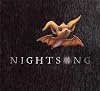
A beautifully written story about a young bat who flies alone for the first time to catch some dinner. At first he is scared and his mother tells him to use his voice and sing to the world to tell him where to go. When he flies out he begins to sing and everything he sees turns to light. He makes it to the pond for dinner and then wonders what is beyond the pond. He grows confident in his singing and takes off to explore until the sun starts to come up and he is reminded of his mom and home. show more I loved the illustrations and the use of "song" to light the way. The pictures were gorgeous additions to a well written story. My favorite quote from the story was "Sense is the song you sing out into the world, and the song the world sings back to you.Sing, and the world will answer. That is how you'll see." I feel that sense can be like this for all animals and overall the book was very touching. show less
Awards


You May Also Like


Associated Authors
Statistics
- Works
- 20
- Also by
- 3
- Members
- 2,478
- Popularity
- #10,350
- Rating
- 4.2
- Reviews
- 52
- ISBNs
- 68
- Languages
- 9
- Favorited
- 2