
Courtney Angela Brkic
Author of The First Rule of Swimming
About the Author
Works by Courtney Angela Brkic
Associated Works
Tagged
Common Knowledge
- Birthdate
- 1972-07-27
- Gender
- female
- Awards and honors
- Whiting Writers' Award (2003)
Members
Reviews
The First Rule of Swimming is one of those quiet novels in which there is not much in the way of action; yet, the story never ceases to captivate. The story moves back and forth between Jadranka and Magdalena, with the occasional side excursion into the minds of a few other family members, as they reminisce on their past that brought them to their current point. There is love and loss, betrayal, jealousy, longing, and every other emotion that humans feel built within that past, and it is in show more how they adjust to and accept it all that gives these characters vibrancy and depth. The fact that their memories include living through a war about which most Americans know very little only adds to the story’s appeal.
What I find the most interesting about The First Rule of Swimming is that while we get to know Magdalena and Jadranka intimately, they still serve as symbols for an entire generation that grew up in a Communist country during the tumultuous Cold War and post-Communist years. Very few Westerners will be able to understand the upheaval such regime changes caused on not just the socio-economic aspect of society. The psychological ramifications of such an existence appear slight when viewed from the relative safety of a democratic, modernized society that never had to deal such changes. Yet, through the two sisters and their extended family and their status as representatives of everyone who grew up in that era and in similar conditions, Westerners get an inside glimmer of such hardships, mental and physical.
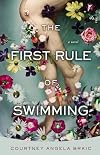
The lasting impression one has upon finishing The First Rule of Swimming is one of serenity, not only for its cover but also for the message that resides within its pages. There is a rhythm to the story that reminds you that every family has their ups and downs, just as every family has certain skeletons they would like to remain hidden or bad eggs they would like to forget. Yet, family matters most in any situation, whether it is the family into which you are born or the family you make with others. After the hardships, betrayals, and loss, one finds comfort in the constancy of such a lesson.
The First Rule of Swimming is not the type of book you truly enjoy. It is beautiful in a tragic sense. It opens your eyes to another culture, another lifestyle. For a chance to learn a bit more about war-torn Croatia, I am glad I read it, and it is the type of story that will stay with me, if anything because of its gorgeous cover and simple message hinted at in the title. Yet, for all its simplicity, I do not believe it is not a novel for the masses. It is a bit too subtle and too quiet; I fear most people would find the story rather boring and somewhat predictable. Yet, for those who take the time to savor and reflect, The First Rule of Swimming can be a rewarding experience. show less
What I find the most interesting about The First Rule of Swimming is that while we get to know Magdalena and Jadranka intimately, they still serve as symbols for an entire generation that grew up in a Communist country during the tumultuous Cold War and post-Communist years. Very few Westerners will be able to understand the upheaval such regime changes caused on not just the socio-economic aspect of society. The psychological ramifications of such an existence appear slight when viewed from the relative safety of a democratic, modernized society that never had to deal such changes. Yet, through the two sisters and their extended family and their status as representatives of everyone who grew up in that era and in similar conditions, Westerners get an inside glimmer of such hardships, mental and physical.
The lasting impression one has upon finishing The First Rule of Swimming is one of serenity, not only for its cover but also for the message that resides within its pages. There is a rhythm to the story that reminds you that every family has their ups and downs, just as every family has certain skeletons they would like to remain hidden or bad eggs they would like to forget. Yet, family matters most in any situation, whether it is the family into which you are born or the family you make with others. After the hardships, betrayals, and loss, one finds comfort in the constancy of such a lesson.
The First Rule of Swimming is not the type of book you truly enjoy. It is beautiful in a tragic sense. It opens your eyes to another culture, another lifestyle. For a chance to learn a bit more about war-torn Croatia, I am glad I read it, and it is the type of story that will stay with me, if anything because of its gorgeous cover and simple message hinted at in the title. Yet, for all its simplicity, I do not believe it is not a novel for the masses. It is a bit too subtle and too quiet; I fear most people would find the story rather boring and somewhat predictable. Yet, for those who take the time to savor and reflect, The First Rule of Swimming can be a rewarding experience. show less
"The first rule of swimming...is to stay afloat"
In this beautiful novel, Luka explained this, first to his son and daughter and then his granddaughters, as he teaches them to swim - an extremely important lesson when you live on an island but just as important as you make your way in life. The island is Rosmarina in Croatia, a country torn apart, first by a brutal Communist regime and, after the fall of Communism, by an equally brutal civil war. Luka's family has been effected by both, show more forcing them to live with secrets which are destroying them. Some have been forced to flee to the United States to avoid imprisonment; his daughter has moved to the mainland to escape her past; and now it is his granddaughters who are being forced to bear the burden.
Jadranka, the youngest, has always been a free spirit, artistic and beautiful. She often disappears for long periods of time but never before without telling her sister, Magdalena. But when she disappears in New York, Magdalena does what she once thought impossible, she leaves her beloved island to find her sister. As she searches for her sister, many of the old secrets start to unravel and much of what she thought she knew about her family has been wrong. If she is to stay afloat, she must be willing to follow the path she is on and accept the truth no matter where it takes her.
I will admit here, that my first reason for requesting this book on Netgalley was the cover -something this lovely just begs to be read. But, the more I read, the more engrossed I became in the lives and secrets of this family. This a beautiful and compelling tale of a family divided by secrets and by time and place. These are complex characters with motives which are not always apparent. Finally, though, it is not the end of Communism or the war or even the truth which will set the family free but the love that is still there beneath the surface. But perhaps the most intriguing character of all in this tale is not the family but the island - I don't know if it actually exists or it is an invention of the author. I suppose I could look it up on Google maps or any Atlas but some places like Rosmarina just belong in the imagination. show less
In this beautiful novel, Luka explained this, first to his son and daughter and then his granddaughters, as he teaches them to swim - an extremely important lesson when you live on an island but just as important as you make your way in life. The island is Rosmarina in Croatia, a country torn apart, first by a brutal Communist regime and, after the fall of Communism, by an equally brutal civil war. Luka's family has been effected by both, show more forcing them to live with secrets which are destroying them. Some have been forced to flee to the United States to avoid imprisonment; his daughter has moved to the mainland to escape her past; and now it is his granddaughters who are being forced to bear the burden.
Jadranka, the youngest, has always been a free spirit, artistic and beautiful. She often disappears for long periods of time but never before without telling her sister, Magdalena. But when she disappears in New York, Magdalena does what she once thought impossible, she leaves her beloved island to find her sister. As she searches for her sister, many of the old secrets start to unravel and much of what she thought she knew about her family has been wrong. If she is to stay afloat, she must be willing to follow the path she is on and accept the truth no matter where it takes her.
I will admit here, that my first reason for requesting this book on Netgalley was the cover -something this lovely just begs to be read. But, the more I read, the more engrossed I became in the lives and secrets of this family. This a beautiful and compelling tale of a family divided by secrets and by time and place. These are complex characters with motives which are not always apparent. Finally, though, it is not the end of Communism or the war or even the truth which will set the family free but the love that is still there beneath the surface. But perhaps the most intriguing character of all in this tale is not the family but the island - I don't know if it actually exists or it is an invention of the author. I suppose I could look it up on Google maps or any Atlas but some places like Rosmarina just belong in the imagination. show less
My Rating – 3 ¾ Stars
Magdalena has lived in the Croatian island of Rosamarina her whole life, except for one year as a child and when she went to university. Her father died when she was a child and her mother, left her with her grandparents on the island. She’s very quiet and reserved and has no desire to ever leave the island.
Her younger sister, Jadranka, has an easy smile and fiery red hair and flits from place to place. She eventually lands in America, acting as a babysitter for a show more cousin that immigrated to the states as a child. She’s a talented artist and her American cousin, Katarina has promised to show Jadranka’s art in her gallery. But Jadranka has disappeared. No note, no call, no nothing. Disappeared in the night without a trace after slashing a self-portrait to pieces.
Magdalena is worried. Jadranka has disappeared many times over the years but has always kept in contact with her sister. She packs her bags and heads to America to search for her sister, leaving her grandmother to deal with her dying grandfather.
The grandfather, Luka, has suffered a stroke and is lying in bed unable to speak or move but remembering the days of war and how his sister left the island with him to be a soldier. How his son had to run away to America because of government agents wanting to throw him in prison for being a radical. The things his daughter did that screwed up her life and what she did to try and protect her only brother.
As Magdalena searches for her sister, she unravels family secrets that have been kept from her since she was a child. Secrets that Jadranka may have discovered and that may have fueled her need to disappear.
The book was beautifully written. You can picture the fictional island of Rosmarina perfectly and the emotions of the characters are very real. The bond between the sisters is strong and you can feel the distress of Magdalena as she tries to locate her sister. The book starts out slow, building up to the secrets and flipping between past and present.
The book is a bit heavy. Ok, a lot heavy. It took me awhile to really get into it and even then I had a hard time. The story travels through time and point of view in a sentence and I found myself having to reread sections to understand whose view I was seeing from and what time period it was.
You don’t get to see from Jadranka’s point of view a lot and I felt like she was a bit of a selfish brat, disappearing without notice and making family worry and travel across the world to find her. I understand the shock of the secret she discovered but still, not cool dude.
Overall the book was good but the pacing was off and the change of time and POV without any kind of warning/notice was annoying. I recommend if you like heavy family oriented stories with dark secrets.
Read more reviews at Punk's House of Books show less
Magdalena has lived in the Croatian island of Rosamarina her whole life, except for one year as a child and when she went to university. Her father died when she was a child and her mother, left her with her grandparents on the island. She’s very quiet and reserved and has no desire to ever leave the island.
Her younger sister, Jadranka, has an easy smile and fiery red hair and flits from place to place. She eventually lands in America, acting as a babysitter for a show more cousin that immigrated to the states as a child. She’s a talented artist and her American cousin, Katarina has promised to show Jadranka’s art in her gallery. But Jadranka has disappeared. No note, no call, no nothing. Disappeared in the night without a trace after slashing a self-portrait to pieces.
Magdalena is worried. Jadranka has disappeared many times over the years but has always kept in contact with her sister. She packs her bags and heads to America to search for her sister, leaving her grandmother to deal with her dying grandfather.
The grandfather, Luka, has suffered a stroke and is lying in bed unable to speak or move but remembering the days of war and how his sister left the island with him to be a soldier. How his son had to run away to America because of government agents wanting to throw him in prison for being a radical. The things his daughter did that screwed up her life and what she did to try and protect her only brother.
As Magdalena searches for her sister, she unravels family secrets that have been kept from her since she was a child. Secrets that Jadranka may have discovered and that may have fueled her need to disappear.
The book was beautifully written. You can picture the fictional island of Rosmarina perfectly and the emotions of the characters are very real. The bond between the sisters is strong and you can feel the distress of Magdalena as she tries to locate her sister. The book starts out slow, building up to the secrets and flipping between past and present.
The book is a bit heavy. Ok, a lot heavy. It took me awhile to really get into it and even then I had a hard time. The story travels through time and point of view in a sentence and I found myself having to reread sections to understand whose view I was seeing from and what time period it was.
You don’t get to see from Jadranka’s point of view a lot and I felt like she was a bit of a selfish brat, disappearing without notice and making family worry and travel across the world to find her. I understand the shock of the secret she discovered but still, not cool dude.
Overall the book was good but the pacing was off and the change of time and POV without any kind of warning/notice was annoying. I recommend if you like heavy family oriented stories with dark secrets.
Read more reviews at Punk's House of Books show less
Summary: Sisters Magdalena and Jadranka were raised by their grandparents on the small Croatian island of Rosmarina. Many people have left the island: their uncle Marin, along with the last of their grandfather's siblings and her family fled to the US when Magdalena was very young, and their embittered mother lives on the mainland, refusing to return. Magdalena is content to stay on Rosmarina, even with its limited opportunities, but Jadranka has an artistic temprament, and goes to stay with show more their cousin Katarina in New York. When Magdalena receives word that her sister has disappeared, she knows something is wrong and goes to New York to search for her... but what she finds are family secrets that everyone had thought long since buried.
Review: This was one of those books that had lovely writing, and I could see how other people would be drawn to it, and there wasn't anything exactly wrong with it, but it totally failed to speak to me. I tried, but I could just not find any connection with this book. I enjoyed the prose, and thought Brkic did an excellent job bringing her setting, and the recent history of Croatia, to life. But I didn't develop an emotional attachment to any of the characters (except maybe Luka, the grandfather, who spends most of the book in a coma), I didn't find the deep dark family secrets all that surprising, and the wandering, non-linear storytelling kept me from getting really involved in what plot there was. I finished the book - which was not helped by a contrived ninth-inning twist that was totally out of keeping with the tone of the entire rest of the story - and wasn't sure what the point of it was, what Brkic was trying to say, what I was supposed to take away from my reading experience, or what the (admittedly lovely) cover had to do with anything. It wasn't a bad read; Brkic's prose is smooth and the book flows easily from one scene to the next. But I never found anything to grab me, and it ultimately didn't make much of an impression one way or the other. 3 out of 5 stars.
Recommendation: The subject matter reminded me somewhat of Middlesex, although the tone was more reminiscent of some of the other Oprah's Book Club-y contemporary fiction that I read a decade ago. Although I didn't particularly connect to this book, there's no reason it shouldn't appeal to people who like somewhat meditative contemporary fiction, particularly those who are drawn to books about sisters, or the immigrant experience, or recent Eastern European history. show less
Review: This was one of those books that had lovely writing, and I could see how other people would be drawn to it, and there wasn't anything exactly wrong with it, but it totally failed to speak to me. I tried, but I could just not find any connection with this book. I enjoyed the prose, and thought Brkic did an excellent job bringing her setting, and the recent history of Croatia, to life. But I didn't develop an emotional attachment to any of the characters (except maybe Luka, the grandfather, who spends most of the book in a coma), I didn't find the deep dark family secrets all that surprising, and the wandering, non-linear storytelling kept me from getting really involved in what plot there was. I finished the book - which was not helped by a contrived ninth-inning twist that was totally out of keeping with the tone of the entire rest of the story - and wasn't sure what the point of it was, what Brkic was trying to say, what I was supposed to take away from my reading experience, or what the (admittedly lovely) cover had to do with anything. It wasn't a bad read; Brkic's prose is smooth and the book flows easily from one scene to the next. But I never found anything to grab me, and it ultimately didn't make much of an impression one way or the other. 3 out of 5 stars.
Recommendation: The subject matter reminded me somewhat of Middlesex, although the tone was more reminiscent of some of the other Oprah's Book Club-y contemporary fiction that I read a decade ago. Although I didn't particularly connect to this book, there's no reason it shouldn't appeal to people who like somewhat meditative contemporary fiction, particularly those who are drawn to books about sisters, or the immigrant experience, or recent Eastern European history. show less
You May Also Like


Associated Authors
Statistics
- Works
- 4
- Also by
- 1
- Members
- 245
- Popularity
- #92,909
- Rating
- 4.0
- Reviews
- 21
- ISBNs
- 13