
Jen Calonita
Author of Conceal, Don't Feel
About the Author
Series
Works by Jen Calonita
Associated Works
Tagged
Common Knowledge
- Birthdate
- 1973-12-14
- Gender
- female
- Occupations
- senior entertainment editor
journalist - Organizations
- Teen People
- Nationality
- USA
- Places of residence
- New York, New York, USA
Long Island, New York, USA - Associated Place (for map)
- New York, USA
Members
Reviews
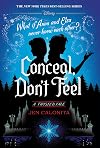
I was not sure how they could improve on the already fantastic and complete story of Frozen, but I would watch a whole movie based on this alternate reality! I cannot wait to forget this book enough to reread! The concept of the girls being raised separately for their own safety invited a compelling twist, and I think gave Anna, frankly, a childhood with far more enrichment and companionship than the original movie did. I was sobbing the entire read! Fantastic retelling in my opinion!
What if Anna and Elsa never knew each other?
Answer: The same thing that happens in Frozen.
Why do I keep reading these Frozen books that are the same damn thing as the movie? Is it because it’s a perfect story as it is?
This feels like an unnecessary script doctoring somebody found in the Disney archives. Like some executive had a deadline so he gave it to his sister’s kid who just graduated film school and said “here, give me something I can bring to the board meeting on show more Thursday.”
Like other “Twisted Tales“, the plot hinges on a cruel spin. This time, the spell to remove Anna’s memories goes awry. Now, if Anna and Elsa are too close together, Anna will turn into ice, like in the ending. So Anna is sent to a different village.
Not a great difference, is it? Anna’s the same person–bubbly and social. Elsa’s still introverted and proper. And they both lived somewhat separated in the original movie.
Elsa still creates Olaf. She still meets the deceptive Hans. She still reveals her powers in a fit of emotion. She still builds an ice castle (there’s even a chapter that’s essentially “Let It Go” in prose form. Now that’s exciting stuff.) She’s still captured and taken to the dungeon. Anna still meets Kristoff who takes her to find Elsa (who she thinks is in trouble based on no evidence). She still goes to Oaken’s. She still has a chase with the wolves. She still rushes to save Elsa from Hans at the end and turns into a frozen statue that’s healed by love.
If you change one thing, you’ve got to change the entire story. It’s a butterfly effect. Anna may not have a different personality, but her goals should change. The plot should change. She shouldn’t be concerned about government machinations. It’d be like if I was Kamala Harris’s long lost brother, but didn’t know it, and I had to find her before Mitch McConnell took over. I have no investment in that scenario–I’m distant in both the physical sense and familiar sense. I’ve got my baked goods to worry about.
And if you’re going to make a twisted tale, then the point of the twisting should be to show us a completely different story, not the same. Straight on Till Morning and Part of Your World did that and it worked beautifully. The conclusion of the movie never took place, so the story is totally different and the characters evolve differently. Ariel is consumed with regret and Wendy becomes an action girl. If Anna and Elsa don’t know each other, why not have them meet at the beginning of the story? Then we can watch their relationship form while they have an adventure that has nothing to do with Prince Hans or Olaf or the Duke of Weselton.
But redoing the movie is lazy lazy lazy. It doesn’t give the reader what they want, which is an “alternate universe” Frozen. This is, beat for beat, the same story. Everything’s just in a different order. It’s a waste of your time. Don’t read this book. show less
Answer: The same thing that happens in Frozen.
Why do I keep reading these Frozen books that are the same damn thing as the movie? Is it because it’s a perfect story as it is?
This feels like an unnecessary script doctoring somebody found in the Disney archives. Like some executive had a deadline so he gave it to his sister’s kid who just graduated film school and said “here, give me something I can bring to the board meeting on show more Thursday.”
Like other “Twisted Tales“, the plot hinges on a cruel spin. This time, the spell to remove Anna’s memories goes awry. Now, if Anna and Elsa are too close together, Anna will turn into ice, like in the ending. So Anna is sent to a different village.
Not a great difference, is it? Anna’s the same person–bubbly and social. Elsa’s still introverted and proper. And they both lived somewhat separated in the original movie.
Elsa still creates Olaf. She still meets the deceptive Hans. She still reveals her powers in a fit of emotion. She still builds an ice castle (there’s even a chapter that’s essentially “Let It Go” in prose form. Now that’s exciting stuff.) She’s still captured and taken to the dungeon. Anna still meets Kristoff who takes her to find Elsa (who she thinks is in trouble based on no evidence). She still goes to Oaken’s. She still has a chase with the wolves. She still rushes to save Elsa from Hans at the end and turns into a frozen statue that’s healed by love.
If you change one thing, you’ve got to change the entire story. It’s a butterfly effect. Anna may not have a different personality, but her goals should change. The plot should change. She shouldn’t be concerned about government machinations. It’d be like if I was Kamala Harris’s long lost brother, but didn’t know it, and I had to find her before Mitch McConnell took over. I have no investment in that scenario–I’m distant in both the physical sense and familiar sense. I’ve got my baked goods to worry about.
And if you’re going to make a twisted tale, then the point of the twisting should be to show us a completely different story, not the same. Straight on Till Morning and Part of Your World did that and it worked beautifully. The conclusion of the movie never took place, so the story is totally different and the characters evolve differently. Ariel is consumed with regret and Wendy becomes an action girl. If Anna and Elsa don’t know each other, why not have them meet at the beginning of the story? Then we can watch their relationship form while they have an adventure that has nothing to do with Prince Hans or Olaf or the Duke of Weselton.
But redoing the movie is lazy lazy lazy. It doesn’t give the reader what they want, which is an “alternate universe” Frozen. This is, beat for beat, the same story. Everything’s just in a different order. It’s a waste of your time. Don’t read this book. show less
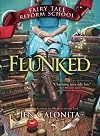
Twelve year old Gilly has made a career of robbing the royals to keep her large family fed, however, that comes to a crashing halt when Gilly’s nabbed for thievery and sentenced to a reform school staffed by infamous fairytale villains (Cinderella’s step-mother, Snow White’s evil queen, etc.), all of whom claim to be reformed themselves. But have they truly reformed?
This had a fun, creative concept, particularly in the wide array of students populating the school, in addition to an show more ordinary every day cobbler’s kid like Gilly, there are fairies, trolls, and even mermaids who sit in tanks at the back of class, making for an abundance of “visually” interesting details.
As much as I liked Gilly’s strength and intelligence, I liked Maxine, a bullied troll, and Kayla, a conflicted fairy, just a little more. There was something in Maxine and Kayla’s vulnerability and in the physical descriptions of their vulnerability that made them kind of adorable, even though in appearance Maxine allegedly isn’t traditionally adorable, and in her questionable actions, Kayla certainly has her moments where she shouldn’t be adorable, either, but it’s the power of a well-crafted dimensional character that I found things to adore in each of them.
Readers more into intrigue and action will undoubtedly enjoy the latter half of this book more than I did. Not that I found it bad, it’s just my sensibilities run more towards the emotional dynamics between Gilly and her family, Kayla grappling with her guilty conscience, and Maxine tentatively gaining friendships, so those were the areas of the book where it shone just a bit brighter for me. show less
This had a fun, creative concept, particularly in the wide array of students populating the school, in addition to an show more ordinary every day cobbler’s kid like Gilly, there are fairies, trolls, and even mermaids who sit in tanks at the back of class, making for an abundance of “visually” interesting details.
As much as I liked Gilly’s strength and intelligence, I liked Maxine, a bullied troll, and Kayla, a conflicted fairy, just a little more. There was something in Maxine and Kayla’s vulnerability and in the physical descriptions of their vulnerability that made them kind of adorable, even though in appearance Maxine allegedly isn’t traditionally adorable, and in her questionable actions, Kayla certainly has her moments where she shouldn’t be adorable, either, but it’s the power of a well-crafted dimensional character that I found things to adore in each of them.
Readers more into intrigue and action will undoubtedly enjoy the latter half of this book more than I did. Not that I found it bad, it’s just my sensibilities run more towards the emotional dynamics between Gilly and her family, Kayla grappling with her guilty conscience, and Maxine tentatively gaining friendships, so those were the areas of the book where it shone just a bit brighter for me. show less
This is a fun read packed with a little bit of snarkiness, a good dose of mischief, danger, secret agendas, attitude, magic, quirkiness and tons of references to popular fairy tales along the way. In other words, it a book with punch.
The main heroine, Gilly, is one of many siblings living in the shoe maker's shoe. Since Cinderella let the Fairy Godmother simply magic up all future glass slippers instead of ordering them from the shoe maker, Gilly's family is poor and barely making it by. show more Gilly loves her family and helps them the only way she can: she steals from the rich to buy food for her brothers and sisters. Gilly gets caught and ends up in reform school, where Cinderella's step-mother, in attempts to redeem herself, teaches potentially 'gone astray' kids how to become heroes and heroines.
Gilly is quite the character. She's a thief, she's got attitude and she has a mouth. She isn't evil—her heart is in the right place—but she's everything but sweet. But then, nobody at reform school is extremely lovable. These flawed characters are exactly what tweens will love. This borders right along the line between childish fun and teenage drama, causing an exciting and quirky mix. Plus, there's action. Tons of it.
With many of the 'evil' characters from fairy tales running this school, it's hard to know which ones are honestly trying to reform and which ones are acting. It makes it impossible to guess who the real bad guy is or where the danger is coming from, when the plot starts to thicken. Even Gilly's friends crowd the gray-zone, all bordering on becoming villains themselves.
Fans of fairy tales and magic battles will love this one, especially those ages 10 to 14. It's light on the emotional end, keeping focus on the fast paced plot, and holds many problems this age group will understand and identify with. show less
The main heroine, Gilly, is one of many siblings living in the shoe maker's shoe. Since Cinderella let the Fairy Godmother simply magic up all future glass slippers instead of ordering them from the shoe maker, Gilly's family is poor and barely making it by. show more Gilly loves her family and helps them the only way she can: she steals from the rich to buy food for her brothers and sisters. Gilly gets caught and ends up in reform school, where Cinderella's step-mother, in attempts to redeem herself, teaches potentially 'gone astray' kids how to become heroes and heroines.
Gilly is quite the character. She's a thief, she's got attitude and she has a mouth. She isn't evil—her heart is in the right place—but she's everything but sweet. But then, nobody at reform school is extremely lovable. These flawed characters are exactly what tweens will love. This borders right along the line between childish fun and teenage drama, causing an exciting and quirky mix. Plus, there's action. Tons of it.
With many of the 'evil' characters from fairy tales running this school, it's hard to know which ones are honestly trying to reform and which ones are acting. It makes it impossible to guess who the real bad guy is or where the danger is coming from, when the plot starts to thicken. Even Gilly's friends crowd the gray-zone, all bordering on becoming villains themselves.
Fans of fairy tales and magic battles will love this one, especially those ages 10 to 14. It's light on the emotional end, keeping focus on the fast paced plot, and holds many problems this age group will understand and identify with. show less
Lists
Awards


You May Also Like


Associated Authors
Statistics
- Works
- 62
- Also by
- 3
- Members
- 10,094
- Popularity
- #2,352
- Rating
- 3.7
- Reviews
- 193
- ISBNs
- 408
- Languages
- 6
- Favorited
- 2
