
Eve Kosofsky Sedgwick (1950–2009)
Author of Epistemology of the Closet
About the Author
Eve Kosofsky Sedgwick is Distinguished Professor of English at City University of New York Graduate Center
Image credit: David Shankbone
Series
Works by Eve Kosofsky Sedgwick
Performativity and Performance (Essays from the English Institute) (1995) — Editor; Introduction — 50 copies
Paranoidi lukutapa ja reparatiivinen lukutapa, eli olet niin paranoidi, että varmaan luulet tässä puhuttavan sinusta (2026) 1 copy
“Queer and Now” — Author — 1 copy
Genders - Art, Literature, Film, History - 1: "A Bit of Her Flesh", et al., Spring 1988 (1988) — Editor — 1 copy
Associated Works
Tales of Henry James [Norton Critical Edition] (1984) — Contributor, some editions — 259 copies, 2 reviews
The Columbia Reader on Lesbians & Gay Men in Media, Society, and Politics (1999) — Contributor — 86 copies
Tagged
Common Knowledge
- Canonical name
- Sedgwick, Eve Kosofsky
- Birthdate
- 1950-05-02
- Date of death
- 2009-04-12
- Gender
- female
- Education
- Cornell University (B.A.|1971)
Yale University (MA|Ph.D|1975) - Occupations
- poet
artist
literary critic
teacher - Organizations
- City University of New York Graduate Center
Duke University
Amherst College
Boston University
Hamilton College - Awards and honors
- Brudner Prize (2002)
American Philosophical Society (2006)
David R. Kessler Award (1998) - Relationships
- Kosofsky, Rita (parent)
Hertz, Neil (teacher; friend)
Sedgwick, Hal (spouse) - Cause of death
- breast cancer
- Nationality
- USA
- Birthplace
- Dayton, Ohio, USA
- Places of residence
- New York, New York, USA
- Place of death
- New York, New York, USA
- Associated Place (for map)
- New York, USA
Members
Reviews

A Buddhist reading of Proust's obsession with reincarnation, atmospheric disturbances, and the way he handles and textualizes refreshment and surprise; bringing Proust into dialogue with Cavafy's poetry to discuss the interplay between desire, pedagogy, and the act of writing; Sedgwick's assessment of queer theory today and an urge—knowing she was soon to die—for a reassessment of Hocquenghem's work; all of these pieces then hinge around the personal as revolutionary, making art as a show more means of leaving pieces of oneself behind, and how suffering, transcending, and becoming aware of one's limitations and one's own mortality all inform the act of reading and the theoretical scope of any given project. The last chapter, Sedgwick's personal reflections as her end grew nearer, is harrowing just as it is enlightening. The world has lost a pioneering and truly radical intellect. show less
This was a very good read, very insightful. It was a little bit academic and dense at times, especially during the literary analysis, which I admit I skimmed through.
Chapter 4 ("Paranoid Reading") was the standout chapter for me. Written in 2003, it reads as very prescient, ahead of it's time, as we are in the era of conspiracy theories, disinformation, paranoia is in the air, and speaking varied conspiracy theories has become acceptable in certain social circles and media, and is read as a show more certain type of wisdom, or at least not being taken for a fool.
"Paranoia has by now candidly become less a diagnosis than a prescription in a world where no one need be delusional to find evidence of systemic oppression, to theorize out of anything but a paranoid critical stance has come to seem naive, pious, or complaisant... itself. Simply put, paranoia tends to be contagious; more specifically, paranoia is drawn toward and tends to construct symmetrical relations, in particular, symmetrical epistemologies." (125-126). show less
Chapter 4 ("Paranoid Reading") was the standout chapter for me. Written in 2003, it reads as very prescient, ahead of it's time, as we are in the era of conspiracy theories, disinformation, paranoia is in the air, and speaking varied conspiracy theories has become acceptable in certain social circles and media, and is read as a show more certain type of wisdom, or at least not being taken for a fool.
"Paranoia has by now candidly become less a diagnosis than a prescription in a world where no one need be delusional to find evidence of systemic oppression, to theorize out of anything but a paranoid critical stance has come to seem naive, pious, or complaisant... itself. Simply put, paranoia tends to be contagious; more specifically, paranoia is drawn toward and tends to construct symmetrical relations, in particular, symmetrical epistemologies." (125-126). show less
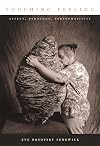
In Touching Feeling (2003), Eve Kosofsky Sedgwick moves away from a hermeneutics of suspicion or exposure toward an understanding of affect and pedagogy, drawing on the notion of beside instead of beneath or beyond (8). Some key ideas:
Drawing on Renu Bora, Sedgwick understands "texxture" (with two x's) as "the kind of texture that is dense with offered information about how, substantially, historically, materially, it came into being" (14).
She understands affect as different from drive show more because affect is less restricted in regards to time and aim, and can be attached to a multitude of things, "including other affects" (19).
Sedgwick approaches shame not by arguing against it, but by understanding it as both "deconstituting and foundational" to identity (36). Shame shouldn't be understood as something to be excised from identity or the self, as therapeutic approaches have offered, but rather seen as something integral to identity (62-63). In fact, shame becomes "simply the first, and remains a permanent, structuring fact of identity" for queer people (and may be more useful in understanding camp and identity politics) (64).
In her chapter "Paranoid Reading and Reparative Reading, or, You're So Paranoid, You Probably Think This Essay Is About You," Sedgwick argues that a hermeneutics of suspicion is limited because it doesn't quite answer "What does knowledge do," and what we can do with knowledge, it doesn't "unpack the local" (124), it is often tautological, proving the assumptions it began with (135). Instead, Sedgwick offers a reparative strategy, which "surrender[s:] the knowing, anxious paranoid determination that no horror, however apparently unthinkable, shall ever come to the reader as new" (146). show less
Drawing on Renu Bora, Sedgwick understands "texxture" (with two x's) as "the kind of texture that is dense with offered information about how, substantially, historically, materially, it came into being" (14).
She understands affect as different from drive show more because affect is less restricted in regards to time and aim, and can be attached to a multitude of things, "including other affects" (19).
Sedgwick approaches shame not by arguing against it, but by understanding it as both "deconstituting and foundational" to identity (36). Shame shouldn't be understood as something to be excised from identity or the self, as therapeutic approaches have offered, but rather seen as something integral to identity (62-63). In fact, shame becomes "simply the first, and remains a permanent, structuring fact of identity" for queer people (and may be more useful in understanding camp and identity politics) (64).
In her chapter "Paranoid Reading and Reparative Reading, or, You're So Paranoid, You Probably Think This Essay Is About You," Sedgwick argues that a hermeneutics of suspicion is limited because it doesn't quite answer "What does knowledge do," and what we can do with knowledge, it doesn't "unpack the local" (124), it is often tautological, proving the assumptions it began with (135). Instead, Sedgwick offers a reparative strategy, which "surrender[s:] the knowing, anxious paranoid determination that no horror, however apparently unthinkable, shall ever come to the reader as new" (146). show less

What I found most impressive in this work of literary criticism was the close readings of novels by Melville, Wilde, Proust, James, and Thackery. The considerations of cultural studies leaned a bit more into academic jargon than I could appreciate, but the book held my interest nonetheless.
Lists
Want to Read (1)
Awards


You May Also Like


Associated Authors
Statistics
- Works
- 17
- Also by
- 8
- Members
- 2,285
- Popularity
- #11,231
- Rating
- 4.1
- Reviews
- 14
- ISBNs
- 53
- Languages
- 5
- Favorited
- 8