
Lauren Berlant (1957–2021)
Author of Cruel Optimism
About the Author
Lauren Berlant is George M. Pullman Distinguished Service Professor at the University of Chicago, coauthor of The Hundreds, and author of Cruel Optimism, both also published by Duke University Press.
Image credit: Photo courtesy the University of Chicago Experts Exchange (link)
Works by Lauren Berlant
The Queen of America Goes to Washington City: Essays on Sex and Citizenship (1997) 167 copies, 1 review
The Female Complaint: The Unfinished Business of Sentimentality in American Culture (2008) 104 copies, 1 review
Compassion: The Culture and Politics of an Emotion (Essays from the English Institute) (2004) 31 copies
Our Monica, Ourselves: The Clinton Affair and the National Interest (Sexual Cultures) (2001) 23 copies
The Affect Theory Reader 1 copy
Associated Works
The Blithedale Romance [Norton Critical Edition, 2nd ed.] (2010) — Contributor — 62 copies, 2 reviews
Tagged
Common Knowledge
- Birthdate
- 1957-10-31
- Date of death
- 2021-06-28
- Gender
- female
- Education
- Oberlin College, BA English, 1979
Cornell University, MA English, 1983
Cornell University, Ph.D. English, 1985 - Occupations
- professor (English)
George M. Pullman Distinguished Service Professor, University of Chicago - Organizations
- University of Chicago
- Nationality
- USA
- Birthplace
- Philadelphia, Pennsylvania, USA
- Associated Place (for map)
- Pennsylvania, USA
Members
Reviews

Lauren Berlant characterizes the term “cruel optimism” in various ways, but the one that spoke most clearly to me is “a projection of sustaining but unworkable fantasy.”
The idea behind cruel optimism is a condition in which the happiness we’ve subscribed to as an ideal, when attained, isn’t happiness and yet we continue to subscribe to it. A circle of frustration that seals its own exits.
An early discussion by Berlant of the book Exchange Value struck me as very poignant in show more conveying this sense of happiness frustrated. Two kids who can only dream of wealth rob a presumably dead woman’s home and find a huge surprise — almost $1 million in cash, other investments, etc.— all hoarded away. They find a chance at the wealth they dream of.
But their dreams aren’t what they dreamed of. One spends his share but ends up with nothing of real value to show for it. And the other holds his wealth, like the hoarder herself, in an anxious clutch.
It’s not just that we chase the wrong things, like wealth, or that nothing, once attained, lives up to our wishes. The problem is the structure of “normal” life.
“Normal” life (the “predictable, maybe in Berlant’s terms) is a fluid interplay of events and meaning, where meaning happens in our affective lives and in more and less explicit interpretations of the events of our lives. When things are normal, there is a flow, no collapses or sudden, disorienting reconfigurations. We can count on the flow as the environment in which meaning can develop and thrive.
But what happens when “normal” itself becomes a flow of collapses and reconfigurations, when change and disruption is our constant environment, when the pace of life changes in such a way that the disturbances are disturbances of a very flow of disturbances?
Normal then becomes a constancy of crisis, where our affective lives and our ability to go on are in constant question and reconfigurations that themselves get interrupted by the need to reconfigure again before we’ve completed even a single reconfiguration.
“Normal” life assumes some stabilities — the pace of time and events, the consistency of meaning-making activities, some kind of containment of the community of meaning-making to a space of potential consensus. But now we find ourselves in a tight circle in which we are trying to develop in instability itself. But it cannot grow there — its conditions snatch away its possibility.
As Berlant says, “Even when you get what you want, you can’t have what you want.”
How did we get here? We embraced change and disruption, and we disvalued stability. The stability we in fact thought we had — maybe think the 1950s — was ill-grounded, in turning away from institutions and practices that we wanted hard enough to believe in that we ignored their failures.
All the stabilities that we count on have now played out their lives — economic, employment, career, marriage, maybe even education. None of these offer an environment in which to settle and develop something meaningful to a life. They change, shatter, transform, and we try to create meaning out of their instability itself.
And since the book was written, even the very stability of reality has played itself away in the proliferation of “realities” via social media and “news.”
If all of this sounds very abstract, it’s because it is. Berlant thinks in a world in which ideas and themes have agency and effect. History is exactly that play of ideas and themes, and we, as historical creatures, are constituted by it.
She builds the story by examining the arts — our meaning-making activities — novels, film, performance art, . . . They are our reflective lives, the places in which we would create meaning, and in which we do create meaning but in a broken flow.
The story also sounds very bleak, but I think it is bleak in the mainstream. It’s on the fringes that we can look ahead. Berlant does find, in her later discussions, a kind of turn against the normal. Even if we can’t defeat the normal, we can throw it back in its own face, a rejection of the normal and maybe a path forward into the not-normal. show less
The idea behind cruel optimism is a condition in which the happiness we’ve subscribed to as an ideal, when attained, isn’t happiness and yet we continue to subscribe to it. A circle of frustration that seals its own exits.
An early discussion by Berlant of the book Exchange Value struck me as very poignant in show more conveying this sense of happiness frustrated. Two kids who can only dream of wealth rob a presumably dead woman’s home and find a huge surprise — almost $1 million in cash, other investments, etc.— all hoarded away. They find a chance at the wealth they dream of.
But their dreams aren’t what they dreamed of. One spends his share but ends up with nothing of real value to show for it. And the other holds his wealth, like the hoarder herself, in an anxious clutch.
It’s not just that we chase the wrong things, like wealth, or that nothing, once attained, lives up to our wishes. The problem is the structure of “normal” life.
“Normal” life (the “predictable, maybe in Berlant’s terms) is a fluid interplay of events and meaning, where meaning happens in our affective lives and in more and less explicit interpretations of the events of our lives. When things are normal, there is a flow, no collapses or sudden, disorienting reconfigurations. We can count on the flow as the environment in which meaning can develop and thrive.
But what happens when “normal” itself becomes a flow of collapses and reconfigurations, when change and disruption is our constant environment, when the pace of life changes in such a way that the disturbances are disturbances of a very flow of disturbances?
Normal then becomes a constancy of crisis, where our affective lives and our ability to go on are in constant question and reconfigurations that themselves get interrupted by the need to reconfigure again before we’ve completed even a single reconfiguration.
“Normal” life assumes some stabilities — the pace of time and events, the consistency of meaning-making activities, some kind of containment of the community of meaning-making to a space of potential consensus. But now we find ourselves in a tight circle in which we are trying to develop in instability itself. But it cannot grow there — its conditions snatch away its possibility.
As Berlant says, “Even when you get what you want, you can’t have what you want.”
How did we get here? We embraced change and disruption, and we disvalued stability. The stability we in fact thought we had — maybe think the 1950s — was ill-grounded, in turning away from institutions and practices that we wanted hard enough to believe in that we ignored their failures.
All the stabilities that we count on have now played out their lives — economic, employment, career, marriage, maybe even education. None of these offer an environment in which to settle and develop something meaningful to a life. They change, shatter, transform, and we try to create meaning out of their instability itself.
And since the book was written, even the very stability of reality has played itself away in the proliferation of “realities” via social media and “news.”
If all of this sounds very abstract, it’s because it is. Berlant thinks in a world in which ideas and themes have agency and effect. History is exactly that play of ideas and themes, and we, as historical creatures, are constituted by it.
She builds the story by examining the arts — our meaning-making activities — novels, film, performance art, . . . They are our reflective lives, the places in which we would create meaning, and in which we do create meaning but in a broken flow.
The story also sounds very bleak, but I think it is bleak in the mainstream. It’s on the fringes that we can look ahead. Berlant does find, in her later discussions, a kind of turn against the normal. Even if we can’t defeat the normal, we can throw it back in its own face, a rejection of the normal and maybe a path forward into the not-normal. show less
Definitely thought-provoking, though some of the connections between chapters felt a little disparate? I really enjoyed chapter five, especially the thoughts related to slow death, but was less interested in other things? This just wasn't my greatest cup of tea, which is more about my feelings and less about the book itself. I liked it, I just wasn't thrilled and rarely felt like blown away. A good read nonetheless, and I recommend it to folks who want to engage with affect theory and see show more how it works/what it might be able to do for them. show less
The Queen of America Goes to Washington City: Essays on Sex and Citizenship (Series Q) by Lauren Berlant
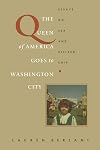
In The Queen of America Goes to Washington City (2007), Lauren Berlant explores the "privatization of U.S. citizenship", taking it for granted that "there is no public sphere in the contemporary United States" (3). Citizenship has been reduced to personal acts and values, especially modeled after or directed toward the family (5). She argues that citizens have been made "like children, infantilized, passive, and overdependent on the 'immense and tutelary power' of the state" (27). show more Citizenship has become "dead citizenship," where citizenship takes place in the private zone (59) and citizens aspire to "dead identities," "Identities not live, or in play, but dead, frozen, fixed, or at rest" (60). show less
I read this over the summer, but it's probably more of a January thing. When it gets real rough just to do anything at all, this stuff can help.
Lists
Awards


You May Also Like


Associated Authors
Statistics
- Works
- 20
- Also by
- 1
- Members
- 1,119
- Popularity
- #22,958
- Rating
- 4.0
- Reviews
- 5
- ISBNs
- 42
- Languages
- 1
- Favorited
- 1