
Laura Matthews (1)
Author of A Regency Christmas VII [1995: Surprise Party/ Mummers' Play/ Christmas Ghost/ Rake's Christmas/ Lady Bountiful]
For other authors named Laura Matthews, see the disambiguation page.
Works by Laura Matthews
A Regency Christmas VII [1995: Surprise Party/ Mummers' Play/ Christmas Ghost/ Rake's Christmas/ Lady Bountiful] (1995) 103 copies, 2 reviews
A Regency Christmas V: [1993: Under the Kissing Bough; Season of Joy; The Viscount and the Hoyden; The Christmas Mouse; No Room at the Inn] (1993) — Contributor — 90 copies, 2 reviews
A Rival Heir, the Irish Rogue, the Nabob's Daughter, Miss Westlake's Windfall — Contributor — 1 copy
Cupid's Arrow 1 copy
Puppy Love 1 copy
Associated Works
Tagged
Common Knowledge
Members
Reviews

When the Viscount Marchwood comes to spend Christmas with the Porchester family, eldest daughter Hally - Alice Halliston Porchester - is skeptical. The son of her dead mother's closest friend, he himself had never been to visit before, and Hally expects that he will consider himself too sophisticated for the country customs she and her younger siblings cherish. Soon won over by his warmhearted participation in all of the family's holiday traditions, the boisterous Hally concludes that he show more would make a suitable match for her cousin Mary Rose, who is as beautiful as she is gentle. The viscount, however, has other ideas...
Originally published in the fifth Regency Christmas collection from Signet, The Viscount and the Hoyden is a short holiday romance, one I might never have stumbled across, had it not been on offer as a free selection from the RegencyReads website I recently discovered. I'm glad I downloaded it (and that I discovered the site!), as it was an enjoyable piece of fluff. There isn't much to it - hardly surprising, given its length - but given my fondness for the sub-genre, it has convinced me to try a longer work by Laura Matthews at some point.
Note: I did have one quibble with the story, leading me to deduct half a star from my original three-star rating. The viscount mentions wanting to give Hally's younger brother Ralph an entertaining school story, to convince him that attending a boarding school will be fun. He mentions that it is "all about going away to school and the mischief they get up to there. The author describes cricket matches and hockey games and football matches." I suspect the author was thinking of Tom Brown's Schooldays, perhaps unaware that it was published in 1857, well after the Regency period (1811-1820). Or, she might not have had a specific title in mind, but assumed that there would have been earlier boys' school stories of that nature. Having studied the early history of the boys' school story, however, I can't think of a title that would have been available at the time, that matches her description. There are actually very few pre-Victorian boys' school stories. For most readers, this would not be a problem, but as someone who has researched the history of this genre, it irritated me enough that it was a distraction. show less
Originally published in the fifth Regency Christmas collection from Signet, The Viscount and the Hoyden is a short holiday romance, one I might never have stumbled across, had it not been on offer as a free selection from the RegencyReads website I recently discovered. I'm glad I downloaded it (and that I discovered the site!), as it was an enjoyable piece of fluff. There isn't much to it - hardly surprising, given its length - but given my fondness for the sub-genre, it has convinced me to try a longer work by Laura Matthews at some point.
Note: I did have one quibble with the story, leading me to deduct half a star from my original three-star rating. The viscount mentions wanting to give Hally's younger brother Ralph an entertaining school story, to convince him that attending a boarding school will be fun. He mentions that it is "all about going away to school and the mischief they get up to there. The author describes cricket matches and hockey games and football matches." I suspect the author was thinking of Tom Brown's Schooldays, perhaps unaware that it was published in 1857, well after the Regency period (1811-1820). Or, she might not have had a specific title in mind, but assumed that there would have been earlier boys' school stories of that nature. Having studied the early history of the boys' school story, however, I can't think of a title that would have been available at the time, that matches her description. There are actually very few pre-Victorian boys' school stories. For most readers, this would not be a problem, but as someone who has researched the history of this genre, it irritated me enough that it was a distraction. show less
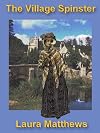
This was a fun sweet read. Clarissa has come down in the world, forced to leave the manor house and move into a small cottage in the village where she gives lessons in painting and music to local gentry. I liked her resourcefulness and her refusal to take the local lord seriously because she remembers him from when they were children. I found the romance a bit unconvincing for reasons I can't quite put my finger on, but there was a lot of enjoyable humour here: Clarissa's absent companion, show more Aria's recurrent bouts of disorientation every time she might be getting well enough to go home and so on. A plot reminiscent of Georgette Heyer, although she would have been even funnier. show less

In some ways, this book reminds me of Pride and Prejudice, but in a much shallower, more wooden way that also takes into account the issues of the day. The heroine is Kate Montgomery, the oldest of two daughters (but middle child). The title refers to the hero, Lord Winterton, while referencing her troubled romantic past and a neighborhood prank. In essence, when Kate was just 18, Lord Winterton's younger brother was madly in love with her, and when she refused to marry him, he stormed off show more to war and subsequently died of his injuries. In the meantime, she went to live with her aunt, and they traveled around the world together. Soon after her return years later, her brother and his friends overheard one of her anecdotes at a party and decided that all of them (minus the brother, obviously) proposing to her would be a fine joke. Hence the opening chapter of the story, and the title of the book to pull it all together.
The pride and prejudice part involves a large bequest from the dead suitor that Kate accepted, which the older brother thought inappropriate under the circumstances (prejudice). She refused to explain the reasons behind the bequest and its acceptance (pride).
And underlying all of this, and much of the dialogue between the hero and heroine, is the limited role of women in the society of the day. Marriage is really the only opportunity for a semblance of independence, and a career is out of the question, well, except for the oldest profession. Even running her own farm or small estate would not be acceptable, although she could afford it given the generous inheritance. The heroine quotes Mary Wollstonecraft and ponders her options and limitations as a woman. The story itself subverts the stereotype of woman as manipulative schemer. Kate does engage in some gentle, subtle direction of the young men of the neighborhood, but not for her own self interest. She even recruits Lord Winterton to assist her machinations.
The hero also turns her attention from institutional sexism to classism, and the plight of the ignorant poor. He gives her opportunities for social action. The dialogue also shares the agricultural innovations and trends of the day, mentions some key political and economic issues, and just generally does a good job portraying the historical era in terms of larger events and personal attitudes.
The characters are shallow, including the protagonists. On the other hand, unlike many modern romance writers, she doesn't rely on stock villains to drive the plot and the romance. Everyone in this story is nice but with faults. The dialogue is functional, with occasional sparkle or slog. The plot is straightforward, with three happy couples by the end (well, two for sure, and one with an understanding). There's no real tension, disagreement, or conflict, except between the two protagonists over the bequest (thus driving the tone of their interactions), which feels contrived. As I mentioned, the romance itself just feels somewhat forced. I like the story mostly because of what I learn from it. I keep it in my library not for the scintillating story but for the historical texture, I think. show less
The pride and prejudice part involves a large bequest from the dead suitor that Kate accepted, which the older brother thought inappropriate under the circumstances (prejudice). She refused to explain the reasons behind the bequest and its acceptance (pride).
And underlying all of this, and much of the dialogue between the hero and heroine, is the limited role of women in the society of the day. Marriage is really the only opportunity for a semblance of independence, and a career is out of the question, well, except for the oldest profession. Even running her own farm or small estate would not be acceptable, although she could afford it given the generous inheritance. The heroine quotes Mary Wollstonecraft and ponders her options and limitations as a woman. The story itself subverts the stereotype of woman as manipulative schemer. Kate does engage in some gentle, subtle direction of the young men of the neighborhood, but not for her own self interest. She even recruits Lord Winterton to assist her machinations.
The hero also turns her attention from institutional sexism to classism, and the plight of the ignorant poor. He gives her opportunities for social action. The dialogue also shares the agricultural innovations and trends of the day, mentions some key political and economic issues, and just generally does a good job portraying the historical era in terms of larger events and personal attitudes.
The characters are shallow, including the protagonists. On the other hand, unlike many modern romance writers, she doesn't rely on stock villains to drive the plot and the romance. Everyone in this story is nice but with faults. The dialogue is functional, with occasional sparkle or slog. The plot is straightforward, with three happy couples by the end (well, two for sure, and one with an understanding). There's no real tension, disagreement, or conflict, except between the two protagonists over the bequest (thus driving the tone of their interactions), which feels contrived. As I mentioned, the romance itself just feels somewhat forced. I like the story mostly because of what I learn from it. I keep it in my library not for the scintillating story but for the historical texture, I think. show less

Next on the list is [The Village Spinster] by [[Laura Matthews]]. While this one was an improvement over [Plain Jane] by [[Marion Chesney]] and [Beth] by [[Barbara Hazard]], it was disappointing (again with the frown!) in comparison to her other works. I like [The Seventh Suitor] a great deal (definitely in my top ten Regency romance list), and [Holiday in Bath] is charming. This story does have its moments, though, and is a bit of a romp.
Our heroine Clarissa Driscoll has come down in the show more world. In the wake of her late father's gambling debts (to the neighboring landowner and father of our hero), she is forced to leave the fine family manor and take up residence in a local village cottage. She supports herself in large part by giving lessons to the younger half-siblings and wards of the current Earl of Kinsford, our hero. As a lady by breeding and training, she has all of the necessary accomplishments to rely on: dancing, drawing, music, etc. The brother and sister are teenagers with little parental supervision since their mother is a shut in hypochondriac and their older brother is too busy with his political career in London, so they get into some trouble. The Earl of Kinsford comes home and immediately butts head with Clarissa, since he feels she's meddling and maybe even coddling his wards.
The romance basically consists of pissing matches between the two of them as the earl tries to exert his authority and the spinster dances between asserting herself and not offending the person who is essentially her patron. There is an obligatory sprained ankle and concussion (of his half-sister) that forces them to keep interacting with each other, as the injured girl cannot be moved for a few days after the accident, and guess whose cottage was closest. Moreover, the girl decides to play matchmaker and hams up her head injury to keep them interacting. Throw in a distant (married) male cousin who keeps dropping by to visit Clarissa and consequent jealousy of Kinsford, combined with residual guilt that her current impoverishment is the result of his father's actions, and this book is all about negative emotions and fiery dialogue. I must say the climactic scene is hilarious, with every character in the story (a total of 8) ending up in the cottage together for a variety of reasons. The dialogue was well-written, even if the characters were annoying, and the pace certainly moved along. Overall, an okay read but not a keeper. show less
Our heroine Clarissa Driscoll has come down in the show more world. In the wake of her late father's gambling debts (to the neighboring landowner and father of our hero), she is forced to leave the fine family manor and take up residence in a local village cottage. She supports herself in large part by giving lessons to the younger half-siblings and wards of the current Earl of Kinsford, our hero. As a lady by breeding and training, she has all of the necessary accomplishments to rely on: dancing, drawing, music, etc. The brother and sister are teenagers with little parental supervision since their mother is a shut in hypochondriac and their older brother is too busy with his political career in London, so they get into some trouble. The Earl of Kinsford comes home and immediately butts head with Clarissa, since he feels she's meddling and maybe even coddling his wards.
The romance basically consists of pissing matches between the two of them as the earl tries to exert his authority and the spinster dances between asserting herself and not offending the person who is essentially her patron. There is an obligatory sprained ankle and concussion (of his half-sister) that forces them to keep interacting with each other, as the injured girl cannot be moved for a few days after the accident, and guess whose cottage was closest. Moreover, the girl decides to play matchmaker and hams up her head injury to keep them interacting. Throw in a distant (married) male cousin who keeps dropping by to visit Clarissa and consequent jealousy of Kinsford, combined with residual guilt that her current impoverishment is the result of his father's actions, and this book is all about negative emotions and fiery dialogue. I must say the climactic scene is hilarious, with every character in the story (a total of 8) ending up in the cottage together for a variety of reasons. The dialogue was well-written, even if the characters were annoying, and the pace certainly moved along. Overall, an okay read but not a keeper. show less
You May Also Like
Associated Authors
Statistics
- Works
- 39
- Also by
- 2
- Members
- 912
- Popularity
- #28,116
- Rating
- 3.4
- Reviews
- 28
- ISBNs
- 122
- Languages
- 4
- Favorited
- 1