
John Milliken Thompson
Author of An Uncommon History of Common Things
About the Author
Works by John Milliken Thompson
Tagged
Common Knowledge
Members
Reviews
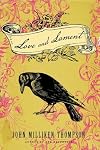
This is a well written, but heartbreaking story about two families, the Hartsoes and the Murchesons. Cicero Murcheson marries Susan Elizabeth Hartsoe and she bears 9 children. The tragedies that follow their lifeline are tenderly expressed by this author. The tale is told from the perspective of Mary Bet Hartsoe, the youngest and last surviving child of the family. She has witnessed the deaths of her grandparents, siblings and mother. She has had to deal with her brother’s deafness and had show more to watch her father’s descent into madness following his own father’s path. At the end of his life, her grandfather Hartsoe, was obsessed with creating a perpetual motion machine. This story is about superstition and, possibly, the perpetual motion of life, the forward marching of this family and others like it, that in spite of their inexorable, difficult journey toward heartache and loss, continue on, never quite giving up. The decisions Mary Bet was forced to make were heartfelt but difficult, yet make them she did. She was a strong and independent woman in a time period when women were docile and compliant. A forerunner to more vocal champions of women’s rights, she achieved a place of honor in a man’s world and, ultimately, discovered her own rightful place in the world.
The novel begins as the 19th century nears its end and continues until the end of World War I when Mary Bet’s life finally takes a different turn. Mary Bet was born in 1887 and she spent the next three decades seeking solutions to her questions and uncertainties and trying to discover her true purpose in life. Her quiet strength and determination, her kindness, her manners, her fears and her sorrows are all presented in detail, making her into a character we grow to know and identify with; we feel her burdens and share in her pain as she faces the sorrows rained down upon her family. We are privy to her doubts about herself and her faith in an ever present G-d, her fear of death and the devil, and on the other end of the spectrum, her ultimate optimism in the face of trauma. She rarely shows anger and most often exhibits common sense in her dealings with people. Throughout her life, Mary Bet is pretty even-tempered, kind and generous, but she has committed her own sins in the past which have continued to loom larger in her mind. She must come to terms with them. She wonders if her family could be cursed. The family’s genetic field is threaded with madness. Even Mary Bet sometimes feels that she is not quite tethered to the ground. She once had an imaginary friend. She believed the devil was coming for her. She witnessed her father’s bouts of madness when he talked to himself, admonished himself, tried to shoot himself.
She lives in a time when change is everywhere. There are horseless carriages, advances in civil rights, improvements for the rights of women. There is racial bias and religious prejudice which is just beginning to be addressed. So this story is about a time when not only Mary Bet searches for answers, but so does America. Should women and blacks have improved rights and benefits, the right to vote, own property; should the country go to war, conscript men, allow women to hold office, should companies discriminate, should Christians mix with Jews? It is a time when there area no miracle drugs and very few adequate treatments for disease and other afflictions.
The image of life in the heady days at the turn of the century is vivid. The reader is taken back into the past with Mary Bet. It is a world in which different classes, religions and race are stressed. Mixing is forbidden. Sometimes it feels like there is too much detail, but it is the minute explanations of everyday life that allow the reader to get to know the main character and live in that time with her, although some characters seem to come and go before they are fully developed.
The reader may wonder if Mary Bet’s insecurities and burdens were brought on by her own behavior, her own tentativeness and instability. However, she comes into her own, becoming the first woman to serve as interim sheriff in North Carolina. She manages the job well, solving crimes, reforming juveniles, and settling many petty disputes and economic issues that have remained unresolved for years.
Also, as I read, I sometimes wondered where this book was going. It seemed to march on without a goal, and yet, in the end, it was simply a very good story, a story told without the vitriol, crude language and concentration on sex that is so prevalent in many of the cruder novels of today. Mary Bet is a warm and endearing character, a bit afraid of G-d and the Devil. Religion and its dogma scare her. She has suffered so much loss that she may be afraid to love, afraid to lose again, afraid she could be cursed. This book is about her coming of age, her growing into herself and learning to deal with the contrasting aspects of life.
The title comes from a poem by George Herbert, Bittersweet. show less
The novel begins as the 19th century nears its end and continues until the end of World War I when Mary Bet’s life finally takes a different turn. Mary Bet was born in 1887 and she spent the next three decades seeking solutions to her questions and uncertainties and trying to discover her true purpose in life. Her quiet strength and determination, her kindness, her manners, her fears and her sorrows are all presented in detail, making her into a character we grow to know and identify with; we feel her burdens and share in her pain as she faces the sorrows rained down upon her family. We are privy to her doubts about herself and her faith in an ever present G-d, her fear of death and the devil, and on the other end of the spectrum, her ultimate optimism in the face of trauma. She rarely shows anger and most often exhibits common sense in her dealings with people. Throughout her life, Mary Bet is pretty even-tempered, kind and generous, but she has committed her own sins in the past which have continued to loom larger in her mind. She must come to terms with them. She wonders if her family could be cursed. The family’s genetic field is threaded with madness. Even Mary Bet sometimes feels that she is not quite tethered to the ground. She once had an imaginary friend. She believed the devil was coming for her. She witnessed her father’s bouts of madness when he talked to himself, admonished himself, tried to shoot himself.
She lives in a time when change is everywhere. There are horseless carriages, advances in civil rights, improvements for the rights of women. There is racial bias and religious prejudice which is just beginning to be addressed. So this story is about a time when not only Mary Bet searches for answers, but so does America. Should women and blacks have improved rights and benefits, the right to vote, own property; should the country go to war, conscript men, allow women to hold office, should companies discriminate, should Christians mix with Jews? It is a time when there area no miracle drugs and very few adequate treatments for disease and other afflictions.
The image of life in the heady days at the turn of the century is vivid. The reader is taken back into the past with Mary Bet. It is a world in which different classes, religions and race are stressed. Mixing is forbidden. Sometimes it feels like there is too much detail, but it is the minute explanations of everyday life that allow the reader to get to know the main character and live in that time with her, although some characters seem to come and go before they are fully developed.
The reader may wonder if Mary Bet’s insecurities and burdens were brought on by her own behavior, her own tentativeness and instability. However, she comes into her own, becoming the first woman to serve as interim sheriff in North Carolina. She manages the job well, solving crimes, reforming juveniles, and settling many petty disputes and economic issues that have remained unresolved for years.
Also, as I read, I sometimes wondered where this book was going. It seemed to march on without a goal, and yet, in the end, it was simply a very good story, a story told without the vitriol, crude language and concentration on sex that is so prevalent in many of the cruder novels of today. Mary Bet is a warm and endearing character, a bit afraid of G-d and the Devil. Religion and its dogma scare her. She has suffered so much loss that she may be afraid to love, afraid to lose again, afraid she could be cursed. This book is about her coming of age, her growing into herself and learning to deal with the contrasting aspects of life.
The title comes from a poem by George Herbert, Bittersweet. show less
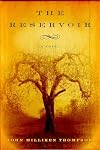
The Reservoir is one of those fascinating true-life mysteries that is fleshed out through fiction. A woman named Lillian was truly found dead in a reservoir in Richmond, Virigina and Tommie Cluverius did stand trial for her murder. Yet, the truth is stranger than fiction, as Mr. Thompson shares with his readers through this intriguing look at 1885 Richmond and a city that was struggling to recover its dignity after the end of the Civil War.
The key to the success behind The Reservoir is the show more meticulous research that oozes from every page. The reader has no problems picturing the town through which Tommie and Lillian ultimately meet their fates or the various scenes of society life portrayed. The glorification of the dead Confederacy and romanticising of its heroes plays a role in each of the character's backgrounds and in the characters that have the most impact upon them; while Mr. Thompson could have made a mockery of a society that is stuck in the glory days, he handles this tricky scenario with delicacy and feeling. In addition, the truth behind the murder remains as murky at the ending of the novel as at the beginning. While this could be construed as frustrating to some, it is a testament to the messiness of life and the difficulties behind discerning the truth from lies. Like real life, The Reservoir has no clear-cut answers or definitive solutions to a problem. The authenticity of the times and of life in general helps to create a strong narrative.
Unfortunately, where The Reservoir struggles is with its characters. The narration flips back and forth between points of view as well as past and present. This keeps the reader from sympathizing too much with any one character, or even from forming a connection with one or the other. Instead, the reader stays impartial, and therefore unengaged, in Lillian's emotional outbursts or Tommie's conniving ways. Mr. Thompson does not attempt to hide the flaws in his characters, but this also detracts from the narration because the reader cannot discern the truth from the fiction, even when one character is telling his or her side of the story. Since the reader does not truly care about the characters, it is difficult to feel the tension behind the proceedings, thereby minimizing the suspense or even interest.
The pacing is another weak point with The Reservoir . The switching between narrators and time periods is uneven and somewhat jarring in spots. The story itself speeds up and slows down at an unsteady pace. The reader will be struggling to get through a section, will all but speed-read through another, only to get bogged down again into another slow and somewhat boring section. There is no rhyme or reason for this unevenness, as it occurs with all narrators, in the past as well as in the present. In a mystery, this is a fundamental flaw.
The Reservoir is not a novel for those who like their stories tied up with tidy endings. It is for those who appreciate the darker, more complicated mysteries, as well as those who can appreciate the depth of research required to take the skeleton of a story idea and flesh it out to create a fully-realized hypothesis of an event that occurred over 100 years ago.
Thank you to Other Press and Nicole from Linus's Blanket for my reading copy! show less
The key to the success behind The Reservoir is the show more meticulous research that oozes from every page. The reader has no problems picturing the town through which Tommie and Lillian ultimately meet their fates or the various scenes of society life portrayed. The glorification of the dead Confederacy and romanticising of its heroes plays a role in each of the character's backgrounds and in the characters that have the most impact upon them; while Mr. Thompson could have made a mockery of a society that is stuck in the glory days, he handles this tricky scenario with delicacy and feeling. In addition, the truth behind the murder remains as murky at the ending of the novel as at the beginning. While this could be construed as frustrating to some, it is a testament to the messiness of life and the difficulties behind discerning the truth from lies. Like real life, The Reservoir has no clear-cut answers or definitive solutions to a problem. The authenticity of the times and of life in general helps to create a strong narrative.
Unfortunately, where The Reservoir struggles is with its characters. The narration flips back and forth between points of view as well as past and present. This keeps the reader from sympathizing too much with any one character, or even from forming a connection with one or the other. Instead, the reader stays impartial, and therefore unengaged, in Lillian's emotional outbursts or Tommie's conniving ways. Mr. Thompson does not attempt to hide the flaws in his characters, but this also detracts from the narration because the reader cannot discern the truth from the fiction, even when one character is telling his or her side of the story. Since the reader does not truly care about the characters, it is difficult to feel the tension behind the proceedings, thereby minimizing the suspense or even interest.
The pacing is another weak point with The Reservoir . The switching between narrators and time periods is uneven and somewhat jarring in spots. The story itself speeds up and slows down at an unsteady pace. The reader will be struggling to get through a section, will all but speed-read through another, only to get bogged down again into another slow and somewhat boring section. There is no rhyme or reason for this unevenness, as it occurs with all narrators, in the past as well as in the present. In a mystery, this is a fundamental flaw.
The Reservoir is not a novel for those who like their stories tied up with tidy endings. It is for those who appreciate the darker, more complicated mysteries, as well as those who can appreciate the depth of research required to take the skeleton of a story idea and flesh it out to create a fully-realized hypothesis of an event that occurred over 100 years ago.
Thank you to Other Press and Nicole from Linus's Blanket for my reading copy! show less

Sometime about 30,000 years ago, somebody stuck a sharp rock into a split stick-and presto! The axe was born. Our inquisitive species just loves tinkering, testing, and pushing the limits, and this delightfully different book is a freewheeling reference to hundreds of customs, notions, and inventions that reflect human ingenuity throughout history.
From hand tools to holidays to weapons to washing machines, An Uncommon History of Common Things features hundreds of colorful illustrations, show more timelines, sidebars, and more as it explores just about every subject under the sun. Who knew that indoor plumbing has been around for 4,600 years, but punctuation, capital letters, and the handy spaces between written words only date back to the Dark Ages? Or that ancient soldiers baked a kind of pizza on their shields-when they weren't busy flying kites to frighten their foes?
Every page of this quirky compendium catalogs something fascinating, surprising, or serendipitous. A lively, incomparably browsable read for history buffs, pop culture lovers, and anyone who relishes the odd and extraordinary details hidden in the everyday, it will inform, amuse, astonish-and alter the way you think about the clever creatures we call humans. show less
From hand tools to holidays to weapons to washing machines, An Uncommon History of Common Things features hundreds of colorful illustrations, show more timelines, sidebars, and more as it explores just about every subject under the sun. Who knew that indoor plumbing has been around for 4,600 years, but punctuation, capital letters, and the handy spaces between written words only date back to the Dark Ages? Or that ancient soldiers baked a kind of pizza on their shields-when they weren't busy flying kites to frighten their foes?
Every page of this quirky compendium catalogs something fascinating, surprising, or serendipitous. A lively, incomparably browsable read for history buffs, pop culture lovers, and anyone who relishes the odd and extraordinary details hidden in the everyday, it will inform, amuse, astonish-and alter the way you think about the clever creatures we call humans. show less
Based on a true murder mystery, The Reservoir presents an intriguing case that unfolds or rather, is encountered much like a detective might expect to experience during a real investigation. Through the uncovering, characters, events and suspicions arise and often take on new meaning and point in various directions. At varying points in the story, the innocent appear guilty, and the guilty, innocent. Many plausible scenarios develop making it difficult to guess what the truth, if any, will show more ever be revealed. By the end, you'll wonder if the conclusion is sincere or have you been mislead to believe an acceptable truth? Much like real-life, nothing is certain and it can be a murky business unveiling the responsible. The Reservoir will leave you questioning who is to blame in this tragic event. It seems circumstance, gender, class and human nature all have a hand in driving the plot to its conclusion. show less
Awards
You May Also Like


Associated Authors
Statistics
- Works
- 18
- Members
- 1,548
- Popularity
- #16,636
- Rating
- 3.5
- Reviews
- 30
- ISBNs
- 51
- Languages
- 1