
Douglas H. Chadwick
Author of Enduring America
About the Author
Douglas H. Chadwick is a field biologist and the author of several books, including The Fate of the Elephant and Yellowstone to Yukon.
Works by Douglas H. Chadwick
True Grizz: Glimpses of Fernie, Stahr, Easy, Dakota, and Other Real Bears in the Modern World (2003) 19 copies
Four Fifths a Grizzly: A New Perspective on Nature that Just Might Save Us All (2021) 14 copies, 1 review
Elephants: out of time, out of space 2 copies
On the Edge of Earth and Sky 1 copy
Associated Works
Tagged
Common Knowledge
- Canonical name
- Chadwick, Douglas H.
- Birthdate
- 1948
- Gender
- male
- Education
- University of Washington (BS | Zoology)
University of Montana (MS | Wildlife Biology) - Occupations
- wildlife biologist
conservationist - Organizations
- Vital Ground
- Short biography
- Douglas H. Chadwick is a wildlife biologist and the author of hundreds of articles and more than a half-dozen books on natural history, including The Fate of the Elephant and True Grizz. He lives in Whitefish, Montana.
- Nationality
- USA
- Places of residence
- Montana, USA
- Associated Place (for map)
- Montana, USA
Members
Reviews
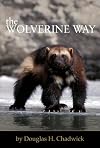
I LOVE wolverines. Mustelids in general are my favorite animals in the world, but wolverines occupy a very special place in my heart. Not because they are "badass," "mean," or "demonic," etc., but because they are truly fascinating animals that we know so little about. Thank you, Douglas Chadwick for writing this book that goes beyond the stereotypes (although he definitely does restate them many times, too).
The book is more thoughtful than I thought it would be, going into reasons why we show more react the way we do to scavengers like the wolverine who often steal our food and destroy our things in the process. "[It] isn't about them in particular, either. How could it be, when the same slurs have been applied to almost every animal and every variety of person ever perceived as an enemy? (...) We react strongly to any threat of competition for resources and dominion. That impulse is old, deep, and consuming; a territorial wolverine could easily relate."
The author was a volunteer for a research project in Glacier National Park. This book resulted from his experience and what he learned from his work there. His observations on wolverines range from their physical characteristics and how that helps them live in their snowy and icy worlds (and how these places are now at risk—and therefore, also the wolverines themselves); their family/social relationships, which go a lot deeper than initially thought for centuries; and information on how they breed and rear their young. The book also goes into the nitty-gritty of volunteer work and the difficulties working with these animals in their habitats. It also details the difficulties in getting there protection status from the government and what hurdles were in their way (which was surprising to me, and which shouldn't have been).
The only things I really disliked was the insistence on the great "wilderness" and how wolverines are the epitome of the "wild" which kind of teetered on a very colonial view of the American landscape.
But this book really satisfied my hyperfixation, and I'm very grateful to all the scientists and volunteers who continue to study and protect the wolverines and their habitats. show less
The book is more thoughtful than I thought it would be, going into reasons why we show more react the way we do to scavengers like the wolverine who often steal our food and destroy our things in the process. "[It] isn't about them in particular, either. How could it be, when the same slurs have been applied to almost every animal and every variety of person ever perceived as an enemy? (...) We react strongly to any threat of competition for resources and dominion. That impulse is old, deep, and consuming; a territorial wolverine could easily relate."
The author was a volunteer for a research project in Glacier National Park. This book resulted from his experience and what he learned from his work there. His observations on wolverines range from their physical characteristics and how that helps them live in their snowy and icy worlds (and how these places are now at risk—and therefore, also the wolverines themselves); their family/social relationships, which go a lot deeper than initially thought for centuries; and information on how they breed and rear their young. The book also goes into the nitty-gritty of volunteer work and the difficulties working with these animals in their habitats. It also details the difficulties in getting there protection status from the government and what hurdles were in their way (which was surprising to me, and which shouldn't have been).
The only things I really disliked was the insistence on the great "wilderness" and how wolverines are the epitome of the "wild" which kind of teetered on a very colonial view of the American landscape.
But this book really satisfied my hyperfixation, and I'm very grateful to all the scientists and volunteers who continue to study and protect the wolverines and their habitats. show less

The author spent seven years studying mountain goats, mainly in Glacier National Park. He camped on the slopes and followed them closely, collaring and tagging some but also learning to identify others by slight individual differences, and to tell males/females apart at different ages, which sounds particularly difficult. He describes the animal in all regards- its physical shape which is so perfectly adapted to living on steep slopes, its eating habits, survival strategies and social show more structure. The terrain it favors and why, the other animals that share its habitat, how it has avoided competition from most other species and also most predators, but is particularly vulnerable to hunting and distubances caused by man. There is a chapter about how mountain goats evolved (they are more closely related to chamois and serow than to bighorn sheep or any kind of actual goat), and another about why their behavior is so different from sheep. The book explains why they are so belligerent to their own kind and how this actually facilitates their survival. There are diagrams and explanations of their distribution across mountain ranges and what happened when they were introduced to new areas. On a more personal bent, there are passages where the author describes his experiences climbing the mountains to follow the goats, his first sighting of a newly-born mountain goat kid, the harshness of winter storms, many examples of how the goats lead their day-to-day lives and how he was finally able to approach a few mountain goat herds closely enough to sit among them and be part of their social interactions (literally- he knew enough of the goats’ body language to maintain dominance among them until one larger male threatened him a few times when he was too close, and then his social standing among the others gradually slipped!) It’s very apparent that the author greatly admired these animals and enjoyed spending time with them in spite of the hardships during his study. His writing about the wildlife and the surrounding landscape is beautifully done. Constant references to the mountain goats as “the white beasts” or “the bearded ones” did get a bit repetitive! I thoroughly enjoyed reading this book
from the Dogear Diary show less
from the Dogear Diary show less
This book is one of a number of must reads if you care about our and our children's futures.
"Wolverines belong to the carnivore family known as the Must elide, more commonly called the weasel family after its most familiar members. From a public relations standpoint, this is a bit unfortunate, considering how corporate shills, slammers, faithless lovers, and hedge fund managers keep giving weasels a bad name."
This book is at once an uplifting account of wildlife biologists and volunteer show more assistants studying wolverines in the wild; the beauty of wilderness and a heart-rending exposure of the harsher side of Nature's sway; and yet more maddening evincing of how prevalent ignorance and cruelty are in the human condition.
I have a deep respect for the hardy souls that labor so perseveringly to help us understand the natural world that enables our existence, and that do so for a pittance, or simply because they care deeply. To me they exemplify the rare wisdom and good in humanity.
My favorite chapter epigraph in the book is:
A man cried: O Heavenly Spirit, speak to me that I may know You exist and care for my fate. And a sparrow appeared on a nearby branch, singing its heart out.
The man didn’t understand. O Creator, he cried again, let me hear your voice.
And in front of the man’s face, a bee buzzed past bearing pollen from flower to flower. A butterfly followed, floating on rainbow wings to sip nectar.
Still the man did not understand. Instead, he called more loudly yet: O Maker of All That Is, if You won’t speak to me, let me feel Your touch just once, I pray.
The Creator touched him. As the wolverine that had just bit the man on the ass loped away, the man shook his fist toward the sky, yelling: Now I am suffering because of a beast with a terrible nature. Why, oh why won’t You ever give me a sign?
And the Creative Spirit sighed: I wish I had designed these hairless apes with more intelligence. But even I don’t always get it right the first time.
~ Chadwick, Douglas. The Wolverine Way. Patagonia. show less
"Wolverines belong to the carnivore family known as the Must elide, more commonly called the weasel family after its most familiar members. From a public relations standpoint, this is a bit unfortunate, considering how corporate shills, slammers, faithless lovers, and hedge fund managers keep giving weasels a bad name."
This book is at once an uplifting account of wildlife biologists and volunteer show more assistants studying wolverines in the wild; the beauty of wilderness and a heart-rending exposure of the harsher side of Nature's sway; and yet more maddening evincing of how prevalent ignorance and cruelty are in the human condition.
I have a deep respect for the hardy souls that labor so perseveringly to help us understand the natural world that enables our existence, and that do so for a pittance, or simply because they care deeply. To me they exemplify the rare wisdom and good in humanity.
My favorite chapter epigraph in the book is:
A man cried: O Heavenly Spirit, speak to me that I may know You exist and care for my fate. And a sparrow appeared on a nearby branch, singing its heart out.
The man didn’t understand. O Creator, he cried again, let me hear your voice.
And in front of the man’s face, a bee buzzed past bearing pollen from flower to flower. A butterfly followed, floating on rainbow wings to sip nectar.
Still the man did not understand. Instead, he called more loudly yet: O Maker of All That Is, if You won’t speak to me, let me feel Your touch just once, I pray.
The Creator touched him. As the wolverine that had just bit the man on the ass loped away, the man shook his fist toward the sky, yelling: Now I am suffering because of a beast with a terrible nature. Why, oh why won’t You ever give me a sign?
And the Creative Spirit sighed: I wish I had designed these hairless apes with more intelligence. But even I don’t always get it right the first time.
~ Chadwick, Douglas. The Wolverine Way. Patagonia. show less

Chadwick is a freelance science writer who is engaged by the National Geographic Magazine to do an article on elephants ´across the world´. Two things that you might expect to happen don´t. Firstly there is no sense in this book that Chadwick was constrained by any kind of budget, his journeying must have cost hundreds of thousands of dollars. Secondly, there is not the slightest hint of dumbing down, or avoiding controversy. Chadwick has really written a book that does justice to its show more subject, and it is readily apparent that he has suffered and toiled for his art. His energy and stoicism is extraordinary, but his real genius is telling the stories of people who know, love, compete with, exploit and kill elephants. He peels back the layers of popular myth, and doesn´t flinch from the most Byzantine debates about the morality and logic of schemes for protecting and/or exploiting elephants. And he is quite honest about his own views on elephants and challenges the reader to examine their own. This really is a masterpiece, of science writing, travel writing, and a hymn to the beauty and qualities of elephants. The analysis of CITES (Convention on Trade in Endangered Species) is devastating, suggesting comparisons with Hansen´s ´Orchid Fever´. At times profoundly disturbing, at others uplifting. This would have to be essential reading for anyone with any interest in, or feeling for, elephants and wildlife conservation generally. A magnificent book that belies its photo-journalistic origins. show less
Lists
Awards


You May Also Like


Associated Authors
Statistics
- Works
- 27
- Also by
- 12
- Members
- 698
- Popularity
- #36,253
- Rating
- 4.2
- Reviews
- 8
- ISBNs
- 37
- Languages
- 1