
Augusta R. Goldin
Author of Ducks Don't Get Wet
About the Author
Works by Augusta R. Goldin
Tagged
Common Knowledge
- Canonical name
- Goldin, Augusta R.
- Gender
- female
Members
Reviews
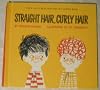
I had mixed feelings about this book. I liked the illustrations because they enhanced the story and the message that the author was trying to get across. The illustrations use all different colors and portray different hair types, which highlights the message that it is okay and normal to be different from others. For example, the illustrations on page 19 have brightly colored hair, and some black hair. Other hair is extremely short while another illustration is long and frizzy. By show more highlighting the differences in hair, the illustrations help enhance the story and the overall message that it is okay to be different. By using a variety of colors and showing drastic differences in the types of hair styles, the illustrations help to complete the message of the story. However, I did not like the language used in this book. The language was very informative and formal for a picture book that is targeted for a young audience. For example, the author writes, “If you looked at a slice of hair through a microscope, you would see that the shape of your hair matches the shape of your follicles” (p. 15). Word choice such as microscope and follicles may be too advanced and unfamiliar to a young audience, which would lead to students losing interest in the story since they may not understand what is being said. The language in the story is formal and not engaging for a young audience. Overall, the big idea of this book is that being different is normal and everyone has differences. show less
Genre: Informational
Age Appropriateness: Primary and Intermediate
Media: Watercolors
Review:
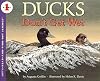
All types of ducks don't get wet, but why? This books does an excellent job of describing in a child-friendly manner how and why the ducks don't get wet when they are always swimming in the water. Also, this book portrays the life of a duck smoothly, including the reason for their migration, and wonderful illustrations to assist presentation of information. There is also an experiment included in the show more back of the book that allows the experimenter to see how something can be waterproof. show less
Age Appropriateness: Primary and Intermediate
Media: Watercolors
Review:
All types of ducks don't get wet, but why? This books does an excellent job of describing in a child-friendly manner how and why the ducks don't get wet when they are always swimming in the water. Also, this book portrays the life of a duck smoothly, including the reason for their migration, and wonderful illustrations to assist presentation of information. There is also an experiment included in the show more back of the book that allows the experimenter to see how something can be waterproof. show less
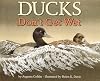
This book gives students a lot of information about ducks such as where they live, how they act, what they eat, etc. I like this book because there is not a lot of text, but still good information for students to learn from. Sometimes informational texts can be wordy and that will push a student to not want to read it. This book has a really good balance of words and pictures. This would definitely be a kinder or 1st grade level book. The students could even do some sort of project show more afterwards that had to do with ducks, that would be fun. This book talks about different types of ducks so maybe students could choose their favorite from the story, give information about that duck and draw/color a picture. show less
This is a great book that explains how and why ducks don't get wet, even if they are completely under water! It has nice pictures to go along with the text to explain how ducks' bodies produce an oil to cover their feathers. This book also explores different species of ducks and how they migrate to find food during the winter. It also provides short experiments that you could do at home or in the classroom.
Lists
Awards


You May Also Like


Associated Authors
Statistics
- Works
- 14
- Members
- 1,736
- Popularity
- #14,815
- Rating
- 3.7
- Reviews
- 19
- ISBNs
- 45