
David Walton (1) (1975–)
Author of The Genius Plague
For other authors named David Walton, see the disambiguation page.
Series
Works by David Walton
Associated Works
All The Rage This Year: The Phobos Science Fiction Anthology (Phobos Award S) (Vol.3) (2004) — Contributor — 8 copies
Tagged
Common Knowledge
- Birthdate
- 1975-10-26
- Gender
- male
- Nationality
- USA
- Places of residence
- Philadelphia, Pennsylvania, USA
- Associated Place (for map)
- Pennsylvania, USA
Members
Reviews
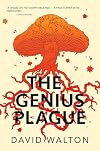
The Genius Plague by David Walton is a highly recommended science fiction/plague novel featuring brothers set against each other and a wide-ranging fungus.
Paul Johns, a mycologist, is returning from his trip through the Amazon with a backpack full of fungi samples when terrorists attack the tourist riverboat he is taking back to Manaus, Brazil. When he makes it home to Maryland, he is immediately hospitalized with a life-threatening fungal pneumonia/infection. He recovers but with a gap in show more his memory.
Neil Johns, the younger brother of Paul, has just managed to fulfill his dream and follow his father's footsteps by getting a job with the NSA. His father, Charles, has Alzheimer’s, and will never know either of his sons' accomplishments. Paul is assigned to a group that is given the almost impossible to crack codes where he manages to figure out the obscure language used in a series of messages from South America. Clearly something out of the ordinary is happening in the Brazilian rain forest and it is spreading
At the same time, Paul is recovering from his infection, but his intelligence has noticeably increased. Neil takes note of the the change in his brother, along with Paul's sudden desire to protect the rain forest. This phenomenon is not just related to Paul, but there are many others who have suffered from the fungal pneumonia and recovered only to exhibit a remarkable increase in intelligence, along with an uncanny ability to seemingly read each other's mind and act in unison. The infected are spreading and so is what seems to be some kind of mind control.
The brothers are on the opposites sides of what is becoming an international war. Either the infection represents the next stage of evolution or it signifies the end of the human race. Can humanity survive this biological threat?
The Genius Plague is a well written page-turner that will definitely have you staying up too late at night reading just-one-more-chapter. The science is believable, well explained, and Walton makes the case for a fungus to be a plausible threat against the human race. He keeps the action moving at a fast pace in a well-constructed and compelling plot. The brothers are both interesting, well developed characters and their interaction with their father is significant to the plot. There are also a wide variety of interesting supporting characters to keep the plot interesting and moving along.
With the thrilling action, Walton adds in a few questions to ponder. What price would you pay for ecological stability? What would you choose if faced with the dichotomy of free will and individuality versus working together in unison for the good of everything? At what cost is mind control acceptable?
This is an excellent novel. The only questions I had about it were the unlikeliness of Neil's employment by the NSA with no degree and I'm not entirely happy with the whole ending, but that could be a win because I'm still pondering it too.
Disclosure: My review copy was courtesy of Prometheus Books.
http://www.shetreadssoftly.com/2017/10/the-genius-plague.html show less
Paul Johns, a mycologist, is returning from his trip through the Amazon with a backpack full of fungi samples when terrorists attack the tourist riverboat he is taking back to Manaus, Brazil. When he makes it home to Maryland, he is immediately hospitalized with a life-threatening fungal pneumonia/infection. He recovers but with a gap in show more his memory.
Neil Johns, the younger brother of Paul, has just managed to fulfill his dream and follow his father's footsteps by getting a job with the NSA. His father, Charles, has Alzheimer’s, and will never know either of his sons' accomplishments. Paul is assigned to a group that is given the almost impossible to crack codes where he manages to figure out the obscure language used in a series of messages from South America. Clearly something out of the ordinary is happening in the Brazilian rain forest and it is spreading
At the same time, Paul is recovering from his infection, but his intelligence has noticeably increased. Neil takes note of the the change in his brother, along with Paul's sudden desire to protect the rain forest. This phenomenon is not just related to Paul, but there are many others who have suffered from the fungal pneumonia and recovered only to exhibit a remarkable increase in intelligence, along with an uncanny ability to seemingly read each other's mind and act in unison. The infected are spreading and so is what seems to be some kind of mind control.
The brothers are on the opposites sides of what is becoming an international war. Either the infection represents the next stage of evolution or it signifies the end of the human race. Can humanity survive this biological threat?
The Genius Plague is a well written page-turner that will definitely have you staying up too late at night reading just-one-more-chapter. The science is believable, well explained, and Walton makes the case for a fungus to be a plausible threat against the human race. He keeps the action moving at a fast pace in a well-constructed and compelling plot. The brothers are both interesting, well developed characters and their interaction with their father is significant to the plot. There are also a wide variety of interesting supporting characters to keep the plot interesting and moving along.
With the thrilling action, Walton adds in a few questions to ponder. What price would you pay for ecological stability? What would you choose if faced with the dichotomy of free will and individuality versus working together in unison for the good of everything? At what cost is mind control acceptable?
This is an excellent novel. The only questions I had about it were the unlikeliness of Neil's employment by the NSA with no degree and I'm not entirely happy with the whole ending, but that could be a win because I'm still pondering it too.
Disclosure: My review copy was courtesy of Prometheus Books.
http://www.shetreadssoftly.com/2017/10/the-genius-plague.html show less
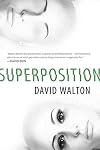
This was an entertaining courtroom drama that happened to geek out all over the place with a coherent explanation of quantum mechanics AND a relevant hard SF extrapolation of the theories.
What is that in laymen terms?
Murder mystery meets many-worlds.
I'm sure those people who geek out over courtroom dramas will get a lot more out of this novel than me. I would have been perfectly peachy with an action-science thriller, and I'll be frank, this novel would have met a five star for me if it had show more been. It was polished enough in plot to stand with its head held high without diving into anything else, but I'll give it props for being very decent in both hard SF and legal mystery stuff.
My personal wishes have nothing to do with whether this book was excellent. And it was excellent.
The science was particularly well-done and engaging and it was also so damn relevant to the plot that I couldn't help but squee with delight at the explored and exploited plot-lines.
It wasn't set very far in the future, but the opened horizons made me feel that ever-so-desired sense of wonder I always pray for in a science-fiction novel.
There wasn't any worldbuilding here. It was just a widening of our myriad possibilities. If only we could have stayed on that side of the novel. *sigh*
Please don't get me wrong. I live for novels that genre-bend. It allows us readers to swim in oceans of new possibilities. I just don't like it when a mix feels like a noose to reel-in characters, even if it provided very decent and ongoing conflict.
I'm afraid I'm prejudiced a bit against mysteries. It doesn't matter how many I've read. They have a place in my heart, but they'll never quite open up my head. Otherwise, I loved all the ideas, no matter if a lot of them have been done before.
The novel has a modern sensibility and a very clear style. I'm sure most people would get through the novel quite easily.
It's the ideas within that will stay with me.
You ought to know what I mean, though. It's all about quantum alien intelligences, bridging the Holtzman gap between the subatomic and macro, manipulating probability wave collapses, the mirror-image duplication of characters, and even e-paper computers that remotely tap into supercolliders.
It's the little classic stuff of SF. In a murder mystery/courtroom drama.
I'm pretty sure most other readers, whether they like mystery or SF, will get a great deal of satisfaction out of the novel. I wish you well with it! show less
What is that in laymen terms?
Murder mystery meets many-worlds.
I'm sure those people who geek out over courtroom dramas will get a lot more out of this novel than me. I would have been perfectly peachy with an action-science thriller, and I'll be frank, this novel would have met a five star for me if it had show more been. It was polished enough in plot to stand with its head held high without diving into anything else, but I'll give it props for being very decent in both hard SF and legal mystery stuff.
My personal wishes have nothing to do with whether this book was excellent. And it was excellent.
The science was particularly well-done and engaging and it was also so damn relevant to the plot that I couldn't help but squee with delight at the explored and exploited plot-lines.
It wasn't set very far in the future, but the opened horizons made me feel that ever-so-desired sense of wonder I always pray for in a science-fiction novel.
There wasn't any worldbuilding here. It was just a widening of our myriad possibilities. If only we could have stayed on that side of the novel. *sigh*
Please don't get me wrong. I live for novels that genre-bend. It allows us readers to swim in oceans of new possibilities. I just don't like it when a mix feels like a noose to reel-in characters, even if it provided very decent and ongoing conflict.
I'm afraid I'm prejudiced a bit against mysteries. It doesn't matter how many I've read. They have a place in my heart, but they'll never quite open up my head. Otherwise, I loved all the ideas, no matter if a lot of them have been done before.
The novel has a modern sensibility and a very clear style. I'm sure most people would get through the novel quite easily.
It's the ideas within that will stay with me.
You ought to know what I mean, though. It's all about quantum alien intelligences, bridging the Holtzman gap between the subatomic and macro, manipulating probability wave collapses, the mirror-image duplication of characters, and even e-paper computers that remotely tap into supercolliders.
It's the little classic stuff of SF. In a murder mystery/courtroom drama.
I'm pretty sure most other readers, whether they like mystery or SF, will get a great deal of satisfaction out of the novel. I wish you well with it! show less
Fast-paced and nerdy in a "cocky newbie to the NSA fights an intelligent Mycelium plague" vein. :)
The initial premise was what brought me to the book and that still stands. The fungus is mimicking our brains from within our brains and makes us smarter... with the pitfall that it only behaves to improve its own survival.
I might have preferred an all-out hard SF going much deeper into a fully-successful plague, but hitting the breaks like this was fun enough for a single novel. The alternative show more might have become a doorstopper and I might have loved that, too, but alas... this is only my opinion. :)
What we do have is a cocky bright kid getting into a ton of trouble who does everything he can to save the world. It's really not bad. It's smart. Interesting. Tons of great science and ideas were thrown about for all you mushroom lovers out there. It's a real smorgasbord. :)
I may not like the end so much, but I really enjoyed the ride getting there. Walton's writing is fast-paced and as cocky as his MC. It's designed to be popcorn fiction and for the most part, it fits the bill perfectly. :)
Now, where's my salad? I'm in the mood for a few whitecaps. :) show less
The initial premise was what brought me to the book and that still stands. The fungus is mimicking our brains from within our brains and makes us smarter... with the pitfall that it only behaves to improve its own survival.
I might have preferred an all-out hard SF going much deeper into a fully-successful plague, but hitting the breaks like this was fun enough for a single novel. The alternative show more might have become a doorstopper and I might have loved that, too, but alas... this is only my opinion. :)
What we do have is a cocky bright kid getting into a ton of trouble who does everything he can to save the world. It's really not bad. It's smart. Interesting. Tons of great science and ideas were thrown about for all you mushroom lovers out there. It's a real smorgasbord. :)
I may not like the end so much, but I really enjoyed the ride getting there. Walton's writing is fast-paced and as cocky as his MC. It's designed to be popcorn fiction and for the most part, it fits the bill perfectly. :)
Now, where's my salad? I'm in the mood for a few whitecaps. :) show less
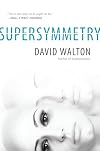
I wanted to like this more. I really did.
Anything that brings to life the littlest of particles and turns them into living, breathing macrocosmic entities has got my fourteen thumbs of flipped approval. I thought the action sequences were quite out of a superhero movie, with teleportation, flight, and even a Doctor Doom blowing up cities from safely behind another dimension while the rest of us contemplate the wonders of time travel and decide how to get around all the timey-wimey show more stuff.
Great ideas going on here, and I don't even need to look too carefully at the math to know that transposing the micro world matrix into the macro, (the one that's defined by tricky concepts like gravity and planar time,) is an awfully lost proposition, especially since our bits and pieces oughtn't fit together as we obviously think they do. My fingers aren't really slapping these keys, after all. And that's kinda the point. We're in this for the story and the introduction or reintroduction of a wild quantum zoo come to play with us silly mortals and our short-stop near-future mental computers that can be programmed to do a whole suite of nifty things.
Great setup. The world is pretty much ours, only more future. Unfortunately, we were inundated with gag reflexes and cracks about how unsafe airplanes are, super-stupid military types and a comic-book rock-em-sock-em plot knockdown that only happened because the wonder-twins were available.
Wonder-twins?Oh yeah, this book takes place 15 years after [b:Superposition|22551892|Superposition|David Walton|https://d.gr-assets.com/books/1421707724s/22551892.jpg|42009574], and the kiddo that got split into two and were prevented from falling back into one person with dual sets of memories got to stay apart all this time as the price to pay to be safe from the baddies of the other quantum dimensions messing with us big time. It turns out that they were also important for this novel, too, but that wasn't very clear until much later, when my dissatisfaction with the ex machina plot had already taken root and festered.
I should have gotten over that. They're a decent pair and not at all like the SuperFriends kids. Really.
Okay, so at least we don't have a long and drawn out court battle in this one. That's a plus. But it's gets dragged back into police drama. (One of the wonder twins joined the force.) Papa's dead right off the bat, even though he was the main freaking character of the previous novel. I get the feeling we were supposed to think of this as a pathos moment, but it flew right over my head during the game.
Unfortunately, we have a problem with common sense when it comes to the plot. You do not. I repeat. Do Not enlist the help of the ultra-powerful psychopathic mommy who's willing to let Cthulhu into the world to change her baby from an unfortunate into a superfortunate version of itself. If she's locked up in a maximum security prison shielded with faraday cages, JUST LET HER BE. I don't care if the story needed a baddy to propel the conflict. Bring in someone new. Someone with a history of Not Screwing Over Your Family. *sigh*
At least the cities were all blowing up. That's a plus. Unfortunately, it was all second-hand. That's a negative.
Last but not least: the dialog. I have read worse, but usually it hinted at being sarcastic and/or satire.
I know this sounds a bit harsh, and it's not really meant to be that rough, I just believed that we both had something going on that was pretty special when I took both novels out on dates. I tried to ignore the buck teeth because of the PHD, I ignored the cliche-speech because of how the novels lit up with big superpowers on occasion. I didn't even have too much of a problem with the insistence that police and courtroom dramas were truly the height of all literature, even though we were both on the same wavelength for most of the night, geeking out over great SF. I just didn't get it. This one decided that lame cliches were funny and a valid excuse to pad the plot. I tried to smile and make nice.
Why was it going so wrong?
I've decided that I'm going to remain friends with the novels. They're not bad folks. They just don't quite seem to know what they really want to be. Perhaps it will get better with time? Someone else will pick them up and take them home? I wish those someones all the love in the world.
:) show less
Anything that brings to life the littlest of particles and turns them into living, breathing macrocosmic entities has got my fourteen thumbs of flipped approval. I thought the action sequences were quite out of a superhero movie, with teleportation, flight, and even a Doctor Doom blowing up cities from safely behind another dimension while the rest of us contemplate the wonders of time travel and decide how to get around all the timey-wimey show more stuff.
Great ideas going on here, and I don't even need to look too carefully at the math to know that transposing the micro world matrix into the macro, (the one that's defined by tricky concepts like gravity and planar time,) is an awfully lost proposition, especially since our bits and pieces oughtn't fit together as we obviously think they do. My fingers aren't really slapping these keys, after all. And that's kinda the point. We're in this for the story and the introduction or reintroduction of a wild quantum zoo come to play with us silly mortals and our short-stop near-future mental computers that can be programmed to do a whole suite of nifty things.
Great setup. The world is pretty much ours, only more future. Unfortunately, we were inundated with gag reflexes and cracks about how unsafe airplanes are, super-stupid military types and a comic-book rock-em-sock-em plot knockdown that only happened because the wonder-twins were available.
Wonder-twins?
I should have gotten over that. They're a decent pair and not at all like the SuperFriends kids. Really.
Okay, so at least we don't have a long and drawn out court battle in this one. That's a plus. But it's gets dragged back into police drama. (One of the wonder twins joined the force.) Papa's dead right off the bat, even though he was the main freaking character of the previous novel. I get the feeling we were supposed to think of this as a pathos moment, but it flew right over my head during the game.
Unfortunately, we have a problem with common sense when it comes to the plot. You do not. I repeat. Do Not enlist the help of the ultra-powerful psychopathic mommy who's willing to let Cthulhu into the world to change her baby from an unfortunate into a superfortunate version of itself. If she's locked up in a maximum security prison shielded with faraday cages, JUST LET HER BE. I don't care if the story needed a baddy to propel the conflict. Bring in someone new. Someone with a history of Not Screwing Over Your Family. *sigh*
At least the cities were all blowing up. That's a plus. Unfortunately, it was all second-hand. That's a negative.
Last but not least: the dialog. I have read worse, but usually it hinted at being sarcastic and/or satire.
I know this sounds a bit harsh, and it's not really meant to be that rough, I just believed that we both had something going on that was pretty special when I took both novels out on dates. I tried to ignore the buck teeth because of the PHD, I ignored the cliche-speech because of how the novels lit up with big superpowers on occasion. I didn't even have too much of a problem with the insistence that police and courtroom dramas were truly the height of all literature, even though we were both on the same wavelength for most of the night, geeking out over great SF. I just didn't get it. This one decided that lame cliches were funny and a valid excuse to pad the plot. I tried to smile and make nice.
Why was it going so wrong?
I've decided that I'm going to remain friends with the novels. They're not bad folks. They just don't quite seem to know what they really want to be. Perhaps it will get better with time? Someone else will pick them up and take them home? I wish those someones all the love in the world.
:) show less
Lists
Awards


You May Also Like


Associated Authors
Statistics
- Works
- 11
- Also by
- 4
- Members
- 793
- Popularity
- #32,131
- Rating
- 3.5
- Reviews
- 32
- ISBNs
- 95
- Languages
- 7
