
Michael Kelly (9) (1963–)
Author of Year's Best Weird Fiction, Vol. 1
For other authors named Michael Kelly, see the disambiguation page.
Series
Works by Michael Kelly
Shadows & Tall Trees 2 7 copies
Shadows & Tall Trees 3 5 copies
Shadows & Tall Trees #4 3 copies
The Woods 2 copies
Shadows & Tall Trees 1 2 copies
The Kraken 2 copies
Warm Wet Circles 1 copy
A Sort Of Homecoming 1 copy
Associated Works
Hint Fiction: An Anthology of Stories in 25 Words or Fewer (2010) — Contributor — 147 copies, 26 reviews
Tesseracts Thirteen: Chilling Tales of the Great White North (2009) — Contributor — 27 copies, 1 review
Looming Low Volume II — Contributor — 4 copies
Come October: An Anthology of Autumnal Horror (Themed Anthologies) — Contributor — 1 copy
Tagged
Common Knowledge
- Birthdate
- 1963
- Gender
- male
- Nationality
- Canada
- Birthplace
- Charlottetown, Prince Edward Island, Canada
- Associated Place (for map)
- Prince Edward Island, Canada
Members
Reviews
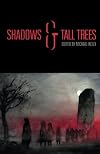
Shadows and Tall Trees is the title of the seventh chapter of William Golding’s modern classic Lord of the Flies. It is a particularly unsettling section of the book, haunted by a sense of lurking, undefined danger and by the disturbing realisation that evil but may be lurking within each and every individual.
This baggage of associations makes Shadow and Tall Trees an ideal name for editor Michael Kelly’s anthology series of weird fiction, published by Canadian press Undertow show more Publications. The series is now in its eighth instalment and having devoured this latest volume over a weekend, I feel I have joined – alas, quite late – just my kind of party. This collection, in fact, is characterised by fiction which could presumably count as “horror” but whose terrors are more elusive than the mainstream fare.
The opening story – The Glassy, Burning Floor of Hell by Brian Evenson – provides a perfect example of what one should expect. Hekla, the protagonist, unwillingly joins a spiritual retreat or workshop in a remote house outside the city. The initial pages suggest that this story will pan out into either a haunted house or a typical “slasher” scenario. What we get, however, is something much stranger and nightmarish. This is not the only story with a surreal, dreamlike atmosphere – another one is The Somnambulists by Simon Strantzas, featuring a hotel powered by dreams.
Conspicuous by their absence are the well-established monsters of the horror genre: there are no vampires, no werewolves and no malevolent clowns, although Dollface by Seán Padraic Birnie features what appears to be an evil doll. Ghosts do appear, but possibly not in the guise one would expect. Alison Littlewood, fresh from her supernatural/timeslip novel Mistletoe (my review here) contributes Hungry Ghosts, a tale set in contemporary Hanoi and inspired by the Vietnamese festival of the dead - a familiar premise is made stranger by the unfamiliar context. A Coastal Quest by Charles Wilkinson is a bittersweet story of a woman escaping an oppressive household, doubling as a tale of ghosts. In Camera Obscura by C.M. Muller, a city photographer shoots a derelict farmhouse haunted by a supernatural being. It’s an entity which borrows as much from Scandinavian folklore as from classic ghost stories, giving this piece a folk horror feel. The same atmosphere permeates Down to the Roots by Neil Williamson, about a high-flying businessman who returns to the small Scottish village of his childhood.
Previous volumes of Shadows and Tall Trees have won prizes and accolades. Peter Straub (no less) has described it as “a smart, soulful, illuminating investigation of the many forms and tactics available to those writers involved in one of our moment’s most interesting and necessary projects, that of opening up horror literature to every sort of formal interrogation”. This volume is, indeed, a cross-section of the contemporary wealth of innovative horror writing. Editor Michael Kelly’s judicious choices ensure that the anthology comprises a variety of subjects, as well as different styles and approaches. Some stories, for instance, set out to be original in form and structure. Tattletale by Carly Holmes has the punch of flash fiction – it’s over in a flurry of dark, violent metaphors. KL Pereira’s You, Girls Without Hands delivers its potent feminist message in six, very brief chapters. The Quiet Forms of Belonging by Kristi DeMeester adopts a style close to prose poetry, rich in metaphors and images which seem to be taken from dark fairy tales. Workday by Kurt Fawver is a Chine-Mieville-like critique of capitalist society, in which increasingly urgent anonymous warnings delivered to the employees of “Corivdan Incorporated” urging them not to attend the corporation’s holiday party because they are “in grave danger”, are countered by reassuring emails and memos issued by management. The piece has no characters, no dialogue and no narrative in the usual sense of the word, consisting solely of these sparring exchanges.
The contemporary feel of this anthology, however, is not based only on originality of form but also on the timeliness of the subjects. This is indeed proof that genre fiction is no mere escapism (although there would be nothing wrong with that) but can also be the means to address burning issues and concerns. Thus, the eco-Gothic The Sound of the Sea, Too Close by James Everington references climate change, global warming and the rise in sea levels; the darkly comic The Fascist has a Party by M. Rickert parodies a recognisable President, who remains unnamed in the text (and will remain unnamed in this review); Rebecca Campbell’s Child of Shower and Gleam portrays the suffering of an abusive relationship. One could also mention Lacunae by V.H. Leslie, whose musical subject makes it one of my favourite stories in the anthology. The young wife of a composer past his prime takes him back to a remote Scottish island. The landscape had purportedly provided the inspiration for his best-known work and the couple hope that his talents will be rekindled. We discover, however, that not only was his famous composition co-written but his (uncredited) first wife, but also that its haunting theme and unusual structure were wholly her creation. Classical music is passing through its own #metoo moment, with powerful figures unmasked as sexual predators and its ‘traditional’ white male canon increasingly put in question. “Lacunae” fits the mood perfectly. It chimes in with Icelandic composer Hildur Guðnadóttir's recent Oscar-acceptance speech and its tribute "to the girls, to the women, to the mothers, to the daughters who hear the music bubbling within...please speak up. We need to hear your voices"
Whilst one appreciates and admires the “timeliness” of these stories and their subjects, it would be wrong to overlook the intrinsic capacity of horror and the Gothic to address “timeless” fears. Pieces like Sleepwalking with Angels by Steve Rasnic Tem, about an old widower who is succumbing to dementia, or Steve Toase’s Green Grows the Grief which presents us with a woman whose sanity unravels following the death of her father, are a reminder that some terrors never change. Loss, pain, growing old, mortality – throughout the ages, these shadows have stalked our worldly existence. Stories might be a way to exorcise them.
Shadows and Tall Trees is a superb collection. It feels like taking a trip outside reality, only to come back and perceive it with brighter, sharper edges. show less
This baggage of associations makes Shadow and Tall Trees an ideal name for editor Michael Kelly’s anthology series of weird fiction, published by Canadian press Undertow show more Publications. The series is now in its eighth instalment and having devoured this latest volume over a weekend, I feel I have joined – alas, quite late – just my kind of party. This collection, in fact, is characterised by fiction which could presumably count as “horror” but whose terrors are more elusive than the mainstream fare.
The opening story – The Glassy, Burning Floor of Hell by Brian Evenson – provides a perfect example of what one should expect. Hekla, the protagonist, unwillingly joins a spiritual retreat or workshop in a remote house outside the city. The initial pages suggest that this story will pan out into either a haunted house or a typical “slasher” scenario. What we get, however, is something much stranger and nightmarish. This is not the only story with a surreal, dreamlike atmosphere – another one is The Somnambulists by Simon Strantzas, featuring a hotel powered by dreams.
Conspicuous by their absence are the well-established monsters of the horror genre: there are no vampires, no werewolves and no malevolent clowns, although Dollface by Seán Padraic Birnie features what appears to be an evil doll. Ghosts do appear, but possibly not in the guise one would expect. Alison Littlewood, fresh from her supernatural/timeslip novel Mistletoe (my review here) contributes Hungry Ghosts, a tale set in contemporary Hanoi and inspired by the Vietnamese festival of the dead - a familiar premise is made stranger by the unfamiliar context. A Coastal Quest by Charles Wilkinson is a bittersweet story of a woman escaping an oppressive household, doubling as a tale of ghosts. In Camera Obscura by C.M. Muller, a city photographer shoots a derelict farmhouse haunted by a supernatural being. It’s an entity which borrows as much from Scandinavian folklore as from classic ghost stories, giving this piece a folk horror feel. The same atmosphere permeates Down to the Roots by Neil Williamson, about a high-flying businessman who returns to the small Scottish village of his childhood.
Previous volumes of Shadows and Tall Trees have won prizes and accolades. Peter Straub (no less) has described it as “a smart, soulful, illuminating investigation of the many forms and tactics available to those writers involved in one of our moment’s most interesting and necessary projects, that of opening up horror literature to every sort of formal interrogation”. This volume is, indeed, a cross-section of the contemporary wealth of innovative horror writing. Editor Michael Kelly’s judicious choices ensure that the anthology comprises a variety of subjects, as well as different styles and approaches. Some stories, for instance, set out to be original in form and structure. Tattletale by Carly Holmes has the punch of flash fiction – it’s over in a flurry of dark, violent metaphors. KL Pereira’s You, Girls Without Hands delivers its potent feminist message in six, very brief chapters. The Quiet Forms of Belonging by Kristi DeMeester adopts a style close to prose poetry, rich in metaphors and images which seem to be taken from dark fairy tales. Workday by Kurt Fawver is a Chine-Mieville-like critique of capitalist society, in which increasingly urgent anonymous warnings delivered to the employees of “Corivdan Incorporated” urging them not to attend the corporation’s holiday party because they are “in grave danger”, are countered by reassuring emails and memos issued by management. The piece has no characters, no dialogue and no narrative in the usual sense of the word, consisting solely of these sparring exchanges.
The contemporary feel of this anthology, however, is not based only on originality of form but also on the timeliness of the subjects. This is indeed proof that genre fiction is no mere escapism (although there would be nothing wrong with that) but can also be the means to address burning issues and concerns. Thus, the eco-Gothic The Sound of the Sea, Too Close by James Everington references climate change, global warming and the rise in sea levels; the darkly comic The Fascist has a Party by M. Rickert parodies a recognisable President, who remains unnamed in the text (and will remain unnamed in this review); Rebecca Campbell’s Child of Shower and Gleam portrays the suffering of an abusive relationship. One could also mention Lacunae by V.H. Leslie, whose musical subject makes it one of my favourite stories in the anthology. The young wife of a composer past his prime takes him back to a remote Scottish island. The landscape had purportedly provided the inspiration for his best-known work and the couple hope that his talents will be rekindled. We discover, however, that not only was his famous composition co-written but his (uncredited) first wife, but also that its haunting theme and unusual structure were wholly her creation. Classical music is passing through its own #metoo moment, with powerful figures unmasked as sexual predators and its ‘traditional’ white male canon increasingly put in question. “Lacunae” fits the mood perfectly. It chimes in with Icelandic composer Hildur Guðnadóttir's recent Oscar-acceptance speech and its tribute "to the girls, to the women, to the mothers, to the daughters who hear the music bubbling within...please speak up. We need to hear your voices"
Whilst one appreciates and admires the “timeliness” of these stories and their subjects, it would be wrong to overlook the intrinsic capacity of horror and the Gothic to address “timeless” fears. Pieces like Sleepwalking with Angels by Steve Rasnic Tem, about an old widower who is succumbing to dementia, or Steve Toase’s Green Grows the Grief which presents us with a woman whose sanity unravels following the death of her father, are a reminder that some terrors never change. Loss, pain, growing old, mortality – throughout the ages, these shadows have stalked our worldly existence. Stories might be a way to exorcise them.
Shadows and Tall Trees is a superb collection. It feels like taking a trip outside reality, only to come back and perceive it with brighter, sharper edges. show less
Shadows and Tall Trees is the title of the seventh chapter of William Golding’s modern classic Lord of the Flies. It is a particularly unsettling section of the book, haunted by a sense of lurking, undefined danger and by the disturbing realisation that evil but may be lurking within each and every individual.
This baggage of associations makes Shadow and Tall Trees an ideal name for editor Michael Kelly’s anthology series of weird fiction, published by Canadian press Undertow show more Publications. The series is now in its eighth instalment and having devoured this latest volume over a weekend, I feel I have joined – alas, quite late – just my kind of party. This collection, in fact, is characterised by fiction which could presumably count as “horror” but whose terrors are more elusive than the mainstream fare.
The opening story – The Glassy, Burning Floor of Hell by Brian Evenson – provides a perfect example of what one should expect. Hekla, the protagonist, unwillingly joins a spiritual retreat or workshop in a remote house outside the city. The initial pages suggest that this story will pan out into either a haunted house or a typical “slasher” scenario. What we get, however, is something much stranger and nightmarish. This is not the only story with a surreal, dreamlike atmosphere – another one is The Somnambulists by Simon Strantzas, featuring a hotel powered by dreams.
Conspicuous by their absence are the well-established monsters of the horror genre: there are no vampires, no werewolves and no malevolent clowns, although Dollface by Seán Padraic Birnie features what appears to be an evil doll. Ghosts do appear, but possibly not in the guise one would expect. Alison Littlewood, fresh from her supernatural/timeslip novel Mistletoe (my review here) contributes Hungry Ghosts, a tale set in contemporary Hanoi and inspired by the Vietnamese festival of the dead - a familiar premise is made stranger by the unfamiliar context. A Coastal Quest by Charles Wilkinson is a bittersweet story of a woman escaping an oppressive household, doubling as a tale of ghosts. In Camera Obscura by C.M. Muller, a city photographer shoots a derelict farmhouse haunted by a supernatural being. It’s an entity which borrows as much from Scandinavian folklore as from classic ghost stories, giving this piece a folk horror feel. The same atmosphere permeates Down to the Roots by Neil Williamson, about a high-flying businessman who returns to the small Scottish village of his childhood.
Previous volumes of Shadows and Tall Trees have won prizes and accolades. Peter Straub (no less) has described it as “a smart, soulful, illuminating investigation of the many forms and tactics available to those writers involved in one of our moment’s most interesting and necessary projects, that of opening up horror literature to every sort of formal interrogation”. This volume is, indeed, a cross-section of the contemporary wealth of innovative horror writing. Editor Michael Kelly’s judicious choices ensure that the anthology comprises a variety of subjects, as well as different styles and approaches. Some stories, for instance, set out to be original in form and structure. Tattletale by Carly Holmes has the punch of flash fiction – it’s over in a flurry of dark, violent metaphors. KL Pereira’s You, Girls Without Hands delivers its potent feminist message in six, very brief chapters. The Quiet Forms of Belonging by Kristi DeMeester adopts a style close to prose poetry, rich in metaphors and images which seem to be taken from dark fairy tales. Workday by Kurt Fawver is a Chine-Mieville-like critique of capitalist society, in which increasingly urgent anonymous warnings delivered to the employees of “Corivdan Incorporated” urging them not to attend the corporation’s holiday party because they are “in grave danger”, are countered by reassuring emails and memos issued by management. The piece has no characters, no dialogue and no narrative in the usual sense of the word, consisting solely of these sparring exchanges.
The contemporary feel of this anthology, however, is not based only on originality of form but also on the timeliness of the subjects. This is indeed proof that genre fiction is no mere escapism (although there would be nothing wrong with that) but can also be the means to address burning issues and concerns. Thus, the eco-Gothic The Sound of the Sea, Too Close by James Everington references climate change, global warming and the rise in sea levels; the darkly comic The Fascist has a Party by M. Rickert parodies a recognisable President, who remains unnamed in the text (and will remain unnamed in this review); Rebecca Campbell’s Child of Shower and Gleam portrays the suffering of an abusive relationship. One could also mention Lacunae by V.H. Leslie, whose musical subject makes it one of my favourite stories in the anthology. The young wife of a composer past his prime takes him back to a remote Scottish island. The landscape had purportedly provided the inspiration for his best-known work and the couple hope that his talents will be rekindled. We discover, however, that not only was his famous composition co-written but his (uncredited) first wife, but also that its haunting theme and unusual structure were wholly her creation. Classical music is passing through its own #metoo moment, with powerful figures unmasked as sexual predators and its ‘traditional’ white male canon increasingly put in question. “Lacunae” fits the mood perfectly. It chimes in with Icelandic composer Hildur Guðnadóttir's recent Oscar-acceptance speech and its tribute "to the girls, to the women, to the mothers, to the daughters who hear the music bubbling within...please speak up. We need to hear your voices"
Whilst one appreciates and admires the “timeliness” of these stories and their subjects, it would be wrong to overlook the intrinsic capacity of horror and the Gothic to address “timeless” fears. Pieces like Sleepwalking with Angels by Steve Rasnic Tem, about an old widower who is succumbing to dementia, or Steve Toase’s Green Grows the Grief which presents us with a woman whose sanity unravels following the death of her father, are a reminder that some terrors never change. Loss, pain, growing old, mortality – throughout the ages, these shadows have stalked our worldly existence. Stories might be a way to exorcise them.
Shadows and Tall Trees is a superb collection. It feels like taking a trip outside reality, only to come back and perceive it with brighter, sharper edges. show less
This baggage of associations makes Shadow and Tall Trees an ideal name for editor Michael Kelly’s anthology series of weird fiction, published by Canadian press Undertow show more Publications. The series is now in its eighth instalment and having devoured this latest volume over a weekend, I feel I have joined – alas, quite late – just my kind of party. This collection, in fact, is characterised by fiction which could presumably count as “horror” but whose terrors are more elusive than the mainstream fare.
The opening story – The Glassy, Burning Floor of Hell by Brian Evenson – provides a perfect example of what one should expect. Hekla, the protagonist, unwillingly joins a spiritual retreat or workshop in a remote house outside the city. The initial pages suggest that this story will pan out into either a haunted house or a typical “slasher” scenario. What we get, however, is something much stranger and nightmarish. This is not the only story with a surreal, dreamlike atmosphere – another one is The Somnambulists by Simon Strantzas, featuring a hotel powered by dreams.
Conspicuous by their absence are the well-established monsters of the horror genre: there are no vampires, no werewolves and no malevolent clowns, although Dollface by Seán Padraic Birnie features what appears to be an evil doll. Ghosts do appear, but possibly not in the guise one would expect. Alison Littlewood, fresh from her supernatural/timeslip novel Mistletoe (my review here) contributes Hungry Ghosts, a tale set in contemporary Hanoi and inspired by the Vietnamese festival of the dead - a familiar premise is made stranger by the unfamiliar context. A Coastal Quest by Charles Wilkinson is a bittersweet story of a woman escaping an oppressive household, doubling as a tale of ghosts. In Camera Obscura by C.M. Muller, a city photographer shoots a derelict farmhouse haunted by a supernatural being. It’s an entity which borrows as much from Scandinavian folklore as from classic ghost stories, giving this piece a folk horror feel. The same atmosphere permeates Down to the Roots by Neil Williamson, about a high-flying businessman who returns to the small Scottish village of his childhood.
Previous volumes of Shadows and Tall Trees have won prizes and accolades. Peter Straub (no less) has described it as “a smart, soulful, illuminating investigation of the many forms and tactics available to those writers involved in one of our moment’s most interesting and necessary projects, that of opening up horror literature to every sort of formal interrogation”. This volume is, indeed, a cross-section of the contemporary wealth of innovative horror writing. Editor Michael Kelly’s judicious choices ensure that the anthology comprises a variety of subjects, as well as different styles and approaches. Some stories, for instance, set out to be original in form and structure. Tattletale by Carly Holmes has the punch of flash fiction – it’s over in a flurry of dark, violent metaphors. KL Pereira’s You, Girls Without Hands delivers its potent feminist message in six, very brief chapters. The Quiet Forms of Belonging by Kristi DeMeester adopts a style close to prose poetry, rich in metaphors and images which seem to be taken from dark fairy tales. Workday by Kurt Fawver is a Chine-Mieville-like critique of capitalist society, in which increasingly urgent anonymous warnings delivered to the employees of “Corivdan Incorporated” urging them not to attend the corporation’s holiday party because they are “in grave danger”, are countered by reassuring emails and memos issued by management. The piece has no characters, no dialogue and no narrative in the usual sense of the word, consisting solely of these sparring exchanges.
The contemporary feel of this anthology, however, is not based only on originality of form but also on the timeliness of the subjects. This is indeed proof that genre fiction is no mere escapism (although there would be nothing wrong with that) but can also be the means to address burning issues and concerns. Thus, the eco-Gothic The Sound of the Sea, Too Close by James Everington references climate change, global warming and the rise in sea levels; the darkly comic The Fascist has a Party by M. Rickert parodies a recognisable President, who remains unnamed in the text (and will remain unnamed in this review); Rebecca Campbell’s Child of Shower and Gleam portrays the suffering of an abusive relationship. One could also mention Lacunae by V.H. Leslie, whose musical subject makes it one of my favourite stories in the anthology. The young wife of a composer past his prime takes him back to a remote Scottish island. The landscape had purportedly provided the inspiration for his best-known work and the couple hope that his talents will be rekindled. We discover, however, that not only was his famous composition co-written but his (uncredited) first wife, but also that its haunting theme and unusual structure were wholly her creation. Classical music is passing through its own #metoo moment, with powerful figures unmasked as sexual predators and its ‘traditional’ white male canon increasingly put in question. “Lacunae” fits the mood perfectly. It chimes in with Icelandic composer Hildur Guðnadóttir's recent Oscar-acceptance speech and its tribute "to the girls, to the women, to the mothers, to the daughters who hear the music bubbling within...please speak up. We need to hear your voices"
Whilst one appreciates and admires the “timeliness” of these stories and their subjects, it would be wrong to overlook the intrinsic capacity of horror and the Gothic to address “timeless” fears. Pieces like Sleepwalking with Angels by Steve Rasnic Tem, about an old widower who is succumbing to dementia, or Steve Toase’s Green Grows the Grief which presents us with a woman whose sanity unravels following the death of her father, are a reminder that some terrors never change. Loss, pain, growing old, mortality – throughout the ages, these shadows have stalked our worldly existence. Stories might be a way to exorcise them.
Shadows and Tall Trees is a superb collection. It feels like taking a trip outside reality, only to come back and perceive it with brighter, sharper edges. show less
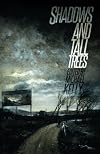
This is a volume of modern weird stories, the kind that aspire to fine writing and a certain atmosphere of dread rather than hero overcoming a succession of crises to win out in the last act plot shenanigans. Heroes overcoming a succession of crises to win out in the last act plots are good for trilogies or endless series if the publisher lets you get away with it, but the short story is a place for experiments of this kind. Maybe.
‘Line Of Sight’ by Brian Evenson has third person show more narration with a neat point of view switch at the end. Todd directs a film but is sure there’s something wrong with it. He goes back to view the finished version and there seems to be something amiss with the eye-lines in scenes shot in an old house. So he goes back to the house. ‘Being in the house was like being in the belly of something. It was like they’d been swallowed, and that the house, seemingly inert, was not inert at all.’ A nicely spooky atmosphere is evoked and the author clearly knows something about filmmaking.
‘Everything Beautiful Is Terrifying’ by M.Rickert. First person narration. Two girls, best friends, look similar and dress in similar clothes so that they are often mistaken for twins. One is murdered. Although she is not found guilty in court everyone thinks the other girl did it and earns a certain notoriety. A film is made. Strangers come to town, identifiable by their clothes and manner so that ‘like belled cats they give their trespass away’. This was one of those stories that works by revealing bits of information slowly until you get a whole picture. A feeling of dread is evoked.
‘Shell Baby’ by V.H. Leslie. Third person narration. On a remote island in the Orkneys, Elspeth rents an isolated cottage for the winter. She wants to be alone. After swimming in the sea, amid a strange green light which she presumes to be the aurora borealis, she finds a small creature on the shore. She begins to consider it the child she always wanted, born of the sea like the goddess Aphrodite or it may be a monster. ‘After all, it’s a fine line between monsters and gods, a vague boundary like the shoreline itself where neither the land nor the sea hold dominion.’ The theme of the maternal instinct is perhaps not so comprehensible to a mere man but it was good.
‘The Water Kings’ by Manish Melwani is based on Balzac’s notion that behind every great fortune there is a great crime. A family of shipping magnates in Singapore may pay the price for their ancestors’ misdeeds. The similes tie in nicely to the main theme: ‘Tankers and cargo ships buoyed the horizon like floating coffins.’ ‘Adulthood and its inheritance weighed on him like rusty chains slipping beneath dark water.’ Partly, perhaps, because of the exotic background, this worked really well. Manish Melwani has a book of Singapore ghost stories coming out soon and it will be worth watching out for.
‘The Attempt’ by Rosalie Parker is a charming childhood fable. ‘The Tall Grass’ by Simon Strantzas was too weird for me. A plant comes to life. ‘The Erased’ by Steve Rasnic Tem was far too weird with things disappearing in a surreal world. ‘We Can Walk It Off Come The Morning’ by Malcolm Devlin evoked a vague sense of menace with some people lost in the fog in Ireland but ended with a whimper. Not unusual in this sort of story but even by those standards this was weak.
‘The Swimming Pool Party’ by Robert Shearman was downright chilling, reminding me of some old saying about the banality of evil. Some kids have a swimming pool party to celebrate Nicky’s birthday and Max, not at all popular, is invited, much to the surprise of his mother. Nicky’s mother is welcoming but odd. Kids birthday parties have gone mad in our time with Mum’s trying to outdo each other but this one was particularly bad. Genuine horror.
‘The Cenacle’ by Robert Levy is about a widow who can’t face going back to her ordinary life so she stays in the graveyard. It turns out there are others doing the same thing. Definitely weird.
‘Slimikins’ by Charles Wilkinson is one of those pieces that lets slip information bit by bit until you get a complete picture at the end. It’s about a former schoolteacher. Few people can stand teaching under modern conditions and they’re leaving the profession in droves but hopefully the robots can take over soon.
‘The Voice Of The People’ by Alison Moore is about a town with a factory that gives off unknown emissions which seem to cause lethargy in everyone. In ‘Curb Day’ by Rebecca Kuder everyone has to put out a certain weight of rubbish in black bags every year in May. No explanation is given. In ‘Engines Of The Ocean’ by Christopher Slats, a woman receives a letter from her father who is dead. She goes to investigate in the seaside town where he lived and everything is covered in salt. No explanation.
‘Sun Dogs’ by Laura Mauro was unreadable because narrative was addressed to ‘you’ as in ‘you did this, you did that’. I found this so annoying I couldn’t finish it.
Many of these stories are over-written but ‘Root Light’ by Michael Wehunt takes the practice to new levels. To be fair, the protagonist is a poet so the excessive descriptiveness may have been meant to reflect that. To be even fairer, it got quite gripping in the middle and had an ending, too. I’m not quite sure what the ending meant but it had one.
‘The Triplets’ by Harmony Neal is great. Three wealthy, beautiful women decide to conceive their girls under the same blue moon, outside, as according to some legend this will produce the perfect child. Three beautiful girls are born and grow up doing everything together. This razor-sharp social satire was an absolute joy to read and laugh out loud funny. The fantastical bit tacked on the end is almost irrelevant.
‘Dispossession’ by Nicholas Royle was a sad story about a Peeping Tom. There was no discernible fantasy element and it wasn’t very nice.
It’s a moot point whether this collection was front loaded with the best stuff at the beginning or whether the later stories didn’t appeal, with the notable exception of ’The Triplets’, because I was getting tired of the ‘New Weird’. There’s a lot of perceptive writing about everyday life today along with carefully worded prose that evokes an atmosphere of dread and as this is the aim perhaps that is how it should be judged.
I have a lot of respect for the authors. To get this kind of thing right takes a much skill and doesn’t pay much. There’s heaps more money in writing chase plots in bestsellerese that will get picked up by Hollywood. The writers obviously do it for the pure love of prose as opposed to story and if you share that affection you might like this book. It won’t be to everyone’s taste and didn’t really fit mine but ‘Shadows & Tall Trees 7’ is a shining example of ‘New Weird’ if you like that sort of thing. It may win awards but fantasy has joined the mainstream in that the stuff which wins awards and the stuff people actually like to read have mostly become separate.
It’s almost worth buying just for ‘The Triplets’. That was hilarious.
Eamonn Murphy
This review first appeared at https://www.sfcrowsnest.info/ show less
‘Line Of Sight’ by Brian Evenson has third person show more narration with a neat point of view switch at the end. Todd directs a film but is sure there’s something wrong with it. He goes back to view the finished version and there seems to be something amiss with the eye-lines in scenes shot in an old house. So he goes back to the house. ‘Being in the house was like being in the belly of something. It was like they’d been swallowed, and that the house, seemingly inert, was not inert at all.’ A nicely spooky atmosphere is evoked and the author clearly knows something about filmmaking.
‘Everything Beautiful Is Terrifying’ by M.Rickert. First person narration. Two girls, best friends, look similar and dress in similar clothes so that they are often mistaken for twins. One is murdered. Although she is not found guilty in court everyone thinks the other girl did it and earns a certain notoriety. A film is made. Strangers come to town, identifiable by their clothes and manner so that ‘like belled cats they give their trespass away’. This was one of those stories that works by revealing bits of information slowly until you get a whole picture. A feeling of dread is evoked.
‘Shell Baby’ by V.H. Leslie. Third person narration. On a remote island in the Orkneys, Elspeth rents an isolated cottage for the winter. She wants to be alone. After swimming in the sea, amid a strange green light which she presumes to be the aurora borealis, she finds a small creature on the shore. She begins to consider it the child she always wanted, born of the sea like the goddess Aphrodite or it may be a monster. ‘After all, it’s a fine line between monsters and gods, a vague boundary like the shoreline itself where neither the land nor the sea hold dominion.’ The theme of the maternal instinct is perhaps not so comprehensible to a mere man but it was good.
‘The Water Kings’ by Manish Melwani is based on Balzac’s notion that behind every great fortune there is a great crime. A family of shipping magnates in Singapore may pay the price for their ancestors’ misdeeds. The similes tie in nicely to the main theme: ‘Tankers and cargo ships buoyed the horizon like floating coffins.’ ‘Adulthood and its inheritance weighed on him like rusty chains slipping beneath dark water.’ Partly, perhaps, because of the exotic background, this worked really well. Manish Melwani has a book of Singapore ghost stories coming out soon and it will be worth watching out for.
‘The Attempt’ by Rosalie Parker is a charming childhood fable. ‘The Tall Grass’ by Simon Strantzas was too weird for me. A plant comes to life. ‘The Erased’ by Steve Rasnic Tem was far too weird with things disappearing in a surreal world. ‘We Can Walk It Off Come The Morning’ by Malcolm Devlin evoked a vague sense of menace with some people lost in the fog in Ireland but ended with a whimper. Not unusual in this sort of story but even by those standards this was weak.
‘The Swimming Pool Party’ by Robert Shearman was downright chilling, reminding me of some old saying about the banality of evil. Some kids have a swimming pool party to celebrate Nicky’s birthday and Max, not at all popular, is invited, much to the surprise of his mother. Nicky’s mother is welcoming but odd. Kids birthday parties have gone mad in our time with Mum’s trying to outdo each other but this one was particularly bad. Genuine horror.
‘The Cenacle’ by Robert Levy is about a widow who can’t face going back to her ordinary life so she stays in the graveyard. It turns out there are others doing the same thing. Definitely weird.
‘Slimikins’ by Charles Wilkinson is one of those pieces that lets slip information bit by bit until you get a complete picture at the end. It’s about a former schoolteacher. Few people can stand teaching under modern conditions and they’re leaving the profession in droves but hopefully the robots can take over soon.
‘The Voice Of The People’ by Alison Moore is about a town with a factory that gives off unknown emissions which seem to cause lethargy in everyone. In ‘Curb Day’ by Rebecca Kuder everyone has to put out a certain weight of rubbish in black bags every year in May. No explanation is given. In ‘Engines Of The Ocean’ by Christopher Slats, a woman receives a letter from her father who is dead. She goes to investigate in the seaside town where he lived and everything is covered in salt. No explanation.
‘Sun Dogs’ by Laura Mauro was unreadable because narrative was addressed to ‘you’ as in ‘you did this, you did that’. I found this so annoying I couldn’t finish it.
Many of these stories are over-written but ‘Root Light’ by Michael Wehunt takes the practice to new levels. To be fair, the protagonist is a poet so the excessive descriptiveness may have been meant to reflect that. To be even fairer, it got quite gripping in the middle and had an ending, too. I’m not quite sure what the ending meant but it had one.
‘The Triplets’ by Harmony Neal is great. Three wealthy, beautiful women decide to conceive their girls under the same blue moon, outside, as according to some legend this will produce the perfect child. Three beautiful girls are born and grow up doing everything together. This razor-sharp social satire was an absolute joy to read and laugh out loud funny. The fantastical bit tacked on the end is almost irrelevant.
‘Dispossession’ by Nicholas Royle was a sad story about a Peeping Tom. There was no discernible fantasy element and it wasn’t very nice.
It’s a moot point whether this collection was front loaded with the best stuff at the beginning or whether the later stories didn’t appeal, with the notable exception of ’The Triplets’, because I was getting tired of the ‘New Weird’. There’s a lot of perceptive writing about everyday life today along with carefully worded prose that evokes an atmosphere of dread and as this is the aim perhaps that is how it should be judged.
I have a lot of respect for the authors. To get this kind of thing right takes a much skill and doesn’t pay much. There’s heaps more money in writing chase plots in bestsellerese that will get picked up by Hollywood. The writers obviously do it for the pure love of prose as opposed to story and if you share that affection you might like this book. It won’t be to everyone’s taste and didn’t really fit mine but ‘Shadows & Tall Trees 7’ is a shining example of ‘New Weird’ if you like that sort of thing. It may win awards but fantasy has joined the mainstream in that the stuff which wins awards and the stuff people actually like to read have mostly become separate.
It’s almost worth buying just for ‘The Triplets’. That was hilarious.
Eamonn Murphy
This review first appeared at https://www.sfcrowsnest.info/ show less
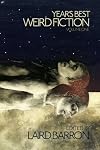
An outstanding premier collection that seems to not get as high a rating as it deserves. The [a:Emily Dickinson|7440|Emily Dickinson|https://d.gr-assets.com/authors/1198536260p2/7440.jpg] I thought was the weakest of the lot, followed by the [a:Wilum H. Pugmire|5741197|Wilum H. Pugmire|https://d.gr-assets.com/authors/1342558366p2/5741197.jpg] story and I would have still give them both a strong three stars. Maybe some people were looking for some just wild out there stuff, but Barron favors show more the weird but comprehensible, sorta, over bizarre experiemental writing that at times leaves me cold. It always seems like writers in love with themselves. Not here though.
I'm looking forward to volume 2. show less
I'm looking forward to volume 2. show less
Awards


You May Also Like


Associated Authors
Statistics
- Works
- 38
- Also by
- 26
- Members
- 589
- Popularity
- #42,597
- Rating
- 3.8
- Reviews
- 11
- ISBNs
- 179
- Languages
- 1