
Ai Weiwei
Author of 1000 Years of Joys and Sorrows: A Memoir
About the Author
Disambiguation Notice:
(yid) VIAF:96607499
VIAF:96607499
Image credit: Aj Wej-wej (Prague, 2017) By Jindřich Nosek (NoJin) - Own work, CC BY-SA 4.0, https://commons.wikimedia.org/w/index.php?curid=57259004
Works by Ai Weiwei
Ai Weiwei: Dropping the Urn, Ceramic Works, 5000 BCE-2010 CE (English and Mandarin Chinese Edition) (2010) 16 copies
Art and cultural policy in China : a conversation between Ai Weiwei, Uli Sigg and Yung Ho Chang (2009) 6 copies
Ai Weiwei: Four Moverments 2 copies
Fuck Off 2 copies
The World As It Is: In the Eyes of Margaret Atwood, Wọlé Sóyinká, Ai Weiwei (1986) — Contributor — 1 copy
1000 év öröm és bánat 1 copy
Black Cover Book, 黑皮書 1 copy
Cahiers d'Art (43rd Year) 1 copy
Human Flow [Blu-ray] 1 copy
Zodíaco - Memórias Gráficas 1 copy
So Sorry 1 copy
MAP Office: The Chinese Box 1 copy
Internal 1 copy
O Blogue de Ai Weiwei. Escritos, Entrevistas e Arengas Digitais. 2006-2009 (Em Portuguese do Brasil) (2013) 1 copy
Zodiac Heads 1 copy
Associated Works
Mahjong: Contemporary Chinese Art From The Sigg Collection (2005) — Contributor and Artist — 19 copies
Tagged
Common Knowledge
- Legal name
- Ai Weiwei
- Birthdate
- 1957-05-18
- Gender
- male
- Occupations
- artist
- Awards and honors
- Frank-Schirrmacher-Preis (2019)
- Relationships
- Ai Qing (father)
- Nationality
- China
- Birthplace
- Beijing, China
- Disambiguation notice
- VIAF:96607499
- Associated Place (for map)
- Beijing, China
Members
Reviews
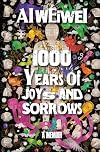
Artist Ai Weiwei writes a dual memoir of his father and himself. His father, Ai Qing, was a well-known poet and friend of Pablo Neruda, but during the Cultural Revolution he was put in a camp and treated poorly because the state deemed his poetry anti-Communist. Ai Weiwei, in parallel, is an outspoken artist who found an internet following on Twitter and constantly challenges the status quo. This, too, got him into trouble with the authoritarian state, and he draws parallels between himself show more and his father and writes about his commitment to art and free expression.
Towards the end of the memoir, Ai Weiwei explains his reason for writing:
"So the idea came to me that if I was released, to bridge the gap between us, I should write down what I knew of my father and tell my son honestly who I am, what life means to me, why freedom is so precious, and why autocracy fears art. I hoped that my convictions could become something he could see and feel in his heart and mind. That way, if one day Ai Lao [his son] wanted to know more, it would be there–my own story, and his grandfather’s."
He does exactly what he sets out to do. The form of the book is nearly evenly split between his father's story and his. Sometimes the timeline in his father's story was a little hard for me to follow, because Ai Weiwei would move forward and back, mostly telling it in chronological order but then referring to something in the future that I wasn't familiar with before picking up the thread. Throughout both men's stories, he reflects on art - and a lot of his thoughts could apply to Art as a whole, including writing - and its meaning to him. I was unfamiliar with his art prior to picking up the memoir, but I found that half of the book especially interesting. Photographs and sketches accompany the text and provide context for the art exhibitions he describes, and now I want to see if I can find at least one of the documentaries he created. He gives a lot of background to his thought process behind his works, and insists that art is always changing and doesn't mean one thing. A book that would equally interest readers of Chinese history and art history. show less
Towards the end of the memoir, Ai Weiwei explains his reason for writing:
"So the idea came to me that if I was released, to bridge the gap between us, I should write down what I knew of my father and tell my son honestly who I am, what life means to me, why freedom is so precious, and why autocracy fears art. I hoped that my convictions could become something he could see and feel in his heart and mind. That way, if one day Ai Lao [his son] wanted to know more, it would be there–my own story, and his grandfather’s."
He does exactly what he sets out to do. The form of the book is nearly evenly split between his father's story and his. Sometimes the timeline in his father's story was a little hard for me to follow, because Ai Weiwei would move forward and back, mostly telling it in chronological order but then referring to something in the future that I wasn't familiar with before picking up the thread. Throughout both men's stories, he reflects on art - and a lot of his thoughts could apply to Art as a whole, including writing - and its meaning to him. I was unfamiliar with his art prior to picking up the memoir, but I found that half of the book especially interesting. Photographs and sketches accompany the text and provide context for the art exhibitions he describes, and now I want to see if I can find at least one of the documentaries he created. He gives a lot of background to his thought process behind his works, and insists that art is always changing and doesn't mean one thing. A book that would equally interest readers of Chinese history and art history. show less
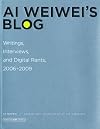
I read this book at a very peculiar time. Our local art museum, the Milwaukee Art Museum, was opening the "Summer of China," the only exhibit in the U.S. to open in collaboration with the Chinese government at the time of the imprisonment of Chinese artist Ai Weiwei. At the same time, my mother had suffered a terrible injury. She had been in a burn unit at a local hospital where my partner and I stayed with her around the clock for weeks on end. When my mom became weaker and weaker, we made show more the decision to take her home and care for her there. This meant dressing wounds, doing physical therapy, making her high calorie shakes to keep weight on her, and many other little travails. It was just the two of us most hours of the day. I took family leave time to care for her. Though I wasn't in the newsroom, I ended up writing a story about Ai's imprisonment and the implications for MAM from home. At some point, I decided to do a daily blog post reflecting on Ai Weiwei's ideas for as long as he remained held. It seemed like a small act of support for this important artist and appropriate for an art critic in a city celebrating "The Summer of China." So after a day of caring from my mom, I would crawl into bed, tired and emotionally drained, and open this book, excerpts of a blog scrubbed from the internet by Chinese authorities and written in Chinese. I found Ai's posts to be hilarious and more insightful and substantial than you might expect from an artist who takes pictures of himself flipping off the White House. It was difficult to choose what I would reflect on in my blog posts, there was just so much worth considering. We should all be grateful to MIT Press for translating and publishing Ai's blog. show less
My best friend is an artist, and when she showed me the draft of a memoir she'd written, I was outraged - "Wait, you're an artist AND a writer? No fair!". My response to this memoir of Ai Weiwei is the same: we know of his skill as an artist and his political struggles against the Chinese government, but he’s also an incredibly skilled writer. The memoir begins with the exile of Ai Weiwei’s father, the renowned poet Ai Qing, to the Chinese equivalent of Siberia, along with his two sons. show more Ai Qing was a political prisoner who suffered greatly under Mao’s administration. Although they lived side-by-side in a freezing dugout, Ai Weiwei never spoke with his father about his punishment, nor about the regime that caused so much suffering for those who were considered to be elites. As Ai Weiwei’s own talent in architecture and in conceptual art became recognized, he was able to leave China and travel to the US and to Europe, and, while enjoying his freedom from constant observation and harassment, he was always drawn back to China. Eventually he was done in by his outspoken rebellion on social media, and was also imprisoned and banned from the internet and from participating in Chinese and international exhibits. He now lives in England. His métier is Dada and his idol is Marcel Duchamp. Ai Weiwei is a true anarchist, dedicated only to his son and his artistic spirit, and permanently contemptuous of any regime that represses the spirit of its citizens. His memoir is a powerful outcry against the rigidity of modern Chinese society.
Quotes: “Memories were a burden, and it was best to be done with them.”
“I felt an aversion to all the norms and premises that others never thought to challenge, and this kept me in an almost permanent state of tension.”
“Violence, so deeply rooted in American life that you could never escape it, reflected the profound flaws built into the country’s social fabric.”
“By the very absence of explicit guidance from my father, a spiritual connection was forged between us; he, in his way, protected me.”
“Then, as now, I seemed to have, however childishly, an instinctive resistance toward cultural authority.”
“When Chinese are abroad, they love nothing more than getting together with people they know – even being with people they don’t like is better than being by themselves! This sense of insecurity when alone stems from the lack of basic guarantees in Chinese society – kinship and bonds of affection are what you count on for protection.”
“Inherent ideas and frameworks left me dissatisfied. When you break away from mandated meaning, you enter a state of tension with your surroundings, and it is then, when you are uncomfortable, that you are at your most alert.”
“Limitations come only from a fear inside the heart, and art is the antidote to fear.” show less
Quotes: “Memories were a burden, and it was best to be done with them.”
“I felt an aversion to all the norms and premises that others never thought to challenge, and this kept me in an almost permanent state of tension.”
“Violence, so deeply rooted in American life that you could never escape it, reflected the profound flaws built into the country’s social fabric.”
“By the very absence of explicit guidance from my father, a spiritual connection was forged between us; he, in his way, protected me.”
“Then, as now, I seemed to have, however childishly, an instinctive resistance toward cultural authority.”
“When Chinese are abroad, they love nothing more than getting together with people they know – even being with people they don’t like is better than being by themselves! This sense of insecurity when alone stems from the lack of basic guarantees in Chinese society – kinship and bonds of affection are what you count on for protection.”
“Inherent ideas and frameworks left me dissatisfied. When you break away from mandated meaning, you enter a state of tension with your surroundings, and it is then, when you are uncomfortable, that you are at your most alert.”
“Limitations come only from a fear inside the heart, and art is the antidote to fear.” show less

Conversation by/with Ai Weiwei is an eye-opening exploration of the artist and the person. These largely take the form of questions and answers but there is an informal feel to much of it that promotes a sense of openness and honesty.
While I know of Ai Weiwei, and had seen a couple of his works (online), I didn't really know anything about him. I wasn't sure whether this was the format for me to learn about him but it seemed like as good a first step as any. Turns out he is the type of show more person who will answer pretty much any question as well as he can, so I was richly rewarded with this book. I did do a quick online check so I wouldn't go into the conversations completely ignorant and it did help a little, but I think I would have been just as pleased had I simply started reading.
I read one conversation/interview a day, partly because this type of format lends itself to such a reading and partly because interviews can often cover the same or similar ground so I didn't want to feel like I was rereading something. Turns out that even when some of the same ground was covered he managed to find different paths into the topic, so it wasn't as repetitive as it could have been.
I came away with both a deep appreciation of the man and a desire to learn more about his art and activism. This book should appeal to most readers with an interest in art and/or activism. It will also be an interesting read no matter how much you already know, or don't know, about Ai Weiwei.
Reviewed from a copy made available by the publisher via NetGalley. show less
While I know of Ai Weiwei, and had seen a couple of his works (online), I didn't really know anything about him. I wasn't sure whether this was the format for me to learn about him but it seemed like as good a first step as any. Turns out he is the type of show more person who will answer pretty much any question as well as he can, so I was richly rewarded with this book. I did do a quick online check so I wouldn't go into the conversations completely ignorant and it did help a little, but I think I would have been just as pleased had I simply started reading.
I read one conversation/interview a day, partly because this type of format lends itself to such a reading and partly because interviews can often cover the same or similar ground so I didn't want to feel like I was rereading something. Turns out that even when some of the same ground was covered he managed to find different paths into the topic, so it wasn't as repetitive as it could have been.
I came away with both a deep appreciation of the man and a desire to learn more about his art and activism. This book should appeal to most readers with an interest in art and/or activism. It will also be an interesting read no matter how much you already know, or don't know, about Ai Weiwei.
Reviewed from a copy made available by the publisher via NetGalley. show less
Lists
Awards


You May Also Like


Associated Authors
Statistics
- Works
- 77
- Also by
- 7
- Members
- 993
- Popularity
- #25,941
- Rating
- 3.9
- Reviews
- 27
- ISBNs
- 115
- Languages
- 11