
Hans-Ulrich Obrist
Author of Ways of Curating
About the Author
Hans Ulrich Obrist is a curator and writer. Since 2006, he has been the codirector of the Serpentine Galleries in London. He is the author of Ai Weiwei Speaks and The Conversation Series, an ongoing collection of interviews with contemporary artists, among other works.
Image credit: Hans-Ulrich Obrist
Series
Works by Hans-Ulrich Obrist
Rem Koolhaas & Hans-Ulrich Obrist: The Conversation Series: Volume 4 (Conversation (Verlag Der Buchhandlung)) (Pt. 4) (2006) 34 copies
More Than You Wanted to Know About John Baldessari: Volume II (Documents) (2013) 11 copies, 1 review
Hans Ulrich Obrist & Christian Boltanski: The Conversation Series: Vol. 19 (Conversation (Verlag Der Buchhandlung)) (2009) 6 copies
An Open System Meets an Open System. Sarah Morris and Hans Ulrich Obrist in Coversation (2013) 5 copies
El aire es azul: Reflexiones sobre arte y arquitectura en torno a la obra de Luis Barragan (Spanish Edition) (2006) 5 copies
Interviews 2 copies
Conversaciones en México 2 copies
It has only just begun : Hans Ulrich Obrist in conversation with Joseph Grigely and Rirkrit Tiravanija (2013) 2 copies
Ai Weiwei (Contemporary Artists (Phaidon)) by Karen Smith, Hans Ulrich Obrist, Bernard Fibicher, Ai Weiwei (2009) Paperback — Author — 1 copy
Via d'Ombra: Alfredo Pirri, Villa Medici, Roma 2000 — Curator — 1 copy
EVN Sammlung : Ankäufe 2000-2002 — Author — 1 copy
Conversaciones en Colombia 1 copy
Lyon Biennial 1 copy
Rashid Rana : Perpétuel Paradoxe — Interviewer — 1 copy
Stručná historie kurátorsví 1 copy
Arte agora! em 5 entrevistas : Matthew Barney, Maurizio Cattelan, Olafur Eliasson, Cildo Meireles, Rirkrit Tiravanija (2006) 1 copy
Surface 1 copy
Cruz-Diez 1 copy
Erwin Wurm 1 copy
Conversaciones en Mexico 1 copy
The future will be 1 copy
Curating DLD 1 copy
Michael Von Graffenried 1 copy
Cities on the Move: Urban Chaos and Global Change - East Asian Art, Architecture and Film Now 1 copy
Ai Wei Wei Speaks 1 copy
DLD arts 1 copy
Associated Works
The Harvard Design School Guide to Shopping / Harvard Design School Project on the City 2 (2001) — Contributor — 174 copies, 1 review
Louise Bourgeois: Destruction of the Father / Reconstruction of the Father: Writings and Interviews, 1923-1997 (1998) — Editor, some editions — 96 copies
Hearing Voices, Seeing Things: A Serpentine Gallery Project with North East London Mental Health Trust (2006) — Foreword — 2 copies
Meet Art : Crossing Limits; Vienna Art Week 2010 — Interviewer — 1 copy
Scottsdale Museum of Contemporary Art: Pae White: — Contributor — 1 copy
Tagged
Common Knowledge
- Birthdate
- 1968
- Gender
- male
- Occupations
- art curator
critic
art historian - Organizations
- Museum Robert Walser (founder)
- Awards and honors
- Royal Institute of British Architects (Honorary Fellow, 2009)
- Nationality
- Switzerland
- Birthplace
- Weinfelden, Thurgau, Switzerland
- Places of residence
- London, England, UK
Paris, France
St. Gallen, Switzerland - Associated Place (for map)
- Switzerland
Members
Reviews
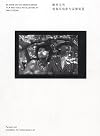
Though he trained as a painter at the China Academy of Fine Arts, Yang Fudong, one of the most interesting and influential young artists emerging from China today, has always preferred film. His videos and photographs combine and accumulate perspectives, investigating identity through ancient mythology, personal memory and lived experience. His subjects, often in their late 20s and early 30s, seem confused and appear to be hovering between the past and present, or perhaps China's past and show more present. That split gives them an expectant quality, as if something is going to happen that never quite does. Yang Fudong seeks, through vignettes, a poetics of place and people as an alternative to the politics of power. No Snow on the Broken Bridge includes in-depth coverage of the recent title piece and an overview of his oeuvre to date. Texts by Ziba de Weck and Hans Ulrich Obrist. show less
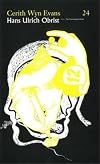
Cerith Wyn Evans’ gloriously uncategorizable oeuvre has spanned installation works, sculptures, photography, film, text and a recent collaboration with industrial-music pioneers Throbbing Gristle. Preoccupations with language and perception generally lead the works, from an exhibition at Tate Britain in which a computer randomly selected lines from William Blake’s poetry to be reflected off a disco ball in Morse code format to “Inverse, Perverse, Reverse,” a large circular mirror show more that showed viewers’ reflections upside down, referencing Lacan’s mirror-stage theory of identity while throwing a wrench into the expected experience of representation. Evans has said he wants his work to function as a “catalyst or reservoir of possible meanings that, for the viewer, could unravel many discursive journeys.” In this series of conversations, Hans Ulrich Obrist draws Evans on these and other themes. show less
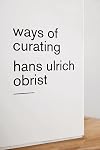
I quite like this book, as it did open my eyes to the fact that the curating world is a fairly multi-layered world, and it goes way beyond just hanging pictures on a wall.
What I like is the rather simple manner in which he writes, and this kept me somewhat engaged throughout. There is a lot of name-dropping, and this does spoil the book somewhat.
Also, when he uses terms like 'the greatest artist' etc, I cannot help but think that he, like many Western writers, cannot see beyond the Western show more / Northern Quarter of the world. Latin America, Asia, Australia are beyond their vision.
I would have liked some photographs. This would have helped to illustrate the points he was wanting to make.
Apart from these, for me, a good book. show less
What I like is the rather simple manner in which he writes, and this kept me somewhat engaged throughout. There is a lot of name-dropping, and this does spoil the book somewhat.
Also, when he uses terms like 'the greatest artist' etc, I cannot help but think that he, like many Western writers, cannot see beyond the Western show more / Northern Quarter of the world. Latin America, Asia, Australia are beyond their vision.
I would have liked some photographs. This would have helped to illustrate the points he was wanting to make.
Apart from these, for me, a good book. show less

This is a difficult book to describe. You can read it in an hour or so. Most of the pages have fewer than 50 words. Many of them have definitions of new words, usually a combination of old words made into something dystopian. The book leaves you with the uncomfortable feeling that all is not right in the world. Then you realize – so what else is new?
It really means that Alvin Toffler’s Future Shock of fifty years ago has finally arrived. Things are moving so fast we can’t adjust and show more accommodate. Even if we tried, the world would have moved on to something else before we got anywhere. So confusion and lack of direction reign.
The words on the page are a cross between a Steven Wright one liner and a Haiku for millennials:
-It turns out computer games merely teach you how to play other computer games.
-A one way trip to Mars would be okay if it had smoking-hot wifi.
-What if there were a drug that made you feel more like yourself?
As you would expect from the co-authors, most of the references are to the internet. The memes are multiple choice dropdowns, fill-in boxes, and radio buttons. That is the normal frame of reference for people who have grown up with the internet always available. Reading The Age of Earthquakes is like living an episode of Black Mirror. It’s all very realistic, very possible, and very downbeat. It’s an emotional warning.
David Wineberg show less
It really means that Alvin Toffler’s Future Shock of fifty years ago has finally arrived. Things are moving so fast we can’t adjust and show more accommodate. Even if we tried, the world would have moved on to something else before we got anywhere. So confusion and lack of direction reign.
The words on the page are a cross between a Steven Wright one liner and a Haiku for millennials:
-It turns out computer games merely teach you how to play other computer games.
-A one way trip to Mars would be okay if it had smoking-hot wifi.
-What if there were a drug that made you feel more like yourself?
As you would expect from the co-authors, most of the references are to the internet. The memes are multiple choice dropdowns, fill-in boxes, and radio buttons. That is the normal frame of reference for people who have grown up with the internet always available. Reading The Age of Earthquakes is like living an episode of Black Mirror. It’s all very realistic, very possible, and very downbeat. It’s an emotional warning.
David Wineberg show less
Awards

You May Also Like


Associated Authors
Statistics
- Works
- 213
- Also by
- 17
- Members
- 1,882
- Popularity
- #13,674
- Rating
- 4.0
- Reviews
- 27
- ISBNs
- 218
- Languages
- 10